Voting for the 2014 San Francisco Film Critics Circle (SFFCC) for our year-end favorites presents the annual hurdle of coming up with a list of nominations that reflect individual taste within a circumscribed pool of films that have achieved theatrical distribution in the last year. In contrast to the diverse festival fare to which I am accustomed, having to narrow my choices down to so-called American “prestige” films feels a bit like a Faustian bargain where I sell my cinephilic soul to the big studios who line up critic circles like dominos. There’s not many ways to fall in this colonized symbiosis. It sometimes feels like a rigged game with obvious results, accounting—no doubt—for the repetitive lists that dominate the ramp-up to awards season. As evidence, check out Mike D’Angelo’s sobering list of the theatrically released films of 2014 to note our starting line and the limited victories of this race. Granted, any other system might prove to be a chaotic free-for-all.
Notwithstanding my reservations, “in every job that must be done there is an element of fun and when you find the fun the job’s a game.” The way this works within SFFCC is that each member is asked to send in a preliminary ballot with five nominations in each category ranked from one to five, with the first choice scoring five points down to the last choice scoring one. Once all the preliminary ballots are submitted, we are then offered a secondary ballot shaped by the tabulated results. Knowing in advance that this secondary ballot will invariably produce the names produced by every other critics circle in the country—lining up the dominos “just so”—leaves me free to use my preliminary ballot to texture my complicity by including choices that I know don’t have a cold chance in Hell, specifically those films outside the grip of Hollywood’s hegemony and the inner circles of American independents (hegemony "light"). Need I argue that this is why I’m a festival correspondent in the first place?
So—to provide a bit of transparency to the process—what follows is my preliminary ballot, which will be followed by my secondary ballot, and SFFCC’s official announcement come Sunday. I will not include, however, information regarding our Special Citation award and Marlon Riggs award.
BEST ACTOR
1. Michael Keaton, Birdman. I admire how SFFCC colleague Omar Moore described Keaton’s performance as “three performances in one”, at least one of which wryly comments upon Keaton’s one-off 1989 portrayal of Batman.
2. Tom Hardy, Locke & The Drop. In the same vein, I first became aware of Hardy’s work as Bane in The Dark Knight Rises (2012), though he was hardly recognizable. In these two performances this year Hardy has revealed himself to be an accomplished actor capable of holding his own without a mask and someone to keep our eyes on in scripts to come.
3. Sid Lucero, Norte: The End of History. As a Filipino actor, Lucero won’t receive much love from American enthusiasts, but his savage performance as a man ravaged by guilt was one of the most heartbreaking and shocking of the year.
4. Adam Bakri, Omar. In this breakout performance, Bakri won’t blip on many American radars, especially with this pro-Palestinian turn nested within a love story. More will be made of the problematic mentorship in Foxcatcher than the one on display here between a Palestinian youth coerced by an Israeli security officer.
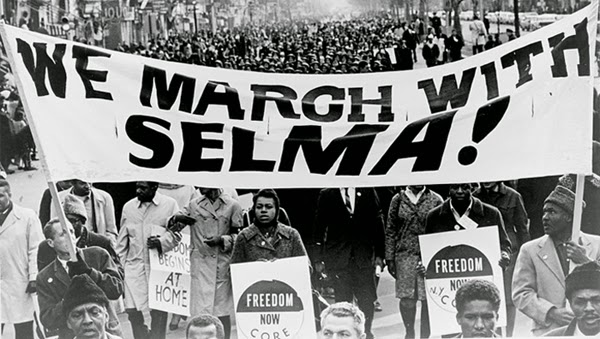
5. David Oyelowo, Selma. Less an impersonation than an admirable embodiment of Dr. Martin Luther King, this is the role Oyelowo was born to play and he does a damn fine job with it.
Hon. Mention: Philip Seymour Hoffman, A Most Wanted Man. This role showed Hoffman at the peak of his game and underscores our loss; but—because I prefer to give awards to the living—I include him here by mention and not nomination.
BEST ACTRESS
1. Marion Cotillard, Two Days, One Night & The Immigrant. Since her breakout performance as Edith Piaf, Cotillard has proven herself again and again to be one of our greatest actresses, this year with two roles characterized by political nuance and charismatic presence.
2. Anne Dorval, Mommy. Dorval reins excess better than almost any actress I know; a necessity for Xavier Dolan’s aggressive, often over-the-top scripts. As a mother with a problem child, she exhibits love and fear in equal measure.
3. Isabelle Huppert, Abuse of Weakness. I’ve said it before and I’ll say it again, all Huppert has to do is lift an eyebrow and she pierces me to the marrow. Here she stands in as the alter-ego for Catherine Breillat’s steely reserve struggling against physical odds.
4. Juliette Binoche, Clouds of Sils Maria. Another performance where an actor seems to play more than one role within a role. First as a glamorous red carpet darling who, secondly, becomes masculinized in her search for a character. The gendered range is amazing.
5. Paulina García, Gloria. As a middle-aged woman refusing to give up her embodied sensuality, García’s performance at first feels feminist but then deepens to something unrelentingly humanist.
Note: American actresses, work harder! If Hollywood is going to weaken you in predictable roles, then seek work out of the country.
BEST SUPPORTING ACTOR
1. Edward Norton, Birdman. As a foil to Keaton’s scene-stealing dominance, Norton handles his own with wit and physicality.
2. Tom Wilkinson, Selma. It takes quite a lot for me to like former President Lyndon Baines Johnson in any characterization and yet Wilkinson does a masterful job of eliciting sympathy and humanizing the former President's difficult, compromised, choices.
3. Ethan Hawke, Boyhood. A consistently good if rarely recognized actor, this is the best thing I’ve seen out of Hawke in a performance shaped over 12 years. Talk about focus and commitment!
4. Waleed Zuaiter, Omar. You might not be able to call him evil, but Zuaiter’s handsome looks and charismatic smile sensualize and complicate his role as an antagonist in this Mideast narrative.
5. Channing Tatum, Foxcatcher. Tatum elevates his boilerplate performances as a sensitive hunk to effective levels of nuance as the luggish and vulnerable wrestler who falls prey to the manipulations of a mentally unbalanced tycoon.
BEST SUPPORTING ACTRESS
1. Tilda Swinton, Snowpiercer & The Grand Budapest Hotel. In two distinct caricatures of entitlement, Swinton excels as the mouthpiece for the 1% while resoundly skewering same.
2. Emma Stone, Birdman. With doe-eyed cynicism, Stone gives voice to a skeptical younger generation formed and informed by social media at odds with the old-fashioned integrity and artistic aspirations of her father.
3. Meryl Streep, Into the Woods. Streep colors her impressive vocal skills with now legendary acting chops to provide the center of this prize piece of American musical theater. Your heart feels for this witch weary of the world and its betrayals.
4. Kristen Stewart, Still Alice & Clouds of Sils Maria. Rebounding from being pigeonholed in the Twilight franchise, Stewart proves that—cast in the right roles—she can deliver low-stated, naturalistic performances. Who would have thought? What a welcome surprise.
5. Sandrine Kiberlain, Violette. Crisp, aloof, and stiffened with intellect, Kiberlain brings Simone du Beauvoir to life, not only as an intellectual giant, but as the reluctant beloved of Violette le Duc.
BEST SCREENPLAY, Original
1. Richard Linklater, Boyhood
2. Alejandro González Iñárritu, Birdman
3. Oleg Negin & Andreyi Zvyagintsev, Leviathan
4. Mike Leigh, Mr. Turner
5. Steven Knight, Locke
BEST SCREENPLAY, Adapted
1. Andrew Bovell, A Most Wanted Man
2. Dennis Lehane, The Drop
3. Joon-ho Bong & Kelly Masterson, Snowpiercer
4. Richard Glatzer & Wash Westmoreland, Still Alice
5. James Lapine & Stephen Sondheim, Into the Woods
BEST CINEMATOGRAPHY
1. Ryszard Lenczewski & Lukasz Zal, Ida
2. Lyle Vincent, A Girl Walks Home Alone At Night
3. Dick Pope, Mr. Turner
4. Emmanuel Lubezki, Birdman
5. Fredrik Wenzel, Force Majeure
BEST PRODUCTION DESIGN
1. Kevin Thompson, Birdman
2. Sergio de la Vega, A Girl Walks Home Alone At Night
3. Suzie Davies, Mr. Turner
4. Adam Stockhausen, The Grand Budapest Hotel
5. Dennis Gassner & Anna Pinnock, Into the Woods
BEST EDITING
1. Sandra Adair, Boyhood
2. Douglas Crise & Stephen Mirrione, Birdman
3. John Gregory, Mr. Turner
4. Justine Wright, Locke
5. Ron Patane, A Most Violent Year
BEST ANIMATED FEATURE
1. Ari Folman, The Congress
2. Signe Baumane, Rocks in My Pockets
3.
4.
5.
Note: The weakest category this year. I was stumped.
BEST FOREIGN LANGUAGE PICTURE
1. Andrey Zvyagintsev, Leviathan. This is grave and elegant cinema richly textured with literary flourishes. Eschewing melodramatic formulas, it narrates a realistic tale of individuals crushed by systematic corruption.
2. Lav Diaz, Norte, the End of History. Astounding in its portrayal of how a man can go crazy with the loneliness of guilt, Diaz’s take on Dostoevysky’s Crime and Punishment runs neck and neck with Leviathan for narrative heft and characterization.
3. Pawel Pawlikowski, Ida. Beautifully lensed, truthfully performed, Pawlikowski creates a road movie intent upon coming to terms with a difficult history.
4. Hany Abu-Assad, Omar. Watching Adam Bakri’s character scale Israel’s Apartheid Wall visualizes the resiliency of the Palestinian spirit and the complicities necessary to achieve independence.
5. Ruben Östlund, Force Majeure. A black comedy as it would have been directed by Ingmar Bergman, if Bergman had a sense of humor.
BEST DOCUMENTARY
1. Laura Poitras, CitizenFour. This is filmmaking at its very best, relevant, informative and deeply disturbing. So good that I have to also nominate it for Best Picture.
2. John Maloof & Charlie Siskel, Finding Vivian Maier. A career is saved from a clutch of cardboard boxes. A fascinating story that profiles a remarkable body of street photography.
3. Daniel Geller & Dayna Goldfine, The Galápagos Affair: Satan Came to Eden. I was personally disappointed that this did not make the Oscars® short list because I found it to be an inventive documentary hybrid that testifies that all conflicts come down to one person against another, even on different sides of a remote island.
4. Rodrigo H. Vila, Mercedes Sosa: The Voice of Latin America. With a limited run in New York City, this portrait of famed folk singer Mercedes Sosa is not getting the love it deserves. At a time when most Americans lack political will, this document could prove as inspiring as nueva canción was for the social upheavals of the 1970s and 1980s in Portugal, Spain and Latin America. Who do we have these days to sing songs of resistance?
5. Ben Cotner & Ryan White, The Case Against 8. It was a brave gamble to chronicle this Supreme Court fight for gay marriage as it, arguably, could have gone either way. As such, its victory is doubly sweet and gratifying to watch.
Note: I won’t name names, but I overheard one of my SFFCC colleagues at a press screening complain about having to vote in such “uninteresting” categories as foreign film and documentary. I felt my blood rise and then settle back down as I mollified myself with my mantras: “They’re only movies” and “There’s no accounting for taste.”
Fortunately, this year has seen an amazing variety in both genres available for nomination and, for me, these were the two most difficult (let alone interesting) categories to negotiate. It frustrates me when members of SFFCC reveal that all they want to play is a game of dominos.
For every nomination in this category, I had an equal choice. An honorable mention needs to go out to Rory Kennedy’s Last Days in Vietnam which humanely expands the history of the evacuation of Saigon as we know it and Rithy Panh’s The Missing Picture which reconstructs the historic atrocities within Cambodia out of its own earth. Also, in tandem with The Case Against 8 and its chronicle of the triumphant Supreme Court decision on gay marriage, I’d like to give an honorable mention to Michael Gough’s Add the Words, a documentary out of Idaho—completely out of the Circle’s circumscribed selection for still being on festival track and not yet in theaters—but important for reminding audiences that, despite gains on the federal level, LGBT communities are still struggling for basic human rights in such red states as Idaho. What good does it do to be married if said marriage means you might lose both job and home? An unnerving catch-22 in civil rights.
BEST DIRECTOR
1. Richard Linklater, Boyhood
2. Alejandro González Iñárritu, Birdman
3. Laura Poitras, CitizenFour
4. Andreyi Zvyagintsev, Leviathan
5. Ava Duvernay, Selma
BEST PICTURE
1. Richard Linklater, Boyhood
2. Alejandro González Iñárritu, Birdman
3. Laura Poitras, CitizenFour
4. Andreyi Zvyagintsev, Leviathan
5. Ava Duvernay, Selma
Note: Not necessarily a candidate for Best Picture but an honorable mention to Stanley Nelson's documentary Freedom Summer, which tracks with the concerns of Selma. Both films revisit a historical moment in voter registration rights now currently under attack by the Republican Right.
Thursday, December 11, 2014
Sunday, December 07, 2014
HOLEHEAD 2014—BLOOD RIDERS: THE DEVIL RIDES WITH US (2014)
I met Finnish director Lari Teräs a little over a month back in Boise, Idaho at Red Feather's patio where we watched Boise Film Underground's Halloween program of horror shorts. We'd met earlier in the evening at Ming Studios where I learned his first feature Blood Riders: The Devil Rides With Us (2014) [Official site / Facebook] was in the program for the Idaho Horror Film Festival. Unfortunately, I'm not allowed to stay up past midnight (and was none too pleased with the unprofessional projections at the festival anyway) so I begged off on an in-cinema screening and asked Lari to forward a Vimeo link, which he generously provided a few weeks later.
His lack of pretension was refreshing. He was visibly enjoying the festival run of his first feature, which he described as: "a blood soaked adventure comedy about four young friends who stumble upon a body after stealing a car. That discovery pushes the friends on a road trip around town during which they try to get rid of the increasing amount of corpses. Along their wild ride the kids encounter neo-Nazis, punk artists, devil worshipers and a plan to resurrect Hitler."
Made on a next-to-nothing budget, Teräs pieced Blood Riders together with personal savings and credit cards and—"to keep things simple"—there's "only" 24 speaking roles and "only" 20 shooting location across 7 cities / towns. Working as a best boy grip and background zombie on John Geddes' Exit Humanity (2011) was where Teräs learned most of the tips and tricks of how feature films are shot after graduating from film school. An undeniable labor of love for everyone involved, Blood Riders was shot in 3 weeks (6 days per week; 14-16 hours per day). By huff and by puff and, definitely, with a lot of fun they made the film. That fun, and the lack of pretension, translates across and makes Blood Rider nothing more than what it is: an entertaining romp of blood, guts and good times.
The no-budget bloody mayhem of Blood Riders lies squarely on the shoulders of the earnest performances of its fresh-faced cast. As Zoey, Caitlynne Medrek bemuses as a lass with impulse control problems (and rumor has it her face was sprayed with blood over 60 times on camera); as Janek, Cory Lof provides an attractive and befuddled protagonist barely able to keep things together; and as Dane, Joel Ballanger is as dreamy as a bad boy gets. All three are easy on the eyes so I have to give a shout-out to either casting or Lari's good taste in friends (one and the same?). I predict Ballanger will need a secretary for his future fan club.
With humor being the festival's main draw this edition, Blood Riders races out ahead of the pack by a bloody nose. It is, as the director will tell you, "a feel good movie about growing up, making new friends, finding love and overcoming the insecurities of youth: What are you willing to do in order to find acceptance either from yourself or from your peers? It's also a movie about off-the-wall characters, hell fires and the (positive) effects of starting an accidental murder spree in order to cover up a petty crime." All in all, a pretty rad combination.
His lack of pretension was refreshing. He was visibly enjoying the festival run of his first feature, which he described as: "a blood soaked adventure comedy about four young friends who stumble upon a body after stealing a car. That discovery pushes the friends on a road trip around town during which they try to get rid of the increasing amount of corpses. Along their wild ride the kids encounter neo-Nazis, punk artists, devil worshipers and a plan to resurrect Hitler."
Made on a next-to-nothing budget, Teräs pieced Blood Riders together with personal savings and credit cards and—"to keep things simple"—there's "only" 24 speaking roles and "only" 20 shooting location across 7 cities / towns. Working as a best boy grip and background zombie on John Geddes' Exit Humanity (2011) was where Teräs learned most of the tips and tricks of how feature films are shot after graduating from film school. An undeniable labor of love for everyone involved, Blood Riders was shot in 3 weeks (6 days per week; 14-16 hours per day). By huff and by puff and, definitely, with a lot of fun they made the film. That fun, and the lack of pretension, translates across and makes Blood Rider nothing more than what it is: an entertaining romp of blood, guts and good times.
The no-budget bloody mayhem of Blood Riders lies squarely on the shoulders of the earnest performances of its fresh-faced cast. As Zoey, Caitlynne Medrek bemuses as a lass with impulse control problems (and rumor has it her face was sprayed with blood over 60 times on camera); as Janek, Cory Lof provides an attractive and befuddled protagonist barely able to keep things together; and as Dane, Joel Ballanger is as dreamy as a bad boy gets. All three are easy on the eyes so I have to give a shout-out to either casting or Lari's good taste in friends (one and the same?). I predict Ballanger will need a secretary for his future fan club.
With humor being the festival's main draw this edition, Blood Riders races out ahead of the pack by a bloody nose. It is, as the director will tell you, "a feel good movie about growing up, making new friends, finding love and overcoming the insecurities of youth: What are you willing to do in order to find acceptance either from yourself or from your peers? It's also a movie about off-the-wall characters, hell fires and the (positive) effects of starting an accidental murder spree in order to cover up a petty crime." All in all, a pretty rad combination.
Friday, December 05, 2014
A GIRL WALKS HOME ALONE AT NIGHT (2014)
Unexpectedly beautiful, at turns contemplative and chilling, Ana Lily Amirpour's debut feature A Girl Walks Home Alone At Night (2014) [Facebook] is being billed as the "first Iranian Vampire Western" and is a text book study of a continuing trend towards elevated genre; i.e., Tomas Alfredson's Let the Right One In (2008) and Jim Jarmusch's Only Lovers Left Alive (2013). Its eccentricity (a chador-clad vampire skateboards around Bad City late at night preying on the blood of its immoral denizens) is redeemed by suspense-drenched atmosphere and—as my friend Frako Loden puts it—a moral center. At The East Bay Express, Kelly Vance concurs: "Filmmaker Amirpour imbues the simple story with a European tone of subdued dread reminiscent of Alain Robbe-Grillet (his L'Immortelle particularly)." But let's not forget the film's mordant wit and—against all odds—a romance at the film's heart.
Lyle Vincent's B&W cinematography incorporates a palette of warm greys and horizontal lens flares that are simply stunning to look at, lending significant (if sometimes self-conscious) style to Sergio De La Vega's evocative production design.
A youthful rock score insures this is a vampire film for a contemporary audience. At The Hollywood Reporter, Boyd von Hoeij spotlights the film's soundtrack "ranging from the Middle Eastern fusion beats of Bei Ru to the underground Iranian rock of Radio Tehran and Kiosk to the spaghetti western-inspired tunes of Portland-based Federale." Fans of the soundtrack will be pleased by its upcoming release by Death Waltz Recording Company.
Amirpour, one of Filmmaker Magazine's "25 New Faces of Independent Film" and a consensually designated "Breakthrough Director of the Year" according to IndieWire's Playlist, Moviemaker, and the Gotham Awards, was interviewed early on by Brownbook. Melissa Leon interviewed Amirpour for The Daily Beast and Steven Erickson did the honors for Fandor, where David Hudson has likewise aggregated reviews from the film's Sundance premiere and its New Directors / New Films run.
With an Independent Spirit nomination for best first feature, I've no doubt that A Girl Walks Home Alone At Night is a film that will be hypnotizing audiences during its Bay Area Landmark Theatres run.
Lyle Vincent's B&W cinematography incorporates a palette of warm greys and horizontal lens flares that are simply stunning to look at, lending significant (if sometimes self-conscious) style to Sergio De La Vega's evocative production design.
A youthful rock score insures this is a vampire film for a contemporary audience. At The Hollywood Reporter, Boyd von Hoeij spotlights the film's soundtrack "ranging from the Middle Eastern fusion beats of Bei Ru to the underground Iranian rock of Radio Tehran and Kiosk to the spaghetti western-inspired tunes of Portland-based Federale." Fans of the soundtrack will be pleased by its upcoming release by Death Waltz Recording Company.
Amirpour, one of Filmmaker Magazine's "25 New Faces of Independent Film" and a consensually designated "Breakthrough Director of the Year" according to IndieWire's Playlist, Moviemaker, and the Gotham Awards, was interviewed early on by Brownbook. Melissa Leon interviewed Amirpour for The Daily Beast and Steven Erickson did the honors for Fandor, where David Hudson has likewise aggregated reviews from the film's Sundance premiere and its New Directors / New Films run.
With an Independent Spirit nomination for best first feature, I've no doubt that A Girl Walks Home Alone At Night is a film that will be hypnotizing audiences during its Bay Area Landmark Theatres run.
SPRING GARDEN (2014)
In full disclosure, Jake Fullilove's Spring Garden (2014) is a pet project of mine. It first arrived at my desk as a shooting script developed by Jake and his collaborator Matt Shelar, adapted from Matt's short story. Straight off, it exhibited a pulpy coherence that spoke to the project's genre ambitions.
My creative presence in Boise, Idaho is mitigated by my age, in that most of Boise's film scene is built upon the momentum of its youthful production crews who—eager to have me write about their projects or contribute financially to their crowd funding campaigns—rarely invite me to participate. That makes some sense in that I'm not really trained in film production, geared more towards exhibition, and normally approach films after the fact when they're on circuit; but, Jake—aware of this sensitive disconnect—made a point of approaching me to ask for my participation in helping him achieve his dream of making his first feature short. Most of the entry level slots on his production crew were already assigned, but I offered to help out where I knew I could: fixing food for the cast and crew for three days of their shoot. It was my first catering gig ever and I'm proud to say it might earn me an IMDb credit. Feeding the team also afforded the opportunity to watch a film being made and to witness Jake's generous and temperate on-set sensibility. Everyone on the set was clearly having a fun and rewarding experience and this had everything to do with Jake's genuine appreciation for each and every aspect of participation provided by his cast and crew.
Saturday evening marks—not necessarily the premiere of the film—but, it's first screening to said cast and crew who will be gathering for a private viewing at Ming Studios—Boise's premiere international art space—and I wanted to take time to congratulate everyone involved on what I consider the unquestioned success of the project and what I hope will be a robust festival run. My only regret is not being present to follow through with a killer grazing table.
With his first feature short, Jake Fullilove reveals himself as a talent to be reckoned with. Visual ingenuity, a strong sense of editorial rhythm, and solid professional marks all the way throughout spotlight Matt Shelar's well-spun psychological thriller. Crisp lensing by Skip Armstrong on the RED scarlet and RED Epic X, state-of-the-art special effects by Dustin Montierth, and an effectively tense and suspenseful sound design by Daniel Kerr frame the sparring performances of David Cowan and Jem Wierenga. For his first narrative short, Jake Fullilove and his collaborators have achieved a disquieting tale of murder and mayhem in the vein of Dexter. The film's final dream sequence (shot in the Boise Co-Op), with its impressive tracking shot, deserves a singular shout-out.
Of related interest: Chris Grapes' profile of the project at Boise Weekly; Frankie Barnhill's spotlight on Jake at Boise State Public Radio; and Pamela Kleibrink Thompson's article at Eagle Magazine.
My creative presence in Boise, Idaho is mitigated by my age, in that most of Boise's film scene is built upon the momentum of its youthful production crews who—eager to have me write about their projects or contribute financially to their crowd funding campaigns—rarely invite me to participate. That makes some sense in that I'm not really trained in film production, geared more towards exhibition, and normally approach films after the fact when they're on circuit; but, Jake—aware of this sensitive disconnect—made a point of approaching me to ask for my participation in helping him achieve his dream of making his first feature short. Most of the entry level slots on his production crew were already assigned, but I offered to help out where I knew I could: fixing food for the cast and crew for three days of their shoot. It was my first catering gig ever and I'm proud to say it might earn me an IMDb credit. Feeding the team also afforded the opportunity to watch a film being made and to witness Jake's generous and temperate on-set sensibility. Everyone on the set was clearly having a fun and rewarding experience and this had everything to do with Jake's genuine appreciation for each and every aspect of participation provided by his cast and crew.
Saturday evening marks—not necessarily the premiere of the film—but, it's first screening to said cast and crew who will be gathering for a private viewing at Ming Studios—Boise's premiere international art space—and I wanted to take time to congratulate everyone involved on what I consider the unquestioned success of the project and what I hope will be a robust festival run. My only regret is not being present to follow through with a killer grazing table.
With his first feature short, Jake Fullilove reveals himself as a talent to be reckoned with. Visual ingenuity, a strong sense of editorial rhythm, and solid professional marks all the way throughout spotlight Matt Shelar's well-spun psychological thriller. Crisp lensing by Skip Armstrong on the RED scarlet and RED Epic X, state-of-the-art special effects by Dustin Montierth, and an effectively tense and suspenseful sound design by Daniel Kerr frame the sparring performances of David Cowan and Jem Wierenga. For his first narrative short, Jake Fullilove and his collaborators have achieved a disquieting tale of murder and mayhem in the vein of Dexter. The film's final dream sequence (shot in the Boise Co-Op), with its impressive tracking shot, deserves a singular shout-out.
Of related interest: Chris Grapes' profile of the project at Boise Weekly; Frankie Barnhill's spotlight on Jake at Boise State Public Radio; and Pamela Kleibrink Thompson's article at Eagle Magazine.
Wednesday, November 26, 2014
HOLEHEAD 2014—BLOODY KNUCKLES (2014)
It's difficult not to get heavy-handed with the puns when writing about Matt O'Mahoney's debut feature Bloody Knuckles (2014) [IMDb / Facebook], which boasted its world premiere at Fantasia in their newly-launched Underground sidebar. Bloody Knuckles has since gained fans at a handful of genre festivals on both sides of the Atlantic. Did I mention it was shot digitally?
Bloody Knuckles arrives to San Francisco as the first of three opening night entries for the 11th edition of IndieFest's Another Hole in the Head Film Festival (Holehead). With an indirect tip of the hat to San Francisco's Chinatown, Bloody Knuckles reveals an '80s VHS horror aesthetic with low-budget production, a clever use of practical gore effects, and politically incorrect comedy ameliorated by foxy, sympathetic lead actor Adam Boys (who plays Travis, the creator of Vulgarian Invasions, an underground comic that gleefully wallows in the obscene) and his winsome love interest Amy (Gabrielle Giraud).
Angered by the Canadian debates about self-censorship in the wake of the 2005 Jyllands-Posten Muhammad cartoons controversy, O'Mahoney vented his frustration by reminding folks that people fought really hard for their right to freedom of speech and that buckling to threats sets a terrible precedent. In Bloody Knuckles he aims offense at Asians, Blacks, and Gays in equal measure. Contingent upon your perspectives on subcultural stereotypes, you'll either wink, wince, or walk out; but, you'll have to give a hand to O'Mahoney's deft balancing act that softens equal opportunity offense with the effective distraction of mayhem, carnage and humor. A special shout-out to the use of Loretta Lynn's "Fist City" over the closing credits as an especially wry (and classy) touch.
As synopsized by Holehead: "Casually dismissing his detractors as pious censors, Travis finds himself in dangerous territory after his comic targets a shady Chinatown businessman named Leonard Fong. Mr. Fong does not take kindly to the offensive caricature of him and orders his goons to punish Travis by severing his drawing hand. Rattled to his core, Travis abandons his comic and retreats into a miserable, alcoholic existence. That is, until his hand returns from the grave. The hand urges Travis to resume Vulgarian Invasions but Travis refuses, fearing a deadly reprisal. The hand, however, will not relent and embarks on a perverse, by-any-means-necessary mission to rejuvenate Travis' once bold spirit."
Marina Antunes interviewed O'Mahoney for Quiet Earth, after stating in her review for the film: "Ever wonder what would happen if Thing dragged one of the Addams kids through a seedy underworld of dirty comics, contraband pesticides and underground sex clubs? That's kind of what Bloody Knuckles is about." O'Mahoney offers further commentary in his Fantasia video interview. At least one thumb up for an offensive but fun entry at this year's Holehead.
Bloody Knuckles arrives to San Francisco as the first of three opening night entries for the 11th edition of IndieFest's Another Hole in the Head Film Festival (Holehead). With an indirect tip of the hat to San Francisco's Chinatown, Bloody Knuckles reveals an '80s VHS horror aesthetic with low-budget production, a clever use of practical gore effects, and politically incorrect comedy ameliorated by foxy, sympathetic lead actor Adam Boys (who plays Travis, the creator of Vulgarian Invasions, an underground comic that gleefully wallows in the obscene) and his winsome love interest Amy (Gabrielle Giraud).
Angered by the Canadian debates about self-censorship in the wake of the 2005 Jyllands-Posten Muhammad cartoons controversy, O'Mahoney vented his frustration by reminding folks that people fought really hard for their right to freedom of speech and that buckling to threats sets a terrible precedent. In Bloody Knuckles he aims offense at Asians, Blacks, and Gays in equal measure. Contingent upon your perspectives on subcultural stereotypes, you'll either wink, wince, or walk out; but, you'll have to give a hand to O'Mahoney's deft balancing act that softens equal opportunity offense with the effective distraction of mayhem, carnage and humor. A special shout-out to the use of Loretta Lynn's "Fist City" over the closing credits as an especially wry (and classy) touch.
As synopsized by Holehead: "Casually dismissing his detractors as pious censors, Travis finds himself in dangerous territory after his comic targets a shady Chinatown businessman named Leonard Fong. Mr. Fong does not take kindly to the offensive caricature of him and orders his goons to punish Travis by severing his drawing hand. Rattled to his core, Travis abandons his comic and retreats into a miserable, alcoholic existence. That is, until his hand returns from the grave. The hand urges Travis to resume Vulgarian Invasions but Travis refuses, fearing a deadly reprisal. The hand, however, will not relent and embarks on a perverse, by-any-means-necessary mission to rejuvenate Travis' once bold spirit."
Marina Antunes interviewed O'Mahoney for Quiet Earth, after stating in her review for the film: "Ever wonder what would happen if Thing dragged one of the Addams kids through a seedy underworld of dirty comics, contraband pesticides and underground sex clubs? That's kind of what Bloody Knuckles is about." O'Mahoney offers further commentary in his Fantasia video interview. At least one thumb up for an offensive but fun entry at this year's Holehead.
Saturday, November 22, 2014
AMERICAN SNIPER (2014)—A Few Evening Class Questions for Screenwriter Jason Hall
Yet another eleventh hour entry in this year's Oscars® race is American Sniper (2014), directed by Clint Eastwood and starring Bradley Cooper as Chris Kyle, decorated United States Navy SEAL and the most lethal sniper in American military history. Based on Kyle's autobiography of the same name, American Sniper's screenplay was written by Jason Hall, a struggling television actor who has since become one of Hollywood's up-and-coming screenwriters.
When Hall first approached Chris Kyle about adapting his bestselling autobiography into a film, Kyle was "a little prickly at first", his "eyes filled with turmoil", but they established a working relationship that then carried over until 2012 when Hall began writing the script. Though "not the chattiest guy in the world", Kyle provided a lot of input into Hall's script, as did his wife and the people around him who knew him well. Hall texted him when he was turning in the script and the following day Kyle and companion Chad Littlefield were murdered by 25-year-old fellow veteran Marine Eddie Ray Routh, whom Kyle and Littlefield had purportedly taken to the gun range in an effort to help him with what they were told by his mother was post traumatic stress disorder (PTSD). Kyle had started going to the Veterans Administration to pick up guys who had been wounded, taking them out hunting or to the gun range for target practice, and in that way found some peace of mind. It was his own way of being of service without redeploying to the Mideast for another tour of duty.
Hall was interested in Kyle's personal story because he wanted to know what compelled men like Kyle to fight? Why did they feel compelled to put themselves through tour after tour of duty? As the film revealed, Kyle enlisted when the U.S. was not at war. So his experience was a little bit different than those men who enlisted after they saw the Towers fall. With Kyle, the need to protect others was within him from an early age. He would always stand up to the bullies and protect his younger brother (who later told Hall that Kyle got beat up on too, yet always defended him). Within the film, Kyle's father teaches him that there are three kinds of men: sheep, who don't know how to protect themselves; wolves, who prey on sheep; and sheepdogs who protect the sheep against predators. Along with wondering why men like Kyle fight, Hall was equally intrigued by what it cost them. In Kyle's case, it cost him dearly.
As a screenwriter, Hall believes there's no sense in making a movie about an individual if it doesn't say something about all of us. He hoped that by helping to create this film it would reveal that Kyle's personal story was the same as the story of our country. We are the country that feels the need to do what's right and just and, as a country, we've been on overwatch for a long time. We've been on the top looking for the bad guys. But at some point, as with Kyle, when the sheepdog hunts the wolf long enough he becomes a hunter. In real terms, this often results in PTSD. The challenge of presenting this issue within a filmic treatment is to not caricature those with PTSD as powder kegs waiting to blow. Each individual experiences the syndrome variously, no less the stigma attached to the condition, so it's a very personal thing for these guys. It's hard to closely examine the issue of PTSD without these men feeling they are being undressed and laid bare. These men of war are trained like professional athletes. Millions of dollars are spent training them. But the military doesn't continue on to train them how to come home and find peace. Despite the few things that are done to indoctrinate them out, the military moreorless abandons them when their duty is done. Most of these soldiers come home and have no jobs; 40% have nowhere to live.
American Sniper had its first screening at AFI Fest where critics (see The Hollywood Reporter) cautioned the film would have a difficult time convincing liberal, left-leaning audiences to rally around a Navy SEAL best known for killing people; but, Hall disagreed and said he wasn't as concerned with audience reception as with critical fallout. Kyle's autobiography was a bestseller in the flyover states, which speaks to what is relatable in his story. Unfortunately, the book was written at a time when Kyle was really struggling with his PTSD and was written with an angry voice.
What Hall learned from interacting with Kyle is that you can't ask a man who he is. A man is not going to break his heart open to an investigative journalist. But you can ask his wife because his wife is going to tell you the truth. Ten days after Kyle's funeral, his wife Taya phoned Hall and told him, "If you're going to do this, you better do this right. Unfortunately, this is going to be a large part of how my kids remember their dad." She then proceeded to make herself available by phone every day for three or four hours a day. They spent a good 200 hours on the phone talking about Kyle. She got to process her grief and feel useful solidifying her husband's legacy in the right way. She told the story of a man who was so sweet before the war with a gentility and solidity that she responded to. She talked about how that was chipped away by his four tours of duty. The scene late in the film where she tells Kyle that she feels she finally has her husband back and knows how hard it was for him to get back to her and their kids actually happened. She had the chance to tell him that word for word a couple of months before he was murdered.
Hall graciously accompanied the film for its San Francisco Film Critics Circle screening on Thursday, November 21, 2014 at San Francisco's Century 9, which afforded an opportunity to ask him a few questions about his work on the film.
Michael Guillén: As a screenwriter writing a script that is, in effect, critiquing the dehumanization of war, how do you negotiate this line of prurience where you've actually ended up with a film that is quite violent? I'm interested in how you decided to frame the action and the forces that led to his dehumanization?
Jason Hall: I approached this story … I saw it as the story of Achilles. In my reading of Achilles—what I come away with—is that the hardest victory is the one in which he got his humanity back. You can't sugarcoat this because this is what these guys went through. What I've put up on the screen is 1/100th of the violence and hostility that they witnessed over there. I've heard things that would peel your eyes back. It's a lot that we ask of these guys and it would do them an injustice not to show at least a portion of what they went through. We ask, "Oh man, what did you see?" We say, "Thank you for your service. Don't really want to hear about it, but thank you so much." The illumination of a little bit of that so that we can get a taste of it opens their experience up so that we can understand it a little better.
Hopefully, this movie will speak to those returning soldiers who aren't Chris Kyle, who aren't Navy SEALs, but who know his name. Like I said, he's the Achilles of that war and he struggled and he had to ask for help and he came home early and it was a tough war for Kyle so hopefully these other guys will see that—if Achilles had to ask for help—maybe it's all right to admit that, "I don't feel okay. Maybe I can talk about it." But I tell you what, there's still this huge stigma, especially within Special Forces, about: "We don't deal with that. We don't get any stress. We don't have it. Because we're trained beyond that. Because they weeded those guys out and we're the tip of the spear." That's a dangerous thread because it prohibits the guys who are experiencing PTSD to come forward, which is unfortunate.
Guillén: But in terms of your craft as the scriptwriter, how much of that action were you able to lay out ahead of time in the shooting script?
Hall: Oh, I went into it. I get very detailed. In a movie where everything's moving it's hard to get every scene you've written with a camera. It's easy when you're sitting at a typewriter to do it all; but, the beauty of working with Clint Eastwood is that I always saw this as a western and he shot it as a western. He captures the naked emotion. There's a truth to Clint Eastwood. It's not as polished as David Fincher—it's not like a Swiss watch—but, it's so honest that it involves a deeper part of us. Eastwood shot the script he read. He's famous for doing that. He responded to the script and wanted to go out and shoot it.
That being said, I didn't know I was writing for Clint Eastwood. I finished the script and a couple of months later I heard Steven Spielberg was reading it, which for a screenwriter is like: "This is it! I've arrived." I thought, "This is the best call I may ever get in my life and whatever happens, what a great day, right?"
I was taking my truck out into the valley to get fixed. I had bought a truck from Japan and the steering wheel was on the wrong side. I was driving out there when I got a call, "His door is closed. He's reading it right now." I was like, "Oh gosh. He's reading it. Spielberg's reading the script." Then I got a call: "Spielberg's agent just walked down the hall to Bradley Cooper's agent and the door's closed there." And I was like, "Oh my God!" At the same time my phone was dying while I was dropping off the truck. It's at, like, 3%. The guy at the repair shop remembers me and he says, "Oh man, my daughter's doing great!" He starts talking about his daughter while the phone is ringing in my pocket and I want to know what's happening with my script but I also want to talk to this guy and respect him so I let the phone ring and ring. I'm in the middle of the valley and I tell the guy, "I have to go" and he asked, "Do you need a ride?" And I'm like, "No, no, no, I'm just going to walk." I get out of there and answer the phone and they tell me, "Spielberg's doing your movie!" and I'm like, "YES!!" and ask, "So what….?" And my phone dies. I had a five-mile walk to the Starbucks but that allowed me to sit with it and that was beautiful. I developed the script with Spielberg for a number of months. But he had a bigger number in mind than the studio was willing to spend on it so we parted ways.
But then I got another call from Bradley who said, "You're not going to believe who's directing this movie." I was like, "I don't know, Bradley, just tell me." Because I was heartbroken when Spielberg walked off, y'know? He said, "Clint Eastwood" and I was like, "Wow." The crazy thing about it is that there was something charmed about Chris. That's what I found the hardest thing to capture. He had all these nicknames. They called him Midas. They called him Right Time Right Place. He made it out of stuff you should not make it out of alive. He writes a book and it goes on to be a best seller. There was something charmed about Chris and his life that passed on into this movie.
My greatest moment in all this, above and beyond Spielberg and Eastwood, was 10 days ago when his wife came in to watch the movie. She came out of the movie and gave me this big hug and was crying her eyes out. She said, "I just spent two hours with my husband. Thank you." That was it for me. Whatever happens next is gravy. I felt a real duty to do right by her and do right by her kids and tell the story right because I knew those two kids were going to watch this movie someday.
Guillén: Along with putting on 44 pounds for this film, Bradley Cooper nailed Kyle's Texan accent. How much of that regional speak is inflected in your script?
Hall: I tried not to go overboard with it. Kyle would say, "There's a tanga in the winda." I'd be thinking, "What is that?" You don't want to go too far with it so that he sounds hickish because Kyle wasn't a hick. I don't know, I can get a Texas accent after a couple of beers.
Guillén: Along with Selma, American Sniper is receiving early press for being a late entry in the Oscars® race. Can you speak at all to your personal feelings about these studio processes to get the film out there to be eligible for nominations?
Hall: Look, I'm happy to be involved, y'know? I mean, I got to work with Clint Eastwood and Bradley Cooper! It's a dream come true and I just feel happy to be involved and I'll do whatever they want me to do. It's a thrill. It really is.
When Hall first approached Chris Kyle about adapting his bestselling autobiography into a film, Kyle was "a little prickly at first", his "eyes filled with turmoil", but they established a working relationship that then carried over until 2012 when Hall began writing the script. Though "not the chattiest guy in the world", Kyle provided a lot of input into Hall's script, as did his wife and the people around him who knew him well. Hall texted him when he was turning in the script and the following day Kyle and companion Chad Littlefield were murdered by 25-year-old fellow veteran Marine Eddie Ray Routh, whom Kyle and Littlefield had purportedly taken to the gun range in an effort to help him with what they were told by his mother was post traumatic stress disorder (PTSD). Kyle had started going to the Veterans Administration to pick up guys who had been wounded, taking them out hunting or to the gun range for target practice, and in that way found some peace of mind. It was his own way of being of service without redeploying to the Mideast for another tour of duty.
Hall was interested in Kyle's personal story because he wanted to know what compelled men like Kyle to fight? Why did they feel compelled to put themselves through tour after tour of duty? As the film revealed, Kyle enlisted when the U.S. was not at war. So his experience was a little bit different than those men who enlisted after they saw the Towers fall. With Kyle, the need to protect others was within him from an early age. He would always stand up to the bullies and protect his younger brother (who later told Hall that Kyle got beat up on too, yet always defended him). Within the film, Kyle's father teaches him that there are three kinds of men: sheep, who don't know how to protect themselves; wolves, who prey on sheep; and sheepdogs who protect the sheep against predators. Along with wondering why men like Kyle fight, Hall was equally intrigued by what it cost them. In Kyle's case, it cost him dearly.
As a screenwriter, Hall believes there's no sense in making a movie about an individual if it doesn't say something about all of us. He hoped that by helping to create this film it would reveal that Kyle's personal story was the same as the story of our country. We are the country that feels the need to do what's right and just and, as a country, we've been on overwatch for a long time. We've been on the top looking for the bad guys. But at some point, as with Kyle, when the sheepdog hunts the wolf long enough he becomes a hunter. In real terms, this often results in PTSD. The challenge of presenting this issue within a filmic treatment is to not caricature those with PTSD as powder kegs waiting to blow. Each individual experiences the syndrome variously, no less the stigma attached to the condition, so it's a very personal thing for these guys. It's hard to closely examine the issue of PTSD without these men feeling they are being undressed and laid bare. These men of war are trained like professional athletes. Millions of dollars are spent training them. But the military doesn't continue on to train them how to come home and find peace. Despite the few things that are done to indoctrinate them out, the military moreorless abandons them when their duty is done. Most of these soldiers come home and have no jobs; 40% have nowhere to live.
American Sniper had its first screening at AFI Fest where critics (see The Hollywood Reporter) cautioned the film would have a difficult time convincing liberal, left-leaning audiences to rally around a Navy SEAL best known for killing people; but, Hall disagreed and said he wasn't as concerned with audience reception as with critical fallout. Kyle's autobiography was a bestseller in the flyover states, which speaks to what is relatable in his story. Unfortunately, the book was written at a time when Kyle was really struggling with his PTSD and was written with an angry voice.
What Hall learned from interacting with Kyle is that you can't ask a man who he is. A man is not going to break his heart open to an investigative journalist. But you can ask his wife because his wife is going to tell you the truth. Ten days after Kyle's funeral, his wife Taya phoned Hall and told him, "If you're going to do this, you better do this right. Unfortunately, this is going to be a large part of how my kids remember their dad." She then proceeded to make herself available by phone every day for three or four hours a day. They spent a good 200 hours on the phone talking about Kyle. She got to process her grief and feel useful solidifying her husband's legacy in the right way. She told the story of a man who was so sweet before the war with a gentility and solidity that she responded to. She talked about how that was chipped away by his four tours of duty. The scene late in the film where she tells Kyle that she feels she finally has her husband back and knows how hard it was for him to get back to her and their kids actually happened. She had the chance to tell him that word for word a couple of months before he was murdered.
Hall graciously accompanied the film for its San Francisco Film Critics Circle screening on Thursday, November 21, 2014 at San Francisco's Century 9, which afforded an opportunity to ask him a few questions about his work on the film.
* * *
Michael Guillén: As a screenwriter writing a script that is, in effect, critiquing the dehumanization of war, how do you negotiate this line of prurience where you've actually ended up with a film that is quite violent? I'm interested in how you decided to frame the action and the forces that led to his dehumanization?
Jason Hall: I approached this story … I saw it as the story of Achilles. In my reading of Achilles—what I come away with—is that the hardest victory is the one in which he got his humanity back. You can't sugarcoat this because this is what these guys went through. What I've put up on the screen is 1/100th of the violence and hostility that they witnessed over there. I've heard things that would peel your eyes back. It's a lot that we ask of these guys and it would do them an injustice not to show at least a portion of what they went through. We ask, "Oh man, what did you see?" We say, "Thank you for your service. Don't really want to hear about it, but thank you so much." The illumination of a little bit of that so that we can get a taste of it opens their experience up so that we can understand it a little better.
Hopefully, this movie will speak to those returning soldiers who aren't Chris Kyle, who aren't Navy SEALs, but who know his name. Like I said, he's the Achilles of that war and he struggled and he had to ask for help and he came home early and it was a tough war for Kyle so hopefully these other guys will see that—if Achilles had to ask for help—maybe it's all right to admit that, "I don't feel okay. Maybe I can talk about it." But I tell you what, there's still this huge stigma, especially within Special Forces, about: "We don't deal with that. We don't get any stress. We don't have it. Because we're trained beyond that. Because they weeded those guys out and we're the tip of the spear." That's a dangerous thread because it prohibits the guys who are experiencing PTSD to come forward, which is unfortunate.
Guillén: But in terms of your craft as the scriptwriter, how much of that action were you able to lay out ahead of time in the shooting script?
Hall: Oh, I went into it. I get very detailed. In a movie where everything's moving it's hard to get every scene you've written with a camera. It's easy when you're sitting at a typewriter to do it all; but, the beauty of working with Clint Eastwood is that I always saw this as a western and he shot it as a western. He captures the naked emotion. There's a truth to Clint Eastwood. It's not as polished as David Fincher—it's not like a Swiss watch—but, it's so honest that it involves a deeper part of us. Eastwood shot the script he read. He's famous for doing that. He responded to the script and wanted to go out and shoot it.
That being said, I didn't know I was writing for Clint Eastwood. I finished the script and a couple of months later I heard Steven Spielberg was reading it, which for a screenwriter is like: "This is it! I've arrived." I thought, "This is the best call I may ever get in my life and whatever happens, what a great day, right?"
I was taking my truck out into the valley to get fixed. I had bought a truck from Japan and the steering wheel was on the wrong side. I was driving out there when I got a call, "His door is closed. He's reading it right now." I was like, "Oh gosh. He's reading it. Spielberg's reading the script." Then I got a call: "Spielberg's agent just walked down the hall to Bradley Cooper's agent and the door's closed there." And I was like, "Oh my God!" At the same time my phone was dying while I was dropping off the truck. It's at, like, 3%. The guy at the repair shop remembers me and he says, "Oh man, my daughter's doing great!" He starts talking about his daughter while the phone is ringing in my pocket and I want to know what's happening with my script but I also want to talk to this guy and respect him so I let the phone ring and ring. I'm in the middle of the valley and I tell the guy, "I have to go" and he asked, "Do you need a ride?" And I'm like, "No, no, no, I'm just going to walk." I get out of there and answer the phone and they tell me, "Spielberg's doing your movie!" and I'm like, "YES!!" and ask, "So what….?" And my phone dies. I had a five-mile walk to the Starbucks but that allowed me to sit with it and that was beautiful. I developed the script with Spielberg for a number of months. But he had a bigger number in mind than the studio was willing to spend on it so we parted ways.
But then I got another call from Bradley who said, "You're not going to believe who's directing this movie." I was like, "I don't know, Bradley, just tell me." Because I was heartbroken when Spielberg walked off, y'know? He said, "Clint Eastwood" and I was like, "Wow." The crazy thing about it is that there was something charmed about Chris. That's what I found the hardest thing to capture. He had all these nicknames. They called him Midas. They called him Right Time Right Place. He made it out of stuff you should not make it out of alive. He writes a book and it goes on to be a best seller. There was something charmed about Chris and his life that passed on into this movie.
My greatest moment in all this, above and beyond Spielberg and Eastwood, was 10 days ago when his wife came in to watch the movie. She came out of the movie and gave me this big hug and was crying her eyes out. She said, "I just spent two hours with my husband. Thank you." That was it for me. Whatever happens next is gravy. I felt a real duty to do right by her and do right by her kids and tell the story right because I knew those two kids were going to watch this movie someday.
Guillén: Along with putting on 44 pounds for this film, Bradley Cooper nailed Kyle's Texan accent. How much of that regional speak is inflected in your script?
Hall: I tried not to go overboard with it. Kyle would say, "There's a tanga in the winda." I'd be thinking, "What is that?" You don't want to go too far with it so that he sounds hickish because Kyle wasn't a hick. I don't know, I can get a Texas accent after a couple of beers.
Guillén: Along with Selma, American Sniper is receiving early press for being a late entry in the Oscars® race. Can you speak at all to your personal feelings about these studio processes to get the film out there to be eligible for nominations?
Hall: Look, I'm happy to be involved, y'know? I mean, I got to work with Clint Eastwood and Bradley Cooper! It's a dream come true and I just feel happy to be involved and I'll do whatever they want me to do. It's a thrill. It really is.
Friday, November 21, 2014
SELMA (2014)—Q&A With Director Ava DuVernay, Actor David Oyelowo, and Producers Oprah Winfrey, Dede Gardner & Jeremy Kleiner
On Sunday, November 16, 2014, I attended an advance screening of Ava DuVernay's Selma (2014) at the Castro Theatre, co-presented by Paramount Studios and the San Francisco Film Society. Only the second screening of the film after its celebrated premiere the week before at AFI Fest, Selma is an eleventh hour entry in the Oscars® race with projected nominations for its director (only four other women have ever been nominated in this category), its lead actor, David Oyelowo, in the role of Dr. Martin Luther King, and its supporting actors Tom Wilkinson (as President Lyndon Baines Johnson) and Oprah Winfrey (as Annie Lee Cooper). Following the screening, director Ava DuVernay, lead actor David Oyelowo, and producers Dede Gardner, Jeremy Kleiner and Oprah Winfrey participated in an on-stage conversation, moderated by Elvis Mitchell.
Mitchell kicked off the discussion by asking Oyelowo about the last speech in the film delivered by Dr. Martin Luther King on the steps of the capitol building in Montgomery, Alabama after the march from Selma. He asked Oyelowo to recall what he felt hearing that speech for the first time and what it meant for him to enact it?
Oyelowo responded that he had an odd experience playing the role of King, which crystallized for him in that admittedly brilliant speech, written by Ava DuVernay. (The filmmakers did not have the rights to King's actual speeches so DuVernay had to write "sound-alike" speeches.) The role was odd for him because there was a spiritual transference in the two days running up to filming that particular speech. He experienced a bizarre fear of being assassinated. "It's true," he said.
He and Ava scouted the location where the speech was to be filmed, which was the exact same spot where Dr. King gave his speech. A platform had been set up with a lectern on it, but it didn't feel right to the stage crew so they went across the street to Dexter Avenue Baptist Church to ask if they could use their pulpit, which they felt would be more appropriate. The Church said no, they couldn't use their pulpit, but offered instead a pulpit they had found two days previously in the basement. The crew accepted the pulpit, placed it on the platform, and discovered by comparing it with photographs taken of the historical speech that it was, indeed, the exact same pulpit used by Dr. King during his speech. Such serendipities happened time and again during the shooting of the film, Oyelowo insisted.
Oyelowo was well-aware that King's life was severely under threat giving that speech. King was told time and again, "We know there are people who want to do you harm if you give that speech." Oyelowo had researched and placed himself within King's atmosphere so much that he was surprised at the end of the day after filming the speech that he was still alive. Admitting that was perhaps a strange thing to say, he nonetheless still feels fear and anxiety whenever he watches that sequence.
Mitchell quoted a line at the end of John Lewis's memoir on the movement: "The road to Selma was the last acts of non-violence." Being from Detroit, he felt a chill go through him when he saw Viola Liuzzo's name come up on the screen because he knew what happened to her. (Liuzzo, a Unitarian civil rights activist from Detroit who responded to King's call for assistance, was shot to death by Klansmen no less than a few hours after his speech while she was shuttling people to the Montgomery airport.)
Mitchell complimented DuVernay for capturing that every movement is like a family and—as with any family—there will be disagreements. DuVernay stressed that it was absolutely crucial when discussing the life of Dr. King to recognize he was not a monolith. He did not accomplish what he accomplished alone. He was a part of a huge, robust clan of brothers and sisters, really smart people, many of who could have just as easily been the leader of the movement. Except one of them was an extraordinary orator as well and they were able to lift him up and have him guide the way. It's astonishing how much support King had, yet within that support there was a disagreement on how to go about certain acts. It's precisely the strategy of the movement that fascinates DuVernay. As an African American major at UCLA, whenever she heard a speech by King she considered what went into what was said. Of course, the march to Selma happened, but to get behind and underneath what that was about and why, the tactics, was what fascinated her and—when taking on a project as large as this—she figured there were two ways she could do it. She could do it fact-based and follow the rules or try to enter what interested her personally and create something a little more textured. Luckily, she had partners who were behind her and on board with approaching the subject a bit differently.
Mitchell approached Winfrey about the responsibility she felt taking on the portrayal of Annie Lee Cooper, a powerhouse figure of the early Civil Rights movement infamous for punching Selma sheriff Jim Clark. Winfrey said she had been reluctant to accept the role because—even though she's only done a few films—in every film it seems she has to hit somebody. But there was no getting around it. The woman was a fighter who knocked sheriff Clark down and had to be apprehended by two sets of handcuffs. The photo of her being straddled by the sheriff and his deputies and beaten with his billy club shocked the American public into awareness. Even Dr. King himself understood when he talked about the incident in his famous Brown Chapel speech: "Mrs. Cooper was down in that line. As you know, we teach a philosophy of not retaliating and not hitting back, but the truth of the situation is that Mrs. Cooper, if she did anything, was provoked by Sheriff Clark."
Winfrey's initial reluctance diminished after reading an article on Cooper sent her by DuVernay. She discovered Cooper lived to be 100, recently passing in 2010, and that she loved watching The Oprah Winfrey Show. Ava lobbied, "Don't you think she would be so honored and pleased to know that someone she watched all those years is actually going to try to take her life and bring it to life on screen?" That's when Oprah knew she had to do it.
As she was doing the role, Oprah thought not just about Cooper's life and story, and how many times she tried to vote, but how Annie Lee Cooper represents why there needed to be a movement in the first place. She represents everybody's mother, sister, aunt, and cousin who tried and had the will to keep getting up—though being continuously humiliated—to try again and again. That sense of determination and humility is what she tried to bring to the role.
Mitchell observed that—in watching Oyelowo's evolving acting career—his performances reveal a keen skill for silences. With the portrayal of Martin Luther King, however, and the familiarity audiences have with the tenor and power of King's voice, Mitchell considered it a brave creative decision to focus on and allow so many silences in the film to characterize King. Specifically, he referenced the scene where King phones Mahalia Jackson and asks her to sing and then listens with so much emotion registering on his face. Mitchell wondered how much of that DuVernay had written into the script or how much had been worked out with Oyelowo during rehearsal and production?
Oyelowo recalled that he and DuVernay had previously worked together on a film called Middle of Nowhere (2012). He had met her through her writing. He read that script—and there were several silences written into that script—and was impressed with her ability to depict the human experience of life. Between the writing and how she drew a performance out of him on film, he knew she had to be the one to direct a film on King because—although we all know King as an icon, as a historical figure, and as a sound byte ("I have a dream…")—the remotest chance of doing him justice on screen would require knowing the human man behind the icon: his guilt, his fear, being a father, being a husband, all the qualities that wouldn't necessarily be seen in a documentary or read in a book. In his experience thus far no one comes close to mining that out of characters than DuVernay.
DuVernay added it was the creative decision of the team to deconstruct the myth of Martin Luther King. There was no further need for mythmaking; that had been done. King was not a speech. He was not a statue. He was not a holiday. He was a brother from the branch. His father was a preacher. His father's father was a preacher. He didn't really want to be a preacher, but it was the family business. Somewhere in there he had to find his way. He went to Boston. He met Carlotta (who, incidentally, was a little older than him; something DuVernay never knew until she started researching him). They moved to Alabama instead of Atlanta to get away from his Dad. All this becomes interesting when you break him down as a man and, within that, he's an amazing orator, does amazing things, and changed the face of the world. But it's even more interesting when you recognize that—when he came home—he had to take out the trash. That was his chore. And when he couldn't remember where the trash bags were, Carlotta had every right to give him the look she gave him. It's important to know these little things. It's important to know that he had marital problems. And that he had a little bit of an ego problem when it came to Malcolm X. His is just another story; but, as a creative team, they decided to approach his story as an ordinary man who did extraordinary things.
Turning to Gardner and Kleiner, Mitchell asked if there were many changes that were wrought once DuVernay and Oyelowo signed on? Yes, Gardner confirmed, there were. She and Kleiner had already been with the project for about eight years; but, it never got off its feet or found purchase. Apologizing for sounding a little "meta-crazy", Gardner believes movies talk back to you when they're ready. They met Oyelowo, who introduced them to DuVernay, and from there they watched the movie come into its own. It had an engine, momentum and life that it had never had before. If you're patient enough to watch that happen, it's one of the joys of the job, Gardner related.
Kleiner added that their company has been very taken by the figure of Dr. King for a long time. In his case, even as a child at five or six, he remembered thinking about this person, reading about him, and going into deep research about him at certain stages of his life. His attraction was similar to DuVernay's; he was caught up in the human being behind the icon. The more he researched King, the deeper King's psychological life became alongside his physical struggle. He expressed pride in what DuVernay and Oyelowo have accomplished in capturing the depth and shades and the highs and lows of this person.
Mitchell then asked the team which scene they shot first? DuVernay replied that the first scene they shot was the jail sequence where King was upset about Malcolm X. She turned in that footage because her cinematographer Bradford Young wanted to shoot the darkest scene first to make sure they could see black people in the dark. That scene and the conversation between King and Reverend Ralph Abernathy (Colman Domingo) where they're quoting Matthew, were a litmus test in terms of lighting, etc.
Oyelowo added that the scene between he and Domingo was also special because, along with acting together in The Butler, they also played the two black soldiers at the beginning of Lincoln. It was Bradford Young who pointed out to Oyelowo as he and Domingo sat on the bunk in the jail, "I think I've seen this before." At that moment Oyelowo realized that the early scene in Lincoln was set in 1865 and his character was saying to the President of the United States, "When are we going to get the vote?" Then here they were in 1965 discussing, "What are we doing? Are we going to get the vote?" It crystallized the painful injustice but necessitous nature of the journey. They were two actors who were given the chance to represent the same problem 100 years apart. So even though it was the first day of shooting, Oyelowo recognized straight off that they were doing something special.
Mitchell then commented upon the weight Oyelowo gained to fit the role and how he could hear how the weight affected his breathing and helped him move away from his own British accent to capture the sound of King's voice. Oyelowo said his kids had great fun with the extra weight and would laugh whenever he would grunt to bend over to pick up something.
Oyelowo then gave credit to Winfrey, with whom he worked on The Butler, for believing in him. She made that clear to him early on so he shared his dreams with her, foremost being his desire to play Dr. Martin Luther King. He delivered a recording to her where he recited one of Dr. King's speeches. Winfrey said, "Hmmmm. I can see it. Not there yet; but, I can see it." She told him, "You are going to have to go deep." Oyelowo was aware that would involve not only physical, emotional, and mental depth, but spiritual depth as well, because King's engine was spiritual.
"I have never given myself over to anything quite as much as this," Oyelowo explained. By doing so, there were by-products he didn't expect. Just to put himself into the mind set of someone who had received so many death threats; being 28 days in any given month away from home, with the weight of the world literally on his shoulders; knowing that the campaign in Selma was dependent upon violence being wrought on people as the only way for the world to see what was going on in Alabama—that they had to turn the cameras on, shake the nest, and hope something would happen—and then when something did happen, bearing the weight of those consequences. All of that did, indeed, bear a physical weight, but there was also an emotional weight, which Oyelowo felt even more. It was difficult for him and scared him because he had to go to dark places in his head where the notion of feeling he might himself be assassinated came into play. He stopped short of asking DuVernay to sweep the buildings near the shoot to make sure some crazy person wasn't lying in wait with a rifle.
Mitchell noted that—though it might seem like a simple thing—so many movies about history sidestep the use of the word "negro", whose inclusion carries significant weight. He wondered if there was difficulty including it in the film?
As one of the producers of Selma, Winfrey was on board with using the word "negro" because—as someone who was born in 1954 and grew up in the South during that time (she was 9-10 years old during these events)—she understood the important nuance between saying "negro" and "black" and had a keen ear for it. Even in the scene where John Lewis was crossing the bridge and said, "Where I come from there are no 'black' people", Winfrey asked DuVernay, "Ava, what do you think? Would he be saying 'black' or would he be saying 'negro'?" Winfrey was very much aware growing up within her own family when the word 'black' appeared. Suddenly they were black people, when they had been negroes. Her father protested, "We're not black people; we're negroes." He didn't like the radical associations with the word "black" in the '60s, and so Winfrey grew up conscious of who was saying that word, what age they were, and whether they were a part of the movement of young people who were out on the forefront of it. "Black" was more accessible to them than to others, like her family.
Mitchell asserted that proper usage of "negro" textured the film and that—for certain members of the audience—it would sound like a bell ringing. At that point, even John Lewis who had been considered something of a radical had moved to the middle and was being called up for being square. Mitchell asked the producers if they understood the necessary texture this unacknowledged glossary of appellatives added to the film?
Gardner said as producers they committed to a script that was authentic, where verisimilitude was important, and there was not going to be a version of DuVernay's movie that wasn't authentic. Therefore, people had to say what they said and do what they did and behave as they behaved. Discomfort be damned. That was the point. Their partners at Paramount were awesome and never stuttered with that stuff. (Not for long anyways.)
Mitchell asked what each of them felt when they finally saw the finished film? Kleiner answered that there was a tremendous responsibility in taking the project on and he believes DuVernay's film does right by history and the intentions of the film and so he was nothing but moved when he saw the complete version and humbled to be a part of it. Gardner agreed that there was so much in this movie that was singularly from DuVernay's heart and soul, not only her representation of the movement, but her representation of women within the movement, and all the flaws and fractures within the movement, let alone the critical notion that King was a human being who was equally flawed, and the hope that notion actually gave to audience members: "Oh, I can protest. I can be a flawed human being and still make a difference."
For Winfrey, wrapping up the film involved multiple layers of emotions. First of all, she was honored to be working with Gardner and Kleiner and Plan B Entertainment. She'd never taken on such a project as a producer and she did so because Oyelowo asked her to. She was happy to be a part of it, but from the very beginning, from the moment she saw the little bit Oyelowo had shared with her on his iPhone, as his friend she wanted to help his dream become reality. So the first time she saw the film, she could only see Oyelowo. She was so happy that he got to fulfill his dream. Then when she watched the film as a producer and was supposed to be taking notes, she was crying the whole time and didn't know if she was supposed to be doing that. Was it professional for a producer to cry? She'd look over at Gardner and didn't see her crying so she would try to stop herself. But she couldn't help it. She found herself hugging the editor. Then she wasn't sure if she was supposed to be hugging the editor. So, for her it was layers of emotion, first for David, then because her great fortune was that she was born in Mississippi but got out by the time she was six years old. She never had to spend a day in a segregated school. She never had to spend time in an environment going to a school where people would make her feel less than. But she has carried with her the stories of her people. She grew up being a student of it and understanding that everything that had ever happened to her happened because of the Annie Lee Coopers and people whose names will never be known who had the courage to keep standing. When she watched the end credits folding in to what they actually filmed, she felt herself a part of every single person who was a part of the movement and created a life where now Ava Duvernay could direct this film when, at that time, they would never have imagined such a thing: the right to fulfill and express the vision of their lives. She was thinking of all those things while she was watching the film and that's why she was blubbering to the side.
As for DuVernay, she argued that for her the film was still not finished and so she couldn't answer Mitchell's question. She hadn't had that moment yet. (As of the onstage conversation, the film was due to be finished the following Friday. Visual effects and color correction have yet to be done.) The film is not finished in her mind so that—when she sees what others are calling the finished film—what she sees is all of her friends. She sees Bradford Young's cinematography. She sees Spencer Averick's editing and recalls how they started out editing on his little Ikea set in his apartment with his roommate standing at the door. She sees Morgan Rhodes, the music supervisor. She sees Aisha Coley who sat with her through all the auditions and made extraordinary choices casting the roles. So that's what she sees right now. She doesn't see the whole yet because she's still in it, still wrapping it, and for her it's not done. For this second screening she came in about half way through, stood in the back, and watched the audience's faces tilted up at the light on the Castro screen, which for her was immensely moving because they all looked so beautiful. She heard their laughter, could see their tears, could feel when they were uncomfortable, and that's a filmmaker's dream come true: to tell a story of these great people and have an audience hear and see this later in San Francisco, in this theater, on this street. "That's why we do it," she concluded.
As stated earlier by Winfrey, Selma was a dream realized for Oyelowo. He had first read the script in July 2007. He and his wife had just moved from the U.K. to Los Angeles with the dream of being in movies. He felt a higher power telling him he was going to play Dr. King in the film Selma. The feeling was so bizarre that he wrote about it in his diary: "Me, an English actor who has done nothing here. What am I thinking?" Mitchell asked Oyelowo if Oprah wasn't the higher power he heard? "Now that you mention it," Oyelowo laughed. He credited Oprah with certainly being part of His plan.
It was a visceral, spiritual, deep knowing that didn't leave him for seven years. Every day since that day he was determined to move the needle to get him to the point where he would get to be somehow a part of this incredible journey. The director at the time didn't agree with his higher power and didn't cast him. But the project went from a director who didn't want him to a director who he loved and who he could suggest.
Oyelowo finished up by saying that his name in the Yoruba language of Nigeria, where he is from, means "a king deserves respect." So, a dream realized.
Mitchell kicked off the discussion by asking Oyelowo about the last speech in the film delivered by Dr. Martin Luther King on the steps of the capitol building in Montgomery, Alabama after the march from Selma. He asked Oyelowo to recall what he felt hearing that speech for the first time and what it meant for him to enact it?
Oyelowo responded that he had an odd experience playing the role of King, which crystallized for him in that admittedly brilliant speech, written by Ava DuVernay. (The filmmakers did not have the rights to King's actual speeches so DuVernay had to write "sound-alike" speeches.) The role was odd for him because there was a spiritual transference in the two days running up to filming that particular speech. He experienced a bizarre fear of being assassinated. "It's true," he said.
![]() |
| Photo: Daniel Bergeron / Indiewire |
Oyelowo was well-aware that King's life was severely under threat giving that speech. King was told time and again, "We know there are people who want to do you harm if you give that speech." Oyelowo had researched and placed himself within King's atmosphere so much that he was surprised at the end of the day after filming the speech that he was still alive. Admitting that was perhaps a strange thing to say, he nonetheless still feels fear and anxiety whenever he watches that sequence.
Mitchell quoted a line at the end of John Lewis's memoir on the movement: "The road to Selma was the last acts of non-violence." Being from Detroit, he felt a chill go through him when he saw Viola Liuzzo's name come up on the screen because he knew what happened to her. (Liuzzo, a Unitarian civil rights activist from Detroit who responded to King's call for assistance, was shot to death by Klansmen no less than a few hours after his speech while she was shuttling people to the Montgomery airport.)
Mitchell complimented DuVernay for capturing that every movement is like a family and—as with any family—there will be disagreements. DuVernay stressed that it was absolutely crucial when discussing the life of Dr. King to recognize he was not a monolith. He did not accomplish what he accomplished alone. He was a part of a huge, robust clan of brothers and sisters, really smart people, many of who could have just as easily been the leader of the movement. Except one of them was an extraordinary orator as well and they were able to lift him up and have him guide the way. It's astonishing how much support King had, yet within that support there was a disagreement on how to go about certain acts. It's precisely the strategy of the movement that fascinates DuVernay. As an African American major at UCLA, whenever she heard a speech by King she considered what went into what was said. Of course, the march to Selma happened, but to get behind and underneath what that was about and why, the tactics, was what fascinated her and—when taking on a project as large as this—she figured there were two ways she could do it. She could do it fact-based and follow the rules or try to enter what interested her personally and create something a little more textured. Luckily, she had partners who were behind her and on board with approaching the subject a bit differently.
Mitchell approached Winfrey about the responsibility she felt taking on the portrayal of Annie Lee Cooper, a powerhouse figure of the early Civil Rights movement infamous for punching Selma sheriff Jim Clark. Winfrey said she had been reluctant to accept the role because—even though she's only done a few films—in every film it seems she has to hit somebody. But there was no getting around it. The woman was a fighter who knocked sheriff Clark down and had to be apprehended by two sets of handcuffs. The photo of her being straddled by the sheriff and his deputies and beaten with his billy club shocked the American public into awareness. Even Dr. King himself understood when he talked about the incident in his famous Brown Chapel speech: "Mrs. Cooper was down in that line. As you know, we teach a philosophy of not retaliating and not hitting back, but the truth of the situation is that Mrs. Cooper, if she did anything, was provoked by Sheriff Clark."
Winfrey's initial reluctance diminished after reading an article on Cooper sent her by DuVernay. She discovered Cooper lived to be 100, recently passing in 2010, and that she loved watching The Oprah Winfrey Show. Ava lobbied, "Don't you think she would be so honored and pleased to know that someone she watched all those years is actually going to try to take her life and bring it to life on screen?" That's when Oprah knew she had to do it.
As she was doing the role, Oprah thought not just about Cooper's life and story, and how many times she tried to vote, but how Annie Lee Cooper represents why there needed to be a movement in the first place. She represents everybody's mother, sister, aunt, and cousin who tried and had the will to keep getting up—though being continuously humiliated—to try again and again. That sense of determination and humility is what she tried to bring to the role.
Mitchell observed that—in watching Oyelowo's evolving acting career—his performances reveal a keen skill for silences. With the portrayal of Martin Luther King, however, and the familiarity audiences have with the tenor and power of King's voice, Mitchell considered it a brave creative decision to focus on and allow so many silences in the film to characterize King. Specifically, he referenced the scene where King phones Mahalia Jackson and asks her to sing and then listens with so much emotion registering on his face. Mitchell wondered how much of that DuVernay had written into the script or how much had been worked out with Oyelowo during rehearsal and production?
Oyelowo recalled that he and DuVernay had previously worked together on a film called Middle of Nowhere (2012). He had met her through her writing. He read that script—and there were several silences written into that script—and was impressed with her ability to depict the human experience of life. Between the writing and how she drew a performance out of him on film, he knew she had to be the one to direct a film on King because—although we all know King as an icon, as a historical figure, and as a sound byte ("I have a dream…")—the remotest chance of doing him justice on screen would require knowing the human man behind the icon: his guilt, his fear, being a father, being a husband, all the qualities that wouldn't necessarily be seen in a documentary or read in a book. In his experience thus far no one comes close to mining that out of characters than DuVernay.
DuVernay added it was the creative decision of the team to deconstruct the myth of Martin Luther King. There was no further need for mythmaking; that had been done. King was not a speech. He was not a statue. He was not a holiday. He was a brother from the branch. His father was a preacher. His father's father was a preacher. He didn't really want to be a preacher, but it was the family business. Somewhere in there he had to find his way. He went to Boston. He met Carlotta (who, incidentally, was a little older than him; something DuVernay never knew until she started researching him). They moved to Alabama instead of Atlanta to get away from his Dad. All this becomes interesting when you break him down as a man and, within that, he's an amazing orator, does amazing things, and changed the face of the world. But it's even more interesting when you recognize that—when he came home—he had to take out the trash. That was his chore. And when he couldn't remember where the trash bags were, Carlotta had every right to give him the look she gave him. It's important to know these little things. It's important to know that he had marital problems. And that he had a little bit of an ego problem when it came to Malcolm X. His is just another story; but, as a creative team, they decided to approach his story as an ordinary man who did extraordinary things.
Turning to Gardner and Kleiner, Mitchell asked if there were many changes that were wrought once DuVernay and Oyelowo signed on? Yes, Gardner confirmed, there were. She and Kleiner had already been with the project for about eight years; but, it never got off its feet or found purchase. Apologizing for sounding a little "meta-crazy", Gardner believes movies talk back to you when they're ready. They met Oyelowo, who introduced them to DuVernay, and from there they watched the movie come into its own. It had an engine, momentum and life that it had never had before. If you're patient enough to watch that happen, it's one of the joys of the job, Gardner related.
Kleiner added that their company has been very taken by the figure of Dr. King for a long time. In his case, even as a child at five or six, he remembered thinking about this person, reading about him, and going into deep research about him at certain stages of his life. His attraction was similar to DuVernay's; he was caught up in the human being behind the icon. The more he researched King, the deeper King's psychological life became alongside his physical struggle. He expressed pride in what DuVernay and Oyelowo have accomplished in capturing the depth and shades and the highs and lows of this person.
Mitchell then asked the team which scene they shot first? DuVernay replied that the first scene they shot was the jail sequence where King was upset about Malcolm X. She turned in that footage because her cinematographer Bradford Young wanted to shoot the darkest scene first to make sure they could see black people in the dark. That scene and the conversation between King and Reverend Ralph Abernathy (Colman Domingo) where they're quoting Matthew, were a litmus test in terms of lighting, etc.
![]() |
| Photo: Bruce Davidson |
Mitchell then commented upon the weight Oyelowo gained to fit the role and how he could hear how the weight affected his breathing and helped him move away from his own British accent to capture the sound of King's voice. Oyelowo said his kids had great fun with the extra weight and would laugh whenever he would grunt to bend over to pick up something.
Oyelowo then gave credit to Winfrey, with whom he worked on The Butler, for believing in him. She made that clear to him early on so he shared his dreams with her, foremost being his desire to play Dr. Martin Luther King. He delivered a recording to her where he recited one of Dr. King's speeches. Winfrey said, "Hmmmm. I can see it. Not there yet; but, I can see it." She told him, "You are going to have to go deep." Oyelowo was aware that would involve not only physical, emotional, and mental depth, but spiritual depth as well, because King's engine was spiritual.
![]() |
| Photo: Richard Shotwell / Invision / AP |
Mitchell noted that—though it might seem like a simple thing—so many movies about history sidestep the use of the word "negro", whose inclusion carries significant weight. He wondered if there was difficulty including it in the film?
As one of the producers of Selma, Winfrey was on board with using the word "negro" because—as someone who was born in 1954 and grew up in the South during that time (she was 9-10 years old during these events)—she understood the important nuance between saying "negro" and "black" and had a keen ear for it. Even in the scene where John Lewis was crossing the bridge and said, "Where I come from there are no 'black' people", Winfrey asked DuVernay, "Ava, what do you think? Would he be saying 'black' or would he be saying 'negro'?" Winfrey was very much aware growing up within her own family when the word 'black' appeared. Suddenly they were black people, when they had been negroes. Her father protested, "We're not black people; we're negroes." He didn't like the radical associations with the word "black" in the '60s, and so Winfrey grew up conscious of who was saying that word, what age they were, and whether they were a part of the movement of young people who were out on the forefront of it. "Black" was more accessible to them than to others, like her family.
Mitchell asserted that proper usage of "negro" textured the film and that—for certain members of the audience—it would sound like a bell ringing. At that point, even John Lewis who had been considered something of a radical had moved to the middle and was being called up for being square. Mitchell asked the producers if they understood the necessary texture this unacknowledged glossary of appellatives added to the film?
Gardner said as producers they committed to a script that was authentic, where verisimilitude was important, and there was not going to be a version of DuVernay's movie that wasn't authentic. Therefore, people had to say what they said and do what they did and behave as they behaved. Discomfort be damned. That was the point. Their partners at Paramount were awesome and never stuttered with that stuff. (Not for long anyways.)
Mitchell asked what each of them felt when they finally saw the finished film? Kleiner answered that there was a tremendous responsibility in taking the project on and he believes DuVernay's film does right by history and the intentions of the film and so he was nothing but moved when he saw the complete version and humbled to be a part of it. Gardner agreed that there was so much in this movie that was singularly from DuVernay's heart and soul, not only her representation of the movement, but her representation of women within the movement, and all the flaws and fractures within the movement, let alone the critical notion that King was a human being who was equally flawed, and the hope that notion actually gave to audience members: "Oh, I can protest. I can be a flawed human being and still make a difference."
For Winfrey, wrapping up the film involved multiple layers of emotions. First of all, she was honored to be working with Gardner and Kleiner and Plan B Entertainment. She'd never taken on such a project as a producer and she did so because Oyelowo asked her to. She was happy to be a part of it, but from the very beginning, from the moment she saw the little bit Oyelowo had shared with her on his iPhone, as his friend she wanted to help his dream become reality. So the first time she saw the film, she could only see Oyelowo. She was so happy that he got to fulfill his dream. Then when she watched the film as a producer and was supposed to be taking notes, she was crying the whole time and didn't know if she was supposed to be doing that. Was it professional for a producer to cry? She'd look over at Gardner and didn't see her crying so she would try to stop herself. But she couldn't help it. She found herself hugging the editor. Then she wasn't sure if she was supposed to be hugging the editor. So, for her it was layers of emotion, first for David, then because her great fortune was that she was born in Mississippi but got out by the time she was six years old. She never had to spend a day in a segregated school. She never had to spend time in an environment going to a school where people would make her feel less than. But she has carried with her the stories of her people. She grew up being a student of it and understanding that everything that had ever happened to her happened because of the Annie Lee Coopers and people whose names will never be known who had the courage to keep standing. When she watched the end credits folding in to what they actually filmed, she felt herself a part of every single person who was a part of the movement and created a life where now Ava Duvernay could direct this film when, at that time, they would never have imagined such a thing: the right to fulfill and express the vision of their lives. She was thinking of all those things while she was watching the film and that's why she was blubbering to the side.
As for DuVernay, she argued that for her the film was still not finished and so she couldn't answer Mitchell's question. She hadn't had that moment yet. (As of the onstage conversation, the film was due to be finished the following Friday. Visual effects and color correction have yet to be done.) The film is not finished in her mind so that—when she sees what others are calling the finished film—what she sees is all of her friends. She sees Bradford Young's cinematography. She sees Spencer Averick's editing and recalls how they started out editing on his little Ikea set in his apartment with his roommate standing at the door. She sees Morgan Rhodes, the music supervisor. She sees Aisha Coley who sat with her through all the auditions and made extraordinary choices casting the roles. So that's what she sees right now. She doesn't see the whole yet because she's still in it, still wrapping it, and for her it's not done. For this second screening she came in about half way through, stood in the back, and watched the audience's faces tilted up at the light on the Castro screen, which for her was immensely moving because they all looked so beautiful. She heard their laughter, could see their tears, could feel when they were uncomfortable, and that's a filmmaker's dream come true: to tell a story of these great people and have an audience hear and see this later in San Francisco, in this theater, on this street. "That's why we do it," she concluded.
As stated earlier by Winfrey, Selma was a dream realized for Oyelowo. He had first read the script in July 2007. He and his wife had just moved from the U.K. to Los Angeles with the dream of being in movies. He felt a higher power telling him he was going to play Dr. King in the film Selma. The feeling was so bizarre that he wrote about it in his diary: "Me, an English actor who has done nothing here. What am I thinking?" Mitchell asked Oyelowo if Oprah wasn't the higher power he heard? "Now that you mention it," Oyelowo laughed. He credited Oprah with certainly being part of His plan.
It was a visceral, spiritual, deep knowing that didn't leave him for seven years. Every day since that day he was determined to move the needle to get him to the point where he would get to be somehow a part of this incredible journey. The director at the time didn't agree with his higher power and didn't cast him. But the project went from a director who didn't want him to a director who he loved and who he could suggest.
Oyelowo finished up by saying that his name in the Yoruba language of Nigeria, where he is from, means "a king deserves respect." So, a dream realized.
Saturday, November 08, 2014
THE WAY HE LOOKS / HOJE EU QUERO VOLTAR SOZINHO (2014)—Frameline Q&A With Daniel Ribeiro
"It is only with the heart that one can see rightly. What is essential is invisible to the eye."—Antoine St. Exupery, The Little Prince.
Brazilian writer / director / producer Daniel Ribeiro is no stranger to Frameline. In 2008, he screened his first short film Cafe Com Leite (You, Me, Him) and followed up in 2010 with Eu Não Quero Voltar Sozinho, which was received so favorably that it inspired him to develop the short into a full feature, Hoje Eu Quero Voltar Sozinho (The Way He Looks, 2014) [Wikipedia / Facebook], his entry for Frameline's 38th edition earlier this year. This tender coming-of-age film emerged as one of my favorites of the festival for blurring the line between ameliorative fantasy and actual possibility.
The Way He Looks had its world premiere at the 64th Berlin International Film Festival in February 2014, where it won the FIPRESCI Prize for best feature film in the Panorama section and the Teddy Award for best LGBT-themed feature. It was released to cinemas in Brazil on April 10, 2014 and was met with positive reviews from critics and audiences, ranking as the 5th most viewed film in the country on its first day of release. It has since been selected as the Brazilian entry for the Best Foreign Language Film at the 87th Academy Awards®.
Boyd van Hoeij's positive review for The Hollywood Reporter deserves credit for inspiring me to watch the film, as I've learned to trust Boyd's perceptions. He writes: "Ribeiro has impressively fleshed out the material into a full narrative, with not only added conflict and a convincing gallery of supporting characters but also an entirely new focus on the quest for independence of the blind lead." At Variety, Jay Weissberg remarks: "Daniel Ribeiro's gay coming-of-age debut has an undeniable appeal ... this is a gay story, done with tenderness and capturing the hesitancy of expressing affection when rejection can have ugly consequences."
As Rod Armstrong synopsized in his program capsule for Frameline, "Daniel Ribeiro has fashioned a magnificent film about teenage love and friendship. Leo and Giovana are best pals, who spend time sunning themselves by the pool and wondering about their futures. As a blind kid who craves his independence, Leo is feeling stifled by his well-meaning parents and hopes to study abroad. Giovana just wants a date—preferably with the recently arrived Gabriel, with his good taste in music and aloof charm.
"A school project pairs the two boys, and Gabriel is effortlessly welcomed into Leo's friendship with Giovana. The dynamics change, however, when sexuality enters the picture. As Gabriel and Leo spend an increasing amount of time together, Giovana feels like she's losing both her best friend and her potential new boyfriend. In the meantime, Leo realizes a growing romantic attachment for the mysterious Gabriel, and a big school party brings all of these tensions to a boil. Throughout the film, Ribeiro is beautifully attuned to the temperaments of his characters and charts their mood swings perfectly. He is similarly expert in portraying the ebb and flow of youthful friendships, and the way romantic attraction can sneak in and overwhelm the unprepared. The Way He Looks is warm, funny, and remarkably well acted—and one of the best film about boys in love since Beautiful Thing."
What follows is a loose transcript of Ribeiro's interaction with his enthusiastic Frameline audience at the film's Monday evening screening at the Castro Theatre (June 23, 2014).
The inspiration for The Way He Looks came from Ribeiro's ruminations on the first time he felt himself attracted to another body, which—he considered—was a visual memory. As he asked his friends the same question, they all confided that their first loves were intimately linked to a visual memory. This made him wonder what it would be like for a blind person to fall in love for the first time, not knowing if the person they had fallen in love with was young or old, ugly or handsome, arguably even male or female? How would that affect one's sexual orientation? Let alone address the issue of where our feelings of sexuality come from? Some people believe individuals are born gay, but others do not. Posing a blind gay character was an interesting way for Ribeiro to approach the idea that a gay orientation is something that comes from within and is not introduced or influenced by external factors.
In English the film's title bears a double meaning. It can refer to how Leo looks at the world or the way Gabriel looks to him. In Portuguese, that double meaning is not quite the same. There, they were playing with the titles between the short and the feature narrative. The short, Eu Não Quero Voltar Sozinho, literally means "I Don't Want to Go Back Alone". The feature narrative, Hoje Eu Quero Voltar Sozinho, reverses that with "Today I Want To Go Back Alone." This titular sense of independence is one of the changes Ribeiro made when converting the short into a feature-length film and it offered a positive change to Leo's character in the translation. Fans of the short film were worried that Leo and Gabriel were not going to get together in the feature. People were always saying to him, "I hope you didn't change the ending?" The ending didn't change. What changed was Leo's struggle for independence. The choice for the English title was a conscious appreciation of its word play. Further, the decision to have Leo enter a foreign student exchange program spoke to his increased independence and his refusal to run away from what he feared facing.
Ribeiro's own fears when he was casting for the short film was that he would never find a 16-year-old actor who could play a blind person; but, in the first round of auditions, Ghilherme Lobo showed up and he did "that thing with his eyes" and Ribeiro knew he had found his Leo. Once Lobo was cast, and with his main fear resolved, Ribeiro knew the rest would flow; but, he still had to find actors to play across from Lobo with perfect chemistry. First, he found Tess Amorim to play Leo's best friend Giovana; "they were great together." It proved a bit more difficult to find the actor to play Gabriel and Ribeiro resorted to asking around if anyone knew anyone who could play the role and "through the friend of a friend of a friend", they finally found Fabio Audi. Fabio was already 21 when he played Gabriel for the short film, and 24 by the time he was cast in the feature. "He was old," Ribeiro joked, "but good at being young."
Despite it being "a gay film with a blind character", The Way He Looks opened well in Brazil, no doubt to its universal coming-of-age themes. Critics and audiences likewise praised the film's soundtrack. Belle and Sebastian were Ribeiro's favorite band and he wrote their song "There's Too Much Love" into his script even before they began shooting. The rest of the songs were added during the editing process, some originally composed, some—like Marvin Gaye's "Let's Get It On", David Bowie's "Modern Love", and Arvo Pärt's "Spiegel em Spiegel"—seamlessly incorporated later. It was important for him that the songs were not incidental and that they made "sense" within the film. Bowie's "Modern Love", for example, replaced an earlier One Direction choice that the band would not authorize, but which ended up working better for the party scene.
An audience member asked Ribeiro to talk about the scene where Leo starts seeing Gabriel in his dreams, and wondered how Ribeiro decided to visualize that? Because he was blind without a sense of visual reference, it's most likely that Leo's dreams would have been black; but, of course, Ribeiro didn't want to do that. He wanted to translate a blind person's dream into film in a different way, primarily by expressing what Leo was feeling. Without a general concept of what was going on, Leo could only experience pieces of things, a bit of Gabriel, a little bit of another character Karina, and so on. He felt that was a nice way to understand Leo's dreams.
One audience member expressed his appreciation that Ribeiro had written a character with disabilities into his narrative, but questioned if Ribeiro had considered casting a real blind actor? Ribeiro answered that when they first started casting, that was a possibility because, as he mentioned earlier, he wasn't sure if he was going to be able to find a young actor to play a blind person; but, once Ghilherme Lobo appeared in the first week of casting and was just so perfect for the role, the quest for casting the character ended. But he admitted it would have been interesting to work with a blind actor.
Another asked what was the most difficult aspect of converting his short film into a feature length film? The short film starts with Gabriel in the class room to the stolen kiss with Gabriel. The short was uploaded to YouTube and made available to anyone who wanted to watch it and so when it came to making the feature, one of the challenges that presented itself was that there was already an existing audience who had a lot of affection for the short so how would he tell the same story in a slightly different way without betraying their affection? He manipulated his script in various ways to keep true to the soul of the short, by way of references to key moments in the short, such as the stolen kiss.
When the microphone came to me, I first praised Ribeiro for his lovely romance that, in my estimation, reflected the best of queer cinema by reaching beyond our identity stories to achieve communication with a broad world audience. A remarkable achievement. Then I asked: "As a romance, it ended happily with a wonderful moment of brave defiance. I'm curious to know if—among queers in Brazil at that age—there is that kind of bravery existing at this time?" Ribeiro confirmed that, yes, indeed, such bravery exists among the young gays in Brazil. Such moments of resistance against homophobic bullying are entirely possible. What happens the next day, however, is another question. But young gays in Brazil aren't hiding anymore and though—as seen in the movie—there are some who are not okay with that, young gays are out and in the open and that's a good thing. Part of it is that young people relate to the characterizations of gays in media, as more and more films and television programs feature gay characters in positive representations. They see that being gay is okay and possible. They see that it's not something that has to be a problem.
Kudos to Strand Releasing for picking up the film for North American distribution and to David Lewis at The San Francisco Chronicle for favorably profiling the film upon its San Francisco run at the Opera Plaza: "If Americans ever start making films like this, the world will be a better place." Further, be sure to check out Pam Grady's Chronicle interview with Ribeiro.
Brazilian writer / director / producer Daniel Ribeiro is no stranger to Frameline. In 2008, he screened his first short film Cafe Com Leite (You, Me, Him) and followed up in 2010 with Eu Não Quero Voltar Sozinho, which was received so favorably that it inspired him to develop the short into a full feature, Hoje Eu Quero Voltar Sozinho (The Way He Looks, 2014) [Wikipedia / Facebook], his entry for Frameline's 38th edition earlier this year. This tender coming-of-age film emerged as one of my favorites of the festival for blurring the line between ameliorative fantasy and actual possibility.
The Way He Looks had its world premiere at the 64th Berlin International Film Festival in February 2014, where it won the FIPRESCI Prize for best feature film in the Panorama section and the Teddy Award for best LGBT-themed feature. It was released to cinemas in Brazil on April 10, 2014 and was met with positive reviews from critics and audiences, ranking as the 5th most viewed film in the country on its first day of release. It has since been selected as the Brazilian entry for the Best Foreign Language Film at the 87th Academy Awards®.
Boyd van Hoeij's positive review for The Hollywood Reporter deserves credit for inspiring me to watch the film, as I've learned to trust Boyd's perceptions. He writes: "Ribeiro has impressively fleshed out the material into a full narrative, with not only added conflict and a convincing gallery of supporting characters but also an entirely new focus on the quest for independence of the blind lead." At Variety, Jay Weissberg remarks: "Daniel Ribeiro's gay coming-of-age debut has an undeniable appeal ... this is a gay story, done with tenderness and capturing the hesitancy of expressing affection when rejection can have ugly consequences."
As Rod Armstrong synopsized in his program capsule for Frameline, "Daniel Ribeiro has fashioned a magnificent film about teenage love and friendship. Leo and Giovana are best pals, who spend time sunning themselves by the pool and wondering about their futures. As a blind kid who craves his independence, Leo is feeling stifled by his well-meaning parents and hopes to study abroad. Giovana just wants a date—preferably with the recently arrived Gabriel, with his good taste in music and aloof charm.
"A school project pairs the two boys, and Gabriel is effortlessly welcomed into Leo's friendship with Giovana. The dynamics change, however, when sexuality enters the picture. As Gabriel and Leo spend an increasing amount of time together, Giovana feels like she's losing both her best friend and her potential new boyfriend. In the meantime, Leo realizes a growing romantic attachment for the mysterious Gabriel, and a big school party brings all of these tensions to a boil. Throughout the film, Ribeiro is beautifully attuned to the temperaments of his characters and charts their mood swings perfectly. He is similarly expert in portraying the ebb and flow of youthful friendships, and the way romantic attraction can sneak in and overwhelm the unprepared. The Way He Looks is warm, funny, and remarkably well acted—and one of the best film about boys in love since Beautiful Thing."
What follows is a loose transcript of Ribeiro's interaction with his enthusiastic Frameline audience at the film's Monday evening screening at the Castro Theatre (June 23, 2014).
* * *
The inspiration for The Way He Looks came from Ribeiro's ruminations on the first time he felt himself attracted to another body, which—he considered—was a visual memory. As he asked his friends the same question, they all confided that their first loves were intimately linked to a visual memory. This made him wonder what it would be like for a blind person to fall in love for the first time, not knowing if the person they had fallen in love with was young or old, ugly or handsome, arguably even male or female? How would that affect one's sexual orientation? Let alone address the issue of where our feelings of sexuality come from? Some people believe individuals are born gay, but others do not. Posing a blind gay character was an interesting way for Ribeiro to approach the idea that a gay orientation is something that comes from within and is not introduced or influenced by external factors.
In English the film's title bears a double meaning. It can refer to how Leo looks at the world or the way Gabriel looks to him. In Portuguese, that double meaning is not quite the same. There, they were playing with the titles between the short and the feature narrative. The short, Eu Não Quero Voltar Sozinho, literally means "I Don't Want to Go Back Alone". The feature narrative, Hoje Eu Quero Voltar Sozinho, reverses that with "Today I Want To Go Back Alone." This titular sense of independence is one of the changes Ribeiro made when converting the short into a feature-length film and it offered a positive change to Leo's character in the translation. Fans of the short film were worried that Leo and Gabriel were not going to get together in the feature. People were always saying to him, "I hope you didn't change the ending?" The ending didn't change. What changed was Leo's struggle for independence. The choice for the English title was a conscious appreciation of its word play. Further, the decision to have Leo enter a foreign student exchange program spoke to his increased independence and his refusal to run away from what he feared facing.
Ribeiro's own fears when he was casting for the short film was that he would never find a 16-year-old actor who could play a blind person; but, in the first round of auditions, Ghilherme Lobo showed up and he did "that thing with his eyes" and Ribeiro knew he had found his Leo. Once Lobo was cast, and with his main fear resolved, Ribeiro knew the rest would flow; but, he still had to find actors to play across from Lobo with perfect chemistry. First, he found Tess Amorim to play Leo's best friend Giovana; "they were great together." It proved a bit more difficult to find the actor to play Gabriel and Ribeiro resorted to asking around if anyone knew anyone who could play the role and "through the friend of a friend of a friend", they finally found Fabio Audi. Fabio was already 21 when he played Gabriel for the short film, and 24 by the time he was cast in the feature. "He was old," Ribeiro joked, "but good at being young."
Despite it being "a gay film with a blind character", The Way He Looks opened well in Brazil, no doubt to its universal coming-of-age themes. Critics and audiences likewise praised the film's soundtrack. Belle and Sebastian were Ribeiro's favorite band and he wrote their song "There's Too Much Love" into his script even before they began shooting. The rest of the songs were added during the editing process, some originally composed, some—like Marvin Gaye's "Let's Get It On", David Bowie's "Modern Love", and Arvo Pärt's "Spiegel em Spiegel"—seamlessly incorporated later. It was important for him that the songs were not incidental and that they made "sense" within the film. Bowie's "Modern Love", for example, replaced an earlier One Direction choice that the band would not authorize, but which ended up working better for the party scene.
An audience member asked Ribeiro to talk about the scene where Leo starts seeing Gabriel in his dreams, and wondered how Ribeiro decided to visualize that? Because he was blind without a sense of visual reference, it's most likely that Leo's dreams would have been black; but, of course, Ribeiro didn't want to do that. He wanted to translate a blind person's dream into film in a different way, primarily by expressing what Leo was feeling. Without a general concept of what was going on, Leo could only experience pieces of things, a bit of Gabriel, a little bit of another character Karina, and so on. He felt that was a nice way to understand Leo's dreams.
One audience member expressed his appreciation that Ribeiro had written a character with disabilities into his narrative, but questioned if Ribeiro had considered casting a real blind actor? Ribeiro answered that when they first started casting, that was a possibility because, as he mentioned earlier, he wasn't sure if he was going to be able to find a young actor to play a blind person; but, once Ghilherme Lobo appeared in the first week of casting and was just so perfect for the role, the quest for casting the character ended. But he admitted it would have been interesting to work with a blind actor.
Another asked what was the most difficult aspect of converting his short film into a feature length film? The short film starts with Gabriel in the class room to the stolen kiss with Gabriel. The short was uploaded to YouTube and made available to anyone who wanted to watch it and so when it came to making the feature, one of the challenges that presented itself was that there was already an existing audience who had a lot of affection for the short so how would he tell the same story in a slightly different way without betraying their affection? He manipulated his script in various ways to keep true to the soul of the short, by way of references to key moments in the short, such as the stolen kiss.
When the microphone came to me, I first praised Ribeiro for his lovely romance that, in my estimation, reflected the best of queer cinema by reaching beyond our identity stories to achieve communication with a broad world audience. A remarkable achievement. Then I asked: "As a romance, it ended happily with a wonderful moment of brave defiance. I'm curious to know if—among queers in Brazil at that age—there is that kind of bravery existing at this time?" Ribeiro confirmed that, yes, indeed, such bravery exists among the young gays in Brazil. Such moments of resistance against homophobic bullying are entirely possible. What happens the next day, however, is another question. But young gays in Brazil aren't hiding anymore and though—as seen in the movie—there are some who are not okay with that, young gays are out and in the open and that's a good thing. Part of it is that young people relate to the characterizations of gays in media, as more and more films and television programs feature gay characters in positive representations. They see that being gay is okay and possible. They see that it's not something that has to be a problem.
Kudos to Strand Releasing for picking up the film for North American distribution and to David Lewis at The San Francisco Chronicle for favorably profiling the film upon its San Francisco run at the Opera Plaza: "If Americans ever start making films like this, the world will be a better place." Further, be sure to check out Pam Grady's Chronicle interview with Ribeiro.
Subscribe to:
Posts (Atom)


.jpg)