Dominic Mercurio has been an insightful intern for The Evening Class this past year, writing on the Disposable Film Festival's Bay Area premiere of Kevin MacDonald's Life In A Day and dispatching from the Palm Springs International ShortFest and the Mill Valley International Film Festival. It's with great pleasure that I offer up his year-end list, in reverse order.
* * *
 10. Lotus Eaters (written & directed by Alexandra McGuinness). When I first saw the trailer for this film I thought to myself "looks sorta like that TV show Skins" (of which I mean the original British version ... don't even get me started on the American MTV bullshit remake) and I wasn't entirely off base. This film is sex, drugs, and rock and roll—plain and simple; but it does so with heart and searing visual flair. It all made sense in the Q&A after the screening when writer / director Alexandra McGuinness explained that she had a background as a stylist and a large interest in fashion, because the way this film is photographed is a bit reminiscent of classic fashion photography. Lotus Eaters follows a group of young upper class Brits living their life in that aimless cycle that we all at some point or another fell into in our teenage years. At the center is a blooming yet turbulent relationship between two of the main characters Alice and Charlie, the latter of which has a bit of a drug problem.
The movie spirals around their lives as if a fly on the wall is taking you from one situation to the next, whether it be a wild party with vodka-baths, or buying ridiculous clothing accessories. The movie is lean at 78 minutes, and is light on plot but heavy on character. It was the last act of the film that had me hooked. Once the wave finally crashes down on the never-ending party these lads live, it begins to take a more pensive route; one that ultimately ends up making this film a wild ride. Top that off with Alexandra's seriously kick-ass taste in music (I'm talking best soundtrack of the year) and seemingly instinctual mastery of blending visuals with music and you end up with a fascinating gem of a feature debut.
 9. The Tree of Life (written & directed by Terrence Malick). I would just as quickly warn people to never watch this film almost as much as I would plead others to do so. Its glacial pacing, stream-of-consciousness structure, over two-hour runtime, and minimalistic story will probably have unsuspecting filmgoers instinctually reaching into their pockets for a quick few rounds of Angry Birds as they pan it for being too artsy. I often wonder if films of this nature will slowly become extinct as our collective attention spans dwindle into the length of adorable-kitten videos on YouTube.
At any rate, this film propelled me into a rather pensive funk for the proceeding few days after seeing it. What ended up being so note-worthy was its unbelievably accurate depiction of how we remember our lives, and more specifically our childhood. Textures, smells, inconsequential moments, or snapshots of seeing the world when you were two feet tall. These moments bubble to the surface, often without too much context of what came before or after it, or even what age you were. The Tree of Life plays out much in the same way. After the introduction of a 1950's family grieving a loss, we are transported back in time ... you know, to the Big Bang. Upon witnessing the very formation of life itself, we eventually catch back up to what most would consider the main "plot line" of this freeform existential journey. The film is visually astounding. I mean serious eye candy. Captured images of profound greatness. Do you get what I'm saying? Pop this one in after a nice bubble bath, or perhaps a few hours of meditation because this isn't a film that's gonna quiet a restless mind.
 8. The Girl With The Dragon Tattoo (directed by David Fincher). It's not often phenomenal filmmakers have turn around time between films as quickly as Fincher. After releasing The Social Network in October 2010, he's already back with his next project which slides snuggly in next to other Fincher classics like Se7en, Fight Club, Zodiac, and Curious Case of Benjamin Button. Yeah, this guy has certainly been busy making some of the greatest films of the last 10 years. It's well known that Dragon Tattoo is a remake of a 2009 Swedish film [Män som hatar kvinnor], leaving many to wonder just why the film is so necessary. While I more often than not join the rally of "leave great foreign films alone!" (as I did when they remade the brilliant Swedish film Let The Right One In), I can't help but make an exception if the film is helmed by a visionary director such as Fincher.
But enough about all that, this movie is badass. Rooney Mara as Lisbeth, the damaged and strong anti-heroine, glues your eyes to the screen and demands your attention in one of the year's best performances. As far as tone goes, this mystery thriller focuses much of its drama on the slow unraveling of the murder mystery at its core and refrains from loud set-piece-destroying action sequences. It's very much akin to Fincher's more recent work in Zodiac and The Social Network where he's been seriously flexing his "make long dialogue scenes way more gripping then any standard action scene would be." To top it off, his frequent cinematographer Jeff Cronenweth paints stunning visuals into each frame with his uncanny eye for visual perfection. Trent Reznor's score is yet again a perfect pairing to the visuals, and keeps the sense of menace and dread up even when really all we're watching is our main characters flipping through old news articles and investigating every corner of a photograph. That is what filmmaking is all about.
 7. Submarine (written & directed by Richard Ayoade). OK, I can't argue it. We've all seen a quirky coming-of-age love story before, however Submarine manages to rise above its own framework to offer a comedy with outstanding characters, emotional depth, and a so-British-it-hurts style humor for the 2011 generation. The film sinks its teeth deep into the visual medium it's presented in with a fresh and lively style. Consistent across the writing, cinematography, directing, and editing the film hits its tone so perfectly on all ends it becomes hard not to be swept away by its heightened reality. Fifteen-year-old Oliver Tate is wise beyond his years, and his hilarious introspective internal rants give us a great sense of the depth of his character. Character is something this film packs in by the tons. Each player in this tale has a perfect array of flaws, quirks, and oddities that make each scene a joy to watch as more layers are peeled back. A classic love story told in an unconventional way. Its odds and ends make this an addictive watch.
 6. Hesher (directed by Spencer Susser). It's hard to pinpoint exactly what about this depraved dark comedy I found so outrageously hilarious. In many ways, it's the sum of its parts, but truly the comedy orbits the hysterically straight-faced performance of Joseph Gordon-Levitt as the aimless stoner metal-head deadbeat Hesher. His unapologetically don't-give-a-flying-fuck attitude accidentally finds its way into a grieving family of three mourning the loss of mama-bear. Its dark tone is played for laughs on just about every turn of the story, and does so without shame. Despite its mostly bleak tone, Hesher keeps things energetic and entertaining with seriously fantastic performances, killer writing, and well-rounded characters. Hesher is filmmaking turned up to 11. In fear of over-complicating things, it's easiest to say: this film fucking rocks.
 5. Martha Marcy May Marlene (written & directed by Sean Durkin). Don't call it a cult film. OK, you can if you want, but—interestingly— director Sean Durkin prefers that the misguided and reclusive group that begins molding Martha's mind to do the "right" thing unconditionally not be so attached to the classical definition of a "cult." I think what he's really getting at is that Martha Marcy May Marlene is a "cult" film without the over-the-top cheesy elements involved. Don't expect any sacrificial lambs, speaking in tongues, and velvet robes in this one. This is a group that could very well exist in our modern world, and it's unnervingly easy to see how someone in a vulnerable state of mind (i.e., Martha) could find solace and a sense of community among her new-found brothers and sisters. This is crucial in understanding just what makes MMMM so powerful and truly chilling. Powerhouse performances from Elizabeth Olsen as Martha as well as John Hawkes as Patrick, the "cult" leader, make this a serious knockout of a feature-length directorial debut. The film is firmly grounded in reality, while Martha struggles to understand her own. Smoothly transitioning between her life since escaping the cult and the deep-rooted memories from when she was still a part of it makes you as the audience sometimes question what is a dream, a memory, or current reality. The audience is constantly trying to make sense of the events and what it will mean for Martha's transition to life in our normal society. You never really know more than Martha, down to this brilliant film's final frame.
 4. The Future (written & directed by Miranda July). Miranda July is odd. If you haven't seen her video blog, watched her interviews, listened to her audio-stories/spoken word albums, or seen her debut feature Me and You and Everyone We Know (in which, as with The Future, she wrote, directed, and starred) then it may be a bit hard to judge whether The Future is going to be your thing or not, but suffice it to say that it's another addition perfectly in line with her off-kilter humor mixed with child-like wonder. In other words it's brilliant. Describing the plot of the film actually doesn't do much good in enhancing your understanding of what this film is truly about. Sure, it involves love, modern-day dilemmas of technology, existential mid-life thoughts, and a talking cat—but really this film is more than about that. Absorbing the film into your mind offers you a rather insightful tale of ... well ... life. Despite its abstracted fun-house mirror presentation, this film at core is a grounded and relatable human story. Miranda July has often been discredited as being "weird for weird's sake" but what makes The Future so inciting is wondering how Miranda July is going to present the next scene. Her unique penchant for storytelling makes her work less about trying to figure out WHAT will happen next, but more so HOW it will happen. Call it weird, but I call it transcendent.
 3. Melancholia (written & directed by Lars Von Trier). "A beautiful film about the end of the world" is this film's tagline, and there truly isn't a better way to sum it up. When was the last time you saw a film about the end of the world that doesn't show people rushing into stores to stock up on supplies, frantic newscasters warning people to stay inside, the Golden Gate Bridge being destroyed, impossible scientific experiments like lasers that can destroy asteroids without any debris entering Earth's atmosphere, or Bruce Willis? In Lars Von Trier's (Antichrist, Dogville) latest film, he explores the real emotions of a handful of characters as they begin to come to terms with the fact that their lives, and the lives of all human beings on Earth might soon be coming to an end. The uncertainty of the situation and the wide personalities of the four main characters cast a relatable shadow in the audience's direction. Would you be the one to doubt it until the last minute? Accept it and enjoy your final moments? Panic and convince yourself there must be a way to stop it? Fantastic performances from Kirsten Dunst and Charlotte Gainsbourg blended with the unmistakable cinema-verite style of Lars Von Trier's eye as well as his latest obsession with super-slo-mo imagery make this film remarkably powerful and existential.
 2. Life in a Day (directed by Kevin MacDonald). It's always refreshing when films are able to take you beyond the simple presentation of a story, and Life in a Day does just that while still remaining captivating and interesting. Life in a Day essentially boils down to being a 95-minute video time capsule of what life was like for humans around the world on June 24, 2010. The result is both fascinating and deeply thought-provoking. Pieced together from thousands of clips that were submitted by people from around the world filming their day, this is a project unlike any other before it. By eliminating the arguably invasive film crew from this documentary, and handing the camera over to the subjects themselves (i.e., everyone on Earth) we get undeniably candid and personal moments that would otherwise be stifled by a bunch of film dudes making sure the shot looks good on the other side of the room. When I say this film is beautiful, I'm not talking about the camerawork, lighting, or visual effects—I'm talking about the deep undercurrent of human feeling sewn throughout the film's running time. In watching this film, you're sure to find connections to your own life and raise some questions about how you're living it. It's an experience that will happen for those willing to open themselves up to it. This film rewards audience members who allow this film to absorb into their minds. It turns out it's one of the most rewarding experiences that film has provided this year.
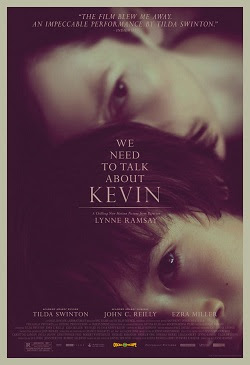 1. We Need to Talk About Kevin (directed by Lynne Ramsay). This film is impossibly twisted, unmistakably unsettling, and far beyond just "dark." Often picking my "favorite" films just comes down to the visceral feeling a film gives me. After all, a truly effective film is the kind of film that literally gives you chills, or overwhelming emotion that lingers hours, days, sometimes weeks upon seeing it. So it was a no-brainer for me to place We Need to Talk About Kevin firmly at the top after experiencing what can only be described as a "my skin is crawling" moment during the closing credits. This film is NOT for everyone. For example: children, people interested in seeing movies to escape / feel good, or people who would not like to be aware of the irreversibly fucked-up scenario of raising a child with serious psychological problems. So its audience is a little limited.
The deranged insanity of the demon-child in question "Kevin" is actually played by three actors at different stages of his life: toddler, adolescent, and teen. While the adolescent Kevin has the most screen time, it will undoubtedly be the teen Kevin (played by Ezra Miller) who will give you death-stares in your nightmares. In fact, it's not just his performance that stands out as exceptional, but Tilda Swinton's performance as his mother Eva. The complex emotions of Eva that drive the fractured narrative through its depraved story of the constant search for a normal life catapult this film into a territory of universal fear and the doubt of one's abilities as a human. It's a rough ride psychologically, but this film is dementedly visceral and not to be missed by anyone willing to stomach it.
Cross-published on Dominic Mercurio's personal blog.
 To paraphrase the Borg, resisting lists is futile. My resistance has whittled down to a rhythm. As the year draws to a close, first—to fulfill my commitment to the San Francisco Film Critics Circle (SFFCC)—I review all the films that achieved theatrical distribution during the course of the calendar year (since those are the only films the Circle is allowed to consider). This remains a frustrating enterprise because most of the films on that list are studio properties and are rarely the festival fare I tend to prefer. It's akin to "liking" political officials elected through corporate campaign funds. It's a very narrow choice and, perhaps, that's why it feels misleadingly passionate. As is well known, many fine foreign films never achieve U.S. distribution, though this year I'd have to say there were more accomplished documentaries than in years past. For those of you interested in what films achieved U.S. distribution, I refer you to Mike D'Angelo's ongoing tally.
Next, from that list of U.S.-distributed films, I nominate five films in ranked order in 12 basic categtories. This year that broke down as follows:
BEST ACTOR
1. Jean Dujardin (The Artist)
2. Adriano Luz (Mysteries of Lisbon)
3. Eric Elmosnino (Gainsbourg: A Heroic Life)
4. Michael Shannon (Take Shelter)
5. Andreas Lust (The Robber)
BEST ACTRESS
1. Jeong Hie-Yung (Poetry)
2. Tilda Swinton (We Need To Talk About Kevin)
3. Berenice Bejo (The Artist)
4. Sibell Kekilli (When We Leave)
5. Michelle Williams (My Week With Marilyn)
BEST SUPPORTING ACTOR
1. Juan Carlos Aduviri (Even the Rain)
2. Viggo Mortensen (A Dangerous Method)
3. Nick Damici (Stakeland)
4. Trevor St. John (In the Family)
5. Albert Brooks (Drive)
BEST SUPPORTING ACTRESS
1. Josiane Balasko (The Hedgehog)
2. Shalene Woodley (The Descendants)
3. Janet McTeer (Albert Nobbs)
4. Charlotte Rampling (Melancholia)
5. Carrey Mulligan (Drive)
BEST SCREENPLAY, Original
1. The Artist (Michel Hazavanicius)
2. Melancholia (Lars Von Trier)
3. Margin Call (J.C. Chandor)
4. Meek's Cutoff (Jonathan Raymond)
5. Midnight In Paris (Woody Allen)
BEST SCREENPLAY, Adapted
1. Mysteries of Lisbon (Carlos Saboga)
2. Carnage (Yasmina Reza / Roman Polanski)
3. Jane Eyre (Moira Buffini)
4. The Descendants (Nat Faxon, Jim Rash & Alexander Payne)
5. Drive (Hossein Amini)
BEST CINEMATOGRAPHY
1. The Artist (Guillaume Schiffman)
2. Mysteries of Lisbon (Andre Szankowski)
3. Melancholia (Manuel Alberto Claro)
4. We Need to Talk About Kevin (Seamus McGarvey)
5. Tinker, Tailor, Soldier, Spy (Hoyte van Hoytema)
BEST ANIMATED FEATURE
1. The Adventures of Tin Tin (Steven Spielberg)
2. Puss In Boots (Chris Miller)
3. Rango (Gore Verbinski)
4. A Cat In Paris (Alain Gagnol & Jean-Loup Felicioli)
5. Rio (Carlos Saldanha)
BEST FOREIGN LANGUAGE PICTURE
1. Mysteries of Lisbon (Raul Ruiz)
2. Poetry (Lee Chang-dong)
3. Le Quattro Volte (Michelangelo Frammartino)
4. Uncle Boonme Who Can Recall His Past Lives (Apichatpong Weerasethakul)
5. A Separation (Asghar Farhadi)
BEST DOCUMENTARY
1. Nostalgia For the Light (Patricio Guzman)
2. Buck (Cindy Meehl)
3. We Were Here (David Weissman)
4. Senna (Asif Kapadia)
5. Cave of Forgotten Dreams (Werner Herzog)
BEST DIRECTOR
1. Raul Ruiz (Mysteries of Lisbon)
2. Michel Hazavanicius (The Artist)
3. Lars Von Trier (Melancholia)
4. Lynne Ramsey (We Need to Talk About Kevin)
5. Terrence Mallick (Tree of Life)
BEST PICTURE
1. The Artist (Michel Hazavanicius)
2. Melancholia (Lars Von Trier)
3. Tree of Life (Terrence Mallick)
4. Drive (Nicolas Winding Refn)
5. We Need to Talk About Kevin (Lynne Ramsey)
Needless to say, none of my first choices were granted honors at the Circle's final vote in early December. Ah well. Subjectivity can be a bitch. That final tally can be found at the SFFCC website.
As for my personal top 10, the list is not so divergent as in years past. Perhaps that reflects a tighter window between festival presence and theatrical distribution? Perhaps my tastes are becoming more homogenized? I can't really say; but, here are my top 10, in alphabetical order.
 The Artist (Michel Hazavanicius). I first caught this film at its Special Presentation at the Toronto International Film Festival, fresh from Jean Dujardin's Best Actor win at Cannes. It was the only film I heard applauded by the international press during its festival P&I screening, which speaks to the film's undeniable appeal as entertainment. Within what parameters entertainment can be gauged as artistic achievement seems to have become the critical concern of late, however, as The Artist tussles with Terrence Malick's The Tree of Life for top position in year-end top 10 lists. Is a film that hits all its production marks and fulfills its creative intentions equally "artistic" as, let's say, a film like Tree of Life, which admittedly overreaches?
There are some who argue that The Artist is simply a pastiche, and that Hazavanicius is less an auteur than a proficient craftsman; but, I agree more with Michèle Maheux who argued in her TIFF program note that The Artist avoids "the trap of pastiche through a sincere appreciation of the cinematic possibilities offered by classic silent film." That's not saying it's trying to be a classic silent film, which some critics use to dismiss the film's artistic merit ("It's not as good as Murnau's Sunrise so, therefore, it's not any good"). Frankly, I find it silly to think The Artist is trying to be a classic silent film, even as it respectfully honors the conventions of the medium and resurrects them in a quite modern configuration. The Artist brilliantly reduces the running gag of Lina Lamont's grating speaking voice in Singing in the Rain, for example, to one transnational comic flourish at film's end when Jean Dujardin speaks in a thick French accent through a dashingly disarming grin. It's by the grace of the alphabet that The Artist is at the top of my list, but it would probably be there anyways. My interview with Michel Hazavanicius can be found here.
 Buck (Cindy Meehl). This heartfelt documentary portrait of "horse whisperer" Buck Brannaman was the first film I caught after relocating to Boise, Idaho. It played at Boise's Flicks Theater as a benefit screening for the Idaho Buckaroo Project to an audience largely composed of buckaroos who had come into town with their families. This was a perfect way to view this film, which explores the ways in which childhood trauma is transformed into personal and professional triumph. My transcript of that benefit event and my interview with Andrea Scott from the Idaho Buckaroo Project can be found here.
 Gold & Copper / Tala Va Mes (Homayoun Asadian). This powerful Iranian domestic drama screened at the San Francisco International Asian American Film Festival. Seyed, a mullah-in-training, relies on his wife Zahra to run the household and earn income so that he can devote his time to studying the Koran. When Zahra becomes ill with multiple sclerosis, Seyed is forced to defeat his own expectations and to seek resources within himself to become a better husband and father. Through the lens of personal melodrama, Gold & Copper addresses the gender inequalities traditionally woven into Muslim society, ameliorating them with compassion.
 In the Family (Patrick Wang). In full disclosure, I have only seen this film on screener and am keen to watch it projected when its festival trajectory brings it to San Francisco next Spring. Wang centers his lead performance in a film he has both written and directed. What starts out as a deceptively gay narrative transforms into a deeply moving custody battle between a boy's blood family and his adoptive Asian American father. By taking the time to flesh out his narrative, Wang achieves masterful grace notes. My interview with Patrick Wang can be found here.
Melancholia (Lars Von Trier). For its rapturous slo-mo prelude alone, Melancholia achieves merit. Here is my expanded write-up from the film's TIFF screening.
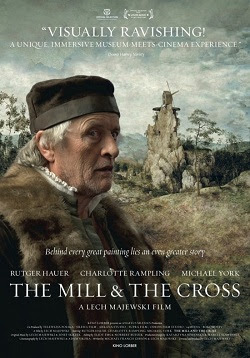 The Mill and the Cross (Lech Majewski). The SFFCC awarded The Mill and the Cross its special citation for "under-appreciated independent cinema" largely due to the championing efforts of Variety colleague Dennis Harvey. I backed him up 100% on this one. I've never quite seen a film like The Mill and the Cross. It takes you into the middle of Pieter Bruegel the Elder's 1564 painting "The Way to Calvary" and allows for a visceral experience of the painting's compositional infrastructure. This is a master work and my transcript of Majewski's introduction at the film's San Francisco International Film Festival screening can be found here.
 A Separation / Jodái-e Náder az Simin (Asghar Farhadi). That two Iranian family dramas have ended up on my top 10 list in the same year seems nearly remarkable in the face of government censure of Iranian filmmaking. Comparable to Gold & Copper in its deconstruction of gendered traditions, A Separation uses a dissipating marriage and the struggle for a daughter's custody to explore the exacting edge of justice in the face of shifting truth. Incredibly nuanced, I predict A Separation will be a leading contender in this year's Academy Awards® foreign language category. If it's not, then there is no justice.
 The Tiniest Place / El Lugar Más Pequeño (Tatiana Huezo). Another remarkable coup for the programming team of this year's San Francisco International Film Festival, Huezo's splendid documentary of the resuscitation of a Salvadorian village ravaged by war speaks to the strength of the human spirit to overcome horrific adversity. Perseverance heals. A transcript of my interview with Huezo is pending.
Tree of Life (Terrence Malick). As mentioned earlier, this film doesn't totally succeed; but, when it does—as in its nested narrative of a troubled family—it's as good as anything Malick has ever done, though arguably not his best. I'm a loud minority here (the SFFCC gave it three of its top awards) and add Tree of Life to my list with admitted reservations. Unfortunately, the grace of the alphabet doesn't help me in situating this film at the tail end of my 10.
 We Were Here (David Weismann & Bill Weber). As a long-time survivor of the HIV virus (I seroconverted in 1986), I can vouch for the fact that most people consider the AIDS crisis to be over. Nothing could be further from the truth. Weismann and Weber's look at the years when the Bay Area's heart burst into flames is given added poignancy for focusing on a handful of survivors from that tumultuous time. This film was extremely difficult for me to watch. It opened up wounds I thought had scarred over. The difference between now and then is that I have come to understand that the value of survivor's guilt is simply to remember and never forget. I'm grateful Weismann and Weber have never forgotten. I never will. My body's struggle to survive reveals memory as a perpetual activist.
 My world is shaped by conversations. The process of becoming myself has long been influenced by my understanding of others and—of more recent relevance—my understanding of film has been influenced by the personalities that create the social weave of film culture. Actors are, admittedly, my least favorite group of people to interview and I'm grateful that I don't have to rely upon celebrity journalism to put meat and potatoes on my table. If ever a Faustian bargain has been struck in the world of the moving image, it is the proverbial press junket where profit-minded studio publicists prod journalists into burning cauldrons of promotional conformity. Writing remains a purgatorial activity, but—eschewing the press junket—it's now no longer sheer hell.
Without question, a focus on the auteurial has determined my choices of who to talk to and, thus, directors have been my strongest suit in recent years, partly because I often find the creative process behind a film to be as interesting as the film itself. In a recent interview regarding his quarter of a century fascination with choreographer Pina Bausch, Wim Wenders stated: "One of the few fields of adventure left on this planet is the creative process." I like that statement very much because it comports with my pleasure: conversation as adventure. If my world is indeed shaped by conversations, lately I have come to feel mine is an adventurous existence because it is so intimately linked to the creative processes of others. Nothing is more satisfying.
2011 marked a pronounced shift in my film coverage in that I decided to stop relying exclusively on publicists to secure access to talent. I feel blessed that—at this stage in the game—I'm often able to contact talent directly and, thereby, time my work to immediate interests rather than the tethered dates of theatrical rollout. Based upon my working record, it's become easier to solicit conversations with individuals who interest me. But before I start sounding too much like I'm biting the hand that feeds me, there are specific publicists I very much enjoy working with. Karen Larsen and her staff at San Francisco's Larsen Associates spring immediately to mind as exemplar publicists who not only do their work but allow me to do mine. Christine Slaton at Terry Hines & Associates / Allied Advertising is always a complete pleasure to work with and was the first publicist to invite me to interview a director in front of an audience, for which I remain sincerely grateful. Festival publicist Lina Rodriguez has helped me mine the somewhat unwieldy Toronto International Film Festival for its Latin American treasures and underscored the art of collaboration possible between publicist and journalist.
Another notable shift in this year's coverage is a growing interest in the craft of critical writing itself. I'll always be interested in directors, but lately I'm more interested in film writers and academic authors. I'm learning so much from comparing notes with colleagues and pursuing academic themes that arch over the filmmaking process. I'm looking forward to what 2012 will offer in that regard.
All that being said, here are my 10 favorite conversations of the year, arranged alphabetically.
* * *
 Mario DeGiglio-Bellemare. While doing research on Tod Browning's The Unknown (1927), I chanced upon the work of Montreal-based writer Mario DeGiglio-Bellemare and we danced around each other on Facebook for a couple of years before finding the opportunity to finally sit down to talk. That opportunity arose when I was invited to attend Montreal's Fantasia Film Festival and I'm grateful to Mario for suggesting we seize that chance. Mario's theological and political interests have enrichened my understanding of genre in general and the horror genre specifically.
Thomas Elsaesser. Perhaps the most influential conversation I've had this year, Elsaesser snapped me out of my obsession with all things upcoming and new to consider the value of historical context and the film canon. Brilliant to the marrow, I listened raptly to Elsaesser's thoughts on film festival studies and national cinemas. My thanks to Danny Kasman at MUBI for publishing the bulk of our brunch conversation, supplemented by a spillover piece on The Evening Class.
 Diamanda Galás. One of the most compelling artists I've ever met has been Philip-Dimitri Galás and having the opportunity to remember him with his sister Diamanda was a sheer joy. Diamanda ain't no slouch either, evidenced by the rather electrifying Schrei 27.
 Todd Haynes. As celluloid capsizes into digital and the in-cinema experience capsizes into home viewing, observing master filmmaker Todd Haynes shift into a new phase of the moving image was thoroughly intriguing. His exploration of long form work in the HBO miniseries Mildred Pierce was revelatory of the directorial opportunities and spectatorial pleasures that await us in future years. Here I must shout out to HBO publicist Ashley Mariner for her expert facilitations.
Michel Hazavanicius. Some consider The Artist a confectionary pastiche. I consider it a perfect work of artistic entertainment and a sly reconfiguration of the silent film. I couldn't convince my colleagues at the San Francisco Film Critics Circle to pay the film any honor; but, I've got my fingers crossed for the Academy Awards®. This was my second conversation with Michel, who remains charming, handsome, funny and intelligent.
 Dee James. My mamacita proved as fascinating as any film director or film scholar on the subject of how movies influence and shape our lives. I learned more about her and our family through her recollections on movies from her childhood into the '70s. Our conversation was the crowning touch to a year-long project on "Mothers & Movies", which joined a portfolio of entries published at MUBI, SF360, and The Evening Class.
 Dave Kehr. Unfortunately, my conversation with seasoned film critic Dave Kehr is not available on-line and—by that very fact—signifies a further shift in my film writing. As one of the first accredited online journalists in the Bay Area, it didn't take very long to become obsolete. Within a mere seven years, thousands of online journalists now compete to say the very same thing at the same time. No doubt this partially motivated my strategy to seek out conversations that might differ and veer away from the din and clamour of online film coverage (and suddenly publishing in print took on a challenging novelty). On the occasion of the University of Chicago Press publication of When Movies Mattered: Reviews From a Transformative Decade, I sought out a conversation with Dave, motivated by his comment: "At the moment, American film criticism seems divided (with some exceptions) between two poles: quick-hit, consumerist sloganeering on Internet review sites and television shows, and full-bore academia, with its dense, uninviting thickets of theoretical jargon." (2011: 2) Chris Fujiwara and I had already discussed the need for film criticism that addresses a region somewhere midway between these two poles and so I appreciated the chance to explore the theme with Dave. Our conversation hits the newsstands in Issue 53 of Film International (Vol. 9, No. 5). A shoutout to Liza Palmer, my editor at Film International, for taking a recent interest in my work, particularly my conversations with film critics.
 Jonathan Marlow. Yet another shift in my 2011 film writing is from theatrical to streaming. This has been partly predicated not only by the advance of current to future trends, but my geographic move away from the San Francisco Bay Area to a new "retirement" home in Boise, Idaho where—believe it or not—there are no press screenings. This is, of course, a curse and a blessing at the same time. Though I am predominantly a film festival enthusiast, and continue to experience film festival fare here and there, I've had to find new ways of watching the moving image and so—with the acquisition of a kick-ass 55" SmartTV—I've signed up to Netflix Instant Watch, VUDU, and Hulu Plus. This has actually been a rather satisfying development. Not only does this free me from the pressures of theatrical rollout (and publicists with their pitchforks) but entices me to watch, let's say, the Criterion library on Hulu Plus (many entries in high definition). This viewing experience is better than screeners or DVDs and, often, better than digital projections in movie houses. The future has arrived. And no one has had more influence on that arrival than Jonathan Marlow, who started out at VUDU (he's responsible for their daily dollar special), developed Greencine, and is currently turning Fandor into a must-stop for the discerning cinephile. Not only is Jonathan informed on these trends, but he's genuinely funny and always a pleasure to lunch with each time I'm back in San Francisco. It should be acknowledged here that it was also Jonathan's interview with Apichatpong Weerasethakul that motivated me to begin interviewing directors oh so many moons ago and I look forward to working with him in future years by contributing entries to Keyframe: Fandor's repository of critical essays.
 Jonathan Rosenbaum. What a complete pleasure it was to speak with Jonathan Rosenbaum, who Girish Shambu has aptly characterized as "arguably the most highly respected English-language film critic in global film culture." My conversation with Jonathan was published in Issue 51 of Film International (Vol. 9, No. 3, pp. 84-93). Again, that is not available online, but I posted an excerpt of that transcript on The Evening Class, while exploring all that was disposable and discontinuous.
 Patrick Wang. Last, but certainly not least, is my conversation with actor-writer-director Patrick Wang whose remarkable directorial debut In the Family toggled that switch inside of me that says one of the key responsibilities of a film journalist is to champion the small film he believes in. And I believe in In the Family, which remains one of the most mature and nuanced narratives I've seen in some time. After having had his film rejected by over 30 film festivals, Wang strategically self-distributed In the Family with a run at New York's Quad Cinema, which resulted in an extended run, an Independent Spirit nomination, and film festival programmers now stumbling over their feet to slot the film in upcoming editions. I won't say which Bay Area film festival has tagged the film until they've officially announced it; but, will say it was pleasurable to watch a few festivals wrestle for the privilege. Ultimately, I guess that's what co-presentations are all about.
Stephen Malkmus and The Jicks: "Senator"
R.E.M.: "Mine Smell Like Honey"
R.E.M.: "Alligator_Aviator_Autopilot_Antimatter"
Beth Ditto: "I Wrote the Book"
Hunx and his Punx: "That's the Curse of Being Young"
PJ Harvey: "The Words That Maketh Murder"
PJ Harvey: "Written On the Forehead"
Fountains of Wayne: "Someone's Going to Break Your Heart"
The Go! Team: "Secretary Song"
Beastie Boys: "Don't Play No Game That I Can't Win"
Rye-Rye (feat. M.I.A.): "Sunshine"
Thurston Moore: "Circulation"
 10. Lotus Eaters (written & directed by Alexandra McGuinness). When I first saw the trailer for this film I thought to myself "looks sorta like that TV show Skins" (of which I mean the original British version ... don't even get me started on the American MTV bullshit remake) and I wasn't entirely off base. This film is sex, drugs, and rock and roll—plain and simple; but it does so with heart and searing visual flair. It all made sense in the Q&A after the screening when writer / director Alexandra McGuinness explained that she had a background as a stylist and a large interest in fashion, because the way this film is photographed is a bit reminiscent of classic fashion photography. Lotus Eaters follows a group of young upper class Brits living their life in that aimless cycle that we all at some point or another fell into in our teenage years. At the center is a blooming yet turbulent relationship between two of the main characters Alice and Charlie, the latter of which has a bit of a drug problem.
 9. The Tree of Life (written & directed by Terrence Malick). I would just as quickly warn people to never watch this film almost as much as I would plead others to do so. Its glacial pacing, stream-of-consciousness structure, over two-hour runtime, and minimalistic story will probably have unsuspecting filmgoers instinctually reaching into their pockets for a quick few rounds of Angry Birds as they pan it for being too artsy. I often wonder if films of this nature will slowly become extinct as our collective attention spans dwindle into the length of adorable-kitten videos on YouTube.
 8. The Girl With The Dragon Tattoo (directed by David Fincher). It's not often phenomenal filmmakers have turn around time between films as quickly as Fincher. After releasing The Social Network in October 2010, he's already back with his next project which slides snuggly in next to other Fincher classics like Se7en, Fight Club, Zodiac, and Curious Case of Benjamin Button. Yeah, this guy has certainly been busy making some of the greatest films of the last 10 years. It's well known that Dragon Tattoo is a remake of a 2009 Swedish film [Män som hatar kvinnor], leaving many to wonder just why the film is so necessary. While I more often than not join the rally of "leave great foreign films alone!" (as I did when they remade the brilliant Swedish film Let The Right One In), I can't help but make an exception if the film is helmed by a visionary director such as Fincher.
 7. Submarine (written & directed by Richard Ayoade). OK, I can't argue it. We've all seen a quirky coming-of-age love story before, however Submarine manages to rise above its own framework to offer a comedy with outstanding characters, emotional depth, and a so-British-it-hurts style humor for the 2011 generation. The film sinks its teeth deep into the visual medium it's presented in with a fresh and lively style. Consistent across the writing, cinematography, directing, and editing the film hits its tone so perfectly on all ends it becomes hard not to be swept away by its heightened reality. Fifteen-year-old Oliver Tate is wise beyond his years, and his hilarious introspective internal rants give us a great sense of the depth of his character. Character is something this film packs in by the tons. Each player in this tale has a perfect array of flaws, quirks, and oddities that make each scene a joy to watch as more layers are peeled back. A classic love story told in an unconventional way. Its odds and ends make this an addictive watch.
 6. Hesher (directed by Spencer Susser). It's hard to pinpoint exactly what about this depraved dark comedy I found so outrageously hilarious. In many ways, it's the sum of its parts, but truly the comedy orbits the hysterically straight-faced performance of Joseph Gordon-Levitt as the aimless stoner metal-head deadbeat Hesher. His unapologetically don't-give-a-flying-fuck attitude accidentally finds its way into a grieving family of three mourning the loss of mama-bear. Its dark tone is played for laughs on just about every turn of the story, and does so without shame. Despite its mostly bleak tone, Hesher keeps things energetic and entertaining with seriously fantastic performances, killer writing, and well-rounded characters. Hesher is filmmaking turned up to 11. In fear of over-complicating things, it's easiest to say: this film fucking rocks.
 5. Martha Marcy May Marlene (written & directed by Sean Durkin). Don't call it a cult film. OK, you can if you want, but—interestingly— director Sean Durkin prefers that the misguided and reclusive group that begins molding Martha's mind to do the "right" thing unconditionally not be so attached to the classical definition of a "cult." I think what he's really getting at is that Martha Marcy May Marlene is a "cult" film without the over-the-top cheesy elements involved. Don't expect any sacrificial lambs, speaking in tongues, and velvet robes in this one. This is a group that could very well exist in our modern world, and it's unnervingly easy to see how someone in a vulnerable state of mind (i.e., Martha) could find solace and a sense of community among her new-found brothers and sisters. This is crucial in understanding just what makes MMMM so powerful and truly chilling. Powerhouse performances from Elizabeth Olsen as Martha as well as John Hawkes as Patrick, the "cult" leader, make this a serious knockout of a feature-length directorial debut. The film is firmly grounded in reality, while Martha struggles to understand her own. Smoothly transitioning between her life since escaping the cult and the deep-rooted memories from when she was still a part of it makes you as the audience sometimes question what is a dream, a memory, or current reality. The audience is constantly trying to make sense of the events and what it will mean for Martha's transition to life in our normal society. You never really know more than Martha, down to this brilliant film's final frame.
 4. The Future (written & directed by Miranda July). Miranda July is odd. If you haven't seen her video blog, watched her interviews, listened to her audio-stories/spoken word albums, or seen her debut feature Me and You and Everyone We Know (in which, as with The Future, she wrote, directed, and starred) then it may be a bit hard to judge whether The Future is going to be your thing or not, but suffice it to say that it's another addition perfectly in line with her off-kilter humor mixed with child-like wonder. In other words it's brilliant. Describing the plot of the film actually doesn't do much good in enhancing your understanding of what this film is truly about. Sure, it involves love, modern-day dilemmas of technology, existential mid-life thoughts, and a talking cat—but really this film is more than about that. Absorbing the film into your mind offers you a rather insightful tale of ... well ... life. Despite its abstracted fun-house mirror presentation, this film at core is a grounded and relatable human story. Miranda July has often been discredited as being "weird for weird's sake" but what makes The Future so inciting is wondering how Miranda July is going to present the next scene. Her unique penchant for storytelling makes her work less about trying to figure out WHAT will happen next, but more so HOW it will happen. Call it weird, but I call it transcendent.
 3. Melancholia (written & directed by Lars Von Trier). "A beautiful film about the end of the world" is this film's tagline, and there truly isn't a better way to sum it up. When was the last time you saw a film about the end of the world that doesn't show people rushing into stores to stock up on supplies, frantic newscasters warning people to stay inside, the Golden Gate Bridge being destroyed, impossible scientific experiments like lasers that can destroy asteroids without any debris entering Earth's atmosphere, or Bruce Willis? In Lars Von Trier's (Antichrist, Dogville) latest film, he explores the real emotions of a handful of characters as they begin to come to terms with the fact that their lives, and the lives of all human beings on Earth might soon be coming to an end. The uncertainty of the situation and the wide personalities of the four main characters cast a relatable shadow in the audience's direction. Would you be the one to doubt it until the last minute? Accept it and enjoy your final moments? Panic and convince yourself there must be a way to stop it? Fantastic performances from Kirsten Dunst and Charlotte Gainsbourg blended with the unmistakable cinema-verite style of Lars Von Trier's eye as well as his latest obsession with super-slo-mo imagery make this film remarkably powerful and existential.
 2. Life in a Day (directed by Kevin MacDonald). It's always refreshing when films are able to take you beyond the simple presentation of a story, and Life in a Day does just that while still remaining captivating and interesting. Life in a Day essentially boils down to being a 95-minute video time capsule of what life was like for humans around the world on June 24, 2010. The result is both fascinating and deeply thought-provoking. Pieced together from thousands of clips that were submitted by people from around the world filming their day, this is a project unlike any other before it. By eliminating the arguably invasive film crew from this documentary, and handing the camera over to the subjects themselves (i.e., everyone on Earth) we get undeniably candid and personal moments that would otherwise be stifled by a bunch of film dudes making sure the shot looks good on the other side of the room. When I say this film is beautiful, I'm not talking about the camerawork, lighting, or visual effects—I'm talking about the deep undercurrent of human feeling sewn throughout the film's running time. In watching this film, you're sure to find connections to your own life and raise some questions about how you're living it. It's an experience that will happen for those willing to open themselves up to it. This film rewards audience members who allow this film to absorb into their minds. It turns out it's one of the most rewarding experiences that film has provided this year.
 1. We Need to Talk About Kevin (directed by Lynne Ramsay). This film is impossibly twisted, unmistakably unsettling, and far beyond just "dark." Often picking my "favorite" films just comes down to the visceral feeling a film gives me. After all, a truly effective film is the kind of film that literally gives you chills, or overwhelming emotion that lingers hours, days, sometimes weeks upon seeing it. So it was a no-brainer for me to place We Need to Talk About Kevin firmly at the top after experiencing what can only be described as a "my skin is crawling" moment during the closing credits. This film is NOT for everyone. For example: children, people interested in seeing movies to escape / feel good, or people who would not like to be aware of the irreversibly fucked-up scenario of raising a child with serious psychological problems. So its audience is a little limited.


