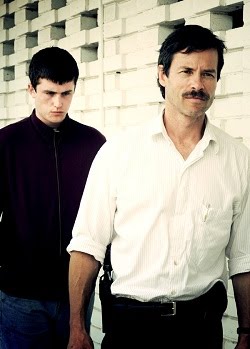
Dominic Mercurio has been an insightful intern for The Evening Class this past year, writing on the Disposable Film Festival's Bay Area premiere of Kevin MacDonald's Life In A Day and dispatching from the Palm Springs International ShortFest and the Mill Valley International Film Festival. It's with great pleasure that I offer up his year-end list, in reverse order.
* * *
 10. Lotus Eaters (written & directed by Alexandra McGuinness). When I first saw the trailer for this film I thought to myself "looks sorta like that TV show Skins" (of which I mean the original British version ... don't even get me started on the American MTV bullshit remake) and I wasn't entirely off base. This film is sex, drugs, and rock and roll—plain and simple; but it does so with heart and searing visual flair. It all made sense in the Q&A after the screening when writer / director Alexandra McGuinness explained that she had a background as a stylist and a large interest in fashion, because the way this film is photographed is a bit reminiscent of classic fashion photography. Lotus Eaters follows a group of young upper class Brits living their life in that aimless cycle that we all at some point or another fell into in our teenage years. At the center is a blooming yet turbulent relationship between two of the main characters Alice and Charlie, the latter of which has a bit of a drug problem.
The movie spirals around their lives as if a fly on the wall is taking you from one situation to the next, whether it be a wild party with vodka-baths, or buying ridiculous clothing accessories. The movie is lean at 78 minutes, and is light on plot but heavy on character. It was the last act of the film that had me hooked. Once the wave finally crashes down on the never-ending party these lads live, it begins to take a more pensive route; one that ultimately ends up making this film a wild ride. Top that off with Alexandra's seriously kick-ass taste in music (I'm talking best soundtrack of the year) and seemingly instinctual mastery of blending visuals with music and you end up with a fascinating gem of a feature debut.
 9. The Tree of Life (written & directed by Terrence Malick). I would just as quickly warn people to never watch this film almost as much as I would plead others to do so. Its glacial pacing, stream-of-consciousness structure, over two-hour runtime, and minimalistic story will probably have unsuspecting filmgoers instinctually reaching into their pockets for a quick few rounds of Angry Birds as they pan it for being too artsy. I often wonder if films of this nature will slowly become extinct as our collective attention spans dwindle into the length of adorable-kitten videos on YouTube.
At any rate, this film propelled me into a rather pensive funk for the proceeding few days after seeing it. What ended up being so note-worthy was its unbelievably accurate depiction of how we remember our lives, and more specifically our childhood. Textures, smells, inconsequential moments, or snapshots of seeing the world when you were two feet tall. These moments bubble to the surface, often without too much context of what came before or after it, or even what age you were. The Tree of Life plays out much in the same way. After the introduction of a 1950's family grieving a loss, we are transported back in time ... you know, to the Big Bang. Upon witnessing the very formation of life itself, we eventually catch back up to what most would consider the main "plot line" of this freeform existential journey. The film is visually astounding. I mean serious eye candy. Captured images of profound greatness. Do you get what I'm saying? Pop this one in after a nice bubble bath, or perhaps a few hours of meditation because this isn't a film that's gonna quiet a restless mind.
 8. The Girl With The Dragon Tattoo (directed by David Fincher). It's not often phenomenal filmmakers have turn around time between films as quickly as Fincher. After releasing The Social Network in October 2010, he's already back with his next project which slides snuggly in next to other Fincher classics like Se7en, Fight Club, Zodiac, and Curious Case of Benjamin Button. Yeah, this guy has certainly been busy making some of the greatest films of the last 10 years. It's well known that Dragon Tattoo is a remake of a 2009 Swedish film [Män som hatar kvinnor], leaving many to wonder just why the film is so necessary. While I more often than not join the rally of "leave great foreign films alone!" (as I did when they remade the brilliant Swedish film Let The Right One In), I can't help but make an exception if the film is helmed by a visionary director such as Fincher.
But enough about all that, this movie is badass. Rooney Mara as Lisbeth, the damaged and strong anti-heroine, glues your eyes to the screen and demands your attention in one of the year's best performances. As far as tone goes, this mystery thriller focuses much of its drama on the slow unraveling of the murder mystery at its core and refrains from loud set-piece-destroying action sequences. It's very much akin to Fincher's more recent work in Zodiac and The Social Network where he's been seriously flexing his "make long dialogue scenes way more gripping then any standard action scene would be." To top it off, his frequent cinematographer Jeff Cronenweth paints stunning visuals into each frame with his uncanny eye for visual perfection. Trent Reznor's score is yet again a perfect pairing to the visuals, and keeps the sense of menace and dread up even when really all we're watching is our main characters flipping through old news articles and investigating every corner of a photograph. That is what filmmaking is all about.
 7. Submarine (written & directed by Richard Ayoade). OK, I can't argue it. We've all seen a quirky coming-of-age love story before, however Submarine manages to rise above its own framework to offer a comedy with outstanding characters, emotional depth, and a so-British-it-hurts style humor for the 2011 generation. The film sinks its teeth deep into the visual medium it's presented in with a fresh and lively style. Consistent across the writing, cinematography, directing, and editing the film hits its tone so perfectly on all ends it becomes hard not to be swept away by its heightened reality. Fifteen-year-old Oliver Tate is wise beyond his years, and his hilarious introspective internal rants give us a great sense of the depth of his character. Character is something this film packs in by the tons. Each player in this tale has a perfect array of flaws, quirks, and oddities that make each scene a joy to watch as more layers are peeled back. A classic love story told in an unconventional way. Its odds and ends make this an addictive watch.
 6. Hesher (directed by Spencer Susser). It's hard to pinpoint exactly what about this depraved dark comedy I found so outrageously hilarious. In many ways, it's the sum of its parts, but truly the comedy orbits the hysterically straight-faced performance of Joseph Gordon-Levitt as the aimless stoner metal-head deadbeat Hesher. His unapologetically don't-give-a-flying-fuck attitude accidentally finds its way into a grieving family of three mourning the loss of mama-bear. Its dark tone is played for laughs on just about every turn of the story, and does so without shame. Despite its mostly bleak tone, Hesher keeps things energetic and entertaining with seriously fantastic performances, killer writing, and well-rounded characters. Hesher is filmmaking turned up to 11. In fear of over-complicating things, it's easiest to say: this film fucking rocks.
 5. Martha Marcy May Marlene (written & directed by Sean Durkin). Don't call it a cult film. OK, you can if you want, but—interestingly— director Sean Durkin prefers that the misguided and reclusive group that begins molding Martha's mind to do the "right" thing unconditionally not be so attached to the classical definition of a "cult." I think what he's really getting at is that Martha Marcy May Marlene is a "cult" film without the over-the-top cheesy elements involved. Don't expect any sacrificial lambs, speaking in tongues, and velvet robes in this one. This is a group that could very well exist in our modern world, and it's unnervingly easy to see how someone in a vulnerable state of mind (i.e., Martha) could find solace and a sense of community among her new-found brothers and sisters. This is crucial in understanding just what makes MMMM so powerful and truly chilling. Powerhouse performances from Elizabeth Olsen as Martha as well as John Hawkes as Patrick, the "cult" leader, make this a serious knockout of a feature-length directorial debut. The film is firmly grounded in reality, while Martha struggles to understand her own. Smoothly transitioning between her life since escaping the cult and the deep-rooted memories from when she was still a part of it makes you as the audience sometimes question what is a dream, a memory, or current reality. The audience is constantly trying to make sense of the events and what it will mean for Martha's transition to life in our normal society. You never really know more than Martha, down to this brilliant film's final frame.
 4. The Future (written & directed by Miranda July). Miranda July is odd. If you haven't seen her video blog, watched her interviews, listened to her audio-stories/spoken word albums, or seen her debut feature Me and You and Everyone We Know (in which, as with The Future, she wrote, directed, and starred) then it may be a bit hard to judge whether The Future is going to be your thing or not, but suffice it to say that it's another addition perfectly in line with her off-kilter humor mixed with child-like wonder. In other words it's brilliant. Describing the plot of the film actually doesn't do much good in enhancing your understanding of what this film is truly about. Sure, it involves love, modern-day dilemmas of technology, existential mid-life thoughts, and a talking cat—but really this film is more than about that. Absorbing the film into your mind offers you a rather insightful tale of ... well ... life. Despite its abstracted fun-house mirror presentation, this film at core is a grounded and relatable human story. Miranda July has often been discredited as being "weird for weird's sake" but what makes The Future so inciting is wondering how Miranda July is going to present the next scene. Her unique penchant for storytelling makes her work less about trying to figure out WHAT will happen next, but more so HOW it will happen. Call it weird, but I call it transcendent.
 3. Melancholia (written & directed by Lars Von Trier). "A beautiful film about the end of the world" is this film's tagline, and there truly isn't a better way to sum it up. When was the last time you saw a film about the end of the world that doesn't show people rushing into stores to stock up on supplies, frantic newscasters warning people to stay inside, the Golden Gate Bridge being destroyed, impossible scientific experiments like lasers that can destroy asteroids without any debris entering Earth's atmosphere, or Bruce Willis? In Lars Von Trier's (Antichrist, Dogville) latest film, he explores the real emotions of a handful of characters as they begin to come to terms with the fact that their lives, and the lives of all human beings on Earth might soon be coming to an end. The uncertainty of the situation and the wide personalities of the four main characters cast a relatable shadow in the audience's direction. Would you be the one to doubt it until the last minute? Accept it and enjoy your final moments? Panic and convince yourself there must be a way to stop it? Fantastic performances from Kirsten Dunst and Charlotte Gainsbourg blended with the unmistakable cinema-verite style of Lars Von Trier's eye as well as his latest obsession with super-slo-mo imagery make this film remarkably powerful and existential.
 2. Life in a Day (directed by Kevin MacDonald). It's always refreshing when films are able to take you beyond the simple presentation of a story, and Life in a Day does just that while still remaining captivating and interesting. Life in a Day essentially boils down to being a 95-minute video time capsule of what life was like for humans around the world on June 24, 2010. The result is both fascinating and deeply thought-provoking. Pieced together from thousands of clips that were submitted by people from around the world filming their day, this is a project unlike any other before it. By eliminating the arguably invasive film crew from this documentary, and handing the camera over to the subjects themselves (i.e., everyone on Earth) we get undeniably candid and personal moments that would otherwise be stifled by a bunch of film dudes making sure the shot looks good on the other side of the room. When I say this film is beautiful, I'm not talking about the camerawork, lighting, or visual effects—I'm talking about the deep undercurrent of human feeling sewn throughout the film's running time. In watching this film, you're sure to find connections to your own life and raise some questions about how you're living it. It's an experience that will happen for those willing to open themselves up to it. This film rewards audience members who allow this film to absorb into their minds. It turns out it's one of the most rewarding experiences that film has provided this year.
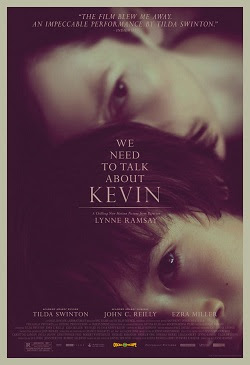 1. We Need to Talk About Kevin (directed by Lynne Ramsay). This film is impossibly twisted, unmistakably unsettling, and far beyond just "dark." Often picking my "favorite" films just comes down to the visceral feeling a film gives me. After all, a truly effective film is the kind of film that literally gives you chills, or overwhelming emotion that lingers hours, days, sometimes weeks upon seeing it. So it was a no-brainer for me to place We Need to Talk About Kevin firmly at the top after experiencing what can only be described as a "my skin is crawling" moment during the closing credits. This film is NOT for everyone. For example: children, people interested in seeing movies to escape / feel good, or people who would not like to be aware of the irreversibly fucked-up scenario of raising a child with serious psychological problems. So its audience is a little limited.
The deranged insanity of the demon-child in question "Kevin" is actually played by three actors at different stages of his life: toddler, adolescent, and teen. While the adolescent Kevin has the most screen time, it will undoubtedly be the teen Kevin (played by Ezra Miller) who will give you death-stares in your nightmares. In fact, it's not just his performance that stands out as exceptional, but Tilda Swinton's performance as his mother Eva. The complex emotions of Eva that drive the fractured narrative through its depraved story of the constant search for a normal life catapult this film into a territory of universal fear and the doubt of one's abilities as a human. It's a rough ride psychologically, but this film is dementedly visceral and not to be missed by anyone willing to stomach it.
Cross-published on Dominic Mercurio's personal blog.
 Back in the mid to late '70s, long before I began writing on film, I had recently arrived in San Francisco and was already enjoying its thriving movie culture, which at the time included the key titles in what was being dubbed the "Australian New Wave" (a resurgence of Australian filmmaking ranging from the mid-'70s into the '80s). I was hypnotized by the mysticism of such early Peter Weir films as Picnic At Hanging Rock (1975) and The Last Wave (1977), by Judy Davis's career-launching performance in My Brilliant Career (1979), and the ANZAC spirit of military epics like Breaker Morant (1980) and Gallipoli (1981).
With Gallipoli, Peter Weir scored his third box office success in a row and secured his credentials as one of Australia's leading auteurs. Gallipoli capitalized upon excerpts from Jean Michel Jarre's electronic masterpiece Oxygène (acknowledged by Thomas H. Green as the album that "led the synthesizer revolution of the Seventies") and catapulted the bracing good looks and cynical intensity of a young Mel Gibson into the international spotlight. Gibson had already staged his celebrity with the ozploitation classic Mad Max (1979), and followed that film's popularity with The Road Warrior (1981) and Mad Max Beyond Thunderdome (1985).
 The Australian New Wave was an incredible season of films whose impact has been recalled by the recent efforts of Blue-Tongue Films, a loose collective of inspired talents—namely the brother team Joel and Nash Edgerton, writer/director David Michôd, writer/director Spencer Susser and writer/director Luke Doolan. Their collaborative films have taken the festival award circuit by storm and satisfied American appetites with such offerings as The Square (a 2008 neo-noir thriller released in the U.S. in 2010), Miracle Fish (a 2009 short film nominated for Best Live Action Short at the 82nd Academy Awards®) and Animal Kingdom (2010), which won the world cinema jury prize at this year's Sundance Film Festival. Animal Kingdom opens stateside on August 13.
 Earlier this summer I had the chance to sit down with writer/director David Michôd to discuss his savage tale of Melbourne's criminal underbelly. Complaining at first that we were seated at a large table too far across from each other, Michôd said he felt he was at a job interview. Well, I joked, answer my questions correctly and you might get the job. Michôd chuckled and promised to do his best.
[This conversation is not for the spoiler-wary!]
* * *
 Michael Guillén: First of all, congratulations on your jury win at Sundance earlier this year and Animal Kingdom's critical success; it's actually doing quite well.
David Michôd: Thank you.
Guillén: I've been looking forward to talking with you—it feels fun for me—because earlier this year Joel and Nash Edgerton were in San Francisco with The Square, which premiered in the Bay Area at the Mostly British Film Festival and then, later, Joel came through town on The Square's press junket. I got to interview him at that time and he spoke quite kindly of you. What especially pleased me with the festival screening of The Square was that it was preceded by the short film Spider (2007), which I understand you wrote?
Michôd: Ah, yeah, yeah.
Guillén: I loved Spider; it's a great short.
Michôd: It's pretty effective.
Guillén: Absolutely. So that's where I wanted to start today. Your career has been built upon a set of celebrated short films and I was wondering if you could speak to the value of a young filmmaker or first-time filmmaker starting out with short films before chancing a first feature?
 Michôd: I kind of think there's no other way to start; I mean, practically speaking. When I wrote the first draft of Animal Kingdom, I thought I was writing it for someone else to direct because I couldn't imagine a world in which anyone would give me millions of dollars to make a movie. In those years when I was developing the script, I made a few shorts. I got so emotionally attached to the script of Animal Kingdom that I couldn't bear the idea of giving it to someone else to screw it up. I decided to make some shorts because people were responding to the screenplay but no one had any faith in me as a director and for obvious reasons: I had nothing to show. So I made a couple of shorts.
 The first one I made—years after film school—was Ezra White [2006], who was a minor character from Animal Kingdom. I gave him his own little world in which to play. I screwed it up. Principally, because it felt like I was testing things; it didn't feel like a short film. It had no point. The couple of shorts that I directed after that—Crossbow [2007] and Netherland Dwarf [2008]—were ones that I put all of my attention and energy into and they worked. They worked really well. On the back of Crossbow especially, Animal Kingdom went from feeling like a delusional pipe dream to something that didn't just feel doable; it felt inevitable. That was entirely because of the shorts I had made.
Guillén: In terms of timing, then, were the short films made after your stint as editor for Inside Film magazine?
 Michôd: The first one and Crossbow came right at the cusp of my leaving Inside Film. I knew that I wasn't going to stay. I'd never had any journalistic ambitions in the first place. It was just a job that I had stumbled into. I was incredibly glad that I did it because I learned so much about how the business works and met a lot of great people.
Guillén: That's what I was going to ask: similar to François Truffaut who started out as a film journalist and then moved into film directing, I was wondering if you found a value in having done the journalism first? Clearly you did?
Michôd: Yeah; but, it was funny. I had been to film school in Melbourne before I got that job at the magazine. So that job at the magazine felt very much like something I was doing in the meantime but—over the course of doing it—I got very involved in it. I was there all up for about six years but by the end I knew that I needed to leave.
 But those were just a couple of shorts that I wrote and directed myself. The ones that I wrote, like Spider and I Love Sarah Jane [2008] with Spencer Susser, for filmmakers starting out they were incredibly useful because they were all about experimentation. Even though I didn't direct those shorts, it was really useful for me to see how something translated from the page to the screen, to see where mistakes were made, and to see where things that I had written that I thought were necessary were actually redundant when they got to the screen. It's through that experimentation that you get a sense of the language of cinema, such that I can't imagine what it would be like to try to direct a feature without having made shorts first.
Guillén: One thing that has frequently come across in much of the commentary that has been written about you and Animal Kingdom is your command of the medium as registered by your preparation. Of course, as I understand it, you had been sitting with the script of Animal Kingdom for nine years. One thing Joel mentioned when we were talking that I found interesting was that you make video storyboards; that you set up how you want a sequence to go by filming it first on video. Can you talk about your process of video storyboarding?
 Michôd: It's funny, I've actually heard Joel say that too and he did help me do a little bit of that on Animal Kingdom; but, I didn't do very much of that on Animal Kingdom. I know that's how Nash likes to work, and Luke Doolan too, who cut both of their films.
Guillén: Did you already have Animal Kingdom visualized in your head so much that you didn't feel a need to video storyboard?
Michôd: It's in part that, but it's also that—even just shooting something on video and then editing it as a video storyboard—is in itself a labor-intensive, onerous thing to do.
Guillén: That's what struck me when Joel mentioned that. It seemed like video storyboarding would, in effect, be making a movie twice.
 Michôd: One of the principle differences between me and Luke Doolan and Nash and Spencer is that those guys are all editors as well as filmmakers and I'm not. I learned how to edit at film school; but, back then, becoming an editor meant buying a $2,000 machine and I thought, "I've never going to do that so I don't need to hone these skills." In the few years since film school, suddenly there was Final Cut Pro and Avid for laptops and those guys all capitalized on that; but, I never did.
Guillén: Do you storyboard at all?
Michôd: No, I don't storyboard either; but, I shot list and I love drawing maps. I love—I can't think what they're called—mud maps, or something. I do that. I agonize over that. In a way the whole purpose of storyboards or video storyboards is just to work out your coverage and coverage is what causes me the most anxiety.
Guillén: By "coverage" you mean your camera placement with regard to your actors; that sort of thing?
Michôd: Yeah. It's entirely about what shots do I need to tell the story in the scene. That's anxiety-inducing. For me, it's easier and freer to do it on paper with my DP and I like the mystery of it as well. I like the adrenalin of turning up on the set with a plan but not knowing exactly whether or not it's going to work until you piece it all together. There's something about shooting it all on video first that takes the mystery out of it.
 Guillén: One of the things I appreciated about Animal Kingdom was the interiority of J's voiceover. Admittedly, I've only seen Spider and Animal Kingdom, so I'm not sure if such voiceovers are a cinematic device you like to use?
Michôd: I do like to use voiceovers. Crossbow, the short that I mentioned before, is told almost entirely in voiceover. I really enjoy the opportunity for poetry that voiceover allows. You should have a look at Crossbow. Animal Kingdom, strangely enough, was never written with voiceover. The voiceover was added in post—in part to deal with that always difficult thing of first acts in movies, clarifying worlds and making people feel comfortable knowing where they are and who the characters are and that kind of stuff—but, also because it was very important to me, given the strangely sprawling nature of Animal Kingdom, that the very beginning be grounded with J [ newcomer James Frecheville]. While he's present in all the scenes at the beginning of the movie, without the voiceover he's strangely in the background. Having that voiceover allowed me to just cement the world in a way but also to put him very much at the center of it.
 Guillén: The voiceover granted J agency. You got the sense that—even though you were seeing this seemingly passive kid—he's actually smarter than appearances allow.
Michôd: That was very important to me too because he is an emotionally damaged kid and emotionally damaged kids often aren't very expressive. It was important to me that you get a sense that there is quite an interesting and complex life there that will come to the surface at some point.
Guillén: In his Sundance review of Animal Kingdom, Movie/Line critic S.T. Van Airsdale stated that Animal Kingdom has rebooted the American crime saga, referencing such filmmakers as Michael Mann, Martin Scorsese, and Francis Ford Coppola among select others. I found his to be an intriguing assessment for being precisely what an American film critic might say, in the sense that I'm aware that Animal Kingdom is actually inspired by true-life events in Melbourne's criminal history. So it's actually an Australian crime saga, distinct from its American counterparts. How do you feel about that? Does it concern you that an American film critic appropriates an Australian venture into its cinematic lineage? Or does this speak to the universality of the film's criminal themes?
 Michôd: I have no objection to his comment. First, it's very flattering. What I had always wanted was—at least on some level—for Animal Kingdom to have something to do with those filmmakers and that is to make a crime film that's quite grand and that takes itself seriously, which is certainly what I love about the great crime films of Mann, Scorsese or Coppola. They do take themselves seriously. I also love Quentin Tarantino's films; but, they do seem to exist in a slightly different universe, a heightened universe, and a fun universe. I wanted to make something that was quite austere and serious.
But I imagine that his comment would also have to do with the fact that Animal Kingdom is in English, which makes it easier to parallel with American cinema than maybe films from non-English speaking cultures.
 Guillén: American criticism aside, the pieces on Animal Kingdom that I've most enjoyed have actually come from Australian critics at the Sydney Morning Herald—Gary Maddox, Kylie Northover, George Palathingal, Philippa Hawker and Paul Byrnes—who published a suite of essays on the film. I found their write-ups particularly insightful because they situated Animal Kingdom within its Australian context, both historically and in reference to other Australian films and television shows (such as the mini-series Underbelly), several of which I'd never heard of here in the States.
Michôd: I do wonder about that sometimes, about the relationship of American film criticism and Australian film criticism to Australian film. There is a peculiar relationship Australians have with Australian cinema. In fact, Australians—generally speaking—don't like Australian films. One of the things that has been most gratifying for me these last couple of weeks now that the film's opened back home is that people are actually going to see it, which is great. I anticipated that a lot of the criticism in Australia would not be talking about the film as cinema but where it sits in the much-maligned recent history of Australian film. I almost expect a backlash after all that incredible press we got out of Sundance. I was almost expecting to go home and be cut down, as is the wont of Australians.
 Guillén: A prophet knows no honor in his own country? Animal Kingdom—or at least certain scenes in Animal Kingdom—were directly inspired by the Walsh Street police shootings that took place in Melbourne in 1988. How old were you in 1988?
Michôd: I was 15.
Guillén: Were you aware of these events at the time or were you struck by this information later?
Michôd: It hit me later because I actually wasn't living in Melbourne at the time; I was living in Sydney. I moved to Melbourne about two years after these events. Melbourne back then, especially in the '80s, was a pretty dark place. For everyone else in the country, Melbourne was known as the place where bad things happen. There were a number of high-profile massacres; crazy people with guns going in the street and killing 12 people, that kind of stuff. But there was also a well-known antagonism between police and criminals in Melbourne, such that people generally were being shot dead by the police at a rate way beyond anywhere else in the country. I had this image of Melbourne as quite a big, dangerous city.
 When I first moved there, I started reading these books that fleshed out and put a personality to these streets and neighborhoods. One of the books I stumbled across was Walsh Street by Tom Noble who used to be the chief police reporter at the newspapers in Melbourne. There was something about that central crime in essence—that one that sits at the center of Animal Kingdom—the brutal and random revenge killing of two very young uniformed cops that made the hair stand up on the back of my neck. From way back then I knew at some point I wanted to make a film that was about a world of dangerous cops and criminals surrounding that event.
Guillén: Is Tom Noble still alive? Did you interact with him at all in the making of Animal Kingdom?
Michôd: Yeah, yeah, he was great. He came on board very early as a script/research consultant. I spent many many days sitting in his living room because he had boxes and boxes of videotapes, photographs, and police interviews; an enormous wealth of material. I would sit on the floor of his living room searching through this stuff.
Guillén: One of the Sydney Morning Herald journalists that I mentioned before, Philippa Hawker, wrote that Animal Kingdom "never for a moment feels like a true-crime narrative ripped from the headlines" and that it was "a coolly made, riveting exploration of choices." This pretty much tracked with how I first reacted to the film. I was fascinated with the decisions your characters were making throughout this strong character-driven narrative. I was wondering if you would play a little game with me?
Michôd: [Chuckles] Yeah?
 Guillén: As the writer and director of Animal Kingdom, you know these characters probably better than anyone else. I was wondering if we could go through your core ensemble of characters and have you discern what was the best decision they've made and the worst decision they've made? So, let's say, starting with Darren Cody (Luke Ford)?
Michôd: Best decision and the worst decision? I would say the best decision that Darren makes is—despite his weakness—to sympathize with and on some level protect J. The fact that he does that seems to work out for him in the long run. Despite his almost paralyzed weakness and ineptitude, he does clearly look out for J on some level and, therefore, doesn't suffer in the same way his brothers do. On a grand scale, I think the worst decision that he makes is not acting on what are clearly his impulses to begin with, which are to move away from his family on some level. He's not necessarily going to be a straight kid or a clean kid; but, he can sense that the people that he's associating so closely with are incredibly dangerous.
Guillén: The scene where he does nothing to prevent his brother Pope from harming J's girlfriend Nicky....
Michôd: That was going to be my specific example.
Guillén: ...is an absolutely shocking scene. I've got to tell you. That scene exemplified the animality of this kingdom and how swiftly and ferociously evil can take over, let alone how fear can make one complicit.
Michôd: In talking to people about that scene, I've frequently been asked why Darren doesn't act. I feel like we did quite a lot of good work getting up to that scene to demonstrate that this kid is so completely under the thumb of his older brother that—as much as you can tell that he wants to do something about it—he's just completely incapable. It surprises me when people react so strongly to that scene. I think it's just that people want him to do something and he doesn't.
 Guillén: How about Craig Cody (Sullivan Stapleton)?
Michôd: I'm not sure what his best decision would be. He's a guy who makes quite crazy decisions and I don't know that he'd necessarily argue that any of them are good, other than that he's quite loving of J and the other people around him and, therefore, hopefully by osmosis he would instill in J a sense of a strange kind of generosity.
Guillén: He's a thrillingly charismatic and virile character. I wasn't familiar with Sullivan's work at all; but, out of your ensemble, he's the actor whose work I want to pursue. You've introduced me to him.
Michôd: I remember first seeing him when he was about 17, back when I was at film school and he was just a kid who was around doing stuff. There was something quite raw and great about him back then and he's just been effectively languishing in Australian television for more than 10 years. He came in to test for a much smaller cop role and I was knocked off my feet by how charismatic and manly he is now. Everyone went nuts for him at Sundance. It was like, "Where did this guy come from?"
The worst decision Craig made was not just quietly playing the game after the cops had been killed and panicking and running away.
 Guillén: How about Barry Brown (Joel Edgerton)?
Michôd: The best decision Barry made was setting up a family and endeavoring on some level to live a good life. The worst decision he made was not leaving his old life sooner.
Guillén: Pope (Ben Mendelsohn)? Can he make any "good" decisions?
Michôd: This is a man who makes only bad decisions. He's a man who's genuinely confused and so emotionally damaged that—as soon as the pillars of his otherwise seemingly functional life fall away—the only thing left for him is to lash out.
 Guillén: Andrew "Pope" Cody is one of the most nuanced villains I've ever seen. He's fascinating for being so morally bankrupt. How about Smurf (Jacki Weaver)? Another excellently-written character, by the way.
Michôd: I would say that her worst decisions are choosing to have children with the men that she presumably hooked up with—who would almost always have been abusive flakes—and her best decision is also her worst decision, which is her cloying nurture of her relationship with her kids, such that some of the decisions she makes in the film to many people seem evil; but, are in other respects, to me anyways, coldly pragmatic.
 Guillén: She comes across as a true lioness in this pride. How about Nathan Leckie (Guy Pearce)?
Michôd: The best decision he makes is to find a way to engage directly with J on a level that no one else in the movie ever really does. The worst decision would be the fact that ... Leckie's an unsual character in that he's a good man and a straight cop and a strangely odd guy in a way; but, he's also very manipulative. He engineers a number of scenarios very deliberately that put J in a sense of tension between him and his family in the hope that J will someday realize that he has nowhere else to go but to the police.
Guillén: Guy Pearce was perfectly suited for this role. I just watched him last night, in fact, in a film called Ravenous.
Michôd: I haven't seen that.
Guillén: In his roles Pearce is often passive, almost vacuous, something of an empty vessel, who is nonetheless incredibly instrumental to the narrative traction of the films he's in. This is a distinct and fascinating quality I note in him as an actor.
 Finally, how about the film's young protagonist J (James Frecheville)?
Michôd: This is on a very simple, practical level. The worst decision he makes is to steal that car for his uncle. The best decision he makes is to kill Pope, which is the moral universe of the film: this is a kid forming a moral compass for himself in a totally morally corrupt world. To do something like that, as he does at the end of the film, is both the wrongest thing a person can do and yet, in his universe, the only thing he can do.
Guillén: Thank you so much. I loved your film and look forward to your future work. I imagine you're quite the popular guy right now having to field off offers?
Michôd: It's weird the pressure that you feel. I couldn't have asked for things to have panned out any better; but, it just brings with it a world of pressure.
Cross-published on Twitch.
 10. Lotus Eaters (written & directed by Alexandra McGuinness). When I first saw the trailer for this film I thought to myself "looks sorta like that TV show Skins" (of which I mean the original British version ... don't even get me started on the American MTV bullshit remake) and I wasn't entirely off base. This film is sex, drugs, and rock and roll—plain and simple; but it does so with heart and searing visual flair. It all made sense in the Q&A after the screening when writer / director Alexandra McGuinness explained that she had a background as a stylist and a large interest in fashion, because the way this film is photographed is a bit reminiscent of classic fashion photography. Lotus Eaters follows a group of young upper class Brits living their life in that aimless cycle that we all at some point or another fell into in our teenage years. At the center is a blooming yet turbulent relationship between two of the main characters Alice and Charlie, the latter of which has a bit of a drug problem.
 9. The Tree of Life (written & directed by Terrence Malick). I would just as quickly warn people to never watch this film almost as much as I would plead others to do so. Its glacial pacing, stream-of-consciousness structure, over two-hour runtime, and minimalistic story will probably have unsuspecting filmgoers instinctually reaching into their pockets for a quick few rounds of Angry Birds as they pan it for being too artsy. I often wonder if films of this nature will slowly become extinct as our collective attention spans dwindle into the length of adorable-kitten videos on YouTube.
 8. The Girl With The Dragon Tattoo (directed by David Fincher). It's not often phenomenal filmmakers have turn around time between films as quickly as Fincher. After releasing The Social Network in October 2010, he's already back with his next project which slides snuggly in next to other Fincher classics like Se7en, Fight Club, Zodiac, and Curious Case of Benjamin Button. Yeah, this guy has certainly been busy making some of the greatest films of the last 10 years. It's well known that Dragon Tattoo is a remake of a 2009 Swedish film [Män som hatar kvinnor], leaving many to wonder just why the film is so necessary. While I more often than not join the rally of "leave great foreign films alone!" (as I did when they remade the brilliant Swedish film Let The Right One In), I can't help but make an exception if the film is helmed by a visionary director such as Fincher.
 7. Submarine (written & directed by Richard Ayoade). OK, I can't argue it. We've all seen a quirky coming-of-age love story before, however Submarine manages to rise above its own framework to offer a comedy with outstanding characters, emotional depth, and a so-British-it-hurts style humor for the 2011 generation. The film sinks its teeth deep into the visual medium it's presented in with a fresh and lively style. Consistent across the writing, cinematography, directing, and editing the film hits its tone so perfectly on all ends it becomes hard not to be swept away by its heightened reality. Fifteen-year-old Oliver Tate is wise beyond his years, and his hilarious introspective internal rants give us a great sense of the depth of his character. Character is something this film packs in by the tons. Each player in this tale has a perfect array of flaws, quirks, and oddities that make each scene a joy to watch as more layers are peeled back. A classic love story told in an unconventional way. Its odds and ends make this an addictive watch.
 6. Hesher (directed by Spencer Susser). It's hard to pinpoint exactly what about this depraved dark comedy I found so outrageously hilarious. In many ways, it's the sum of its parts, but truly the comedy orbits the hysterically straight-faced performance of Joseph Gordon-Levitt as the aimless stoner metal-head deadbeat Hesher. His unapologetically don't-give-a-flying-fuck attitude accidentally finds its way into a grieving family of three mourning the loss of mama-bear. Its dark tone is played for laughs on just about every turn of the story, and does so without shame. Despite its mostly bleak tone, Hesher keeps things energetic and entertaining with seriously fantastic performances, killer writing, and well-rounded characters. Hesher is filmmaking turned up to 11. In fear of over-complicating things, it's easiest to say: this film fucking rocks.
 5. Martha Marcy May Marlene (written & directed by Sean Durkin). Don't call it a cult film. OK, you can if you want, but—interestingly— director Sean Durkin prefers that the misguided and reclusive group that begins molding Martha's mind to do the "right" thing unconditionally not be so attached to the classical definition of a "cult." I think what he's really getting at is that Martha Marcy May Marlene is a "cult" film without the over-the-top cheesy elements involved. Don't expect any sacrificial lambs, speaking in tongues, and velvet robes in this one. This is a group that could very well exist in our modern world, and it's unnervingly easy to see how someone in a vulnerable state of mind (i.e., Martha) could find solace and a sense of community among her new-found brothers and sisters. This is crucial in understanding just what makes MMMM so powerful and truly chilling. Powerhouse performances from Elizabeth Olsen as Martha as well as John Hawkes as Patrick, the "cult" leader, make this a serious knockout of a feature-length directorial debut. The film is firmly grounded in reality, while Martha struggles to understand her own. Smoothly transitioning between her life since escaping the cult and the deep-rooted memories from when she was still a part of it makes you as the audience sometimes question what is a dream, a memory, or current reality. The audience is constantly trying to make sense of the events and what it will mean for Martha's transition to life in our normal society. You never really know more than Martha, down to this brilliant film's final frame.
 4. The Future (written & directed by Miranda July). Miranda July is odd. If you haven't seen her video blog, watched her interviews, listened to her audio-stories/spoken word albums, or seen her debut feature Me and You and Everyone We Know (in which, as with The Future, she wrote, directed, and starred) then it may be a bit hard to judge whether The Future is going to be your thing or not, but suffice it to say that it's another addition perfectly in line with her off-kilter humor mixed with child-like wonder. In other words it's brilliant. Describing the plot of the film actually doesn't do much good in enhancing your understanding of what this film is truly about. Sure, it involves love, modern-day dilemmas of technology, existential mid-life thoughts, and a talking cat—but really this film is more than about that. Absorbing the film into your mind offers you a rather insightful tale of ... well ... life. Despite its abstracted fun-house mirror presentation, this film at core is a grounded and relatable human story. Miranda July has often been discredited as being "weird for weird's sake" but what makes The Future so inciting is wondering how Miranda July is going to present the next scene. Her unique penchant for storytelling makes her work less about trying to figure out WHAT will happen next, but more so HOW it will happen. Call it weird, but I call it transcendent.
 3. Melancholia (written & directed by Lars Von Trier). "A beautiful film about the end of the world" is this film's tagline, and there truly isn't a better way to sum it up. When was the last time you saw a film about the end of the world that doesn't show people rushing into stores to stock up on supplies, frantic newscasters warning people to stay inside, the Golden Gate Bridge being destroyed, impossible scientific experiments like lasers that can destroy asteroids without any debris entering Earth's atmosphere, or Bruce Willis? In Lars Von Trier's (Antichrist, Dogville) latest film, he explores the real emotions of a handful of characters as they begin to come to terms with the fact that their lives, and the lives of all human beings on Earth might soon be coming to an end. The uncertainty of the situation and the wide personalities of the four main characters cast a relatable shadow in the audience's direction. Would you be the one to doubt it until the last minute? Accept it and enjoy your final moments? Panic and convince yourself there must be a way to stop it? Fantastic performances from Kirsten Dunst and Charlotte Gainsbourg blended with the unmistakable cinema-verite style of Lars Von Trier's eye as well as his latest obsession with super-slo-mo imagery make this film remarkably powerful and existential.
 2. Life in a Day (directed by Kevin MacDonald). It's always refreshing when films are able to take you beyond the simple presentation of a story, and Life in a Day does just that while still remaining captivating and interesting. Life in a Day essentially boils down to being a 95-minute video time capsule of what life was like for humans around the world on June 24, 2010. The result is both fascinating and deeply thought-provoking. Pieced together from thousands of clips that were submitted by people from around the world filming their day, this is a project unlike any other before it. By eliminating the arguably invasive film crew from this documentary, and handing the camera over to the subjects themselves (i.e., everyone on Earth) we get undeniably candid and personal moments that would otherwise be stifled by a bunch of film dudes making sure the shot looks good on the other side of the room. When I say this film is beautiful, I'm not talking about the camerawork, lighting, or visual effects—I'm talking about the deep undercurrent of human feeling sewn throughout the film's running time. In watching this film, you're sure to find connections to your own life and raise some questions about how you're living it. It's an experience that will happen for those willing to open themselves up to it. This film rewards audience members who allow this film to absorb into their minds. It turns out it's one of the most rewarding experiences that film has provided this year.
 1. We Need to Talk About Kevin (directed by Lynne Ramsay). This film is impossibly twisted, unmistakably unsettling, and far beyond just "dark." Often picking my "favorite" films just comes down to the visceral feeling a film gives me. After all, a truly effective film is the kind of film that literally gives you chills, or overwhelming emotion that lingers hours, days, sometimes weeks upon seeing it. So it was a no-brainer for me to place We Need to Talk About Kevin firmly at the top after experiencing what can only be described as a "my skin is crawling" moment during the closing credits. This film is NOT for everyone. For example: children, people interested in seeing movies to escape / feel good, or people who would not like to be aware of the irreversibly fucked-up scenario of raising a child with serious psychological problems. So its audience is a little limited.