 "For to kill is the great law set by nature in the heart of existence! There is nothing more beautiful and honorable than killing!"—Guy de Maupassant.
At MUBI, Adrian Curry has curated a stunning gallery of posters for François Truffaut's The Bride Wore Black (La mariée était en noir, 1968) on the occasion of the film's re-release at New York's Film Forum. Also at MUBI, Daniel Kasman offers an object lesson in visual acuity by astutely comparing an Econolite train motion lamp (with "General" engine) as it appears in both The Bride Wore Black and Wim Wender's The American Friend (1977). Then, of course, David Hudson has rounded up a few key reviews from the Forum run, most notably my San Francisco Film Critics Circle colleague Fernando Croce's burnished piece for Slant.
 Here on the West Coast, The Bride Wore Black showed up in the Pacific Film Archive's Enduring Allure retrospective of the films of Jeanne Moreau, which is where I caught up with Truffaut's adaptation of Cornell Woolrich's 1940 novel. PFA characterized The Bride Wore Black as Truffaut's alleged homage to Alfred Hitchcock "treated in the manner of Renoir." The San Francisco Film Society followed suit less than a week later with a brief run of a new 35mm print of The Bride Wore Black at New People Cinema, where I attended their first screening on Friday, December 16, 2011, specifically to hear Eddie Muller engage Laura Truffaut in an onstage conversation before her father's film.
Laura Truffaut, who has lived in the Bay Area for 30+ years, has now and again offered distinct insight into her father's films at various Bay Area presentations. I heard her introduce Les Quatre cents coups (The 400 Blows, 1959) at PFA in January 2008, and L'Enfant Sauvage (The Wild Child, 1970) at a Landmark screening in March 2009, and so I welcomed the opportunity to hear her a third time, which I knew would be a charm.
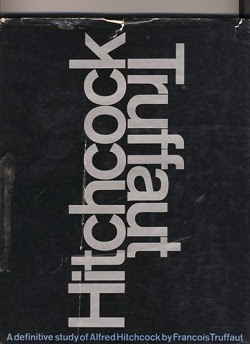 By way of introduction, Muller had mentioned earlier to Laura Truffaut that her father's book on Hitchcock was the very first film book he ever owned and read. As a kid, he had mentioned that he really liked Hitchcock's movies and a family friend gifted him the book, thereby changing his life. Shortly thereafter, he saw François Truffaut's La Nuit Américaine (Day For Night, 1973) and—smitten by the romance for moviemaking in that film—the die was cast. He said to himself, "That's the life for me. It has to somehow involve the movies."
Inviting Truffaut to the stage, Muller prefaced their conversation by confirming that he considers The Bride Wore Black to be a film noir, partly because it was based on a novel by Cornell Woolrich who, as a writer, was one of the key figures in the development of noir as literature in the United States. Woolrich's books translated very well to France, many of them appearing in the Série noire that was, in turn, influential on the French New Wave. Certain themes in Woolrich's work—i.e., the cruel indifference of fate—appealed to a French sensibility.
 Not only that, Truffaut agreed, but Woolrich's themes of shifting personality, of one person turning out to be someone else, was an equally influential theme. Perhaps not as present in The Bride Wore Black as in La sirène du Mississipi (Mississippi Mermaid, 1969), another Woolrich adaptation of her father's made shortly after The Bride Wore Black.
Muller suggested that—by the time the film was made in 1968—a lot of people perceived it as a somewhat revisionist take on Woolrich's novel because it focused on the femme fatale figure as the protagonist. What Truffaut did with the character of Julie Kohler (Moreau) and his depiction of the men in the film who become her victims was markedly different than how Woolrich treated these characters in his novel. However, Truffaut stuck close to the structure of the book, replicating the novel's five episodes. Truffaut's adaptation was about the cruel indifference of fate, a protagonist bent on self-destruction, and encouraged the audience to empathize with a person who was doing something very wrong, who knew she was doing something wrong, but who went ahead and did it anyway. For Muller, those are three essentials for a film noir.
 Though in the case of her father's film, Truffaut differentiated—unsure if this would apply generally to film noir—that there was also an attempt not to psychologize at all. There was something quite stylized about the story. Likening it a bit to a dark fairytale, Truffaut explained her father's challenge was indeed to gain the audience's empathy for Julie Kohler, but also to keep them involved and interested in the linear logic of the story, a creative challenge that was of considerable interest to her father. Later in his career in the late '70s he went on to film L'Histoire d'Adèle H (The Story of Adele H, 1975), L'Homme qui aimait les femmes (The Man Who Loved Women, 1977) and La chambre verte (The Green Room, 1978), wherein he focused on stories where the main characters follow an implacable logic. It remained a challenge for him to keep the audience interested in one character in a narrative limited by directions in which the story could go. He thought about it in musical terms: to follow a line, what he called an "ascending straight line." Not all of his movies were following that pattern, but The Bride Wore Black was probably the first film where he started doing that.
One way he addressed this challenge was to rely on strong acting. Her father had loved working with Jeanne Moreau on Jules et Jim (Jules and Jim, 1962) and he knew that having her as the central character in The Bride Wore Black would carry the movie; but, he also knew that the actors who played the men she encountered had to be equally good and compellingly hold their own. He found a number of them in the theater, which he attended frequently, often casting for actors for his films. A number of the actors in The Bride Wore Black subsequently appeared in his later movies.
 The one character he was, perhaps, most attached to in The Bride Wore Black was Fergus, the artist, played by Charles Denner. She was seven when her father made this movie and it was the first film of his she was allowed to see in the theaters when it opened. She recalled her father sometimes liked to work on Sunday mornings going over dailies with his editor at a nearby screening room and he would let her and her sister come with him. There were scenes from the movie that she had easily seen 10 times over before the movie was finished, including a scene or two that were eventually cut, but which she recalled vividly; scenes that involved the character Fergus. Her father probably decided the scenes were too long and would throw off the balance of the film, so they were deleted; but, 10 years later, he revisited a similar character and used the same actor in The Man Who Loved Women. So The Bride Wore Black is both an adaptation of a novel but also something very personal for her father that he was able to return to later on in subsequent films.
 It was Muller's understanding that François Truffaut was dissatisfied with the finished film and Laura confirmed her father had difficulty with the color. It was only his second time to use color in a film. His first films were all small budget black and white New Wave movies and then he went to England to make Farenheit 451 (1966), which was a British production with a lot more money that required color for many reasons. When he came back to France to do The Bride Wore Black, it became clear the film was also going to be in color. Later on as her father progressed in his career, he laid down rules for himself, including how to use color—how to use color in his period movies and how to use color in his more contemporary pieces—but, at the time of The Bride Wore Black, he hadn't quite figured it out. She suspects it was frustrating for him to figure out how to create atmosphere with color. If you think of what are considered to be the great adaptations of Cornell Woolrich, they're primarily in black and white. Femme fatales seem to be more fatale in black and white. That could have been an issue creating tension. For her, The Bride Wore Black is visually distinct from her father's other movies, probably because of those issues.
 It was also Muller's understanding that her father had creative differences with his cinematographer Raoul Coutard who was working at the same time with Godard? In that regard, one of her father's challenges was that the protagonist was supposed to be traveling between one man and the other, as the story moves forward, but unfortunately for budgetary reasons most of the film had to be filmed in one geographic area. So her father and Coutard had to modify the storyline visually, made all the more trickier by the movie being in color, and create the illusion of different landscapes. There was definitely differences of opinion and approach between Coutard and her father.
 Muller noted that The Bride Wore Black was the first Woolrich novel written in what is considered his "black period." Woolrich was a fascinating man. He was a closeted homosexual who lived at the Hotel Marseilles in New York with his mother virtually his whole life and he had absolutely no real experience of the outside world. He was the most socially inept human being imaginable. Despite Woolrich's extraordinary imagination, Muller couldn't imagine a person less like François Truffaut than Cornell Woolrich. Woolrich started writing his noir novels cooped up in his hotel room with The Bride Wore Black being the first of a series. Its structure was extraordinary innovative. Woolrich didn't reveal the motivations of the protagonist until the very end of the book so the reader was going through this whole story—as audiences did with the film—wondering why Julie Kohler was doing what she was doing.
 Truffaut thinks her father decided to move it up a little bit, partly influenced by Hitchcock's understanding of how to manipulate audiences with suspense. When do you bring a flashback into a movie like The Bride Wore Black? A flashback or two was going to be necessary so her father gave much thought to when he would bring them in. Her father eventually agreed that Hitchcock's precept of letting the audience "in on it" early on actually created more suspense than a big revelation at the end. Another Hitchcock touch was that you never saw Jeanne Moreau's character knock on a door or enter a room. A couple of times in the movie she's suddenly just there, without explanation. Truffaut was fairly certain her father stole that from the character of Mrs. Danvers in Hitchcock's Rebecca (1940). Hitchcock made a point of not letting the audience hear Mrs. Danvers' footsteps so that they would be as startled as the protagonist Joan Fontaine when she lifted her glance and Mrs. Danvers was standing there observing her. Obviously, for the character of Mrs. Danvers, this was meant to be spooky. With Julie Kohler, it's meant to be more magical perhaps? She's suddenly in the middle of the scene and there isn't a whole lot of logic to it; the audience needs to accept it as a given.
Muller agreed that her father brought an element of magical realism to the film that compensated for a huge flaw in the original novel, which—not to spoil the plot—but you do wonder at one point how she knows who these men are? That's a crucial point in the story that's never explained. The way her father presented this as a given in the film eliminated the incongruency from the audience's mind. Julie just appears, almost like a supernatural force. There's no realism involved in it.
 Muller asked Truffaut if she had ever met Hitchcock as a child? She hadn't. He wondered because—she may not have noticed as a young girl—but the relationship Hitchcock and her father shared was an intense bond between their two artistries. It fascinated Muller that—while her dad was making this film—his closest confidante was really Hitchcock, who was included in all the correspondence. Her dad was asking him questions all the time. She did attend Hitchcock's funeral under a peculiar set of circumstances.
 Truffaut wanted to point out the unsung actor Serge Rousseau who plays David the groom (who the audience sees for only 10 seconds). He was one of her father's best friends. He was a casting agent, an actors' agent, and often played crucial small roles in her father's movies. Rousseau was actually an excellent actor who had given up on acting himself. He played the character at the end of Baisers volés (Stolen Kisses, 1968) who the audience has seen follow Claude Jade throughout the movie. At the very end he comes up to her sitting on the park bench and declares his love and proposes. He tells her, "Every other relationship is temporary but with me it will be forever." In The Green Room he plays the nemesis of the hero. We only see him in photographs but we hear his name mentioned constantly. So Rousseau played a big role in her father's life by pointing out to him interesting young actors who Truffaut would then watch perform in the theater and often hire for his films.
 There was a story behind the name of the protagonist: Julie Kohler. Julie is a name that her father was fond of, though she never found out why. Kohler was a brand of chocolate that her father liked a lot as a child. He liked that name so much that he used it again in Tirez sur le pianiste (Shoot the Piano Player, 1960) where he named his protagonist Charlie Kohler. Of course, Kohler is also a homonym for colère, which means anger.
Everything Muller has read on this film indicates that it was made at a difficult time in her father's life, which undoubtedly colors his conflicted recollections of the film itself; but, Muller finds the film extraordinary. He's reached a point where he thinks of film noir in thematic terms and for him The Bride Wore Black is a classic thematic example of a film noir. He's impressed with her father's sensitivity to these types of stories, to the work of American writers like Cornell Woolrich and David Goodis (whose novel Down There Truffaut adapted into Shoot the Piano Player, "another classic noir"). The American narrative style tended to be tough, hard-edged and coldhearted; but, her father wasn't like that at all. No one would ever say that François Truffaut was a coldhearted filmmaker. Quite the opposite. He was probably the most humanistic filmmaker of his era. To see him adapt these kinds of stories made them doubly fascinating.
Laura Truffaut concluded by recalling that her father was keen on quoting Jean Renoir: every man has his reasons, which applies to any character in a movie. Muller identified the quote from La Règle du jeu (Rules of the Game, 1939) where, more to the point, the full quote specifies that "the most terrifying thing is that every man has his reasons."
Of related interest: John Goodman's interview with Laura Truffaut for the North Shore News.
 Singular pleasures. When I was invited by the publicists of The Housemaid (Hanyo, 2010)—the highly anticipated remake of Kim Ki-Young's 1960 Korean classic—to interview director Im Sang-soo, I agreed to do so if they would pull me a ticket to TIFF's North American gala premiere at Roy Thompson Hall. Little did I expect that—not only would they pull me a ticket—but they would seat me in the director's box with Im Sang-soo and The Housemaid's two lead actors Jeon Do-yeon (Cannes winner for Secret Sunshine) and Lee Jung-jae. At film's end when the spotlight angled up to our section during the applause, I had to resist rising and flexing my bicep. No sense in stealing Lee Jung-jae's thunder.
It was a grounding shift from that evening's spectacular spotlight to my relaxed conversation with the convivial Im Sang-soo and his disappointingly laconic actors the following day at the Four Seasons (especially Jeon Do-yeon who deferred to her director on every count, such that I finally gave up addressing her directly). While waiting for my interview to begin, I was afforded the added pleasure of overhearing Marion Cotillard pointing to the poster for Little White Lies to advise her rapt friends exactly who among that film's male cast was gay. (Don't worry, boys, your secrets are safe with me!)
 As synopsized for TIFF: "In this erotic thriller, the housemaid of an upper-class family becomes entangled in a dangerous tryst. A satirical look at class structure, reminiscent of the work of Claude Chabrol, this sexy soap opera is a story of revenge and retribution." At MUBI, David Hudson rounded up the multiple reviews from The Housemaid's international premiere at Cannes. For those who didn't catch Kim Ki-Young's original version at any one of a number of revival screenings this past year (including its appearance in the San Francisco International Asian American Film Festival's "Out of the Vault" selection), MUBI has continued to offer Kim Ki-Young's original on free streaming video.
A reminder to Bay Area audiences that Im Sang-soo's The Housemaid will be screening in the World Cinema sidebar at the upcoming 33rd edition of the Mill Valley Film Festival.
Im Sang-soo was born in Seoul. He studied history at Yonsei University before enrolling at the Korean Academy of Film Arts. As a writer and director, his feature films include Girls' Night Out (1998), Tears (2001), A Good Lawyer's Wife (2003), The President's Last Bang (2005), and The Old Garden (2007). [This conversation is not for the spoiler-wary!!]
* * *
 Michael Guillén: Recently, I had the opportunity to catch a revival screening of Kim Ki-Young's original version of The Housemaid at our Asian film festival in San Francisco and—now having seen your version of the story at last night's North American premiere at Roy Thompson Hall—I can express my admiration that your version is so different, that it's not really a remake at all, and that it's a true revisioning of the narrative. I commend you on that achievement.
I would, however, seek to explore those differences and why you decided to take the story in such a separate direction than the original and why you infused it with such an altogether distinct tone? What was the challenge for you in taking on Kim Ki-Young's much-beloved original?
Im Sang-soo: Kim Ki-Young's movie was made in 1960. The background of that film was its accurate description of the socio-economic environment at the time. The film emerged when Korea was just beginning to develop its middle class and many young women from the countryside would move to the city to work as housemaids for these burgeoning middle class families. I made my film different than the original because Korea's socio-economic environment has changed since then. These days, due to globalization, there is much more separation between the poor and the rich and the definition of the middle class has actually started to break down. Many Koreans who once thought of themselves as middle class—like Eun-yi (Jeon Do-yeon) in my film—have started to self-destruct as the separation between rich and poor has increased, such that now there is a super-rich class, like the family where Eun-yi is employed. So, as you say, Kim Ki-Young's film is legendary and I wanted to challenge myself remaking it.
Guillén: But what specifically was it that you found challenging in readdressing the socio-economic issues first described by Kim Ki-Young?
 Sang-soo: The challenge was exactly in describing how the socio-economic situation is changing in Korea. As throughout Asia, there is now an emergence of the super rich, which is offset against the fact that in the past 20 years those who are poor are becoming even poorer and having even more of a hard time of it. I wanted to challenge myself by showing this social problem.
Guillén: When Noah Cowan introduced the film at last night's gala, he dedicated it to Claude Chabrol who passed away yesterday. Cowan likened your film to Chabrol's "chilly thrillers"; however, you have likened your film to Alfred Hitchcock's style of suspense. Can you speak to what you feel you have borrowed from Hitchcock and brought into your film?
Sang-soo: In François Truffaut's interview with Alfred Hitchcock, Hitchcock talked about what he felt were the true elements of suspense. For example, when his characters are having a sexual relationship, they think no one knows; but, Hitchcock makes sure the audience knows. The suspense arises from the tension between what is believed to be unknown by the characters but is known by the audience.
 Guillén: Speaking of sexual tension, The Housemaid heats up the auditorium. How do you direct such intimate scenes with your actors? How do you create that erotic environment on set? Do you work on a closed set?
Sang-soo: I worked with the sexual relationship between Eun-yi and her employer Hoon (Lee Jung-jae) so that it would be secretive and express the danger of their lust. I'm wondering, did you feel that?
Guillén: Definitely! My question, however, is more technical. I'm wondering how you contain the eroticism on set? Did this require a closed set so that the actors could indulge the intensity of the scenes?
Sang-soo: Usually, yes, it was a closed set but also it must be said that my actors are very professional. They could joke around with each before shooting; but, once the cameras started rolling, they took their direction quite seriously.
Guillén: The film's tag-line that "sometimes innocence becomes a menace" distinguishes the difference in character and tone that I noted between Kim Ki-Young's film and yours. In the original, I felt the maid was bad from the beginning but Jeon Do-yeon's performance is admirably multi-faceted and her character arc painfully enunciated. Why did you choose to focus on the—for lack of a better term—deflowering of her innocence?
 Sang-soo: I actually don't think it's a "deflowering" of innocence because there is no person in the world who is innocent, per se. Eun-yi understood what was going on, she knew what was at stake in the situation and what the dynamics were within the house, but she went ahead and built up her hopes and enflamed her desires. Her revenge at film's end was a way to maintain her dignity in the face of her own choices.
Guillén: Jung-jae Lee, your character Hoon has to hold his own among a pride of lionesses, in effect; strong, beautiful, cruel women. How did you pull out of yourself the necessary strength to match these women?
Jung-jae Lee: Through unexpected behavior.
Guillén: How do you mean "unexpected"?
Jung-jae Lee: That the character himself would even think of having sexual relations with the housemaid in the presence of his family indicates that he possesses this strength.
 Guillén: A strength which could probably be more accurately characterized as arrogant privilege. My favorite nuance in your characterization of Hoon was—when discovering that his wife and his mother-in-law have had Eun-yi's baby aborted—rather than being concerned with her welfare, he is indignant that this action was taken without his knowledge or compliance. For a moment you almost feel compassion for him, for his loss, and yet you realize it's mainly pride on his part and no sense of genuine care for Eun-yi.
Jung-jae Lee: I think every human being is capable of such selfishness and duplicity, pretending to put someone else's interests first but thinking only of themselves.
Guillén: With that arrogant privilege in mind, let's turn to how it has been represented in the film's production design. If your challenge to yourself, Im Sang-soo, was to depict the increasing divide between the poor and the super-rich, you have staged it excellently in this house where Eun-yi comes to work as a maid. The house is amazingly designed, not the least of which is its collection of paintings scattered throughout. They telegraph a sense of unbridled acquisition true to Hoon's privileged character. Clearly this was your intention? Can you speak to how you came up with the vision of the house?
 Sang-soo: Just as in all the super-rich homes in Europe, Korea and Asia, what these people try to do is to copy the traditional European lifestyle: drinking good wines, collecting paintings, listening to opera. Myself, I find it questionable that this would be a life they genuinely enjoy or if it's not more for show.
Guillén: I don't want to give away the film's shocking and spectacular set piece ending; however, I am interested in the rhyme between the film's introductory scene where the young woman jumps off the high building to her death and Eun-yi's suicide. What are you trying to say by that framing rhyme?
Sang-soo: People don't know why the young woman in the first scene has committed suicide. These people witness the suicide and then they forget about it. It's possible that at film's end when Eun-yi commits suicide that people in the neighborhood heard about the housemaid committing suicide but then—just as easily as in the first instance—they will forget about it. The point is that—even though throughout the movie it is never explained why the young woman in the first scene committed suicide—she has a story. We just don't know about it like we know about Eun-yi's story. Suicide has become much more frequent in Korea as the economy has become unstable.
Guillén: My final question, then. The coda to the film is a nearly surreal and extremely stylized set piece that proves unsettling for being so ambivalent. Can you offer a bit of insight as to what you wanted the audience to take away from that scene?
Sang-soo: There has been a lot of controversy surrounding that last scene. Even one of the producers wanted it deleted. Many people complain about it. But without that scene, I think the movie would have been just so-so. I went with my gut feeling and included it. It's a simple set-up: they're giving a birthday party to a little girl who just witnessed something terrible and trying to cover up her trauma with expensive gifts. I wanted audiences to wonder if she could truly heal from such an event?
Cross-published on Twitch.
 The 12th edition of the San Francisco Independent Film Festival—better known as SF IndieFest—takes over the Roxie Theater for two weeks starting this Thursday, February 4. Out of the fest's three dozen programs worth of features, docs and shorts, I had the chance to preview four on DVD screener. Happily, they're all winners.
 The film I'm most excited about is No One Knows About Persian Cats, Kurdish-Iranian director Bahman Ghobadi's controversial portrait of Tehran's underground indie-rock scene. It won an Un Certain Regard Special Jury Prize at Cannes last year at the exact same time the film's co-writer, Iranian-American journalist Roxana Saberi, received a suspended sentence on espionage charges and was released from Iranian prison. More controversy occurred last autumn when Iranian auteur Abbas Kiarostami publicly admonished Ghobadi for this decidedly unsavory look at life in Iran. Ghobadi responded with a bitter, anguished open letter to his one-time mentor. Brouhaha aside, Persian Cats is a remarkable film and an inspired departure for its director, best known for lyrical, but unsparing rural parables about war-ravaged children (Time for Drunken Horses, Turtles Can Fly). And though he's previously touched on the plight of musicians in Marooned in Iraq and Half Moon, this is his first time working in an urban milieu.
 Shot clandestinely in 17 days, Persian Cats follows two musicians as they pursue a vague-ish notion of performing in Tehran before embarking on an elusive foreign tour. After hooking-up with a sketchy, motor-mouthed music promoter, the trio buzz around Tehran perched on a single motorcycle, in search of band members, passports, visas, practice space and a venue. Harassment by the authorities is constant. During these excursions we're introduced to a variety of local musicians and musical styles—Persian-flavored rap, heavy metal, alt-rock, neo-soul—with song performances rapid-cut MTV-style to images of Tehran street life. The musicians appear to be playing versions of themselves, with sincere, somewhat stilted acting that works fine within the film's semi-documentary vibe. The exception is actor Hamed Behdad as the manic promoter Nader. The scene where he wheedles his way out of 75 lashes and a massive fine for possessing foreign DVDs and alcohol is the film's comic highlight. (Runner up: the heavy metal band playing for distraught cows on a dairy farm.)
With a mixture of resignation and outrage, No One Knows About Persian Cats proves that tenacious youth and rock 'n' roll will somehow find a way, even in an Islamic theocracy. The film is also beautifully shot, making it all the more fortunate that SF IndieFest will be screening it in 35mm (one of only four such films in the fest).
 In Belgian director Johan Grimoprez' wildly original mash-up/collage/essay film Double Take, we get an 80-minute riff on paranoid USA/USSR Cold War relations by way of Alfred Hitchcock's assertion that "if you meet your double, you should kill him. Or he should kill you." Clips of Hitchcock—mostly stuff from his droll film promos and TV show intros—are woven into a Hitch vs. Hitch narrative with the help of professional look-alike Ron Burrage and sound-alike Mark Perry. That's all cleverly edited with archival footage of the Nixon-Khrushchev debate, the Cuban Missile Crisis, worrisome Space Race updates (Sputnik! Pupnik!), Red Square military parades, flying saucer movie clips and a series of insidiously hilarious Folger's Instant Coffee commercials ("How can such a pretty housewife make such bad coffee?!"). Fascinating, spooky and poetic (with the occasional drift into ponderousness), this is the most original vision I expect to see at the movies all year.
 While Persian Cats and Double Take contain non-fiction elements, the other two films I previewed are straight-up documentaries. Don Argott's The Art of the Steal tells the story of the world's most valuable collection of post-impressionist and modern art, and how it became subjected to "the greatest act of cultural vandalism since WWII." Philadelphia pharmaceutical magnate Albert C. Barnes amassed the collection in the early 20th century, putting it on public display in 1923. The exhibition was reviled by Philly art critics, causing an outraged Barnes to move the whole thing to a building in the suburb of Lower Merion, PA. (The collection contains 181 Renoirs, 59 Matisses, 46 Picassos and is currently valued at around $25 billion.) In his will, Barnes specified that the collection should stay in Merion, and never be sold or go on tour. Director Argott meticulously details how Barnes' wishes got thwarted over the years by a tourist-hungry metropolis, ambitious politicians, clueless judges and duplicitous foundation board members. It's a thorny, engrossing tale well told. This is another film IndieFest will be screening in 35mm. The Art of the Steal is also scheduled to open at a San Francisco Landmark theater on March 12.
 I don't know if Palestinian-owned grocery stores are a phenomenon unique to San Francisco, but for 35 years I've never lived more than two blocks from one. Katherine Bruens' Corner Store, which is having its World Premiere at IndieFest, is the story of one such store and its soft-spoken proprietor. For 10 years, Yousef Elhaj worked at the Church St. Market from 7:30AM to midnight, 364 days a year, closing only for Easter (Elhaj is Christian). He slept in a back storeroom, saving money to support his wife and three children back in Bethlehem. His intention is to bring them to America, and—once all US bureaucratic hurdles have been cleared—the film follows him back to Bethlehem. Once there, however, Elhaj feels conflicted about returning to the US. On one hand, he loves being back amongst his people and culture. On the other hand, life under Israeli occupation, with its checkpoints and separation barriers, is extremely difficult. Friends, family and neighbors all weigh in with their opinions. I won't reveal what happens, but I promise this touching documentary will make you care one way or the other.
Cross-published on film-415 and Twitch.
 Winner of this year's Cannes Jury Prize Ex-aequo, Park Chan-wook's ninth feature Thirst polarized audiences arguably satiated with blood and violence in a festival line-up described as the most sanguine in Cannes history. Surveying the aggregate compiled by Dave Hudson for the IFC Daily, Thirst received a fierce dismissal from Daniel Kasman at The Auteurs Notebook—who found the film apparently stupid and hollow—as well as a gushing endorsement from Blake Etheridge at Cinema Is Dope who tagged it "the first masterpiece of 2009." In his admittedly more moderate concurrence for Screen Daily, Darcy Paquet stated that at "its best moments, Thirst offers something of the poetic force of cinema's timeless masterpieces." Poetry being a glittering crown to place on the head of a narrative, one has to take such anointments with a smidge of caution. Todd Brown's assessment for Twitch weighs the pros and cons quite fairly, ultimately queuing in the con camp.
 "While hardly a favorite of the festival," Eric Kohn dispatched to The Wrap, "Thirst succeeds as a lively crowd pleaser." The film did well with its Korean audiences on opening weekend, scoring nearly $6,000,000 in box office. Thirst contains several firsts: 1) It's Park Chan-wook's first vampire movie and, indeed, his first venture into the genre of supernatural horror; 2) it's the first mainstream Korean film to feature full-frontal adult male nudity from one of its leading box office stars (which might have had something to do with its opening weekend box office); and 3) it's the first Korean film co-produced by U.S. studio Universal Pictures International, distributed by Focus Films. Focus, in fact, has done an admirable job promoting the film on its website Film In Focus. Not only have they provided a succinct and well-written career overview by Scott MacAulay, but they've included three intriguing slideshow surveys: Nick Dawson profiles 12 of the directors grouped into the "New Korean Cinema"; Anne Billson provides a short history of the vampire film; and Peter Bowen addresses the issue of "sexy priests".
 By separate entry, I'll finesse the film in more detail; but, for starters, here's my transcript of a conversation I had with Park Chan-wook when he was in San Francisco for the film's press junket. My thanks to John Weaver at Terry Hines & Associates for setting up this one-on-one and to Moho Film's Project Development Manager Wonjo Jeong for his translative assistance. Further thanks to the suggested query from Twitch teammate Ard Vijn. Warning: This conversation is not for the spoiler-wary!
* * *
 Michael Guillén: Welcome to San Francisco! Have you been driving around like Jimmy Stewart in compulsive pursuit of some elusive object of desire? I understand that's the specific scene from Hitchcock's Vertigo that compelled you to venture into filmmaking? Did I Confess have anything to do with Thirst's sexualized priest?
Park Chan-wook: For me, the film Vertigo itself is an object of desire. I've seen a limited sampling of locations where Vertigo was shot while in San Francisco; but, I didn't have enough time to make it to the cemetery at Mission Dolores, which is of course an important location for a pivotal scene in that film. But rather than seeing any particular San Franciscan location, what has been most attractive to me about Vertigo is Jimmy Stewart's literal pursuit of Kim Novak's character. That's what I like in Vertigo. There isn't a particular scene or bit that I like in the film; it's Stewart's overall pursuit that I enjoy. There's several point of view shots and endless roads and streets that he travels following her.
 Pursuing Vertigo as an object of desire, however, is a desire that cannot be filled because so many things are different now than when the film was shot: the atmosphere is different, the air at the time, the kind of sunlight at the time is something that cannot be recreated. My pursuit of a Vertigo "experience" is something that will probably remain elusive forever.
Speaking of Hitchcock and influences, especially from his film Vertigo, the surrealism that Hitchcock captures in realistic moments is something I'm always trying to achieve. Looking at North by Northwest, for example, its villainous, bitter and dark sense of humor is also something I always strive for. But I Confess? Though Montgomery Clift is an actor I like very much, the film itself not so. In all honesty, I can't even recall the film very well.
 Guillén: Via Twitch teammate Ard Vijn: Some of your movies, notably Oldboy, have been based on mangas, and often feature sequences which are full of visual jokes and fantastic elements. I'm A Cyborg… especially contained some stunning, playful and abstract images. Are you interested in creating a fully animated movie?
Park: A lot of directors say during film production that—if they had more money—they could build a set that they could destroy, take a wall out and move a camera around, and be given total freedom to shoot a film in whatever way they want. There's also the restriction of the "magic hour": there's a very limited time of the day when you can utilize the beautiful sunlight as it sets during the magic hour. Directors always complain about these restrictions and limitations placed on them while creating their art. That being said—with so many directors complaining about restrictions and limitations—why don't they all switch to animation? There must be a variety of reasons.
Speaking for myself, my reason is that there are no actors involved. What I mean by that is that—in my filmmaking—I thoroughly prepare storyboards. In fact, I prepare a storyboard for an entire film from start to finish. This is a means of controlling my production as much as I can. I try to plan ahead as much as I can from the earliest pre-production stages. However, an actor's performance is the only element that cannot be calculated 100%. Often your film will depend upon your actor's performance, ability and passion. Amid all these things that I've predicted and prepared for and the plans I've set in place, the only thing that still holds an element of surprise is an actor's performance. It's by always being ready to be surprised by an actor's performance that I'm able to still be tense during a film shoot. If it weren't for that variable, shooting film would be a boring process where everything is predictable and everything goes according to plan.
Animation is a fully-controlled environment, as opposed to a live-action film where there is still an element of surprise in an actor's performance that the director can't fully control or anticipate 100%. Just for the sake of argument—and not because I think directors are God—but, if directors were God, would this God prefer a world where every human acts in accordance with His will? Or would this God find it more interesting to watch over a world where humans are given free will with which to act? Within that metaphor, an argument could be made that it's preferable to be a live-action director than an animation director. Despite the fact that it probably is more interesting to be in a situation where humans act off free will, when I watch animation films like Mamoru Oshii's Ghost In the Shell or Katsuhiro Otomo's Akira—very well-made animation films—I feel a desire to do animation films. So who knows? I might actually go ahead and do an animation.
 Guillén: Can you speak to the connective tissue between Emile Zola's novel Thérèse Raquin and your film? When did you first read the novel? Why did it speak to you? And what did you sense was potentially cinematic about it? Accordingly, what elements have you felt have most successfully transferred over into Thirst?
Park: I began thinking about this story one night 10 years ago and—even within that first imagining—it included the scene (which made its way into the film) where Sang-hyun strangles Tae-ju. Despite being overcome with sorrow, he can't resist his lust for blood and he begins to drink her's. Within moments, however, he realizes how animal-like he has become drinking the blood of someone he loves so much. He decides to give his blood to her, thereby reviving her, but as a vampire. All the details of that scene came up when I first thought of this story 10 years ago.
After I first thought of the story, it ended up on the shelf for years. Where this woman came from, how he fell in love with her, the details of their relationship, were all left blank. Then one day I came across Emile Zola's Thérèse Raquin and—when I first read the novel—I meant to make a separate film; but, then I thought, "Why not fuse Thérèse Raquin and the vampire story?" Why I felt I could do this was because—when I fused the two together—I felt Thérèse Raquin filled in the blanks left by the vampire story. I first visualized this scene where Sang-hyun turns Tae-ju into a vampire—and his subsequent realization of the true nature of his sucking the blood from someone he loves, being shocked by his own behavior, and his attempt to reverse the process by turning her into a vampire—10 years ago. I first visualized that moment of realization as taking place in the bath room where Sang-hyun would catch his reflection in the mirror and realize what he was actually doing. But I didn't actually like using this device of the mirror because it was the easy way out. Anyone could think of using a mirror in this situation.
Instead, I came across Thérèse Raquin. I felt the character of the mother-in-law (Madame Raquin in the novel; Lady Ra in the film) could stand in for the mirror. Rather than using the actual mirror in the bathroom, I could use her observing eyes. When Sang-hyun's eyes meet hers during this scene, reflecting her shock and horror, he realizes what he's doing. As an audience member, you might consider this a minor detail; but, for a filmmaker like me, it's possibly one of the most important decisions made making this film. Once I came across this piece of the puzzle—inspired by Emile Zola's Thérèse Raquin—everything else fell together.
 Guillén: You have said "No one will be able to conceive of the religious issues that are embedded in Thirst." Let's take that on. For me the strongest religious issue in Thirst was the subtle distinction between guilt and culpability. Did you intend to address that distinction? How do you distinguish guilt from culpability?
[At this juncture the interpreter asked me what I meant by "culpability" and I said that—as I intended it—guilt is an emotive response of conscience; feeling "bad" about something one has done—whereas, culpability is something at fault within an individual, inherently "bad", for which an individual is truly blameworthy; but, for which—notwithstanding—he or she must likewise be responsible.]
 Park: You have actually put your finger on a point I repeatedly emphasize in my films. This priest Sang-hyun has become a vampire despite his wanting to do a good deed. He didn't ask to become a vampire. What's worse, he was actually trying to do something good. Vampirism has befallen him. His identity has become defined for him. His choice was not involved in this process. Perhaps he could have just accepted his fate and become a "good" vampire living by whatever his desires dictated? He might have even found happiness living the life of a vampire the best he could? Instead, Sang-hyun struggles against his identity as a vampire, which opposes his teachings in the Catholic faith and his moral standards as a human that include not committing murder and so on.
In Sang-hyun's struggle to live as a vampire while holding onto his human faith, we see him fall into ridiculous, contradictory situations. Ultimately, he ends up killing a woman he loves, turning her into a vampire. This she-vampire is honest to her instincts. She revels in the fact that she has become a vampire and finds pleasure in killing people. Sang-hyun, as priest, feels responsible for this and—despite the fact that committing suicide is also a sin in Catholic teachings—he takes responsibility for creating a creature who he knows will kill many other people. Sang-hyun is a character who—as you say—feels culpability. He tries to take responsibility even though he probably doesn't have to—he was forced into his situation; he didn't choose to be a vampire—but, whether it's right that he tries to take responsibility right up until the end or whether it's wrong, whether it's a smart or stupid thing for him to do, accepting responsibility is up to each and every individual to decide. I find Sang-hyun's decision to take responsibility for his vampirism, noble and heroic. He achieves integrity through his attempt to accept responsibility for his actions.
 To take a specific example from Thirst to highlight where I've made a distinction between guilt and culpability, I cite the scene where Sang-hyun is trying to justify his killing people who want to commit suicide anyways. He says that—when he meets these people who want to commit suicide and whose blood he drinks—they seem to have a comfortable and peaceful death. In a way he feels he is helping them somehow. That's, of course, a ridiculous justification—it's only an excuse for taking their blood—and killing them in the process is, of course, a sin. Yet, in order to avoid the sin of committing suicide—in this case indirectly because if he chose not to survive, if he chose not to drink other people's blood, he would (in effect) be committing suicide—Sang-hyun kills because he needs other people's blood to survive. Thus, in order to avoid committing the sin of suicide, he's helping kill those who want to commit suicide. Of course this is not logical; but, this is nevertheless Sang-hyun's attempt to avoid guilt. It's his attempt to stop feeling bad about the wrong things that he does. By film's end, he ultimately realizes his behavior is morally corrupt, he has committed sins, and he takes responsibility for them. That's how I distinguish guilt from culpability.
Cross-published on Twitch.
 This entry is not for the spoiler-wary!
Most of the recent press on Reygadas has concerned Battle in Heaven. I offer my favorites: Jonathan Marlow's insightful Sundance interview with Reygadas for Dave Hudson's Greencine Daily. This interview was instrumental in my enjoying and learning from the Reygadas residency at Yerba Buena. Kudos, Jonathan!!
 Michael Atkinson for the Village Voice: "Battle in Heaven, as ambitious as its title, is a living mystery, already notorious for hardcore-osity but so serious about its formal intelligence and so deep-dish in its evocations of inexpressible desolation, personal and social, that it occupies your skull like a siege of Huns."
Karin Badt, Cannes 2005, Bright Lights Film Journal: "The important thing is these two human beings. Just watch them and be patient. Cinema is a means of expression, not communication. I don't want to say anything. When you kiss someone, are you trying to communicate anything?"
 Bryant Frazer, Deep Focus: "The film's explicitness is crucial to its meaning. By dwelling on both types of bodies—the trim and conventionally beautiful versus the flabby and utterly ordinary—Reygadas emphasizes both physical closeness and economic distance. He seems less interested in bodies in the erotic sense than in the way that they can be indicators of class—in the sense that body shapes are influenced by economics, because the folks without the money to dine well end up feasting on junk instead, which sticks to their figures."
Antonio Pasolini, europeanfilms.net: "Of course, there is love in this film as well as manipulation. There's also injustice regarding the bad distribution of tools. Injustices from the system, not just from nature itself."
Nick Roddick / FIPRESCI 2005: "[I]t's easier to connect the fact that you have breakfast in the morning and then you go to work afterwards than to connect that you dream one night about fire in the sky and that you go to work the next day."
 Aquarello at Strictly Film School: "Reygadas' bracing portrait of Mexico's profoundly fractured and polarized--and perhaps irredeemable--society, human connection occurs not through the opacity of the soul but through the characters' disembodied rituals that serve as communion for unarticulated desire."
Here's a good video clip interview with Reygadas at Cannes:
* * *
 Delighted with Japón, I was hyped for Battle In Heaven. All in all, Battle was not as satisfying for me as Japón, though it has certainly hovered around me like some unresolved thought. What truly bothered me about Battle was the idea that this young woman Ana (Anapola Mushkadiz) could confess her shadow to Marcos (Marcos Hernández), her chauffeur since childhood, and even make him complicit through secrecy and sexual favors, but when he confesses his shadow to her, a line gets crossed. An equality is denied. Ana encourages Marcos to turn himself in knowing full well that he will be put away, possibly even executed. She wants to dispense with the distasteful. This betrayal adds weight to an already almost unbearable burden and, Marcos, terrified in the face of truth, pees his pants and murders her. If ever someone has been swept up by the horrors of circumstance into ignoble death it is Marcos in Battle in Heaven.
The sound design in this movie accomplishes what the narrative shifting did in Japón. In one particularly stunning sequence Marcos is at a gas station where loud music is being played. A procession of chanting penitents winds by and the sound shifts from the loud music to the chanting, builds, then recedes back to the loud music. A moment where you hear as well as see two realities.
 In another notorious scene where Marcos and Ana are having sex, the camera moves out of the room and circles the courtyard before coming back in. When asked about which directors had influenced him, Reygadas did not mention Hitchcock so this is undoubtedly my complete projection; but, this scene reminded me of the one in Frenzy where just as the necktie murderer is about to rape and kill another victim, the camera pulls away from the scene of the crime, backs down the hallway and stairwell through the front landing, down the front steps, and across the street. In Frenzy, however, if the camera had returned, the crime would have been evident. Not so in Battle, where the camera does return, and the crime is obscured. Notwithstanding, the punishment remains severe.
02/20/06 UPDATE: What goes around, comes around. After convincing me that non-actors should embody their roles and not represent them, Carlos Reygadas reminded himself as well as those present that this is not as easily done as it sounds. In Battle In Heaven Magdalena Flores—Ascen in his first film Japón—makes a cameo appearance. Reygadas was excited at first about including Magdalena in his second film, but, realized afterwards that it was a mistake as the taint of recognized celebrity had already taken. I had to agree and told him that, as pleased as I was to see her again, it distracted from the film. Amazing how quickly this happens!!
 02/26/06 UPDATE: At the L.A. Weekly Scott Foundas interprets the opening blowjob of Battle In Heaven to be a dream sequence. I didn't see it that way at all and wonder if Reygadas intended it as such? Unfortunately Reygadas's residency at Yerba Buena has come and gone and he's not around to ask. I always regret the unvoiced unanswered questions! Foundas ventures: "If Japón was Reygadas' objet d'art, then Battle is his objet de scandale, his elephant-dung Jesus . . . ."
01/27/07 UPDATE: A shout out to Rob Davis who recently interviewed (or should I say recently posted his interview with) Carlos Reygadas for Errata. Not only does this fascinating interview delve into the director's filmmaking subjectivity of sound and image, his use of non-actors, and some of his favorite filmmakers, but provides an up-to-date compendium of recent online commentary on Reygadas sophomore feature Battle in Heaven (Batalla en el Cielo, 2005).
 "For to kill is the great law set by nature in the heart of existence! There is nothing more beautiful and honorable than killing!"—Guy de Maupassant.
 Here on the West Coast, The Bride Wore Black showed up in the Pacific Film Archive's Enduring Allure retrospective of the films of Jeanne Moreau, which is where I caught up with Truffaut's adaptation of Cornell Woolrich's 1940 novel. PFA characterized The Bride Wore Black as Truffaut's alleged homage to Alfred Hitchcock "treated in the manner of Renoir." The San Francisco Film Society followed suit less than a week later with a brief run of a new 35mm print of The Bride Wore Black at New People Cinema, where I attended their first screening on Friday, December 16, 2011, specifically to hear Eddie Muller engage Laura Truffaut in an onstage conversation before her father's film.
 By way of introduction, Muller had mentioned earlier to Laura Truffaut that her father's book on Hitchcock was the very first film book he ever owned and read. As a kid, he had mentioned that he really liked Hitchcock's movies and a family friend gifted him the book, thereby changing his life. Shortly thereafter, he saw François Truffaut's La Nuit Américaine (Day For Night, 1973) and—smitten by the romance for moviemaking in that film—the die was cast. He said to himself, "That's the life for me. It has to somehow involve the movies."
 Not only that, Truffaut agreed, but Woolrich's themes of shifting personality, of one person turning out to be someone else, was an equally influential theme. Perhaps not as present in The Bride Wore Black as in La sirène du Mississipi (Mississippi Mermaid, 1969), another Woolrich adaptation of her father's made shortly after The Bride Wore Black.
 Though in the case of her father's film, Truffaut differentiated—unsure if this would apply generally to film noir—that there was also an attempt not to psychologize at all. There was something quite stylized about the story. Likening it a bit to a dark fairytale, Truffaut explained her father's challenge was indeed to gain the audience's empathy for Julie Kohler, but also to keep them involved and interested in the linear logic of the story, a creative challenge that was of considerable interest to her father. Later in his career in the late '70s he went on to film L'Histoire d'Adèle H (The Story of Adele H, 1975), L'Homme qui aimait les femmes (The Man Who Loved Women, 1977) and La chambre verte (The Green Room, 1978), wherein he focused on stories where the main characters follow an implacable logic. It remained a challenge for him to keep the audience interested in one character in a narrative limited by directions in which the story could go. He thought about it in musical terms: to follow a line, what he called an "ascending straight line." Not all of his movies were following that pattern, but The Bride Wore Black was probably the first film where he started doing that.
 The one character he was, perhaps, most attached to in The Bride Wore Black was Fergus, the artist, played by Charles Denner. She was seven when her father made this movie and it was the first film of his she was allowed to see in the theaters when it opened. She recalled her father sometimes liked to work on Sunday mornings going over dailies with his editor at a nearby screening room and he would let her and her sister come with him. There were scenes from the movie that she had easily seen 10 times over before the movie was finished, including a scene or two that were eventually cut, but which she recalled vividly; scenes that involved the character Fergus. Her father probably decided the scenes were too long and would throw off the balance of the film, so they were deleted; but, 10 years later, he revisited a similar character and used the same actor in The Man Who Loved Women. So The Bride Wore Black is both an adaptation of a novel but also something very personal for her father that he was able to return to later on in subsequent films.
 It was Muller's understanding that François Truffaut was dissatisfied with the finished film and Laura confirmed her father had difficulty with the color. It was only his second time to use color in a film. His first films were all small budget black and white New Wave movies and then he went to England to make Farenheit 451 (1966), which was a British production with a lot more money that required color for many reasons. When he came back to France to do The Bride Wore Black, it became clear the film was also going to be in color. Later on as her father progressed in his career, he laid down rules for himself, including how to use color—how to use color in his period movies and how to use color in his more contemporary pieces—but, at the time of The Bride Wore Black, he hadn't quite figured it out. She suspects it was frustrating for him to figure out how to create atmosphere with color. If you think of what are considered to be the great adaptations of Cornell Woolrich, they're primarily in black and white. Femme fatales seem to be more fatale in black and white. That could have been an issue creating tension. For her, The Bride Wore Black is visually distinct from her father's other movies, probably because of those issues.
 It was also Muller's understanding that her father had creative differences with his cinematographer Raoul Coutard who was working at the same time with Godard? In that regard, one of her father's challenges was that the protagonist was supposed to be traveling between one man and the other, as the story moves forward, but unfortunately for budgetary reasons most of the film had to be filmed in one geographic area. So her father and Coutard had to modify the storyline visually, made all the more trickier by the movie being in color, and create the illusion of different landscapes. There was definitely differences of opinion and approach between Coutard and her father.
 Muller noted that The Bride Wore Black was the first Woolrich novel written in what is considered his "black period." Woolrich was a fascinating man. He was a closeted homosexual who lived at the Hotel Marseilles in New York with his mother virtually his whole life and he had absolutely no real experience of the outside world. He was the most socially inept human being imaginable. Despite Woolrich's extraordinary imagination, Muller couldn't imagine a person less like François Truffaut than Cornell Woolrich. Woolrich started writing his noir novels cooped up in his hotel room with The Bride Wore Black being the first of a series. Its structure was extraordinary innovative. Woolrich didn't reveal the motivations of the protagonist until the very end of the book so the reader was going through this whole story—as audiences did with the film—wondering why Julie Kohler was doing what she was doing.
 Truffaut thinks her father decided to move it up a little bit, partly influenced by Hitchcock's understanding of how to manipulate audiences with suspense. When do you bring a flashback into a movie like The Bride Wore Black? A flashback or two was going to be necessary so her father gave much thought to when he would bring them in. Her father eventually agreed that Hitchcock's precept of letting the audience "in on it" early on actually created more suspense than a big revelation at the end. Another Hitchcock touch was that you never saw Jeanne Moreau's character knock on a door or enter a room. A couple of times in the movie she's suddenly just there, without explanation. Truffaut was fairly certain her father stole that from the character of Mrs. Danvers in Hitchcock's Rebecca (1940). Hitchcock made a point of not letting the audience hear Mrs. Danvers' footsteps so that they would be as startled as the protagonist Joan Fontaine when she lifted her glance and Mrs. Danvers was standing there observing her. Obviously, for the character of Mrs. Danvers, this was meant to be spooky. With Julie Kohler, it's meant to be more magical perhaps? She's suddenly in the middle of the scene and there isn't a whole lot of logic to it; the audience needs to accept it as a given.
 Muller asked Truffaut if she had ever met Hitchcock as a child? She hadn't. He wondered because—she may not have noticed as a young girl—but the relationship Hitchcock and her father shared was an intense bond between their two artistries. It fascinated Muller that—while her dad was making this film—his closest confidante was really Hitchcock, who was included in all the correspondence. Her dad was asking him questions all the time. She did attend Hitchcock's funeral under a peculiar set of circumstances.
 Truffaut wanted to point out the unsung actor Serge Rousseau who plays David the groom (who the audience sees for only 10 seconds). He was one of her father's best friends. He was a casting agent, an actors' agent, and often played crucial small roles in her father's movies. Rousseau was actually an excellent actor who had given up on acting himself. He played the character at the end of Baisers volés (Stolen Kisses, 1968) who the audience has seen follow Claude Jade throughout the movie. At the very end he comes up to her sitting on the park bench and declares his love and proposes. He tells her, "Every other relationship is temporary but with me it will be forever." In The Green Room he plays the nemesis of the hero. We only see him in photographs but we hear his name mentioned constantly. So Rousseau played a big role in her father's life by pointing out to him interesting young actors who Truffaut would then watch perform in the theater and often hire for his films.
 There was a story behind the name of the protagonist: Julie Kohler. Julie is a name that her father was fond of, though she never found out why. Kohler was a brand of chocolate that her father liked a lot as a child. He liked that name so much that he used it again in Tirez sur le pianiste (Shoot the Piano Player, 1960) where he named his protagonist Charlie Kohler. Of course, Kohler is also a homonym for colère, which means anger.


