Setting and mindset—LSD research theorist Stanislav Grof argued over the years—were essential for maximizing that drug's healing potential. The same might be said about cinema's power to ameliorate grief. My beloved sister Barbara Guillén passed away no less than three days before opening night of the 57th edition of the San Francisco International Film Festival (SFIFF) after a prolonged hospitalization and—though I had some reservations about attending SFIFF as a consequence—concluded it would be best to continue with my scheduled participation. It was the appropriate thing to do, if at times admittedly difficult. Friends and colleagues have offered respectful condolences and loving support, helping to shoulder my burden, and I've taken comfort in the familiarity of the festival's infrastructure, its venues—the Castro Theatre, the Sundance Kabuki, and New People Cinema—in whose auditoriums I have automatically settled into favorite seats determined over years of attendance. Left side, center aisle.
Safe and secure in my setting, my mindset—on the other hand—has been volatile, a wild card, and I throw that out there to qualify how grief can affect reception and perspective on a film. Stories of children in peril, death watch sequences, testimonials of social injustice, have always been problematic for me to handle emotionally, but even more so this go-round. Exhaustion and rogue waves of overwhelming sorrow have weakened my patience for long takes, slapstick gags, and indie narratives that seem slight, even unnecessary. That being said, I am convinced more than ever that films are never seen in a vacuum; that our subjectivities—however affected by the crises in our lives—influence how we perceive and interpret the frenzy on the wall, which is in essence the symbiotic thrill of the cinephilic experience. That's not meant to be an apology for how I have reacted to the films I've seen in my first week at the festival, but merely a statement of cinematic fact. Offered with a note of gratitude at how cinema has helped me steer—yet again—through a tumultuous period of my life. I dedicate this year's coverage to my dear sister Barbara.
Unable to negotiate opening night, my opening pitch for SFIFF was Pittsburgh Pirate Dock Ellis's infamous 1970 no-hitter on LSD, the obvious hook to Jeff Radice's No No: A Dockumentary (2014) [official site] which Radice expands upon to assemble a fascinating, rich documentary about the baseball player nicknamed "the Muhammad Ali of the ballpark." St. Augustine in all his late life contrition could have played shortstop to this tale of a man who was proudly black, loudly opinionated, addicted to drugs and alcohol, but who—in his later years—discovered the value of remorse and turned his life around to counsel other athletes battling demons with which he was all too familiar. I'm not a sports enthusiast by nature, but am certainly enthused over Radice's sports doc, which reaches past the diamond to reveal the social pressures of a time and place on a beloved American sport and its players. An added high-five to the film's funky psychedelic score by Adam Horovitz (of the Beastie Boys). Further thanks to Alex Hecht for forwarding the url to No Mas and artist James Blagden's animated rendition of Dock Ellis' legendary LSD no-hitter.
Speaking of high fives, Mike Jacobs' captivating 10-minute short The High Five (2014) preceded No No: A Dockumentary. They're perfect teammates. On October 2, 1977, Dusty Baker hit his 30th homerun of the season, making history as the 4th player on the Dodgers to hit 30 or more home runs. As Baker rounded the bases, an excited rookie named Glenn Burke met him at home plate, raised his arm high in the air and slapped Baker five. It was the first high five recorded in the history of sports. A year later, Burke was forced out of baseball amid rumors of his sexual orientation. The film takes audiences back to the spontaneous moment between the two men and tells the story of how the celebratory gesture spread throughout the sports world at the same time Burke was being forced from the game he loved. Again, though not necessarily a sports enthusiast, I am highly respectful of this reclaimed gem of gay history. It sparkles.
Originally entitled Roots & Webs, San Francisco Film Society alumni Sara Dosa—an associate producer on last year's Inequality For All (2013)—boasted the world premiere of her first documentary feature The Last Season (2014) [Facebook]. With anthropological finesse and an open heart, Dosa aligns foraging with filmmaking as she tracks the tale of matsutake mushroom hunters in Oregon state, specifically the heartfelt interaction between an elderly Vietnam vet and a survivor of the Khmer Rouge who becomes his adopted son. What makes this season their last is not only the life cycle of the matsutake mushroom as threatened by undisciplined foraging and climate change, but the family's final opportunity to enjoy the mushroom hunting season together. Elegaic, and insightful as to the traumatizing effects of war on men from different backgrounds, I was quite taken by this documentary's narrative glimpse into one of America's relatively unknown subcultures. Word-of-mouth is rapidly spreading on The Last Season and Dosa is assured a robust festival experience; for starters, Melissa Silverstein's profile for IndieWire.
SFIFF provided a refreshing touch of international glamour with the on-stage appearance of beloved French actor Romain Duris, accompanied by director Cédric Klapisch, for the one-off screening of Chinese Puzzle (2013), the third installment in a trilogy that rivals Richard Linklater's "Before" Trilogy in its sophisticated purview of the maturation of cinematic characters over time. Ten years past, Klapisch delighted audiences with L'Auberge Espagnole (The Spanish Room, 2002), introducing the charismatically frenetic Xavier (Duris) whose expectations of life are endlessly complicated by unfolding circumstance. Complication, however, veers into a kind of beauty, as Klapisch shifts his characters to New York City and sets their changing lives against a constantly shifting backdrop of urban existence. As someone deeply enamored with street art, I adored Klapisch's eschewal of ready architectural branding to explore the pedestrian and oft-overlooked street-level beauty of modern Manhattan.
This year's Persistence of Vision Award was awarded by SFIFF to Isaac Julien, with B. Ruby Rich in an on-stage conversation with Julien that was smart and far-reaching, and the first-ever projection of all nine screens of Julien's original installation Ten Thousand Waves (2010) unified onto one screen. This afforded an omnipotent glimpse of the logical infrastructure of Julien's immersive film installation (recently at MOMA and San Diego), as well as the presiding emotional affects elicited by visual strategies of placement, replication, repetition, juxtaposition and inversion: negotiations of space and their attendant aesthetics. Every artistic choice triggered profound meditations, no less the green screen reveal incorporated as a dream sequence, or the intertextual citations to the film traditions of China. A satisfying, unique experience at the festival.
As mentioned by Rod Armstrong in his introduction to Philippine auteur Lav Diaz's Norte, the End of History (2013), it's possibly the longest film at SFIFF (clocking in at 250 minutes), at the same time that it's one of the shortest in Diaz's ouevre. I was swept up in this epic exploration of Dostevyskian themes regarding the nature of crime and its punishments, and ravaged by Sid Lucero's savage performance as an existential law school dropout. Several scenes in Norte felt like gliding vessels slowly filling up with grief, guilt, revelation and meaning. Elliptical interruptions in the narrative jolted the storyline into startling new trajectories. Profundity and depth earmark a familiar conceit of the free man imprisoned in his own skin and the incarcerated prisoner who has achieved freedom within. Norte will be one of the featured highlights in the third edition of the Yerba Buena Center for the Arts focus on New Filipino Cinema this Summer and well worth a second, if not repeated, viewings.
As someone currently in the grip of grief, hoping that movies will somehow ameliorate the pain, some films are as difficult to watch as they are soothing. Argentinian director Juan Taratuto delivers a slow-burn low-key narrative in La reconstrucción (The Reconstruction, 2013) suggesting that the grief of others can help reconstruct a life frozen by grief. I was frequently reminded throughout this film of the fairy tale of the Ice King whose frozen kingdom finally begins to melt when he issues his first tear. That's the challenge, isn't it? Not to allow grief to halt the flow of life. This film spoke as clearly to me as a friend sitting across a table.
As a San Franciscan, I will never forget November 1978, marked by two tragic events in rapid succession that left the city reeling in disbelief and horror. First, the Jonestown Massacre, and then the assassinations of mayor George Moscone and supervisor Harvey Milk, all within the same week. Time has a way of turning such historic tragedies into multiplex entertainment. The Massacre, in particular, was skillfully documented for American Experience by Stanley Nelson in Jonestown: The Life and Death of People's Temple (2006), which underscored (as Nelson told me in interview) the death of utopian idealism in the United States. Ti West resituates that cultural loss to an unspecified location in The Sacrament (2013), programmed by Rod Armstrong for SFIFF's "midnight" series.
Contemporizing Jonestown's mass suicide through the use of digital cinematography and found footage tropes, West converts the memory of Jonestown into a piece familiar to his genre fanbase, eschewing his previous forays into supernatural horror to focus on the (natural?) horror of religious fanaticism and—perhaps even more horrific—the voyeuristic witnessing of same. Effective enough, The Sacrament fails however to really bring anything new to the table except its prurience, although I'm pleased—after years of monitoring the work of Joe Swanberg, A.J. Bowden and Kentucker Audley—to witness the unfolding maturation of their performances. They continue to come into their own within acting ensembles. Swanberg is a rooted actor with a gift for the comic, Bowden manifests grounded, serious virilities, and Audley exhibits a sensual befuddlement that's attractive. As "Father", Gene Jones reigns over them all channeling Jim Jones to a chilling "t", right down to the characteristic shades.
Sultry tween Josh Wiggins (reminiscent of River Phoenix and/or Leonardo DeCaprio in their tween years) launches his career with a remarkably mature and nuanced performance in Kat Candler's Hellion (2014), proudly supported at the 57th edition of SFIFF by both the San Francisco Film Society and the Kenneth Rainan Foundation as part of their flagship funding initiative (which also helped to bring Beasts of the Southern Wild and Fruitvale Station, among other American independents, to multiplex screens). All of 15, Wiggins has captured a dream, co-starring against Idaho alumni Aaron Paul, who adds yet another pigment to his palette of beleaguered masculinities. I predict it will be wonderful watching Wiggins and his talent grow up over the coming years. In retrospect, I'm grateful to have run into producer Jonathan Duffy early on in the festival who encouraged me to catch the film. I met Jonathan last year at SFIFF's A2E Initiative when I interviewed him for Yen Tan's Pit Stop.
Notable in part for being the first Costa Rican feature ever shown at SFIFF, Por las plumas (All About the Feathers, 2013) achieves both Costa Rican and international traction, doing well at the home box office while inviting inquiry into the practice of creating national cinemas for international film festival networks. Whereas the film's aural landscape is undeniably indicative of its Costa Rican setting, its comic vignettes are universal in their quirky, deadpan, if somewhat amorphously assembled, delivery. Trained in Barcelona, and intriguingly well-versed in the mechanics of financing independent film through crowd funding and festival funding initiatives, Neto Villalobos is another winning talent to watch in years to come. My thanks to Miguel Gomez for forwarding a Vimeo link to one of Villalobos' music videos.
The first entry at SFIFF to go on rush, Justin Simien's Dear White People (2014) [official site]—winner of the Sundance Film Festival's Special Jury Award for Breakthrough Talent—is a rather brilliant send-up of the campus comedy, skewering unfortunate headline events with brave, bracing critiques of racial inequities and identity stereotypes. A thoroughly entertaining and enlightening evening at the movies! I was especially impressed with Tyler James Williams's comic turn as Lionel Higgins, the wary, wide-eyed gay fish-out-of-water; perhaps one of the best-written queer characters in recent memory, resonant with credible agency.
The continuing relevance of Dear White People's comic scrutiny of race relations on contemporary American campuses seems decades distant and yet disturbingly allegiant to the efforts of college students in 1964 to secure voting rights for Black sharecroppers in racist Mississippi, as profiled in Stanley Nelson's assured Freedom Summer (2014). A competent use of archival footage combined with contemporary interviews with key participants, is further enrichened by illustrated re-creations, while the stinging haunt of the Supreme Court's recent decision to roll back key provisions of the Voting Rights Act hovers menacingly over the project. Unsung heroes are given prominent due in Freedom Summer, specifically the charismatic Mississippi organizer Fannie Lou Hamer, whose live testimony at the Democratic National Convention was kept off the networks' televised coverage by the less-than-subtle contrivances of President Johnson. Hamer's tombstone infamously reads: "I am sick and tired of being sick and tired." This is a tremendous historical document, necessary in the face of recent setbacks in American racial relations and increasing economic inequality.
Thomas Balmès' visually stunning documentary hybrid Happiness (2013) deserves its Sundance prize in the World Cinema competition—the mountainous regions of Bhutan are filmed in all their snowcrested skyscratching grandeur—even as its staged narrative draws attention to itself, inducing suspicion as to the veracity of its documentary impulse. Its theme is honest however, as it questions the advance of modernization on traditional ways of life. Audiences can't resist being charmed by its nine-year-old protagonist Peyangki whose wide-eyed wonder never fails to solicit amused sentiment as he negotiates his monk's robe to perform cartwheels and to pretend he's flying. His first visit with his uncle to the nearby "city" of Thimphu to sell a yak to buy a television signifies Bhutan's uneasy negotiation with modernization. The seductive allure of television and the internet earns Bhutan's constitutional monarch his first-ever applause when during a public address he announces its allowance into the country—a country rated by Business Week in 2006 as the happiest country in Asia—but reveals its unsettling and hypnotic grip in the film's final scenes, redefining the very notion of what "happiness" might mean.
Unfortunately, not every viewing experience at a festival can be a favorable one, no less for grief or a mild concussion. Within that camp I would have to include Serge Bozon's Tip Top (2013), misleadingly billed in SFIFF's program as a "screwball comedy". Along with brisk pacing, I expect screwball comedies to be characterized by warmth and wit, neither of which Tip Top possesses, even as it sordidly rushes along with its sadomasochistic obsessions. All in all, I found the film to be a mean-spirited humiliation offered up for laughs. To each their own laughter.
Neither was I impressed with the moribund pacing and flat visuals of When Evening Falls on Bucharest or Metabolism by Romanian auteur Corneliu Porumboiu who seems intent on taking all magic out of moviemaking, making even the casting couch a plebian exercise. Maybe I just wasn't in the mood for endoscopy as entertainment? I can go to my doctor for that? To each their own endoscopy?
At least Taiwanese auteur Tsai Ming-Liang exhibits visual audacity and a sense of mise en scène in his indulgent long takes in Stray Dogs (2013). As Dennis Harvey culled from the protagonist of Porumboiu's Metabolism, "reality deepens with the length of a camera shot", but that has unsettling implications when regarding "digital lensing's theoretically 'infinite' span". How much reality can one bear when one casually visits the moviehouse to either get away from reality or configure reality in more palatable terms? And how much does one have to bring to such temporal exercises in order to make it worth the time?
Ming-Liang is threatening to give up filmmaking because audiences just aren't "patient" enough for his cinema. He's disgruntled with audiences that want narratives to clip along at a steady pace or, as I've suggested, narratives that filet reality to appease an appetite for catharsis. I find Tsai Ming-Liang's complaints partly disingenuous, especially since he is an arthouse darling who does everything he possibly can to test the patience of his audiences. It strikes me that—when audiences become impatient with his films—he's achieved his creative goal, so why the complaint? To crib from Laura Nyro, "I've got a lot of patience, baby, but that's a lot of patience to lose." And lost it, I'm sorry to say, I have. Ming-Liang's latest snoozefest displays his talents for composition and atmosphere, yes, but gone are the humor and whimsy of his earlier films, and an appreciation for their structural beauty is harder won. But I appear to be a loud minority here at SFIFF when it concerns Stray Dogs. Others have accepted the film on its own merits and countered that it "works" for them. Eminently more patient than I am, and probably more to be trusted in articulating these practices, Brian Darr recently synopsized at Hell on Frisco Bay: "Tsai's films have long developed recurrent themes of home and rootlessness, but with Stray Dogs he uses these to create his rawest, bitterest attack on Taiwan's inequalities thus far. His first digital feature employs surveillance-style footage of his actor fetiche Lee Kang-sheng and two youngsters tramping through and setting camp in locations 'stolen' whether by crew or characters. It culminates in a fourteen-minute take that's simultaneously unforgiving and about forgiveness."
Thursday, May 01, 2014
Wednesday, April 23, 2014
SFIFF57—Michael Hawley Previews A Handful
Salvation Army (France / Morocco / Switzerland, dir. Abdellah Taïa)—Moroccan writer Abdellah Taïa makes a memorably assured filmmaking debut with this adaptation of his autobiographical novel. As a gay teenager living in Casablanca with his large family, Abdellah is preyed upon by horny men in the souks, while indulging his own sexual obsession for an older brother at home. Events during a seaside holiday trigger the desire for a different life, and mid-film we're thrust ten years ahead to Geneva, where an older Abdellah will take up residence in the local Salvation Army while waiting for a Swiss scholarship to kick in. Taïa directs his film with an economy of filmic language, employing short, spare scenes which speak volumes. The film eschews any musical score, yet it is music upon which Salvation Army's abruptly poignant final moment rests. Taïa is aided immeasurably by the exquisitely restrained camerawork of ace DP Agnès Godard. This is my favorite of the films I previewed, and is one of 11 films competing for this year's SFIFF New Directors Prize.
School of Babel (France dir. Julie Bertuccelli)—While Julie Bertuccelli is best known for narrative features such as Since Otar Left and The Tree, is it in the documentary realm where I believe she really shines. Her latest is a compelling and compassionate look at one year in a Parisian "reception" class for 11-year-old immigrants, where they study French language and culture, as well as a general curriculum. The disparate students include a Jewish boy whose family fled neo-Nazi attacks in Serbia, a girl from Guinea who faces genital mutilation if returned home, and a boy with Asperger Syndrome whose single mother left Ireland in search of economic opportunity. They're guided by an empathetic but resolute teacher, Brigitte Cervoni, who will also help them produce a class video they'll bring to a youth film festival in Chartres. The parent-student-teacher conferences, where students are frequently put in the awkward position of playing interpreter, are particularly illuminating. School of Babel begins on Day One with each student writing "hello" on the chalkboard in their native language and ends with intensely emotional farewells on graduation day. Be sure to have a handkerchief in hand.
The Reconstruction (Argentina dir. Juan Taratuto)—Writer / director Juan Taratuto wastes no time in telling the audience that his main character is a miserable S.O.B. In the opening scene, we watch Eduardo barrel down a deserted Patagonia highway, refusing to stop when he passes a woman screaming next to an overturned vehicle. Clearly, this is a man in dire need of reconstruction. In short order he receives a call from Mario, a former co-worker living in the tourist town of Ushuaia, and very reluctantly agrees to watch over Mario's gift shop while he undergoes medical tests. Mario lives with a wife and two teenage daughters and enjoys a warm family life, an environment into which the bristly Eduardo fits like a space alien. When a tragedy occurs, Eduardo is presented with the opportunity to rediscover his humanity, but is he already too broken to try? Diego Peretti, the eagle-beaked and beady-eyed actor who also stars in the upcoming The German Doctor, gives a haunting performance and is reported as having collaborated with Taratuto on the script. Considering the subject matter, it's worth mentioning that the film never once feels mawkish or manipulative. Two quietly devastating scenes in particular—which of course I can't divulge here—are as memorable as anything I've seen at the movies this year.
What Now? Remind Me (Portugal dir. Joaquim Pinto)—Although I might not be familiar with the previous films of director Joaquim Pinto, I'm very aware of the filmmakers on whose films he has worked in the sound department, ranging from Manoel de Oliveira to André Téchiné to Christophe Honoré. In this intimate, nearly 3-hour documentary made during a year the director suffered the toxic (and occasionally delusional) effects of HIV and Hepatitis C treatments, Pinto reflects back on his life and career. Sharing screen time with Pinto are his strapping younger husband (and frequent film collaborator) Nuno Leonel, their four dogs and the arid plot of land in the Azores they've called home for 10 years. Featuring a non-stop voiceover commentary from Pinto, the film touches on everything from his university years in the GDR, the nature of diseases, cave dwellings of our ancestors and the passage of time. Visually the film blends archival footage and quotidian verité with flourishes of superimposition and animation. There's even a discrete scene of sexual intimacy between Pinto and his husband. What Now? Remind Me is a staggeringly original work which deservedly won both the FIPRESCI and Grand Jury prizes at last year's Locarno Film Festival.
If You Don't, I Will (France, dir. Sophie Fillières)—Two of my favorite French actors, Mathieu Amalric and Emmanuelle Devos, team up once again as a prickly on-screen couple in this wickedly offbeat tale of a marriage on the rocks. Pierre and Pomme are empty-nesters who've reached the point where even simple conversations devolve into a volley of passive-aggressive barb slinging. During a particularly contentious mountain hike mid-film, Pomme decides she's had enough and takes off to go live alone in the forest. Pierre returns home and feigns disconcern, at least initially, when Pomme fails to return after several days. While the film takes a slightly dark turn here, bemusement is always around the corner, such as when Pomme crashes a chamber music festival, or when a chamois abruptly drops out of the sky and into her forest abode. Director Fillières also wrote the screenplay and the film marks her third collaboration with the outstanding Devos. If You Don't, I Will is the second funniest film I've seen this year (after Bruce LaBruce's Gerontophilia).
Cross-published at film-415.
Tuesday, April 22, 2014
SFIFF57—Michael Hawley Peruses the Line-Up From the Rest of the World
The 57th San Francisco International Film Festival will be taking off in just a few days time. In recent posts, we've looked at this year's awards and special programs, as well as SFIFF57's extensive line-up of French selections and films from other parts of Europe. Now it's time to wrap up this year's round-the-world perusal with highlights of SFIFF57's ambitious roster of films from Asia, Africa, the Middle East and the Americas.
While my enthusiasm for new Asian cinema has perhaps waned in recent years, I'm always game to see a new work by a favorite filmmaker. At this year's festival, that film will be Tsai Ming-liang's Stray Dogs. SFIFF has a long history with the minimalist Taiwanese director, going back to 1992's Rebels of the Neon Gods. (Not that I'm bragging, but that film's original Chinese poster hangs in my bathroom.) The festival was also responsible for bringing us Vive l'amour (1994), The River (1997), The Hole (1998) and The Wayward Cloud (2005). The consensus seems to be that his new film, Stray Dogs, is a return to form following the misfire of Face, Tsai's 2009 tripped-out take on Salomé (which remains unseen in the Bay Area). At this year's Golden Horse Awards—essentially the Oscars® for Chinese language indie / art films—Tsai won Best Director and his longtime filmic muse, Lee Kang-sheng, took Best Actor for this story of a father and two children surviving on the streets of Taipei. It's been very touching to have watched Lee age under Tsai's admiring gaze these past 22 years.
Another big name Asian auteur with a film in SFIFF57 is the prolific South Korean, Hong Sang-soo. Our Sunhi is one of two movies the filmmaker released in 2013, and it's the one that won him the Best Director prize at the Locarno Film Festival. Hong has been making films since 1996—Our Sunhi is his 15th feature—but it's only in the past few years that SFIFF has begun programming his work, screening Hahaha in 2011 and The Day He Arrives in 2012. His films are probably an acquired taste, with their squicky protagonists (as often as not, a drunken blowhard film director) and kinked-out narrative structures. Honestly, I found his earlier works almost unbearable. But I've been converted and am now fully on board the Hong train, eagerly awaiting a date with Our Sunhi.
Filipino cinema has experienced a renaissance in the Bay Area, thanks to curator Joel Shepard of the Yerba Buena Center for the Arts (YBCA). One of the directors he champions is Lav Diaz, an award-winning independent filmmaker whose socially and politically conscious films are also noted for their extreme length (2004's Evolution of a Filipino Family clocked in at nine hours). While my own singular experience with a Diaz film saw me lasting only halfway through 2011's six-hour Century of Birthing, I'm committed to catching the entirety of SFIFF57 selection Norte, the End of History. Running a brisk four hours and 15 minutes, Norte screened in Cannes' Un Certain Regard sidebar last year, and is said to be Diaz' most accessible film. If you're unable to catch it during the festival, YBCA will screen it four more times in June. On a related note, the festival will also present a 4K digital restoration of master Lino Brocka's 1975 masterpiece Manila in the Claws of Light. The film, which for some reason was titled Manila in the Claws of Darkness when I saw it at the festival decades ago, has been restored by Martin Scorsese's World Cinema Foundation with the assistance of Mike De Leon, the film's original cinematographer and an acclaimed director in his own right.
Two films from Kazakhstan have secured slots in the festival, Seric Aprymov's Bauyr (Little Brother) and Emir Baigazin's Harmony Lessons. I caught the latter at this year's Palm Springs International Film Festival and fully recommend it as a troubling, intensely cinematic allegory of institutionalized bullying and authoritarianism. A major caveat—animals were definitely harmed during filming, including, but not limited to, a roach getting fried on a miniature electric chair. There's also ample violence meted out against the film's teenage protagonists. I anticipate the unnerving Harmony Lessons will be one of the most talked about films at SFIFF57 amongst those who see it. Other possibilities within the festival's Asian narrative features include Peter Chan's American Dreams in China (with cinematography by Chris Doyle), Firestorm starring Hong Kong superstar Andy Lau, South Korean Late Show entry Intruders, Mary is Happy, Mary is Happy, with a story constructed from the Twitter musings of a Thai teen, and finally Tamako in Moratorium, from Nobuhiro Yamashita, director of 2005's hysterically funny Linda, Linda, Linda.
It happens that all three Asian documentaries I plan to see are works by Western filmmakers. My top doc choice of the entire festival is Stephanie Spray and Pacho Velez' Manakamana, which arrives from the visionary folks at Harvard's Sensory Ethnography Lab (Sweetgrass, Leviathan). It consists of only a dozen shots, all long takes of passengers riding a cable car up to the titular Nepalese mountaintop temple. On one trip it's a group of schoolboys, on another it's three old ladies eating rapidly melting ice cream cones, and on another it's a bunch of goats. I am truly looking forward to seeing this. From over in neighboring Bhutan there's also Thomas Balmès' Happiness, a docu-fiction hybrid that witnesses the changes brought to a small village by the arrival of electricity and the internet. Balmès is best known for the 2010 commercial hit documentary, Babies, and this new film is scored by favorite indie band, British Sea Power. Lastly, in Swiss director Luc Schaedler's Three Letters from China, we're presented with three intimate views of life in a rapidly changing People's Republic.
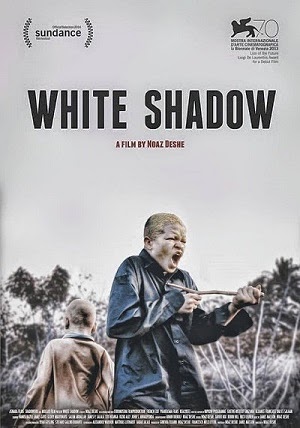
The film I most want to see from this region is Mohammad Rasoulof's Manuscripts Don't Burn, a clandestinely filmed drama about Iran's Secret Service police and their harassment of artists and intellectuals. Rasoulof would certainly have first-hand knowledge on that subject. The film is being likened more to 2011's solemn Goodbye (SFIFF55) than the director's earlier, otherworldly allegories like Iron Island and The White Meadows. The SFIFF57 line-up also features a trio of promising Sundance award winners from this part of the world. Zeresenay Berhane Mehari's Difret is an Ethiopian legal drama focused on women's rights, which won the festival's World Cinema Audience Award. Sundance awarded its Grand Jury Prize for World Cinema Documentary to Talal Derki's Return to Homs, a harrowing look at the effects of revolution on two young men in Syria's third largest city. The festival's documentary jury also saw to fit to award a special prize for "Cinematic Bravery" to Hubert Sauper's We Come as Friends, which examines the human cost of neo-colonialism in the newly formed nation of South Sudan. Sauper, whose 2004 Oscar®-nominated Darwin's Nightmare is one of my all-time favorites, is expected to attend the festival. Finally, in Noaz Deshi's fevered White Shadow, a Tanzanian albino teen struggles to remain alive in a culture that believes his body parts have restorative properties. The film has gotten incredible buzz since its Venice premiere, including the signing on of Ryan Gosling as executive producer. Variety's Guy Lodge praised the film as being "stylistically reckless in the best possible way," as it "veers wildly between earthy verité and near-ecstatic surrealism." White Shadow, as well as Difret will be competing for this year's New Director's Prize.
Out of all the movies in the festival line-up, it appears that Justin Simien's social satire Dear White People is the one Bay Area audiences are most excited about. Its two SFIFF57 screenings were among the very first to go to rush. A retinue of folks associated with the film is expected to attend the festival. As for me, I'm most looking forward to Night Moves, the eco-terrorism thriller from Kelly Reichardt (Wendy and Lucy, Meek's Cutoff), starring Dakota Fanning, Jesse Eisenberg and Peter Sarsgaard. I'm also hoping to see the adaptation of Cormac McCarthy's Child of God, directed by and co-starring the ubiquitous James Franco. (SFIFF57's Centerpiece Film Palo Alto, also co-stars Franco and is based on a book of his short stories.) The film is Franco's second 2013 directorial literary adaptation, following William Faulkner's As I Lay Dying. And because I love Susan Sarandon and nostalgic movies set in East coast seashore resort towns, I might also have to take a look at Michael Tully's Ping Pong Summer.
Jeremy Irons will receive this year's Peter J. Owens Acting Award, but it should be noted that SFIFF57 offers other opportunities for star-gazing. Indie queen Patricia Clarkson will attend the world premiere of Last Weekend on May 2, along with other cast members and the film's co-directors, Tom Williams and Tom Dolby. Dolby wrote the screenplay and is the son of pioneering sound engineer, Ray Dolby. Clarkson plays a well-to-do Lake Tahoe matriarch who gathers the family together for one final Labor Day weekend at the family manor. Saturday Night Live co-alumni Bill Hader and Kristen Wiig will also be in town for the May 1 screening of Craig Johnson's dysfunctional family dramedy The Skeleton Twins. It will be the film's first screening since its Sundance premiere back in January.
Roughly half of this year's U.S. feature films are documentaries, and a typically eclectic bunch they are. The first to grab my attention was Jeffrey Radice's No No: A Dockumentary. I'm no sports fan, but who doesn't want to see a film about the man who pitched a no-hitter, major league baseball game in 1970 while tripping on LSD? The player's name was Dock Ellis and his reputation as an African American rabble rouser who was told everything he did was a no-no, earned him the nickname, "The Muhammad Ali of the Ballpark." The film earns bonus points by having a score composed by the Beastie Boys' Adam Horovitz. No No: A Dockumentary will be shown with Michael Jacobs' 10-minute short The High Five, which explores "the origin of the seemingly most instinctual of celebratory gestures."
Perhaps as a result of Twenty Feet from Stardom winning last year's audience award for Best Documentary—not to mention that Oscar®—SFIFF57 will feature four music-related documentaries. These include a reminiscence of indie singer / songwriter Elliott Smith (Heaven Adores You), a stylized look at a day in the life of Australian rocker, author, screenwriter and film composer Nick Cave (20,000 Days on Earth), a bio-doc of the Grateful Dead's legendary rhythm guitarist (The Other One: The Long Strange Trip of Bob Weir) and finally a portrait of veteran entertainment manager Shep Gordon (Supermensch: The Legend of Shep Gordon). The latter reps the directorial debut of actor/comedian Mike Myers, and Mr. Gordon himself is expected to attend the festival. (The film opens at Landmark's Embarcadero Cinemas on June 13.) Also attending the fest will be The Dead's Bob Weir, who is expected to perform a mini-concert at his May 2 screening. I can only assume word has not gotten out about this, as tickets still seem to be available.
Here's a rundown of a few other American docs of possible interest. Jeremy Ambers' Impossible Light explores artist Leo Villareal's dream, which was to cover the Oakland Bay Bridge's suspension cables with 25,000 computer-programmed LED lights. It's quite beautiful to see, if you haven't been to the Embarcadero yet to experience it. I'm therefore curious why the festival has given this film of such obvious local interest just one screening—and scheduled it at 4:00 p.m. on a weekday? Biographical documentaries of a non-musical nature at SFIFF57 include The Dog, a 10-years-in-the-making portrait of John Wojtowicz, the real-life person portrayed by Al Pacino in Dog Day Afternoon, and Burt's Buzz, where you'll learn all about the bearded guy with the railroad cap whose singular image has graced billions of lip balm packages. Social issue documentaries are a mainstay of this festival and among this year's selections are films about Cesar Chavez (Cesar's Last Fast), the Mississippi civil rights movement in the summer of 1964 (Freedom Summer) and a conflict between immigrant workers and locals in a North Dakota fracking boomtown (The Overnighters).
For a few years now, the Academy of Motion Picture Arts and Sciences has sponsored a SFIFF World Cinema Spotlight, which "calls attention to a current trend in international filmmaking, bringing to light hot topics, reinvigorated genres, underappreciated filmmakers and national cinemas." This year the festival has chosen to spotlight New Voices in Latin American Cinema, with five films from first and second-time directors hailing from Costa Rica (Neto Villalobos' All About the Feathers), Mexico (Claudia Sainte-Luce's The Amazing Catfish), Venezuela (Mariana Rondón's Bad Hair), Argentina (Benjamin Naishtat's History of Fear) and Uruguay (Manolo Nieto's The Militant). They are joined by three additional features in making up SFIFF57's eight-film line-up of recent works from Latin America. For a savvy and extensive critical overview of these films, I defer to my esteemed colleague Michael Guillén's entry here on The Evening Class, whose special focus is Latin American Cinema. I'll end by saying that I am particularly excited the festival has programmed Club Sándwich, the third film from Mexican director Fernando Eimbcke. While SFIFF has shown his two previous features, Duck Season and Lake Tahoe, this is the first time that Eimbcke himself is scheduled to accompany his film to the Bay Area.
04/28/14 ADDENDUM: An added SFIFF screening of Jeremy Ambers' Impossible Light will be a special, outdoor screening for the general public on May 5th at 8 pm at the Exploratorium. Of note is that both screenings of Impossible Light sold out less than an hour after the outdoor one was announced, but Ambers has managed to also get the Roxie Theater to screen it on May 8th at 7:00PM, and possibly at a couple other theaters around the Bay Area thereafter.
Cross-published on film-415 (in a slightly alternate version).
Asia
While my enthusiasm for new Asian cinema has perhaps waned in recent years, I'm always game to see a new work by a favorite filmmaker. At this year's festival, that film will be Tsai Ming-liang's Stray Dogs. SFIFF has a long history with the minimalist Taiwanese director, going back to 1992's Rebels of the Neon Gods. (Not that I'm bragging, but that film's original Chinese poster hangs in my bathroom.) The festival was also responsible for bringing us Vive l'amour (1994), The River (1997), The Hole (1998) and The Wayward Cloud (2005). The consensus seems to be that his new film, Stray Dogs, is a return to form following the misfire of Face, Tsai's 2009 tripped-out take on Salomé (which remains unseen in the Bay Area). At this year's Golden Horse Awards—essentially the Oscars® for Chinese language indie / art films—Tsai won Best Director and his longtime filmic muse, Lee Kang-sheng, took Best Actor for this story of a father and two children surviving on the streets of Taipei. It's been very touching to have watched Lee age under Tsai's admiring gaze these past 22 years.
Another big name Asian auteur with a film in SFIFF57 is the prolific South Korean, Hong Sang-soo. Our Sunhi is one of two movies the filmmaker released in 2013, and it's the one that won him the Best Director prize at the Locarno Film Festival. Hong has been making films since 1996—Our Sunhi is his 15th feature—but it's only in the past few years that SFIFF has begun programming his work, screening Hahaha in 2011 and The Day He Arrives in 2012. His films are probably an acquired taste, with their squicky protagonists (as often as not, a drunken blowhard film director) and kinked-out narrative structures. Honestly, I found his earlier works almost unbearable. But I've been converted and am now fully on board the Hong train, eagerly awaiting a date with Our Sunhi.
Filipino cinema has experienced a renaissance in the Bay Area, thanks to curator Joel Shepard of the Yerba Buena Center for the Arts (YBCA). One of the directors he champions is Lav Diaz, an award-winning independent filmmaker whose socially and politically conscious films are also noted for their extreme length (2004's Evolution of a Filipino Family clocked in at nine hours). While my own singular experience with a Diaz film saw me lasting only halfway through 2011's six-hour Century of Birthing, I'm committed to catching the entirety of SFIFF57 selection Norte, the End of History. Running a brisk four hours and 15 minutes, Norte screened in Cannes' Un Certain Regard sidebar last year, and is said to be Diaz' most accessible film. If you're unable to catch it during the festival, YBCA will screen it four more times in June. On a related note, the festival will also present a 4K digital restoration of master Lino Brocka's 1975 masterpiece Manila in the Claws of Light. The film, which for some reason was titled Manila in the Claws of Darkness when I saw it at the festival decades ago, has been restored by Martin Scorsese's World Cinema Foundation with the assistance of Mike De Leon, the film's original cinematographer and an acclaimed director in his own right.
Two films from Kazakhstan have secured slots in the festival, Seric Aprymov's Bauyr (Little Brother) and Emir Baigazin's Harmony Lessons. I caught the latter at this year's Palm Springs International Film Festival and fully recommend it as a troubling, intensely cinematic allegory of institutionalized bullying and authoritarianism. A major caveat—animals were definitely harmed during filming, including, but not limited to, a roach getting fried on a miniature electric chair. There's also ample violence meted out against the film's teenage protagonists. I anticipate the unnerving Harmony Lessons will be one of the most talked about films at SFIFF57 amongst those who see it. Other possibilities within the festival's Asian narrative features include Peter Chan's American Dreams in China (with cinematography by Chris Doyle), Firestorm starring Hong Kong superstar Andy Lau, South Korean Late Show entry Intruders, Mary is Happy, Mary is Happy, with a story constructed from the Twitter musings of a Thai teen, and finally Tamako in Moratorium, from Nobuhiro Yamashita, director of 2005's hysterically funny Linda, Linda, Linda.
It happens that all three Asian documentaries I plan to see are works by Western filmmakers. My top doc choice of the entire festival is Stephanie Spray and Pacho Velez' Manakamana, which arrives from the visionary folks at Harvard's Sensory Ethnography Lab (Sweetgrass, Leviathan). It consists of only a dozen shots, all long takes of passengers riding a cable car up to the titular Nepalese mountaintop temple. On one trip it's a group of schoolboys, on another it's three old ladies eating rapidly melting ice cream cones, and on another it's a bunch of goats. I am truly looking forward to seeing this. From over in neighboring Bhutan there's also Thomas Balmès' Happiness, a docu-fiction hybrid that witnesses the changes brought to a small village by the arrival of electricity and the internet. Balmès is best known for the 2010 commercial hit documentary, Babies, and this new film is scored by favorite indie band, British Sea Power. Lastly, in Swiss director Luc Schaedler's Three Letters from China, we're presented with three intimate views of life in a rapidly changing People's Republic.
Middle East / Africa
The film I most want to see from this region is Mohammad Rasoulof's Manuscripts Don't Burn, a clandestinely filmed drama about Iran's Secret Service police and their harassment of artists and intellectuals. Rasoulof would certainly have first-hand knowledge on that subject. The film is being likened more to 2011's solemn Goodbye (SFIFF55) than the director's earlier, otherworldly allegories like Iron Island and The White Meadows. The SFIFF57 line-up also features a trio of promising Sundance award winners from this part of the world. Zeresenay Berhane Mehari's Difret is an Ethiopian legal drama focused on women's rights, which won the festival's World Cinema Audience Award. Sundance awarded its Grand Jury Prize for World Cinema Documentary to Talal Derki's Return to Homs, a harrowing look at the effects of revolution on two young men in Syria's third largest city. The festival's documentary jury also saw to fit to award a special prize for "Cinematic Bravery" to Hubert Sauper's We Come as Friends, which examines the human cost of neo-colonialism in the newly formed nation of South Sudan. Sauper, whose 2004 Oscar®-nominated Darwin's Nightmare is one of my all-time favorites, is expected to attend the festival. Finally, in Noaz Deshi's fevered White Shadow, a Tanzanian albino teen struggles to remain alive in a culture that believes his body parts have restorative properties. The film has gotten incredible buzz since its Venice premiere, including the signing on of Ryan Gosling as executive producer. Variety's Guy Lodge praised the film as being "stylistically reckless in the best possible way," as it "veers wildly between earthy verité and near-ecstatic surrealism." White Shadow, as well as Difret will be competing for this year's New Director's Prize.
U.S.A.
Out of all the movies in the festival line-up, it appears that Justin Simien's social satire Dear White People is the one Bay Area audiences are most excited about. Its two SFIFF57 screenings were among the very first to go to rush. A retinue of folks associated with the film is expected to attend the festival. As for me, I'm most looking forward to Night Moves, the eco-terrorism thriller from Kelly Reichardt (Wendy and Lucy, Meek's Cutoff), starring Dakota Fanning, Jesse Eisenberg and Peter Sarsgaard. I'm also hoping to see the adaptation of Cormac McCarthy's Child of God, directed by and co-starring the ubiquitous James Franco. (SFIFF57's Centerpiece Film Palo Alto, also co-stars Franco and is based on a book of his short stories.) The film is Franco's second 2013 directorial literary adaptation, following William Faulkner's As I Lay Dying. And because I love Susan Sarandon and nostalgic movies set in East coast seashore resort towns, I might also have to take a look at Michael Tully's Ping Pong Summer.
Jeremy Irons will receive this year's Peter J. Owens Acting Award, but it should be noted that SFIFF57 offers other opportunities for star-gazing. Indie queen Patricia Clarkson will attend the world premiere of Last Weekend on May 2, along with other cast members and the film's co-directors, Tom Williams and Tom Dolby. Dolby wrote the screenplay and is the son of pioneering sound engineer, Ray Dolby. Clarkson plays a well-to-do Lake Tahoe matriarch who gathers the family together for one final Labor Day weekend at the family manor. Saturday Night Live co-alumni Bill Hader and Kristen Wiig will also be in town for the May 1 screening of Craig Johnson's dysfunctional family dramedy The Skeleton Twins. It will be the film's first screening since its Sundance premiere back in January.
Roughly half of this year's U.S. feature films are documentaries, and a typically eclectic bunch they are. The first to grab my attention was Jeffrey Radice's No No: A Dockumentary. I'm no sports fan, but who doesn't want to see a film about the man who pitched a no-hitter, major league baseball game in 1970 while tripping on LSD? The player's name was Dock Ellis and his reputation as an African American rabble rouser who was told everything he did was a no-no, earned him the nickname, "The Muhammad Ali of the Ballpark." The film earns bonus points by having a score composed by the Beastie Boys' Adam Horovitz. No No: A Dockumentary will be shown with Michael Jacobs' 10-minute short The High Five, which explores "the origin of the seemingly most instinctual of celebratory gestures."
Perhaps as a result of Twenty Feet from Stardom winning last year's audience award for Best Documentary—not to mention that Oscar®—SFIFF57 will feature four music-related documentaries. These include a reminiscence of indie singer / songwriter Elliott Smith (Heaven Adores You), a stylized look at a day in the life of Australian rocker, author, screenwriter and film composer Nick Cave (20,000 Days on Earth), a bio-doc of the Grateful Dead's legendary rhythm guitarist (The Other One: The Long Strange Trip of Bob Weir) and finally a portrait of veteran entertainment manager Shep Gordon (Supermensch: The Legend of Shep Gordon). The latter reps the directorial debut of actor/comedian Mike Myers, and Mr. Gordon himself is expected to attend the festival. (The film opens at Landmark's Embarcadero Cinemas on June 13.) Also attending the fest will be The Dead's Bob Weir, who is expected to perform a mini-concert at his May 2 screening. I can only assume word has not gotten out about this, as tickets still seem to be available.
Here's a rundown of a few other American docs of possible interest. Jeremy Ambers' Impossible Light explores artist Leo Villareal's dream, which was to cover the Oakland Bay Bridge's suspension cables with 25,000 computer-programmed LED lights. It's quite beautiful to see, if you haven't been to the Embarcadero yet to experience it. I'm therefore curious why the festival has given this film of such obvious local interest just one screening—and scheduled it at 4:00 p.m. on a weekday? Biographical documentaries of a non-musical nature at SFIFF57 include The Dog, a 10-years-in-the-making portrait of John Wojtowicz, the real-life person portrayed by Al Pacino in Dog Day Afternoon, and Burt's Buzz, where you'll learn all about the bearded guy with the railroad cap whose singular image has graced billions of lip balm packages. Social issue documentaries are a mainstay of this festival and among this year's selections are films about Cesar Chavez (Cesar's Last Fast), the Mississippi civil rights movement in the summer of 1964 (Freedom Summer) and a conflict between immigrant workers and locals in a North Dakota fracking boomtown (The Overnighters).
Latin America
For a few years now, the Academy of Motion Picture Arts and Sciences has sponsored a SFIFF World Cinema Spotlight, which "calls attention to a current trend in international filmmaking, bringing to light hot topics, reinvigorated genres, underappreciated filmmakers and national cinemas." This year the festival has chosen to spotlight New Voices in Latin American Cinema, with five films from first and second-time directors hailing from Costa Rica (Neto Villalobos' All About the Feathers), Mexico (Claudia Sainte-Luce's The Amazing Catfish), Venezuela (Mariana Rondón's Bad Hair), Argentina (Benjamin Naishtat's History of Fear) and Uruguay (Manolo Nieto's The Militant). They are joined by three additional features in making up SFIFF57's eight-film line-up of recent works from Latin America. For a savvy and extensive critical overview of these films, I defer to my esteemed colleague Michael Guillén's entry here on The Evening Class, whose special focus is Latin American Cinema. I'll end by saying that I am particularly excited the festival has programmed Club Sándwich, the third film from Mexican director Fernando Eimbcke. While SFIFF has shown his two previous features, Duck Season and Lake Tahoe, this is the first time that Eimbcke himself is scheduled to accompany his film to the Bay Area.
04/28/14 ADDENDUM: An added SFIFF screening of Jeremy Ambers' Impossible Light will be a special, outdoor screening for the general public on May 5th at 8 pm at the Exploratorium. Of note is that both screenings of Impossible Light sold out less than an hour after the outdoor one was announced, but Ambers has managed to also get the Roxie Theater to screen it on May 8th at 7:00PM, and possibly at a couple other theaters around the Bay Area thereafter.
Cross-published on film-415 (in a slightly alternate version).
Tuesday, April 15, 2014
EDEN INTERRUPTED—Dayna Goldfine and Dan Geller On the Unreliable Narrators & Self-Made Mythologies of The Galapagos Affair, and Nathaniel Dorsky's Involvement With Ballets Russes
I'm pleased to announce that my friends at Fandor have published my conversation with Dayna Goldfine and Dan Geller on the occasion of the theatrical release of their most recent documentary The Galapagos Affair: Satan Comes to Eden. In this piece, Goldfine and Geller talk unreliable narrators and self-made mythologies. A reminder that the body of this duo's remarkable work can be streamed at Fandor.
Anyone who knows me realizes that, for me, conversations are like liquid gold and I hate to waste a drop. So, though not necessary for a conversation on their latest documentary, I did enjoy asking a few questions about Goldfine and Geller's previous film Ballets Russes (2005).
Dayna Goldfine: I remember with Ballets Russes, the first time we looked at some of the archival footage, we were sitting in the Library of Performing Arts in New York and we didn't know the dancers yet. I don't think we had even done more than one or two interviews. So we were looking at these rare, grainy black and white images on little screens and they didn't mean a thing to us. It really took these beautiful living human beings to talk about them, moving back and forth in time between them; it took that kind of effort to make those images mean something to an audience.
Michael Guillén: Along with your skill at editorial timing. One of my favorite moments in Ballets Russes was when you were profiling Nathalie Krassovska. I adored her! Those uplifted, insouciant eyebrows! And her ostentatious jewelry! And when you were focusing on her ill-fated love affairs and the one marriage that ended in divorce four months later and you cut to her and she's coyly laughing with an innocent, demure air. Brilliant.
And since we're talking about Ballets Russes, I'm intrigued by Nathaniel Dorsky's involvement as an editorial consultant. Can you speak to his involvement?
Daniel Geller: He came on to Ballets Russes early on. He was the first editor on the project. He brought it to the point where we got a lot of the scenes on their feet. It was a hard movie. We had all these characters and wonderful stories about their origins, their feelings about dance, and all this history. We had actually done a couple of cuts with Nick. One focusing on characters only, not worrying about any of the history, and another one laying out the tracks of the history. At that point, I think we were all exhausted. Even Nick said, "Maybe it's time to take a break and bring someone else in with some fresh eyes to edit." That's when Gary Weimberg came in with a fresh blast of enthusiasm and his own eye and artistry and really jazzed up the two of us as well. We melded those two editorial strains into one movie.
Goldfine: But, also, Nick is a huge George Balanchine fan.
Guillén: I didn't know that!
Goldfine: If you ever go to the ballet and there's a Balanchine program on, look up at the standing room only area behind the seats and you'll see Nick there. We didn't know that when we called him. We just loved his films and had looked at the film on Paul Bowles that he had edited for Owsley Brown (Night Waltz: The Music of Paul Bowles, 2000), which we thought was a beautiful collaboration.
Geller: And we had worked with Nick before on our follow-up to Frosh (1994), Now and Then (1999).
Goldfine: We had called him to see if he would be interested in our subject, the Ballets Russes. He said, "Oh my God, I revere Balanchine and ballet." So Nick definitely brought a certain musicality to, especially, our initial approach to the footage and those sections.
Anyone who knows me realizes that, for me, conversations are like liquid gold and I hate to waste a drop. So, though not necessary for a conversation on their latest documentary, I did enjoy asking a few questions about Goldfine and Geller's previous film Ballets Russes (2005).
* * *
Dayna Goldfine: I remember with Ballets Russes, the first time we looked at some of the archival footage, we were sitting in the Library of Performing Arts in New York and we didn't know the dancers yet. I don't think we had even done more than one or two interviews. So we were looking at these rare, grainy black and white images on little screens and they didn't mean a thing to us. It really took these beautiful living human beings to talk about them, moving back and forth in time between them; it took that kind of effort to make those images mean something to an audience.
Michael Guillén: Along with your skill at editorial timing. One of my favorite moments in Ballets Russes was when you were profiling Nathalie Krassovska. I adored her! Those uplifted, insouciant eyebrows! And her ostentatious jewelry! And when you were focusing on her ill-fated love affairs and the one marriage that ended in divorce four months later and you cut to her and she's coyly laughing with an innocent, demure air. Brilliant.
And since we're talking about Ballets Russes, I'm intrigued by Nathaniel Dorsky's involvement as an editorial consultant. Can you speak to his involvement?
Daniel Geller: He came on to Ballets Russes early on. He was the first editor on the project. He brought it to the point where we got a lot of the scenes on their feet. It was a hard movie. We had all these characters and wonderful stories about their origins, their feelings about dance, and all this history. We had actually done a couple of cuts with Nick. One focusing on characters only, not worrying about any of the history, and another one laying out the tracks of the history. At that point, I think we were all exhausted. Even Nick said, "Maybe it's time to take a break and bring someone else in with some fresh eyes to edit." That's when Gary Weimberg came in with a fresh blast of enthusiasm and his own eye and artistry and really jazzed up the two of us as well. We melded those two editorial strains into one movie.
Goldfine: But, also, Nick is a huge George Balanchine fan.
Guillén: I didn't know that!
Goldfine: If you ever go to the ballet and there's a Balanchine program on, look up at the standing room only area behind the seats and you'll see Nick there. We didn't know that when we called him. We just loved his films and had looked at the film on Paul Bowles that he had edited for Owsley Brown (Night Waltz: The Music of Paul Bowles, 2000), which we thought was a beautiful collaboration.
Geller: And we had worked with Nick before on our follow-up to Frosh (1994), Now and Then (1999).
Goldfine: We had called him to see if he would be interested in our subject, the Ballets Russes. He said, "Oh my God, I revere Balanchine and ballet." So Nick definitely brought a certain musicality to, especially, our initial approach to the footage and those sections.
SFIFF57—Michael Hawley Peruses the Line-Up Elsewhere In Europe
The 57th San Francisco International Film Festival (SFIFF57) is set to begin in ten days and so far we've taken a glance at this year's awards and special presentations, as well as the impressive line-up of French selections. The festival will also present a generous number of European films from outside France and here are some thoughts on the ones which have grabbed my attention.
Four films from the UK and Ireland made my SFIFF57 must-see list. All have major U.S. distribution, so we'll see if I catch them at the fest or wait for their respective upcoming theatrical releases. (At this point, it appears none have directors or other talent accompanying them to the festival). Like many people, I'm especially dying to see The Trip to Italy, Michael Winterbottom's sequel to 2010's The Trip, starring Steve Coogan and Rob Brydon as comically annoying versions of themselves out on the road. UK director Richard Ayoade follows up his acclaimed 2010 directorial debut Submarine with what appears to be another critical success, the Dostoevsky-based, dystopian doppelganger dramedy The Double, starring Jesse Eisenberg and Mia Wasilkowska (opening May 16 at the Landmark's Opera Plaza). Also returning with a lauded sophomore film is Irish director John Michael McDonagh, whose black comedy Calvary drew raves at Sundance and Berlin. This is his second collaboration with actor Brendan Gleeson (The Guard), here playing a village priest threatened with murder by an unseen confessor. Calvary is a last-minute addition not listed in the festival's printed program. Then in Lenny Abrahamson's absurdist indie-rock fable, Frank, Michael Fassbender's handsome face remains hidden through an entire movie, whilst he delivers lines from under a giant fiberglass head.
From the continent's Eastern extremes, SFIFF57 brings us a pair of Georgian films. In case you haven't heard, the former Soviet Socialist Republic is the world's latest hotbed of emerging film talent. This "new" Georgian cinema movement is loosely thought to have begun with Levan Koguashvili's 2010 neo-realist junkie saga, Street Days. While that film has yet to appear in the Bay Area, the director's follow-up film Blind Dates, has earned a slot in this year's SFIFF line-up, along with Zaza Urushadze's anti-war tale Tangerines. I understand the Pacific Film Archive will be doing a Georgian series later this year and hopefully Street Days and Nana Ekvtimishvili's In Bloom, a terrific Georgian film I recently saw at the Palm Springs International Film Festival, will be included. From Georgia's neighbor Turkey, SFIFF57 is bringing us Zeynep Dadak and Merve Kayan's rambunctious female coming-of-age tale The Blue Wave, which is competing for SFIFF57's New Directors Prize. It might be remembered that last year's prize went to a debut Turkish film, Belmin Söylemez' Present Tense. Lastly from The East, I'm very grateful the festival has programmed Romania's When Evening Falls on Bucharest or Metabolism, another captivating-sounding exercise in cinematic formalism from Corneliu Porumboiu, director of 12:08 East of Bucharest and Police, Adjective.
Rounding out the list of SFIFF57 European narrative features I'd like to catch are a trio from Scandinavia (albeit at its most loosely defined). Lukas Moodysson's We Are the Best! is said to be a return to the ebullience of his early films like Show Me Love and Together, following a string of four gravely dour projects that marked the Swedish director's output in the Aughts. His latest follows the ups and downs of an all-girl punk band in the 80's and is scheduled to open theatrically on June 6. While violent genre films from anywhere in the world are rarely my cup of grog, I've read enticing things about Alex van Warmerdam's Danish entry Borgman. The festival's capsule write-up suggests it's like Boudu Saved from Drowning as directed by David Lynch instead of Jean Renoir, and that's exactly how it comes across in the trailer. Along with François Ozon's Young and Beautiful, it's one of two SFIFF57 films that were in Cannes' main competition last year. Then in Benedikt Erlingsson's dryly humorous Of Horses and Men, a series of inventive vignettes explore relationships between man/beast and man / man in the Icelandic countryside. Friends who caught this 2014 Icelandic Oscar® submission at Palm Springs had only great things to say.
Four non-French European documentaries also make my SFIFF57 must-see list, starting with Joaquim Pinto's What Now? Remind Me, a 164-minute rumination on the director's year-long co-habitation with toxic, mind-altering drugs used to combat his HIV and Hepatitis C. The film won FIPRESCI and Special Jury Prizes at last year's Locarno Film Festival. I missed seeing Lois Patiño's Coast of Death at Palm Springs and am therefore grateful to find it here. This narration-less portrait of Spain's rugged Galician coast employs a device whereby human figures are miniscule within long-shots of nature, but their individual voices are heard crystal clear on the film's soundtrack. One of my favorite films of last year's festival was P.O.V. award-winner Jem Cohen's Museum Hours, which was largely set inside Vienna's Kunsthistorisches Museum. Johannes Holzhausen's The Great Museum takes an in-depth, Frederick Wiseman-like look at this revered institution's inner workings as it prepares for a 2013 renovation. And last but certainly not least, Mark Cousins follows up his staggeringly great 15-hour doc series The Story of Film with the self-explanatory A Story of Children and Film.
Cross-published on film-415.
Thursday, April 10, 2014
SFIFF57—Michael Hawley Previews the French Films
Now that we've gotten the 57th San Francisco International Film Festival's roster of special programs out of the way, it's time to get into the nitty-gritty of this year's promising, 103-feature film line-up. In my next few dispatches, I'll be regionally surveying the titles which have grabbed my interest. As always we'll be starting with France, because that's where most of the films I wish to see hail from.
In addition to being alphabetically first in the festival catalog, Catherine Breillat's Abuse of Weakness is the film I'm most jonesing to see at SFIFF57. In this essentially autobiographical work, Isabelle Huppert plays a movie director incapacitated by a stroke, who falls prey to a handsome conman (portrayed by French rapper Kool Shen). Breillat has a long history with the festival, and appeared here in person when The Last Mistress opened the fest in 2008. Since then, SFIFF has brought us the director's two fairytale adaptations, Bluebeard (2009) and The Sleeping Beauty (2011) and I'm pleased they've followed through with her latest. Isabelle Huppert shows up again in the SFIFF57 selection Tip Top. She and Sandrine Kiberlain star as detectives investigating police corruption and a small town murder. The film has been described as a perverse, screwball neo-noir and comes from writer / director Serge Bozon, whose odd WWI musical La France played the festival in 2008. Alas, the fest has chosen not to bring us Huppert's turn as a horny mother superior in 2013's The Nun.
If memory serves, it's been a while since a bona fide French movie star attended SFIFF—Ludivine Sagnier accompanying Claude Chabrol's A Girl Cut in Two in 2008, perhaps—so I'm excited at the prospect of actor Romain Duris being here for the April 26 showing of Chinese Puzzle, along with director Cédric Klapisch. Duris, for those who can't place the name, co-starred in last year's SFIFF audience award winner, 1950's speed-typing rom-com, Populaire. I first took note of him when the festival showed Tony Gatlif's Gadjo Dilo in 1998. His new film closes out a loose trilogy, all directed by Klapisch, that includes L'Auberge Espagnole (2002) and Russian Dolls (2005). While there's only one screening at the festival, Chinese Puzzle will open at Landmark's Embarcadero Cinema on May 23. Another SFIFF57 French film scheduled to open soon locally (May 9 at Landmark's Opera Plaza) is François Ozon's Young & Beautiful, a matter-of-fact portrait of a teenage Parisienne's dabblings in prostitution, which screened in competition at Cannes last year.
SFIFF tends to pass on most films of LGBT interest—I've always assumed out of deference to the Frameline LGBT film fest which takes place each June. I was therefore surprised and not displeased to find at least seven such films in the 2014 line-up, four of them French or French co-productions. I'm most looking forward to Salvation Army, by first-time director Abdellah Taïa. Based on his autobiographical novel, it's the two-part story of a gay Moroccan teenager living with his family in Casablanca, whom we meet again 10 years later residing in Geneva. The film has received raves since its premiere at Venice last September and features cinematography by the incomparable Agnès Godard. Also on the LGBT tip is Robin Campillo's Eastern Boys, wherein a middle-aged Parisian gets more than he bargained for upon taking up with an Eastern European train station hustler. Campillo is best known for screenplays co-written with Laurent Cantet (Time Out, The Class) and Eastern Boys is the first film he's directed since 2004's zombie flick, Les revenants.
Actor Niels Arestrup is always recognizable for the older, macho types he's played in such films as The Beat My Heart Skipped and A Prophet. It should therefore be interesting to see him play a worn out, missing-persons detective who happens to be gay in Yossi Aviram's The Dune. The film co-stars Israeli heartthrob Lior Ashkenazi (Late Marriage, Walk on Water) as a long-estranged son and has been praised for its authentic depiction of an elderly gay couple. Finally, while I couldn't care less about haute couture and have shunned the entire glut of recent fashion designer documentaries, I'm intrigued by SFIFF57's bio-pic of Yves Saint Laurent. That's because Jalil Lespert, an actor I've always admired (Human Resources, the titular Le petit lieutenant), has for some reason chosen this as his third directorial feature. Lespert attended the festival in 2005 when he accompanied Robert Guédiguian's The Last Mitterrand to San Francisco. Yves Saint Laurent will also open at Landmark's Opera Plaza on July 4.
Two additional SFIFF57 French narrative features have caught my eye. If you've attended recent editions of the SF Film Society's French Cinema Now, you're familiar with the droopy-eyed, stringy-haired countenance of actor Vincent Macaigne. He starred in last year's FCN opening nighter 2 Autumns, 3 Winters, and the previous year's double-billed shorts A World Without Women and Stranded. Those shorts were directed by Guillaume Brac, whose new film Tonnerre finds Macaigne playing a rock star whose life gets complicated during a hometown visit. Then in Sophie Fillières' If You Don't, I Will, two of my favorite French stars, Emmanuelle Devos and Mathieu Amalric, pair up as an out-of-sorts couple (as they've done before in the films of Arnaud Desplechin). Amalric, it might be mentioned, is said to have an unforgettable cameo in the aforementioned The Dune.
One of the nicest surprises to be found in this year's line-up is the documentary Agnès Varda: From Here to There. In this 5-part French TV mini-series which originally aired in 2011, the 85-year-old "Godmother of the French New Wave" journeys around Europe doing what she does best, which is simply being Agnès Varda. Her itinerary includes conversations with directors Chris Marker, Alexander Sokurov, Carlos Reygadas and Manoel de Oliveira. The series can be enjoyed in one fell 225-minute swoop or spread across five short weekday matinees. Another French doc I'm looking forward to is Julie Bertuccelli's School of Babel, an intimate look at a Parisian "reception" class for immigrant students. Bertuccelli's last documentary to play the festival, 2007's The Whistling Blackbird, followed the production of veteran French-Georgian director Otar Iosseliani's Gardens in Autumn, and was considerably better than the film it observed in the making. Bertuccelli is also known for her narrative features Since Otar Left (2003) and The Tree (2010).
Finally, as a 20th anniversary tribute, the festival will screen a 159-minute restored director's cut of Patrice Chéreau's Queen Margot, starring Isabelle Adjani, Daniel Auteuil, Virna Lisi and Vincent Perez. Steven Jenkins' florid description of the film in the catalog will jog your memory as to why it deserves to be revisited.
Cross-published at film-415.
Subscribe to:
Posts (Atom)