Sunday, February 03, 2013
NOIR CITY 11: SUNSET BLVD. (1950)—Eddie Muller Introduction
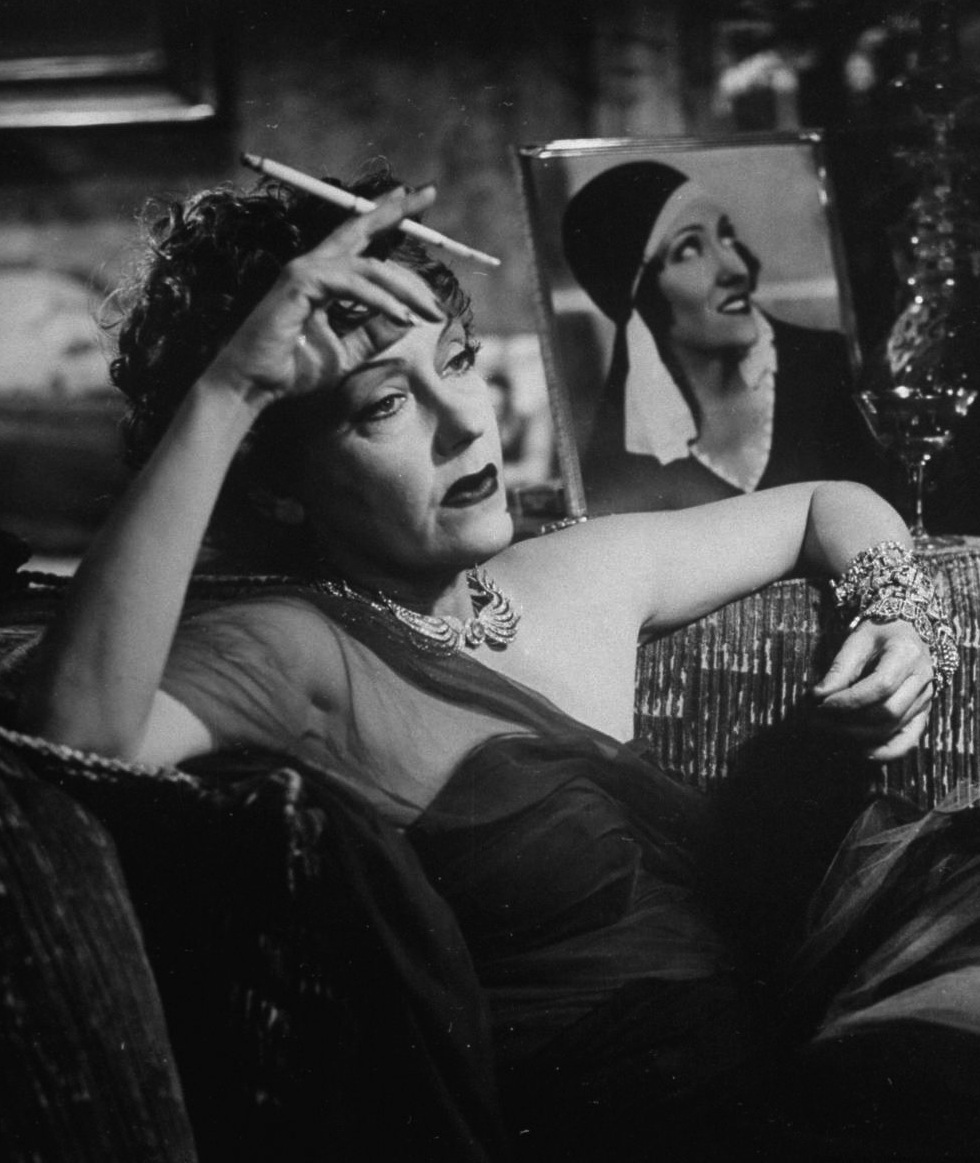
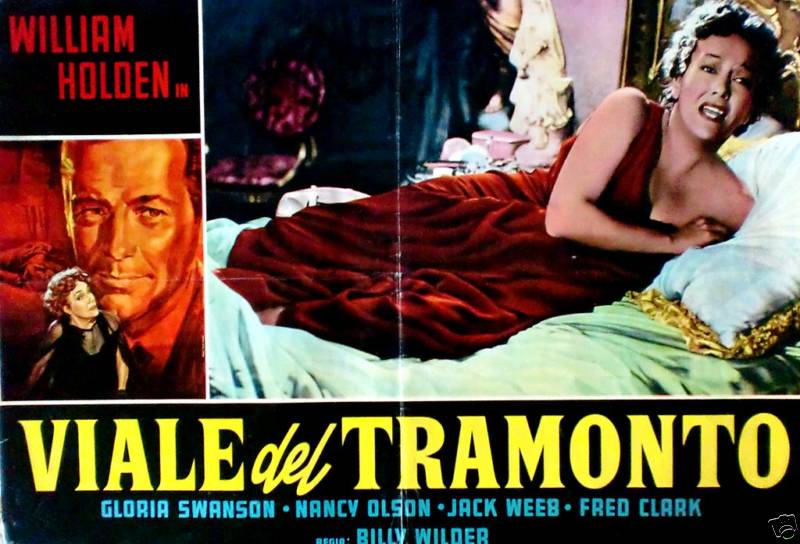
"The theme of today's screenings is 'showbiz noir'," announced Bill Arney, the Voice of Noir City. "And as someone with their own television show Cheese Theatre every Saturday night at 10:00pm on Comcast's Channel 26 Marin, I know a thing or two about the darkness and despair at the core of so-called 'entertainment'. But today is a happy day because we are about to present the American premiere of the digital restoration of one of the greatest films of all time, noir or otherwise: Sunset Blvd."
Eddie Muller then took to the Castro Theatre stage to introduce the film. "I am very excited about today's program for a number of reasons, but number one it's because—not only were we able to create a double-bill of show business noir; Broadway and New York in Repeat Performance and good ol' Hollywood and California in Sunset Blvd.—but we also get to finally show one of our brand-new 35mm restorations (Repeat Performance) side by side with a fully digital restoration of a classic film. As you know, this has been a major issue not just here at Noir City but all over the world as digital becomes the standard for film preservation. Those of you who have been here regularly know that I'm a hardliner—our catchphrase for this year is 'keeping it reel'—but I'm also not a fool. I know that I could spend the rest of my life fighting the future; but, I will—as much as I possibly can—hold the responsible people's feet to the fire and demand that what's actually put out there for public consumption is absolutely and positively as good as it can possibly be. So, in that vein, I am absolutely thrilled that Paramount Pictures has chosen Noir City and the Castro Theatre to premiere its digital restoration of probably its greatest film. So this is quite an honor and you, this audience right here, is in for a treat because you are the first people in America to see this."
Hoping that some people in the audience were seeing Sunset Blvd. for the very first time, Muller mentioned as "a cute little aside" that Bill Arney, the "Voice of Noir" up in the projection booth, met his future bride at a Noir City festival many years ago and Laurel, his wife, has been bugging Muller ever since to show her favorite film Sunset Blvd. at Noir City. "Well, Laurel," Muller shouted out, "I am showing Sunset Blvd. on your birthday!" and then quipped to Arney, "Bill, if you don't get lucky tonight…."
Muller admitted there was little he could say about one of the greatest films ever made, other than that Billy Wilder totally deserves all the credit. It was a film shot almost entirely in secret. Wilder and Charles Brackett wrote the script for the film in fits and starts and actually went into production without a finished script. The story behind the casting of Gloria Swanson is now legendary. Many actresses were approached in Hollywood for what was considered a kiss of death role and much praise must go to Swanson—who had been a huge silent film star—for embracing this and creating one of film's truly legendary characters: Norma Desmond.
William Holden's performance is likewise splendid and it must be remembered that—at the time the film was made—Holden was not a huge star. His rising star had actually dimmed and a lot of people thought that his appearing next to this "tarantula" on screen was not the wisest choice; but, he gave an amazing performance that revitalized his career.
The one little tidbit that Muller wanted to share about Sunset Blvd. was that—when David Lynch was filming Eraserhead, which took him years to get done—he worked with a lot of different crews, and before he would start filming each time he would sit everybody down and show them Sunset Blvd. and said, "This is the feel I want for my movie." Who would have thought there would have been a connection between Sunset Blvd. and Eraserhead?
Finally, Muller gave a big shoutout to Andrea Kalas of Paramount Pictures for making this restoration happen and for allowing Noir City to host the American premiere.
Of related interest: Brian Darr's write-up on Sunset Blvd. for Hell on Frisco Bay, wherein he notes: "Today's Sunset Blvd. screenings are the first time in eleven years that Noir City is trumpeting the world premiere of a restoration not presented from a newly-struck 35mm print but a newly-created DCP drive. Sunset Blvd. is one of four such digital presentations at the festival, also to include Experiment in Terror on Wednesday and the pair of 3-D films on Friday. For some this may feel like the beginning of the end of an era for a festival that has almost never utilized digital projection for anything other than its pre-feature montages, and a betrayal of this year's terrific poster image and slogan 'keeping it reel'."
Eddie Muller then took to the Castro Theatre stage to introduce the film. "I am very excited about today's program for a number of reasons, but number one it's because—not only were we able to create a double-bill of show business noir; Broadway and New York in Repeat Performance and good ol' Hollywood and California in Sunset Blvd.—but we also get to finally show one of our brand-new 35mm restorations (Repeat Performance) side by side with a fully digital restoration of a classic film. As you know, this has been a major issue not just here at Noir City but all over the world as digital becomes the standard for film preservation. Those of you who have been here regularly know that I'm a hardliner—our catchphrase for this year is 'keeping it reel'—but I'm also not a fool. I know that I could spend the rest of my life fighting the future; but, I will—as much as I possibly can—hold the responsible people's feet to the fire and demand that what's actually put out there for public consumption is absolutely and positively as good as it can possibly be. So, in that vein, I am absolutely thrilled that Paramount Pictures has chosen Noir City and the Castro Theatre to premiere its digital restoration of probably its greatest film. So this is quite an honor and you, this audience right here, is in for a treat because you are the first people in America to see this."
Hoping that some people in the audience were seeing Sunset Blvd. for the very first time, Muller mentioned as "a cute little aside" that Bill Arney, the "Voice of Noir" up in the projection booth, met his future bride at a Noir City festival many years ago and Laurel, his wife, has been bugging Muller ever since to show her favorite film Sunset Blvd. at Noir City. "Well, Laurel," Muller shouted out, "I am showing Sunset Blvd. on your birthday!" and then quipped to Arney, "Bill, if you don't get lucky tonight…."
Muller admitted there was little he could say about one of the greatest films ever made, other than that Billy Wilder totally deserves all the credit. It was a film shot almost entirely in secret. Wilder and Charles Brackett wrote the script for the film in fits and starts and actually went into production without a finished script. The story behind the casting of Gloria Swanson is now legendary. Many actresses were approached in Hollywood for what was considered a kiss of death role and much praise must go to Swanson—who had been a huge silent film star—for embracing this and creating one of film's truly legendary characters: Norma Desmond.
William Holden's performance is likewise splendid and it must be remembered that—at the time the film was made—Holden was not a huge star. His rising star had actually dimmed and a lot of people thought that his appearing next to this "tarantula" on screen was not the wisest choice; but, he gave an amazing performance that revitalized his career.
The one little tidbit that Muller wanted to share about Sunset Blvd. was that—when David Lynch was filming Eraserhead, which took him years to get done—he worked with a lot of different crews, and before he would start filming each time he would sit everybody down and show them Sunset Blvd. and said, "This is the feel I want for my movie." Who would have thought there would have been a connection between Sunset Blvd. and Eraserhead?
Finally, Muller gave a big shoutout to Andrea Kalas of Paramount Pictures for making this restoration happen and for allowing Noir City to host the American premiere.
Of related interest: Brian Darr's write-up on Sunset Blvd. for Hell on Frisco Bay, wherein he notes: "Today's Sunset Blvd. screenings are the first time in eleven years that Noir City is trumpeting the world premiere of a restoration not presented from a newly-struck 35mm print but a newly-created DCP drive. Sunset Blvd. is one of four such digital presentations at the festival, also to include Experiment in Terror on Wednesday and the pair of 3-D films on Friday. For some this may feel like the beginning of the end of an era for a festival that has almost never utilized digital projection for anything other than its pre-feature montages, and a betrayal of this year's terrific poster image and slogan 'keeping it reel'."
Saturday, February 02, 2013
NOIR CITY 11: REPEAT PERFORMANCE (1947)—Alan K. Rode Introduction
In his introduction to a double bill of "showbiz noir", Alan K. Rode stated that those in the audience who were habituers of Noir City would recall that Repeat Performance (1947) screened at the festival in 2008. Joan Leslie was the featured guest that year and was given an on-stage tribute, despite the unfortunate fact that a 16mm print was the best that was available to screen at that time. So when Todd Weiner and company at the UCLA Television and Film Archive asked the Film Noir Foundation (FNF) to partner in a 35mm restoration, FNF immediately said yes.
Repeat Performance is historically important for a number of reasons. Although Eddie Muller's notes in the souvenir program guide describe the film as a backstage melodrama crossed with The Twilight Zone, Rode described Repeat Performance as the film noir version of It's A Wonderful Life. "Who else," he posed, "gets the chance to relive the past year after they've killed their husband on New Year's Eve?"
The film was made in 1947 and directed by Alfred Werker, better-known for He Walked By Night made the following year. Originally, Jules Dassin had been hired to direct the film with Franchot Tone in the lead role but in Hollywood—then as now—all that changed and Werker stepped in to direct and Louis Hayward was cast as the male lead instead. Hayward was a major star married to Ida Lupino who went off to war in the Pacific, saw quite a lot of combat action, and—as with many people involved in the war—came back a changed man, divorced Lupino, and ended up increasingly in B pictures; though in 1947 he was still a major star.
Interestingly enough, the Assistant Director on Repeat Performance was Robert Stillman (who produced Try and Get Me!). Stillman went on to become Stanley Kramer's partner on a number of productions into the 1950s. Repeat Performance also featured Virginia Field, Tom Conway (who took a break from playing The Falcon at RKO to play a role that his brother George Sanders might have been better suited for), and Natalie Schafer (better known for playing the wife of Thurston Howell III on Gilligan's Island).
But most notably, Repeat Performance was the feature debut of a quite young and beautiful Richard Basehart. Basehart had received the New York Drama Critics Award for his performance in the Broadway production of The Hasty Heart and was brought to Hollywood amidst great fanfare. He didn't end up at MGM, or Warner's, or 20th Century Fox but at Eagle-Lion, a studio that was trying to build itself up as a solid competitor, with Repeat Performance being one of their key projects in their effort to produce A films. The problem lay in the fact that the major studios at that time also controlled the theaters. Eagle-Lion became involved in the infamous lawsuit that resulted in the studios having to divest themselves of their theaters, thereby breaking that monopoly and ushering in the collapse of the studio system. Repeat Performance premiered in Richard Basehart's home town Blainville, Ohio. Basehart, of course, went on to star in many other films and television projects, including the memorable narrative voiceover for the 1984 Olympics.
Watching this gorgeous restoration print of Repeat Performance reminded me that it was one of the first films to focus my attention on the use of Diego Rivera's Cargador de Flores as set decoration—not only here but again in such noir favorites as Walk A Crooked Mile (1948) and The Prowler (1951)—which I wrote up for The Evening Class for Noir City 6.
Repeat Performance is historically important for a number of reasons. Although Eddie Muller's notes in the souvenir program guide describe the film as a backstage melodrama crossed with The Twilight Zone, Rode described Repeat Performance as the film noir version of It's A Wonderful Life. "Who else," he posed, "gets the chance to relive the past year after they've killed their husband on New Year's Eve?"
The film was made in 1947 and directed by Alfred Werker, better-known for He Walked By Night made the following year. Originally, Jules Dassin had been hired to direct the film with Franchot Tone in the lead role but in Hollywood—then as now—all that changed and Werker stepped in to direct and Louis Hayward was cast as the male lead instead. Hayward was a major star married to Ida Lupino who went off to war in the Pacific, saw quite a lot of combat action, and—as with many people involved in the war—came back a changed man, divorced Lupino, and ended up increasingly in B pictures; though in 1947 he was still a major star.
Interestingly enough, the Assistant Director on Repeat Performance was Robert Stillman (who produced Try and Get Me!). Stillman went on to become Stanley Kramer's partner on a number of productions into the 1950s. Repeat Performance also featured Virginia Field, Tom Conway (who took a break from playing The Falcon at RKO to play a role that his brother George Sanders might have been better suited for), and Natalie Schafer (better known for playing the wife of Thurston Howell III on Gilligan's Island).
But most notably, Repeat Performance was the feature debut of a quite young and beautiful Richard Basehart. Basehart had received the New York Drama Critics Award for his performance in the Broadway production of The Hasty Heart and was brought to Hollywood amidst great fanfare. He didn't end up at MGM, or Warner's, or 20th Century Fox but at Eagle-Lion, a studio that was trying to build itself up as a solid competitor, with Repeat Performance being one of their key projects in their effort to produce A films. The problem lay in the fact that the major studios at that time also controlled the theaters. Eagle-Lion became involved in the infamous lawsuit that resulted in the studios having to divest themselves of their theaters, thereby breaking that monopoly and ushering in the collapse of the studio system. Repeat Performance premiered in Richard Basehart's home town Blainville, Ohio. Basehart, of course, went on to star in many other films and television projects, including the memorable narrative voiceover for the 1984 Olympics.
Watching this gorgeous restoration print of Repeat Performance reminded me that it was one of the first films to focus my attention on the use of Diego Rivera's Cargador de Flores as set decoration—not only here but again in such noir favorites as Walk A Crooked Mile (1948) and The Prowler (1951)—which I wrote up for The Evening Class for Noir City 6.
NOIR CITY 11: HELL DRIVERS (1957)—Filmprogramme
Underscoring the international reach of film noir, here's a lovely set of German images for Hell Drivers (Duell am Steuer), courtesy of one of my favorite film blogs Filmprogramme.
NOIR CITY 11: TRY AND GET ME! (aka, THE SOUND OF FURY, 1951)—Eddie Muller Introduction
Eddie Muller introduced Try and Get Me! (aka The Sound of Fury, 1951) as an extraordinary production based on a true story with a local angle, namely an infamous incident that took place in 1934 in San Jose, California—the kidnapping and murder of Brooke Hart and the highly-publicized public lynching of his murderers—that serves as the basis for this film, which first inspired Fritz Lang's Fury (1936) and later Joe Pagano's novel The Condemned, written in the late 1940s.
Try and Get Me! was the first film of fledgling producer Robert Stillman who bought the rights to Pagano's novel and hired him to draft the screenplay. In addition to being a continuation of honoring Noir City's guest Peggy Cummins—by way of Curse of the Demon (1957) and Hell Drivers (1957) shown at the festival earlier in the afternoon—Try and Get Me! joined those two films as a subtle tribute to Cy Endfield, who was the uncredited writer for Curse of the Demon, the writer and director of Hell Drivers, and the director and final uncredited screenwriter for Try and Get Me!
Describing Noir City's opening night feature Gun Crazy (1950) as "catching lightning in a bottle", Muller commented that the same could be said of Try and Get Me! After Frank Lovejoy and Lloyd Bridges give, perhaps, their best performances in a motion picture, there is also an underappreciated yet fascinating supporting role by Katherine Locke. The ever fabulous Adele Jergens is likewise in the cast and, of course, Richard Carlson—ever easy on the eyes—plays the ambitious news reporter too quick to break a story, inciting unbridled public fury.
Like so many of the films that Noir City seeks to find and preserve, Try and Get Me! was released at the height of the Hollywood witch hunt era. Cy Endfield was one of the men blacklisted during that period and Try and Get Me! became the last film he would make in the United States. Just like Jules Dassin, he left the country, went to England where—because of his name Cyril Endfield—he was presumed by later generations to be an Englishman. He went on to do a lot of work with Stanley Baker, made the great historical epic Zulu (1964) with Michael Caine, and so everyone thought he was British, though in fact he was Cy Endfield from New York.
Obviously, Endfield, and Robert Stillman and Joe Pagano felt they had created something incredibly special with this movie. It was released in December of 1950 under the title The Sound of Fury. Because of the witch hunt climate of the time, the film was considered somehow "dirty", was almost immediately withdrawn from circulation and retitled Come and Get Me!, except in two cities where it continued to play as The Sound of Fury: San Francisco and Los Angeles.
Muller admitted that Come and Get Me! is a film he has wanted to restore since the beginning of the Film Noir Foundation (FNF) and, thus, he was especially delighted to have finally achieved this through the auspices of FNF and the UCLA Television and Film Archive, let alone to be presenting the world premiere of the film's 35mm restoration at Noir City. It was "a torturous road" and Muller felt compelled to thank Paramount who—they found out—did own the picture and allowed the restoration to happen. He also shouted out to the For the Love Of Film (Noir) Film Preservation Blogathon hosted by Marilyn Ferdinand (Ferdy on Films) and Farran Smith Nehme (Self-Styled Siren). "They created an international blogathon to raise money to help us restore this film. It was an absolute grass-roots [effort] that I cherish. Film writers all over the world for one week wrote about film noir with links to provide money to the Film Noir Foundation."
Muller asserted that, by film's end, he was confident the audience would consider Try and Get Me! "one of the most emotionally devastating film noirs you will have ever seen" and quickly joked, "and you know I never oversell."
There's no doubt in my mind that watching the restored print with the beamingly proud Marilyn Ferdinand at my side proved to be one of those outstanding cinephilic moments one can only be proud to experience. Earlier in the day, I had taken Marilyn to lunch at Mission Chinese, introduced her to filmbud Brian Darr, walked her through Clarion Alley, and—as synchronicities go—was surprised to find her sitting next to my saved seat while I was off schmoozing with the crowd. Some friendships are just meant to happen. I walked her "home" afterwards.
As for the film itself, it's an uneven piece, though I was especially taken by the inversive twist of Lloyd Bridges' performance as Jerry Slocum—the film's homme fatale—who seduces gullible Howard Tyler (Frank Lovejoy) with his flashy clothes, fast talk, vain preening, and sleek physique. As Alan Rode later quipped, "I'll never look at Seahunt in the same way again." The mob sequences seemed to me to be appropriated footage from some other less sinister event, with folks in the crowd obviously having a good time rather than being enraged, though the actual prison assault—as Raymond Borde and Etienne Chaumeton wrote in their 1955 survey A Panorama of American Film Noir 1941-1953—"remains one of the most brutal sequences in postwar American cinema." This sequence is raised to a frenzied pitch by the previously cool-as-a-cucumber Bridges transforming into a wild animal rattling his cage, anticipating his public lynching by a vengeful mob, and shouting out the film's title in defiant rage.
Of related interest: At Ferdy on Films, Marilyn Ferdinand provides a thorough plot synopsis and adds: "Endfield was radicalized by the Depression of the 1930s, an era that produced Fury (1936), Fritz Lang’s version of this true story that accorded more with the zeitgeist of its time. Try and Get Me! appeared just as audiences and critics alike were turning against dissent and discord to achieve the artificial peace of the 1950s. Endfield’s nihilistic vision of group think and the court of public opinion was not destined to find favor in its own time."
Try and Get Me! was the first film of fledgling producer Robert Stillman who bought the rights to Pagano's novel and hired him to draft the screenplay. In addition to being a continuation of honoring Noir City's guest Peggy Cummins—by way of Curse of the Demon (1957) and Hell Drivers (1957) shown at the festival earlier in the afternoon—Try and Get Me! joined those two films as a subtle tribute to Cy Endfield, who was the uncredited writer for Curse of the Demon, the writer and director of Hell Drivers, and the director and final uncredited screenwriter for Try and Get Me!
Describing Noir City's opening night feature Gun Crazy (1950) as "catching lightning in a bottle", Muller commented that the same could be said of Try and Get Me! After Frank Lovejoy and Lloyd Bridges give, perhaps, their best performances in a motion picture, there is also an underappreciated yet fascinating supporting role by Katherine Locke. The ever fabulous Adele Jergens is likewise in the cast and, of course, Richard Carlson—ever easy on the eyes—plays the ambitious news reporter too quick to break a story, inciting unbridled public fury.
Like so many of the films that Noir City seeks to find and preserve, Try and Get Me! was released at the height of the Hollywood witch hunt era. Cy Endfield was one of the men blacklisted during that period and Try and Get Me! became the last film he would make in the United States. Just like Jules Dassin, he left the country, went to England where—because of his name Cyril Endfield—he was presumed by later generations to be an Englishman. He went on to do a lot of work with Stanley Baker, made the great historical epic Zulu (1964) with Michael Caine, and so everyone thought he was British, though in fact he was Cy Endfield from New York.
Obviously, Endfield, and Robert Stillman and Joe Pagano felt they had created something incredibly special with this movie. It was released in December of 1950 under the title The Sound of Fury. Because of the witch hunt climate of the time, the film was considered somehow "dirty", was almost immediately withdrawn from circulation and retitled Come and Get Me!, except in two cities where it continued to play as The Sound of Fury: San Francisco and Los Angeles.
Muller admitted that Come and Get Me! is a film he has wanted to restore since the beginning of the Film Noir Foundation (FNF) and, thus, he was especially delighted to have finally achieved this through the auspices of FNF and the UCLA Television and Film Archive, let alone to be presenting the world premiere of the film's 35mm restoration at Noir City. It was "a torturous road" and Muller felt compelled to thank Paramount who—they found out—did own the picture and allowed the restoration to happen. He also shouted out to the For the Love Of Film (Noir) Film Preservation Blogathon hosted by Marilyn Ferdinand (Ferdy on Films) and Farran Smith Nehme (Self-Styled Siren). "They created an international blogathon to raise money to help us restore this film. It was an absolute grass-roots [effort] that I cherish. Film writers all over the world for one week wrote about film noir with links to provide money to the Film Noir Foundation."
Muller asserted that, by film's end, he was confident the audience would consider Try and Get Me! "one of the most emotionally devastating film noirs you will have ever seen" and quickly joked, "and you know I never oversell."
There's no doubt in my mind that watching the restored print with the beamingly proud Marilyn Ferdinand at my side proved to be one of those outstanding cinephilic moments one can only be proud to experience. Earlier in the day, I had taken Marilyn to lunch at Mission Chinese, introduced her to filmbud Brian Darr, walked her through Clarion Alley, and—as synchronicities go—was surprised to find her sitting next to my saved seat while I was off schmoozing with the crowd. Some friendships are just meant to happen. I walked her "home" afterwards.
As for the film itself, it's an uneven piece, though I was especially taken by the inversive twist of Lloyd Bridges' performance as Jerry Slocum—the film's homme fatale—who seduces gullible Howard Tyler (Frank Lovejoy) with his flashy clothes, fast talk, vain preening, and sleek physique. As Alan Rode later quipped, "I'll never look at Seahunt in the same way again." The mob sequences seemed to me to be appropriated footage from some other less sinister event, with folks in the crowd obviously having a good time rather than being enraged, though the actual prison assault—as Raymond Borde and Etienne Chaumeton wrote in their 1955 survey A Panorama of American Film Noir 1941-1953—"remains one of the most brutal sequences in postwar American cinema." This sequence is raised to a frenzied pitch by the previously cool-as-a-cucumber Bridges transforming into a wild animal rattling his cage, anticipating his public lynching by a vengeful mob, and shouting out the film's title in defiant rage.
Of related interest: At Ferdy on Films, Marilyn Ferdinand provides a thorough plot synopsis and adds: "Endfield was radicalized by the Depression of the 1930s, an era that produced Fury (1936), Fritz Lang’s version of this true story that accorded more with the zeitgeist of its time. Try and Get Me! appeared just as audiences and critics alike were turning against dissent and discord to achieve the artificial peace of the 1950s. Endfield’s nihilistic vision of group think and the court of public opinion was not destined to find favor in its own time."
Friday, February 01, 2013
NOIR CITY 11: CURSE OF THE DEMON (1957)—Alan K. Rode Introduction
Continuing their tribute to Peggy Cummins, Noir City screened Jacques Tourneur's Curse of the Demon (aka Night of the Demon, 1957). Alan K. Rode, author of Charles McGraw: Biography of a Film Noir Tough Guy and the soon-to-be-published Michael Curtiz: A Man For All Movies (University Press of Kentucky), as well as the producer of the Arthur Lyons Film Noir Festival in Palm Springs—returned to the Castro stage to provide introduction.
Rode detailed that there were two versions of the Tourneur film, Curse of the Demon and the one unspooling at Noir City, Night of the Demon. The film was shot in England in 1956 and released in the U.S. in 1958 as Curse of the Demon, with 12 minutes cut out of it. "But the version you're going to see tonight, courtesy of our good friends Grover Crisp and Sony/Columbia is going to be the 96-minute version."
Co-starring with Peggy Cummins in Curse of the Demon is Dana Andrews, who Rode opined, "Always established this implacable believability in every role that he undertook. This picture is no exception. He plays an expert in paranormal psychology who comes to England to look into the supernatural and he is convinced that it's all a bunch of baloney. Peggy is there as kind of the spine to the movie to convince him that maybe this isn't just all charlatans and fakery." Curse of the Demon had a wonderful supporting cast led by Niall McGinnis, who plays one of the all-time great heavies.
The redoubtable Jacques Tourneur (Out of the Past, Nightfall) cut his teeth working in Val Lewton's unit making such films as Cat People and I Walked With A Zombie. Much of that suggestive cinema of dread and terror elicited from in-camera effects can be traced throughout Curse of the Demon. Therein lies some back story between Tourneur and the film's producer Hal E. Chester, who was a child actor featured in some of the East Side Kid films, and who later produced some of the Joe Palooka series at Monogram. Chester ended up in England and wanted Curse of the Demon to be a monster horror film. After Tourneur had directed it, Chester added scenes of the demon, which was a big sticking point for Tourneur who didn't want the film to be so explicit. Chester was always on the set, rewriting Charles Bennett's script. Bennett had scripted such pre-WWII Hitchcock movies as 39 Steps and Foreign Correspondent. As Dana Andrews described Chester, "He was a real little schmuck."
Be that as it may, as John Ford once said, "Most of the good things in movies happen by accident." Out of the alchemy of Curse of the Demon's great cast, director and script (including Cy Endfield's uncredited participation) came a movie that was a classic of its type. When Rode first saw the film on his parents' Philco, he rushed upstairs and got his mother's bread knife to keep beside him for protection "from the demons that were out there." To this day it holds up remarkably well. A terrific film, immensely suspenseful, well-crafted and a fitting continuance of Noir City's ongoing tribute to Peggy Cummins.
Rode detailed that there were two versions of the Tourneur film, Curse of the Demon and the one unspooling at Noir City, Night of the Demon. The film was shot in England in 1956 and released in the U.S. in 1958 as Curse of the Demon, with 12 minutes cut out of it. "But the version you're going to see tonight, courtesy of our good friends Grover Crisp and Sony/Columbia is going to be the 96-minute version."
Co-starring with Peggy Cummins in Curse of the Demon is Dana Andrews, who Rode opined, "Always established this implacable believability in every role that he undertook. This picture is no exception. He plays an expert in paranormal psychology who comes to England to look into the supernatural and he is convinced that it's all a bunch of baloney. Peggy is there as kind of the spine to the movie to convince him that maybe this isn't just all charlatans and fakery." Curse of the Demon had a wonderful supporting cast led by Niall McGinnis, who plays one of the all-time great heavies.
The redoubtable Jacques Tourneur (Out of the Past, Nightfall) cut his teeth working in Val Lewton's unit making such films as Cat People and I Walked With A Zombie. Much of that suggestive cinema of dread and terror elicited from in-camera effects can be traced throughout Curse of the Demon. Therein lies some back story between Tourneur and the film's producer Hal E. Chester, who was a child actor featured in some of the East Side Kid films, and who later produced some of the Joe Palooka series at Monogram. Chester ended up in England and wanted Curse of the Demon to be a monster horror film. After Tourneur had directed it, Chester added scenes of the demon, which was a big sticking point for Tourneur who didn't want the film to be so explicit. Chester was always on the set, rewriting Charles Bennett's script. Bennett had scripted such pre-WWII Hitchcock movies as 39 Steps and Foreign Correspondent. As Dana Andrews described Chester, "He was a real little schmuck."
Be that as it may, as John Ford once said, "Most of the good things in movies happen by accident." Out of the alchemy of Curse of the Demon's great cast, director and script (including Cy Endfield's uncredited participation) came a movie that was a classic of its type. When Rode first saw the film on his parents' Philco, he rushed upstairs and got his mother's bread knife to keep beside him for protection "from the demons that were out there." To this day it holds up remarkably well. A terrific film, immensely suspenseful, well-crafted and a fitting continuance of Noir City's ongoing tribute to Peggy Cummins.
Subscribe to:
Posts (Atom)