Saturday, June 17, 2006

2006 FRAMELINE XXX—The Evening Class Interview with Fawn Yacker and Lauren Sterling


At the press conference for this year's Frameline Festival, I had the welcome opportunity to meet Fawn Yacker, whose film Ugly Ducklings, a documentary about the harassment of gay and lesbian youth and youth suicide, had come highly recommended to me by Seema Arora who had asked if I couldn't spotlight some of the festival's youth-oriented fare. Fawn was receptive to an interview.

* * *

The Evening Class: Fawn, I wanted to tell you first of all that your documentary Ugly Ducklings was one of the first screeners I reviewed for Frameline and I actually cried when I saw it because it brought up for me a lot of the issues that I went through as a young person but also to realize that these same issues continue to exist even when you mature—that you still deal with the same, basic issues—and how important it would have been to work on them earlier to not have them lingering so long into adulthood. Could you briefly synopsize your documentary?

Fawn Yacker: The documentary follows 13 young women and one adult woman actress through their process of rehearsing for a play also called Ugly Ducklings. The play takes place in a summer camp in Maine and it's mostly about bias-based harassment and youth suicide. But also about finding one's identity, struggling with one's sexual identity, and how difficult that is when you're surrounded by peers that don't accept who you are.

What we did with the documentary, when the film was cast we didn't know who was straight, who was gay, who was otherwise. They just cast for the characters based on these young women's auditions. What I did coming in was also not knowing what people's sexual identities were but wanting to interview these kids early on right before they started the rehearsal process to find out what their ideas about the different issues were that they would be having to explore in creating the characters for the play and then did a second interview with them further on down the line. What I found was a group of astonishingly mature and sophisticated young women who actually were pretty familiar with the issues already and some of who actually were dealing with some of the issues that were mirrored in the play. Some had not yet fully come out to their parents. Some weren't quite sure how they were identifying. Basically, we included those interviews and a lot of the workshops that were done with the kids in order to prepare them for the issues that they were going to be involved with in the play. Some of these kids were 10 years old and we wanted to make sure that everybody was well-prepared for the idea of suicide, the idea of harassment, because some of the kids get harassed in the play and I wanted to make sure they could handle that.

EC: I think the eloquence of these young women certainly comes across. You did a skillful job of documenting that. I was especially impressed with the 10-year-old girl. What was her name again? She seemed to be the one who came in and actually learned so much from the process.

FY: Exactly. One of the youngest kids was named Shae Friou. She came into the process a little bit more sophisticated than an average 10-year-old because she had parents who were very liberal, and I guess all the kids' parents were progressive in some way or otherwise they wouldn't have let their kids be in the play, some kids were actually pulled from the play when the parents got a better idea of what the content was. Shae's father had a transsexual secretary so she knew about that. I couldn't include all of her ideas about things but she was very very clear and straightforward about her experience and that's what makes her interview so powerful.
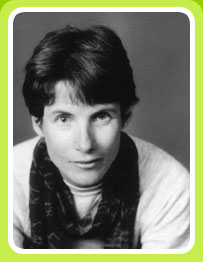
EC: Not only her interview, but her stage performance as well because she is the young character in the play who's going to attempt suicide towards the end. The play, I understand, is written by a lesbian playwright Carolyn Gage out of Portland, Maine, and the theatrical production was actually staged there?

FY: The production was staged in Waterville, Maine, Carolyn is from Portland, and Waterville houses Colby College and Colby was a co-producer for the play. They used their scenic designer and lighting director for the play and we used their stage.

EC: I'm assuming that the play was well-received?

FY: The play was very well-received. They performed it not only in Waterville but also in another town closeby—I'm forgetting the name of it right now—and all of the audiences were full to capacity. We were prepared for some demonstrations even but nothing actually ever happened. Actually, one of the actresses did have some trouble at school as a result of being in this play. We weren't able to include that story but it was powerful and dramatic but did not allow the flow of the documentary to go and it was a whole different idea that she was harassed and accused of being lesbian when she wasn't. The kids were being very hard on her.

EC: Proof of the necessity for this type of documentation in the first place. It's my understanding that your documentary and the play are part of a national campaign that you have been called in to help out on. Could you speak a little bit about that campaign?

FY: To speak a little bit about the campaign actually Lauren Sterling, the executive producer, and Lyn Mikel Brown could speak better about it. They're working with a nonprofit called Hardy Girls Healthy Women and that nonprofit took on the job of creating the film, along with Lauren Sterling and Lyn Mikel Brown, they are the coproducers, and it was daunting because none of them had ever made a film before but Lauren, the executive producer, is an incredible go-getter and energetic, her learning curve was very high and she stepped up to the plate every time. She was amazing. The campaign originated in Maine because Maine has twice the national average for teen suicide, with LGBT kids being 2 to 5 times more likely to commit suicide.

EC: Were you brought in because you have worked on this issue before? You are obviously sensitive to the issue and eloquent about it, have you done other documentary work about teenage suicide?

FY: I haven't done anything about teenage suicide or youth suicide but the producers found me through Carolyn Gage who knows a good friend of mine, we have a mutual friend in common, and then when they saw what I had done in the past, I was co-director and co-producer of a film called That's A Family, which was made by Women's Educational Media, Deborah Chasnoff directed, and I'd worked on a number of Deborah Chasnoff's films as a Director of Photography as well, and all of those deal with issues of homophobia basically, and I've also worked a great deal with Dee Mosbacher at Woman Vision who also makes films about homophobia. And I've worked with kids a lot. I've done a lot of film making that included children, either as a director or director of photography.

EC: It's been interesting to watch some of the youth-oriented documentaries in this year's Frameline line-up. I just finished watching Follow My Voice, which focuses on the Harvey Milk High School in New York. It's certainly important, as I was stating earlier, for these young kids to learn how to take care of themselves at an early age so that this baggage doesn't carry on later into life. What are your hopes for the film?

FY: Basically my hope for the film is that it will save lives and save pain. That's as much as I can hope for. There's so much pain out there and there's so much harassment going on out there, I can tell you from working in the schools, I've even taught some, it's happening quite frequently and kids do—after a lot of that kind of harassment—feel like taking their lives often. They're just battered down. If kids who are participating in this kind of harassment who watch this film and understand better what their actions are causing and that they're causing their peers pain, then hopefully we'll have a lot less of that going on in the schools and elsewhere.

EC: Is Ugly Ducklings premiering at Frameline?

FY: This screening is the world premiere and it will be shown again in Waterville, Maine, in July. We're in the process now of applying to film festivals because this just got completed about a month and a half ago.

EC: I anticipate you're going to have a good run with this film. It's a powerful piece. Like I said, I was very moved by it when I watched it. I want to thank you for the efforts you've taken into producing and directing it and into promoting education on this theme and for taking the time to talk a little bit with me about it. I certainly wish you luck with the premiere.

FY: Michael, thanks a lot, I really appreciate your comments.

EC: No problem, I really loved the film, and I just want to do my part in getting folks to go out and see it at Frameline. For that matter, I would love to talk to you further as the documentary is traveling around through the festivals. If you ever want to report to me about its life in the festival circuit, that fascinates me.

FY: Me too. I'm very curious to see how it's going to do.

* * *

Taking Fawn's cue, I then phoned Lauren Sterling back East to find out more about the national campaign against youth suicide.

* * *

Lauren Sterling: The documentary is the cornerstone of our national campaign, which is really the distribution of a community action kit with the film and an enhanced dvd that we hope to get into the hands of every single adult—and youth!—in as many sectors and communities and schools and churches as possible. This is really about changing or shifting, I should say, the culture around this issue of harassing, and using language, and using gay and lesbian realities and lives as some kind of insult and some kind of oppressed human being that is still existing in our country.

Evening Class: I'm certainly behind you 100% on this effort. Fawn was saying that she was hoping young people would see Ugly Ducklings, primarily because she was hoping that by their watching this film they might come to some kind of awareness of the harm they're causing their peers. How do you think that could be effected?

LS: Actually, there are two youth populations that we care about. One are those that are doing, or potentially doing—if not already—the harassing or the misuse of GLBT language and references, and to try to shift their thinking a little bit around the harm that they're doing. And then the other population of youth we hope to impact are those who are questioning or are finding that they are in a sexual minority, and understanding that there are resources and there are ways to get support and to be safe. Our goal is to save lives.

EC: I hope lives are saved! If people wanted to find out about the national campaign, how would they find out that information?

LS: To go to the website that's holding—one of the co-producing websites in Maine—and there's two ways: a phone number and a web address in which they can get a lot of information about it, as well as they can download an order form if they want to get a hold of it. That phone number is (207) 861-8131.

EC: That's great. When I was talking to Fawn, she said that this campaign originated in Maine because Maine has twice the amount of teen and youth suicide by comparison to the rest of the nation. Could you talk a little bit about that?

LS: Maine has the highest rate of youth suicide, ages 15-19, in New England and it's 75% in the percentile nationally. So we're way up high in terms of rate of suicide of our youths per capita.

EC: Any thoughts on why that is?

LS: Actually it's a long story about why that is. We're learning more and more and more. There was a community in the central coast of Maine a couple of years ago that was presenting a trend of significant numbers and so the Federal Center for Disease Control came to Maine and did an epidemiological study and, when they reported that data back, we found it was really interesting that there was no mention of this separate population of our kids but they had a lot to say with extreme research—both adults and youths were researched, hundreds and hundreds in this community. What they are finding, and what we are all finding, is that in many cases young people are very uncomfortable going to their parents and other adults with really difficult issues, afraid of how they'll react. And likewise, parents were saying in this research, that they are uncomfortable around certain issues and topics because they don't know how to manage them and they don't know much about them. We found that to be really interesting. And it covers everything, from relationships, orientation, substance abuse issues, sexuality, all of those elements were included in items that were uncomfortable. So we have two generations not talking to each other and not understanding how to help each other and to be proactive in expressing their concerns and their pain.

EC: Hopefully Ugly Ducklings will be the bridge to help mend that generational gap. I want to thank you very much, Lauren, for the additional information as well as thank you personally for this remarkable film. I was very affected when I watched it because it reminded me so much of my own youth and how difficult it was to proceed forward into life past a desire to die. You have created a powerful document.

LS: Thank you. The process of doing this project has taught me what it means to be an ally. Because I didn't know really. I thought I was before but now I really know what it means.

EC: I'm glad you are our ally. Thank you very much.

LS: Thank you. And I hope to see you there!

* * *

Ugly Ducklings will have its world premiere at Frameline on Sunday, June 18, 3:45 p.m. at the Roxie Film Center. Fawn Yacker, and hopefully Lauren Sterling, will be in attendance to answer questions. I highly recommend this documentary for anyone concerned about LGBT youth suicide.

Friday, June 16, 2006

2006 FRAMELINE XXX—20 Centímetros (20 Centimeters)


It's a pity 20 Centimeters is screening at the Victoria Theater and not the Castro, where it rightfully should be seen. It deserves the Castro's big screen, especially since—as Robert O'Shaughnessy has implied in the program capsule—it's competing for the "most outrageous musical crown" now reserved for the Frameline favorite, Yes Nurse! No Nurse! The Victoria Theater and the Castro Theatre are not an equal playing field.

O'Shaughnessy writes: "Veteran Spanish filmmaker Ramón Salazar draws upon the conventions of the over-the-top Hollywood musical to tell the raw, dramatic and often hilarious story of Marieta (Mónica Cervera), an unforgettable transvestite with transsexual dreams and a '20-centimeter problem.' " Clearly, it ain't easy being a hung woman, and the full frontal image of Marieta leaning against a wall with developed breasts and a big dick registers as singularly iconic on the altar of evershifting queer bodies.

"To complicate an already challenging existence," O'Shaughnessy continues, "Marieta has narcolepsy and is prone to fall asleep without warning at any moment. In these unexpected moments of sleep, Marieta enters a fantasy world where Madrid becomes the magical stage of her leading-lady dreams." Shades of My Own Private Idaho … with a dress and heels! Her narcoleptic fantasies are energetically choreographed; the mash-up of Felipe Valdez Leal's "Tu Solo Tu" and Mike Hawker / Ivor Raymonde's "I Only Want To Be With You" being especially noteworthy.

Marieta's narcoleptic seizures prove seductive as well. While ogling El Reponedor (Pablo Puyol), a hot and hunky fruit stocker, she passes out, is rescued by him, and wakes up to find him gleefully sucking her off. Variety's Jonathan Holland—though conceding Puyol is "peachy-buttocked"—complains "the one-dimensional Puyol disappoints." Jonathan?!!! Wake up!! There is nothing disappointing about Pablo Puyol! He is the sexiest butch bottom I have ever seen on screen. You can almost smell the heat of his pleasure. And the poignance of his being so cock-fixated that he can't support nor respect how big Marieta's dreams are is not an unfamiliar theme in this hungry town.

Several critics have enjoyed 20 Centimeters exactly for what it is. Adam Nayman from Eye Weekly calls it a "balls out spectacle." The actual plot, Nayman admits, "is just a flimsy structure on which to hang her spectacular subconscious production numbers. And why not? They're bright, imaginative and fabulous."


"The film's story may be slight," Ed Gonzales at Slant concurs, "but Salazar's sparkling tribute to an alternative lifestyle and unconventional female beauty is liberating." He elaborates: "Salazar's humor is … cruder and less affecting than Pedro Almodóvar's, but his love for women is touching: The film's best scene is a fateful encounter between Spanish cinema's homeliest divas—Monica Cervera, as Marieta, and Rossy de Palma, as a fellow prostitute who's been around the block one too many times—and Marieta's apartment complex is a colorful nucleus bursting with the spastic energy of hot-tempered trannies and abuelitas, a dwarf, and Spain's answer to the snaggle-toothed Edith Massey."

20 Centimeters is hanging it all out Friday evening, June 16, 8:00, at the Victoria. This movie is a lot of fun and completely worth the price of admission.

2006 FRAMELINE XXX—Two Drifters


The film opens with a slow, sensual kiss of two young men—Pedro and Rui—very much in love, celebrating their one-year anniversary by exchanging rings inscribed with "two drifters" after Mancini's "Moon River", their song. Pedro drives off and is immediately killed in an automobile accident.

Contemporaneously, a troubled seductive young woman, Odete—who lends her name to the original title of the film—is abandoned by her lover after admitting she wants to wed and have a child.

Watching Portuguese director João Pedro Rodrigues' Two Drifters (aka Odete), I am reminded of Djuna Barnes' Nightwood query: "Watchman, what of the night?" Rodrigues has claimed night's terrain as his mise-en-scene within which he frames the fractured passions of obsessed psyches. Steve Jenkins has it right in the program capsule when he states that Two Drifters is effected "[w]ith a cool eye and a unique understanding of the hold placed on the living by the dead." It's never made clear whether the dead accomplish that hold through the possessive memories of the living or whether the living are obsessively manipulated by the dead. A soul wind periodically blows throughout this film, signaling supernatural influences and fateful guidances.

Two Drifters screens at the Castro Theatre on Thursday, June 22, at 10:30 p.m. Possibly already another sellout. Without question, some of the best Frameline has to offer this year is its Latino fare.

2006 FRAMELINE XXX—El Cielo Dividido (Broken Sky)


In his follow-up to the incandescent A Thousand Clouds of Peace, Mexican director Julián Hernández channels Tsai Ming-Liang with a notable and effective eschewal of dialogue. Cinnoman skin and briefs constitute the bulk of the wardrobe and atmospheric references to water abound (rain, showers, tears). Hernández even incorporates an intertitular tip of the hat to Apichatpong Weerasethakul about a third of the way into the film. Other than for these obvious homages, however, the film is uniquely (and poetically) his own.

Featured in the Panorama section of the 2006 Berlinale, Zlatko Vidackovic's FIPRESCI write-up honors the film's essential erotic melodrama expressed via body language. "[T]he characters talk with their eyes, with their movements." Frameline's program capsule likewise stresses these sensual semiotic balletics.

What evolves is a guided meditation on first love, which is always painfully remembered for its singular intensity, its instruction on betrayal, and its saturation of wishful recapitulation. The movie is long but elegant, screening only once on Wednesday, June 21, 9:15 p.m. at Frameline's newest venue, Cinéarts@Empire. Possibly already sold out.

CANYON CINEMA—The Evening Class Interview With Dominic Angerame


Canyon Cinema's unrivaled collection of more than 3500 films traces the history of the experimental and avant-garde filmmaking movement from the 1930s to the present. Canyon's primary activity is the distribution of 16mm films and videotapes by independent film artists. Independent filmmakers, unlike commercial filmmakers or studio artists, rarely receive financial compensation for their work. The money that Canyon Cinema returns to the artists helps them continue making their films. Canyon Cinema is the only distribution organization that has been consistent in the equitable return of artist revenues; more than 40% of Canyon's gross income is returned directly to the filmmakers.

Through my good friend Eric Theise, who has recently been appointed to the Board of Directors for Canyon Cinema, I was introduced to Canyon's executive director Dominic Angerame, who graciously sat down with me and Eric to answer my inquiries.

* * *

The Evening Class: As I mentioned to you, Dominic, I've read your statement on Canyon's website, which provides a fascinating history of the organization beginning with its backyard projections in the Canyon, California home of Bruce Baillie. Your mission statement eloquently lays out the practical and aesthetic objectives of Canyon Cinema so I don't need to ask you too many questions about that. I'm more interested in how you became involved with Canyon Cinema?

Dominic Angerame: My involvement with Canyon really began when I was a filmmaker in Chicago and I read about Canyon Cinema distributing films so I sent my films off here to be distributed. Then when I moved to San Francisco in 1980, I was attending an MFA program at the San Francisco Art Institute and a job opened up at Canyon Cinema. I applied for it and I got it. So I started working, inspecting movies, shipping movies, roughly around 1980. Business had been really bad, there were three employees, nobody was getting paid well, everyone was getting paid about $3 an hour, and I realized that we needed to have a catalog come out. We needed to have a hard copy catalog of the films because hardly anybody knew what films Canyon Cinema even distributed anymore. So I applied for a NEA grant, which we got, to publish our Catalog No. 5, which came out around 1982-1983. All of a sudden what we found was that it increased our business tremendously because people finally knew what kind of films we had available, they knew the titles, they knew the filmmakers, and they knew what was current in the collection. That sort of began an upturn in our popularity.

EC: The catalog, is this primarily for purchase? Or for rental?

DA: It's basically a for-purchase catalog, as a reference catalog. I have a copy, let me show you. [He hands me a copy which I leaf through while we talk.]

Eric Theise: At this point the people that use the catalog are primarily programmers, people who are at festivals or at venues like Chicago Filmmakers or Ocularis or someplace like that in New York. I think at that time there was probably more chance of individuals renting …?

DA: No, there were a lot of small film showcases, a lot of film studies programs in universities, colleges, which is the basic market for our work.

EC: It all looks very affordable too! So a lot of programmers do rentals then?

DA: Oh absolutely! 80% of our business are film rentals. Film rentals go for about $3 a minute. That may be increasing to $4 because film has become such a precious commodity and such a rarified format for people to view on.

EC: Does Canyon Cinema itself do programming? I know you're going to have this program tomorrow but Eric was mentioning to me that that's not a frequent occurrence?

DA: It's not a frequent occurrence. It's something we would like to bring back into focus. Exhibition used to be one of our missions. In 1975, the exhibition part of Canyon Cinema was split off and that became the San Francisco Cinematheque. The exhibition venue for Canyon Cinema ceased to exist so we're trying to get that back through these series of screenings we're doing here at the Ninth Street building.

EC: You're not affiliated then with the Cinematheque any longer?

DA: Not legally. They're a completely separate organization.

EC: Do they also do archival work like Canyon?

DA: They don't have any prints. They have paper archives and they do a lot of film exhibitions on a regular basis.

EC: People always think they want the kind of job you have and, as I've been talking to directors and curators and programmers, what I'm becoming aware of is that they all say that if you want this job you need to first of all start at the beginning. You were just mentioning that you started out as a print inspector; what is that? I'm not sure I even know what a print inspector really does.

DA: Basically what we do is we distribute 35mm, 16mm, Super8 films and when they come back from rental, what we do is we put them on a pair of rewinds, run the film through a synchronizer to make sure people haven't cut frames out or haven't damaged the print upon projection. So each film when it comes back from a film rental needs to be hand-inspected to make sure that the perforations aren't torn, make sure the film isn't scratched, make sure the film isn't torn itself.

EC: Are you in a position or trained to conserve that film if there are damages?

DA: We do minor repair and sometimes major repair if the film is damaged. But all the films belong to the filmmakers so it's not Canyon Cinema's property. If the film is really damaged beyond repair we contact the filmmaker. We contact the renter. We charge the renter for a replacement of the print.

EC: So you started as a film inspector and you moved up through available positions until you became the executive director?

DA: It was a shared job. We had three employees, one person left, so we combined that person's job between the other two of us and we had a shared managerial position. And then when that person left, I took on the duties of the executive director.

EC: Canyon Cinema is a non-profit?

DA: No, we are technically a for-profit.

EC: The exhibition aspect is undoubtedly very important one way or the other because how else is the general public to know or be educated by your archives? The program that you've put together for tomorrow; what's the gist of it?

DA: It's just a series of new films that have been brought into distribution over the last six or seven months from filmmakers working out in the world.

EC: Eric was telling me that Canyon Cinema is pretty much known everywhere?

DA: We've garnished a great reputation over the last 40 years that we've been in business.

EC: Your own films, what are they about?

DA: My own films are like city symphonies. They're urban landscapes. Urban portraits of buildings being torn down in high contrast black and white, people working on bridges, tarring roofs, digging up streets, y'know? A lot of the urban grittiness of high contrast black and white, and they're 16mm.

EC: What is the importance of experimental film?

DA: Experimental cinema is incredibly important in the fact that what it does is it changes the way that you see moving images. Experimental cinema challenges virtually all forms of cinema. It has a great beneficial power in that it can really change the nature in how we see the world.

EC: It strikes me as subversive, not only in terms of artistic expression, but distribution patterns and exhibition patterns. I'm really feeling—and I know many people have commented on this—that the whole nature of going to see movies is changing so rapidly that for those of us who grew up on going to a movie theater and sitting in the dark and being kidnapped as Sontag would say, we're losing that so rapidly. Movies are going straight to dvd!

DA: Right.

EC: So I'm intrigued and respectful of organizations like Canyon Cinema. I think of you as—well, I can't really say revolutionary because you've been around a long time—but it's like you're becoming revolutionary again.

DA: Again. We're living in a technological revolution and at the same time in a technological crisis. What's happening is we're rapidly losing the cinematic experience. In front of our eyes this is happening. Labs are going out of business. Film distribution companies are going out of business because there's no more demand for the movies. At the same time students who are going to film school, they go through a whole four-year program and don't even know what a motion picture film is; it's really kind of a strange situation. Places like Canyon Cinema—there's probably about two or three of them left in the world—we're hanging on by our fingernails financially, but the passion, and the energy, and the love of cinema is so great that we'll basically see the organizations through as far as we can.

EC: What can people do to help Canyon Cinema?

DA: We could use some donations. People could donate money to us. We could definitely use that.

EC: Do you need a good grant writer?

DA: We need probably a good grant writer and people can donate to us through a fiscal agent called The Film Arts Foundation.

EC: So now you're the executive director….

DA: I've been the executive director since 1980 approximately.

EC: And I noticed in my mailings that last week you had a showing of films?

DA: I had a showing, a sampling. I've made about 35 of my own films so last week I had a sampling of about 10 of them.

EC: I regret missing that.

DA: Yeah, that was a lot of fun.

EC: Will that be coming back around?

DA: Oh, I hope so, y'know? But it's hard to get a show.

Eric Theise: You should mention your other big credit of the past year; Dominic was in the Whitney Biennial.

DA: My last piece, which is an anti-war piece of found footage, was in the Whitney Biennial.

EC: That must have been fun!

DA: That was great.

EC: Did you go?

DA: Yeah, I did. It was good. That piece is called The Anaconda Targets.

EC: Returning to the problems of exhibition, my concern is always the general public. The blog that I've been writing, I've been amazed how responsive people are to it. It's made me realize that most people are accessing information online. You have an online site. You distribute online. Do you have any exhibition possibility online?

DA: Well, these are things that we're talking about right now. How to put clips of our films on our website. How to expand in that kind of direction.

EC: So along with an effective grant writer, you also need a web person who's skilled in that kind of development?

DA: Yeah, we could definitely use some of the tech help.

EC: Why I'm interested in the possibility of online viewing is because I've been participating in something of a fraternity of online film bloggers throughout the United States and Canada, a few from Europe, and we routinely have what we call "blogathons" where we choose a film, or a director, or a genre to write about. Recently, we set ourselves the task of writing about avant garde / experimental cinema come August. One of the main objectives of this blogathon is to provide information on how these films can be accessed for viewing. So I'm trying to figure out how they can see what Canyon has in its collection. Do you have sister organizations? Do you swap films with other organizations in other parts of the country?

DA: There's only about four of us in the world that are like this organization that actually distribute experimental motion picture film on celluloid, which is the bulk of our inventory.

EC: If someone were to ask you, "What is an experimental film?" Could you define it?

DA: Y'know, it really defies identification. It's gone through many different terms. People use "avant garde", people use "experimental", people used to use "independent films". Experimental cinema, I would say in a broad definition, is exploring the art of cinema without using a narrative format. Films that don't necessary tell stories. Basically non-narrative cinema.

EC: A visual-aural experience?

DA: That's right.

EC: I know when Eric first started turning me onto experimental film I didn't know what in the world he was getting at, but, he kept showing me things. I finally went to my first program of experimental shorts at the Pacific Film Archives where he was screening Hojas de Maiz. Do you interact with PFA at all?

DA: They rent from us. We supply them with a lot of material.

EC: I like to ask people who are well-established in what they are doing what they would recommend to younger people if they wanted to get into film curation or film preservation, how you would encourage that, or what you would say?

DA: Right now the field to get into seems to be film preservation. There's a school in Rochester that a lot of people go, you need a certificate, and you learn the art of preserving motion picture film and how to handle it. It really takes an education to—you really need to be trained on motion picture films these days and the art of preservation. Exhibition is something you just sort of do, y'know? You find a place that you think you want to show movies and you just sort of go and do it. I've shown films in bars and galleries and museums, wherever you want to do it is the most important thing.

EC: So you're not just an executive director, you are a print inspector, you are a projectionist, you are a file clerk, and a person needs to have all those skills.

DA: You need to have all those components and you can't feel that one job is disassociated with the other or that one task is more demeaning than the others, whether it be just watering the plants or even just dusting off the film cans.

EC: Do you offer any kind of training through the organization?

DA: We have interns. We seek interns who come in to help us out.

EC: So if someone wanted to become a projectionist, do you have a program for something like that?

DA: Not really. We have a small screening room in the back but people come in and they rent our screening room and then we provide the projection for them.

EC: How about festivals around the United States? Are there very many that focus on experimental film?

DA: The Ann Arbor Film Festival focuses on experimental film. The Osnabrook Film Festival in Germany is basically all experimental cinema.

Eric Theise: There's a festival in Colorado, TIE. TIE exclusively shows celluloid, they don't show any video or digital, so that's something that's kind of close to our hearts. There are a lot of festivals. There's a festival in Vancouver, in Victoria there's an Antimatter Festival. There's a place called Chicago Filmmakers that has a regular ongoing series and they also sponsor the Onion City Film Festival which is very receptive to experimental work.

EC: So are all of these organizations organized into any kind of coalition?

DA: Not really, no. It's sort of a loose, anarchistic network.

EC: I'm just trying to figure out where people can go to see these films. Because most people wouldn't be able to rent from you because they wouldn't have the projectors or anything like that. That's why I was wondering about online possibilities.

DA: What we do right now is rent out our screening room and then we provide projection for it. We charge like a dollar a minute for that.

EC: So if someone looked at your catalog and they saw a film they really wanted to see, they could contact you and say, "I'd like to see this movie and I'm willing to rent it, however, I have no place to show it." They can come here and see it?

DA: That's right.

EC: That's a wonderful thing to know.

Eric Theise: For people on line there's an online discussion devoted to experimental film called Frameworks. So that's a good place for people to get information. Parallel to Frameworks there's a list that goes up called "This Week In Avant Garde Cinema." Screenings all around the world are listed on that and it comes out roughly every Saturday.

EC: That's great. These blogbuddies I was telling you about, a few of them are in Canada or near Canada, and it appears there's a lot of stuff going on around Toronto.

DA: Toronto's a pretty big source. The Toronto International Film Festival has a huge experimental sidebar that's put on through the Cinematheque Ontario.

EC: How about here in the Bay Area? Does the Film Society promote any kind of experimental film?

DA: The San Francisco International offers maybe two or three programs of shorts and experimental films per year but not a great deal, not as much as the documentary category, or the narrative category. I think that's an area they certainly could expand on.

EC: With that, I'll let you be. Thank you very much for your time, I appreciate it, and I look forward to learning more about Canyon. Thank you very much.

* * *
After our talk, Dominic invited me to watch one of the pieces in tomorrow's Newfangled Films program: Maia Cybelle Carpenter's Working Portraits. Shot in June 2000 at Phil Hoffman's Independent Image-Making Workshop, this film stays close to the participants and the film medium itself as they work on their projects. With Becka Barker, Helen Hill, Deirdre Logue, Kelly Krotine, Alexis Rubenstein (1975-2002), and Karyn Sandlos. This silent 8-minute b&w 16mm short was finished in 2005.

I was reminded of Mark Doty's poem "Description" in which he writes: "things that shine. / What is description, after all / but encoded desire?" The singularly most beautiful image in Working Portraits is sunshine glinting off of celluloid. Carpenter shifts her camera to amplify that glint into a pulsar sparkle.

Newfangled Films, curated by Michelle Silva and Dominic Angerame, features new films to the Canyon Cinema collection by Stan Brakhage, Maia Carpenter, Eve Heller, Jeanne Liotta, Phil Solomon, and Tim Wilkins.

FRIDAY, JUNE 16TH at 7:30pm
Admission: $7

Independent Film Center
145 Ninth Street @ Minna
First Floor Screening Room
San Francisco

Thursday, June 15, 2006

GUILLERMO ARRIAGA—Balboa Theater Intro and Q&A


After talking with Guillermo at his hotel, I caught transit to the Balboa Theater, killing time in the late afternoon windswept sun with a freshly-inscribed copy of The Night Buffalo, which is indeed a pageturner, and astute in its portrayal of the manipulative hold exerted on the living by the dead.

Gary Meyer, the Director of Programming at the Balboa, introduced Arriaga to his enthusiastic audience. "Tonight," he said, "we are thrilled to have a special guest whose films 21 Grams, Amores Perros, and tonight's film that we're showing, Three Burials, are films that I love and I know that a lot of our customers loved when we showed them originally." Gary detailed that Arriaga won best screenplay at Cannes last year for Three Burials, was nominated for an Oscar for best screenplay for 21 Grams, and Babel—his last project with Iñárritu—won multiple prizes at this year's Cannes film festival. Babel is due to be released this fall.

"He's most famous in the United States for his films," Gary continued, "but he is first and foremost a novelist. The Night Buffalo is the first of his books to be translated into English and sold in America in English. …His insight into human foibles and emotions are very clear in every story he writes. His works are both universal and the themes that they explore are unique in the style of the setting of his native Mexico." Gary then invited Arriaga to the front of the theater to speak.

"Hello," he began, "Thank you very much for being here. My parents taught me since I was very young to be thankful. So I am very thankful to Gary Meyer for his invitation. Gary, thank you very much. And, of course, thank you for being here to listen to me and watch the movie. I want to talk about two things: my novel and this film you're going to see.

"I was known first in Mexico as a novelist and all my books were published long before I wrote screenplays. Many critics say, 'In Guillermo Arriaga's books there's a cinematic influence because of his screenplays.' No. What I have been trying to do is to give a literary flavor to the screenplays. To make them more like literature.

"It's a pity that the Nobel prize is not given to screenwriters. That would be great. Of course, not for me. There are people who have written screenplays which I admire, like that great playwright Mr. Sam Shepard. He's one of the best writers around. When I was in Cannes a journalist said, 'I'm going to interview Sam Shepard.' So I said, 'Would you mind if I write a little note for Sam?' Which was like a 50-page love letter. I said, 'I'm sure, Sam, you don't have any idea who I am. And I'm sure you haven't seen my work. But I'm a huge fan and I would love to meet you someday.' That night Sam Shepard went to dinner after Three Burials and introduced himself so I met the man himself.

"The Night Buffalo is a story of a young man called Gregorio. Gregorio is a schizophrenic. He has teenage schizophrenia which you know is very hard. And he has two great loves: his girlfriend, with whom he is madly in love, and his best friend, who he trusts a lot. While he's in and out of the mental asylums, his best friend (whose name is Manuel) begins a relationship with Tania, until they fall in love, and this moment when they say, "Well, we're in love. Ciao." Gregorio knows that when he's inside the psychiatric hospital so it's a great blow to him. Some time later Manuel tries to reconcile with Gregorio and—though it looks like they're going to reconcile—Gregorio, two days after they meet, kills himself. This is page two of the novel. [Laughter.] Really!

"This is told from the point of view of Manuel, which after the suicide of his friend, he becomes a castaway and he wanders around the rainy Mexico City. Mexico City, if you haven't been there, it's high in the mountains, it's cold. The other day an American friend came to visit me in the City and he said, 'Where's the beach?' I said it's like a hundred miles to the West so if you want to go, it's a long walk. But Mexico is a very rainy city from moreorless the end of April to September. And the rain is almost like London.

"So this is the story. Gregorio who is a very intelligent man leaves a box to Manuel with a lot of secret messages, and photographs and letters and notes. While Manuel begins to open this box, he begins to discover a lot of things that he didn't know so he slowly begins to go close to the edge of madness. It's a love story. It's a story of friendship. It's a story of people who don't know where to go, who have no direction. I have been a college professor now for 27 years and the more I have contact with young people, the more I see they have this sense of [being] castaways. Many of them are the children of the first divorced parents who didn't know how to divorce. So, you know—"The fucking mother you have" and "your dad is an alcoholic"—you know these fights? They have [wounded] a whole generation. So they are afraid of falling in love. They think falling in love can be something bad. Religion doesn't give the right answers now for many of them. They have no jobs. There's no social utopia, like for some of them it was communism or even being a hippie. There's nothing. It's like we're now in the jungle of the free market. It is cold and these people are really terrified so they have the sensation of [being] castaways. And I wanted that kind of sensation in this novel.

"It's funny but in Mexico—I hope this will not happen in the States—but people younger than 30 really like the novel, older than 30 say, 'I don't like it.' I hope in the States they will say people older than 100 years will not like it. [Laughter.] So if you make me the honor of buying my novel, I hope you will enjoy it. I spent almost five years writing it every day. I consider writing a profession. I'm not like, 'I'm not inspired today, I will not write.' I cannot imagine a banker telling his boss, 'Y'know, I'm not inspired.' So I spent every night from 10:00 to 5:00 in the morning trying to write and I spent four or five years writing this novel, just before writing Amores Perros.

"And now this film you are going to see; I'm going to talk something about it. I was once writing when my cell phone rang. So I answered and there was a voice in Spanish who said, 'Ola. Soy Tommy Lee Jones. Habla Ingles?' I thought to myself, 'What's going on?' but I said, 'Yes!' because like two weeks before someone called and said that very important people in Hollywood called, and say this and this, and I said, 'You go to your mother and blah blah blah.' He was a man and so he was profoundly offended by my remarks about his mother. So I [thought], 'Maybe this is Tommy Lee Jones.' So I said, 'Hi, Tommy!' Cool. Tommy says, 'Hi. You know I've seen Amores Perros and I like it a lot.'

" 'Yeah? Okay. I've seen your movies and I also like you as an actor a lot.'

" 'What are you doing?'

" 'I'm in L.A.'

" 'I'm in L.A. also. Why don't we have dinner?' [he said] with this slightly Texan accent that he has. So we get together. It was the first time … I had only written one thing, Amores Perros, a Mexican thing, so I'm not used to having phone calls from movie stars, I don't know about you? It was very strange. We had dinner and I [thought], 'What kind of man would Tommy Lee Jones be?' So I asked him three questions to see if we were on the same planet. 'Which is your favorite living writer, Tommy?' If he said John Grisholm or Sidney Sheldon or something like that I could say, 'Excuse me, sir….' He said Cormac McCarthy. And I said, 'You know, that's also my favorite author. Who's your favorite American painter?' If he says Norman Rockwell, we are done. And he says Edward Hopper. Then I have some things in common with him. And then I ask him, 'Who's your favorite filmmaker?' 'Akira Kurosawa.' YES!! This is a man I want to work with. And then we have the same interests: he likes the border, he likes the desert, and he likes trailer homes, which I love. He loves to hunt like I do. I know a lot of people when I say that I hunt they boo me. It's hard to explain but hunting is at least for me the only thing that puts me in the deepest frontier of death and life, of beauty and cruelty, something very difficult to explain, even to myself. I always feel guilty and feel bad for the animals I kill but I don't know why I can. …Both Tommy Lee and I have a passion for hunting and we went hunting together, and while we were hunting at his huge, immensely beautiful ranch which you're going to see a lot here, we came to the conclusion that we wanted to make a movie together. So he said, 'Guillermo write whatever you want.'

"This is a story of friendship, of deep friendship, and it's a story of justice. This is not—I would like you from the very beginning to understand that this is not a story of revenge, in any way it is not a story of revenge. It's a story of a man who has a very primitive sense of justice and for him justice is to be in the shoes of the man you have damaged. I want to make that point very clear because many people think it's—what's the word in English?—about [vengeance]. It's not a film about death, even though it has a corpse as a character, that's why he's buried three times. It's not a film about death. It's a film deeply rooted in life. It's a film about the relationship between people of different countries and I have learned through the years that globalization has taught us that we have much more things in common than differences. And it's terrible that now the world has made us suspicious one of the other. It's terrible. Now what's foreign to you is a threat. It's not only for Americans, it's for everyone. I can tell you, I don't know if I have the face of a terrorist, but I have been singled out in airports several times, and taken to private rooms where they check my luggage and question me strongly. It's not funny to be [suspected]. Once I was with my son, who was nine at that time, and he had these Lego blocks that he built into a starship and the guy destroyed it to see if there was a bomb, asking a nine-year-old kid if he was a terrorist or not. My son was completely terrified.

"So I think that one of the purposes of art is not giving answers, but allowing you to make questions. And I hope that this film will raise questions if it's worth being suspicious [of each] other; if it's not a moment to overcome prejudices of race, ethnicity, class, etc., etc. I think that we need it badly. It's a very stressed world now. This stress is the ideal place to have totalitarian regimes and repressive systems. So it's in our hands to avoid that, to understand. This is what this film is about. So I hope you will enjoy it."

Arriaga then opened himself up to questions. One guy expressed his delight in having another chance to see the film—he saw it when it came out at a megaplex—so seeing it at the Balboa was terrific and he thanked Gary for that chance. "I wanted to ask you," he addressed Arriaga, "if you had seen the film Lone Star and if it had affected you … in the making of Three Burials?"

"I love Lone Star and think John Sayles is a great writer/director," Arriaga answered, "but, it's not an influence on this film. I have always said that the major influence on my work is life itself. Melquiades Estrada is a real friend of mine, he's still alive. He's living in Wisconsin. And I wanted to pay him an homage for our great friendship. He's a very poor Mexican peasant, I've been hunting with him and his brothers, Pedro and Lucio. Melquiades Estrada is even in another one of my novels. In 1994 I wrote a novel called The Sweet Scent of Death. He's one of the characters in that novel. Because I really love those guys. You cannot imagine how warm and friendly Mexican peasants are. Every time I go to their place they leave me their bed and they sleep on the floor and they feel profoundly offended if I do not accept the bed. Of course I have to, to get [away from] Lucio's snoring, which is huge. But they are very warm.

"It's a very strong experience for a Mexican coming here, to cross the river and be illegal and criminal and be chased by the authorities with a different language and different weather. Imagine, these guys live in Tomalitas. It must be like 32 centigrades in Wisconsin in the winter. It's a shock. So based on the experience of Melquiades and his brothers and how painful it [has been] for them to come here without knowing the language and imagine someone from Tomalitas going off to Wisconsin trying to go through all the border patrols and all the authorities.

"And I want to say something about immigration, by the way. I think the United States has all the right to build whatever walls they need to protect its borders. They can send the whole U.S. Army to protect the border and I think it's all right. But it's a shame that my country doesn't have the capacity of building jobs for its citizens. That's [more] shameful than all the walls built by the Bush administration. But we have to realize something. The United States needs the labor force to keep running the economy. This is a reality. Mexico doesn't have the capacity to create jobs and the United States needs [laborers]. So instead of putting walls and putting these warm, great people in danger of death, why don't we make a profound dialogue between our countries and find the best way to resolve this?" That comment brought him a handsome round of applause.

A woman asked what process Arriaga goes through to select a translator for his novel? "I find that a lot of the novels that touch me most were originated in a language other than English," she said, "I think it's got to be a profound choice."

"Yes, it's a profound choice," Arriaga agreed, "but I have the huge luck to be translated by a very young poet from New York and Mexico City, Alan Page, who is now 27 and it's good because I know this kid from the very day he was born because he's my sister's son. [Laughter.] He has a Ph.D. in English literature from NYU and he has been studying hard and he lives half his life in New York and half his life in Mexico City. He knows me and he knows what I want and this is real: I have spent with him like nine hours on the phone going through his translation. Every day I phone him for hours and hours, 'Why you put this word? I don't like how it sounds.'

" 'That's the way we say it in English….'

" 'I don't care, I don't like it.'

"And sometimes I invent expressions. In 21 Grams I invented a lot of them. Benicio goes, 'That's not the way we speak in English. So you must change that.'

"And I say, 'I can't.'

"And Benicio says, 'Why?'

"I'm incapable of mutilating a classic." [Laughter.]

As luck would have it, Diane Weipert was in the audience. She's the screenwriter for Carlos Bolado's Sólo Dios Sabe. She commented, "I haven't seen your film Three Burials yet but, when you were talking about the cadaver being a main character and having to bury him three times, it reminded me of a short I saw in Mexico City last month in the house of a friend of mine who's a filmmaker and then I realized that I think you're the one who wrote it. Did you write a film about a guy that they bury and then he keeps coming back and he keeps turning up in people's houses? Is that something that you wrote?"

"It's something that I wrote and that I directed," Arriaga smiled.

"That's what I thought," Diane confirmed, "It was a wonderful wonderful short. And I wondered if that was an idea that resonates with you, and obviously there's the idea of not wanting to be dead, this cadaver coming back, he keeps turning up at his aunt's house, and the kids would go into the bathroom and their uncle would be shaving in the bathroom. It was wonderful, it was very funny, and his friend was narrating it. And in the end his friend goes to—he has his last drinking session at the gravesite, and they sit on the car, and they get drunk and they talk about old times and then the friend says, 'That was the last time that I ever saw him because that night I was hit by a car and my wife had the gall to have me cremated.' It was fantastic. I wonder if you could talk about your idea of not wanting to stay dead and if that's an idea that you wanted to expand in a longer film?"

"Okay," Arriaga began, accepting the challenge, "I'm going to tell you a story about this short film that I wrote and directed and it's based on a small short story that I wrote a long time ago. I was 26 when I wrote it. This has to do with a personal story of myself. I had a roommate. He was going to the Olympic games on the rowing team. I was so envious. 'He's going to the Olympics and I'm not going. What am I good at? Fights! I fought all the time when I was young. So I'm going to go into boxing. I'm going to box and fight and go to the Olympics as a middleweight.'

"So I began to train to be a boxer when I suddenly began to have a pain in my chest. This pain was too much for me so I went to the doctor and he said, 'You have a strained muscle. Don't worry. Keep on training.' I trained that day and I felt I was going to die. That night it felt like I had a cat inside my left arm. I decided to go to a cardiologist. A very funny cardiologist, Dr. Watberg. He said, 'I have good news and bad news.' Okay, [what's] the good news? 'You're not a hypochondriac.' [Laughter.]

" 'What's the bad news?'

" 'You have a heart infection and your heart is very swollen and this is an infection that nothing happens if you stay calm, but you were boxing so you are on the verge of having a heart attack and maybe you will die tonight.'

"Shit.

" 'There's nothing we can do except give you some medicine to bring down the swelling.'

"That night," Arriaga described, "I remember watching my hands and [thinking], 'Maybe tomorrow these are going to be the hands of a corpse.' That's what happens! Your hands, all of your hands, are going to the hands of a corpse sooner or later. 'I have to do something with these hands. I have to caress. I have to beat the guys I haven't yet beat. And I have to do something that will go beyond my life.' That's why I decided to be a writer. I think that night if I died I would get out of my tomb and say, 'I'm not dead' and I would go around and that's where that story came from. That's why I write. I think writing is a way of fighting death. That's what Kafka says. For the pygmies you are not dead until your name is not pronounced. Whenever your name is pronounced, you are still alive."

With that, Arriaga had to end the questions in order to catch a flight to Los Angeles, but he thanked us very much for showing up to hear him speak.

The experience of watching The Three Burials of Melquiades Estrada afterwards was noticeably heightened, especially the sequence where Pete Perkins (Tommy Lee Jones) and Mike Norton (Barry Pepper) come across the hunters watching the familiar soap opera on their t.v. Arriaga plays Juan, the man who offers Pete some fresh kill. Now knowing of their hunting history, this now seemed wonderfully apt. Further, realizing that Arriaga's friend Melquiades Estrada plays the actor Julio Cedillo who, in turn, plays Melquiades Estrada, felt whimsical and warm.

Wednesday, June 14, 2006

The Night Buffalo—The Evening Class Interview With Guillermo Arriaga


I recently met Guillermo Arriaga in the lobby of the Monaco Hotel where he was lodged while promoting his new novel in San Francisco. After introducing myself, he asked where my family was from, and my family name, and queried whether I knew that I shared the name Guillén with the Subcomandante Marcos. Of course, I smiled, my friends always wonder where I go when I'm missing for weeks at a time. He laughed. Our brief conversation was engaging and a bit unnerving as Guillermo never once averted his gaze. He has a shaman's piercing stare.

The Evening Class: Guillermo, thank you for meeting with me; I really appreciate that.

GA: Don't think about it.

EC: I understand that you're in town to promote the Simon and Schuster publication of The Night Buffalo ….

GA: Yeah, that's right.

EC: … and also to help Gary Meyer introduce The Three Burials of Melquiades Estrada out at the Balboa this evening. I will be out there this evening as well.

GA: Okay. Thank you.

EC: I'm going to focus on the novel because I think that's what you're primarily here for ….

GA: Absolutely.

EC: … but before I do, I want to congratulate you on your wins at Cannes, last year for the screenplay of Three Burials, and then this year for Babel; I understand it did very well.

GA: Thank you very much.

EC: The Night Buffalo. This is the first novel you are publishing here in the United States?

GA: Yes, it's my first novel.

EC: But it's actually the third novel you've written?

GA: Yes, it's my third novel and I wrote all of my books before writing screenplays.

EC: The first two novels are also going to be published?

GA: Yes. One of them's published in English but in England and all the English territories, well, former English territories.

EC: Can you synopsize The Night Buffalo?


GA: This is the story of a man who has a very good friend who's called Gregorio. Gregorio is a schizophrenic young man and he has a great love for his girlfriend Tania and a great trust and love for his best friend Manuel. These are the people he trusts the most. But while he's going in and out of the mental asylums, his girl friend and his best friend begin having a relationship until they fall in love. Obviously the relationship between Gregorio and his girlfriend is broken and the friendship is broken. When these friends seem to reconcile, Gregorio kills himself, and he leaves Manuel a box with secret messages after being dead, with letters, photographs, tapes, and slowly Manuel begins to get into the spiral of madness that his friend has been living. So this is a story of madness, of love, of a sense of being lost, of guilt, and how in the end you have to realize and assume the consequences of your acts and the valued importance of love.

EC: "Consequences" is a term I see applied to your writing a lot. Mainly I know your writing through your screenplays and it strikes me as a blend between quantum physics and eastern metaphysics. [Guillermo chuckles.] In physics they say every action has a reaction, but with you it seems more like it's a richocheted reaction, more of an indirect reaction. Why the interest so much in consequences? Or culpability?

GA: Because we have been very superficial in many [ways], even in the news, no one cares about human life. In the movies right now the hero kills, everyone has accidents and no one cares … it's not about moral consequences. It's like having some gravity on human acts. Having some substance with what's going on with the human condition. Assuming that your decisions have consequences is part of the human condition. The existentialistas—the existential philosophers—were always very aware of these things. Your life is defined by the decisions you [take] and you are your decisions. I am obsessed with this way of thinking.

EC: I commend you for wanting to add that depth to human understanding because I agree with you there is a lack of understanding. Another aspect of that blend between Eastern metaphysics and quantum physics is the term tat tvam asi—thou are that—which means that we are not separated at all. Separation is an illusion that physics and metaphysics discount. What I see in your writing is a lot of that quality, that you strive to profile the connections between people even if they're not aware that there are connections, but moreso to show that the separations are false, the politics are false, the obvious is false, and you make a viewer strive to understand what's deeper in human interaction.

GA: My basic themes and concerns are the human substances. Other people are more into style, or more into the structures, but I'm trying always to write everything into the service of trying to understand humanity, especially contradictions in human conditions. My teachers told me in literature and cinema that I must create loveable characters and I am against that. I must create interesting characters. And the way for me to create interesting characters is to portray the contradictions of humanity.

EC: Your narrative style—speaking of style—is what poet Gary Snyder might call a riprap style, a backtracking narrative overlap style. How did that develop? Why did that become a narrative tool for you?

GA: First of all, I have ADD, Attention Deficit Disorder, so I jump from one place to another. Second, I am very influenced by Juan Rulfo and William Faulkner who say each story has a way to be told. And third I'm influenced by the way we tell stories. In our daily basis we never go linear.

EC: That's true.

GA: You tell me my parents come from Michoacan, or maybe they come from France, and now you know I have a girlfriend in France, and that's the way we tell stories. So that's the three reasons I write—riprop, you say?

EC: Riprap. Which, if you're backpacking or hiking, it's the way you zigzag up or down the mountain. Even as I was reading the first chapter of The Night Buffalo, when you were describing the gun Gregorio uses to kill himself and he summons the image or memory of how he stole it from a convenience store police man, I could already see how you might film that memory, because in your past films you often flash back to some earlier, important moment to deepen and amplify the plot. I agree with you that we operate on many levels at the same time.

GA: And we never get lost. We're telling stories and we go back and forth but we never get lost.

EC: I think because the storytelling is genuine. That's probably why people are relating to it so much and why you're doing so well. The next two novels, what are they going to be about? Are they related to The Night Buffalo?

GA: They are related thematically but the settings are completely different. The Sweet Scent of Death is set in rural Mexico and also has to do with the importance of death, especially of the survivors, as in this one. And the other is The Guillotine Squad, it's a story of the guillotine in the Mexican Revolution. There was no guillotine in the Mexican Revolution. I made everything up.

EC: That's your right as a writer.

GA: That's a comedy, by the way, it's black humor all the way along.

EC: Speaking of black humor, here in San Francisco our local film critic Mick LaSalle took offense by Three Burials because he said it had too much corpse violation humor. Now, I'm a Chicano, and I understand the role of death in Three Burials, but how would you defend yourself against a statement such as LaSalle's?

GA: I will tell you something. When I was young at high school we had a skeleton, a real human skeleton in the classroom, in high school. I grew up with a skeleton. And no one seemed bothered by the skeleton. You can put a skeleton here and people will say, "Ah, a skeleton." But if I put a corpse, it becomes threatening because it reminds us of where are we going? And how we are going to transform ourselves. The body is going to be devoured by worms. I wanted to take the danger of [the] corpse and make it more real, more close, more like a friend, the corpse being a character. To take out the threatening parts of it and make some humor about it. I know that some people get offended because of the presence of a corpse but that means that they are threatened by the presence of death. In a society where they are taking our sense of death, they are also taking our sense of life. If you don't have thoughts about death, you won't have thoughts about life. It becomes a bland substance, like a gelatina, a gel, so I think confronting yourself with death makes you reconsider your life. That's the purpose.

EC: The decaying of the body is mentally challenging. The skeleton, the bone, the hueso—the word is the same for a bone and the seed of an avocado—it's something that's actually living, a bone can bloom. But a decaying body is something different, it challenges the mind.

GA: Challenges, yes, it's threatening.

EC: What I appreciated about Three Burials was the love he had for his friend. He was able to get over and basically accompany that decaying corpse to its rightful place of burial. That was a powerful, beautiful image.

GA: I think, as all of my work, this is a story of love. Friendship is a manifestation of love.

EC: Babel, which did so well this year at Cannes, referencing its Biblical origin, are you trying to say that people are not as disconnected as we think we are?

GA: Something that globalization has taught us is that human beings have much more in common than differences. We have essential things in common—love, power, death, hate, fear—it's the same in every culture. That's a little bit why it's about Babel. At some point it seems we are suspicious, one of the other, but in the end we have the same worries, and the same concerns. Now in a world where everyone is suspected of being a terrorist, y'know?—everyone is suspicious—we have to get closer and understand that we have much more things in common. That's what is running beneath Babel, the movie.

EC: The Night Buffalo is going to be turned into a movie?

GA: It's already turned into a movie; it's in post-production.

EC: Oh it is already? Did you do it with Iñárritu?

GA: No, no, I produced it myself.

EC: Great! Did you direct it?

GA: No, I co-wrote but I was very close to the process. I have been on the set and in the editing room. It's directed by a great director Jorge Hernandez Aldana, a first-time director I hired and I'm very happy. With Iñárritu Babel is our last collaboration together.

EC: Oh it is? You did a trilogy with him?

GA: A trilogy, yes. A trilogy I envisioned a long time ago. I always write by trilogies and this was a trilogy I envisioned. But now we have three films and I think that's enough for now.

EC: Time to move on.

GA: Yeah. We have different interests.

EC: In terms of the filming of The Night Buffalo, can you say who you've cast?

GA: Diego Luna. He's the anchor of the film and he's surrounded by newcomers who have never been in a film before.

EC: That's great. I like new faces myself. I just saw Diego in Sólo Dios Sabe.

GA: How was it?

EC: I enjoyed it very much, but primarily because of Alice Braga who I've been watching, I think she's a promising young actress.

GA: From City of God, she was good, yeah.

EC: And then she did Sólo Dios Sabe and Lower City, both of which I got to see a few months ago….

GA: Cidade Baixa. Portuguese.

EC: Exactly. So … influences? You were saying earlier you were influenced by Rulfo and Faulkner about narrative structure. Who else has influenced you?

GA: First of all I must say that my major influence is life itself. I'm not a derivative author who takes from other [writers]. Basically, my stories come from my own life, from what I have experienced directly. I'm not like I write something where I want to be like that. I live something and I want to put it into [words], express it. Life is my basic influence. If this is going to be other writers' influence I would put Juan Rulfo also and Faulkner and Villarojas and Martinez Guzman.

EC: Faulkner I know, of course, but the others I've not read. Thanks for the tips. My main influences are Miguel Angel Asturias and Julio Cortazar, of course, because of his narrative devices, I love his narrative structures. So what's in the future? You said you worked very closely with the editing of The Night Buffalo, do you want to direct yourself?

GA: Yes, I want to direct myself. I'm writing another film about the border now and then I am going to write another one which I want to direct.

EC: I'm very glad to hear that because I think a screenwriter is often the most misunderstood agent in an artistic production, they're almost invisible. I know it irritated me whenever I read reviews of Babel how they kept saying it was Iñárritu's film. I didn't think of it that way.

GA: I agree with you. [Smiling.]

EC: I think it's the writing, or at least the teamwork, the collaboration, that makes a film. We have a celebrity culture that puts too much emphasis on the auteur theory of directorship, saying the director is doing everything.

GA: I have a disagreement with Alejandro myself. I don't think it's an auteur film, it's auteurs, it's an authors thing, not an author.

EC: All the more reason that it's great that you won best screenplay at Cannes last year for Three Burials. I loved The Three Burials of Melquiades Estrada!

GA: Thank you.

EC: Such an intriguing story. One of the best things Tommy Lee Jones has ever done in terms of his acting. The new film that you're doing, what will it be about?

GA: I want to explore the border. The border is not only immigration and drugs. There's also love stories between Mexicans and Americans. You must have witnessed this?

EC: I owe my life to it!

GA: I also want to explore that. The romantic and love exchanges between people from two sides of the border. Then I want to explore the death penalty. Now I am also involved in a project that is exploring jealousy.

EC: You're tackling all the great themes, the big mythic themes that humankind is dealing with. Your films are never easy. They require some work on the part of your audiences to understand how the story is developing and the quality in your work that I'm intrigued in as a writer is the forward-leaning momentum of your stories. Even when you don't exactly know what's going on, you know something is going to happen, some kind of resolution is going to happen. Do you think resolution is a thing we can really get in life?

GA: Yeah, but, I was born into Marxism and the Marxists have this dialectic way of thinking—thesis, antithesis, synthesis—which become the thesis for another antithesis. So, yeah, there's resolution but there comes the question of a new thing that has to be answered. Everywhere solution is part of a new triangle.

EC: In terms of the screenwriting, are there other screenwriters that you admire?

GA: Yes. Well, he's not a screenwriter, but he has written screenplays—Sam Shephard. Of course I think Sam Shephard is great. Almodovar I think is great. Bright!

EC: Did you see Volver at Cannes?

GA: No, I haven't seen it yet. I think Lars von Trier is a good writer also. I think Michael Haneke is a good writer.

EC: Are you a film maker who actually goes out to see other films? Some folks have mentioned to me that they don't watch other people's movies.

GA: Sometimes. It depends. For example, now with this film we were on the set and in the editing room for so long that I have very little time to see movies. But last year I was a juror in a film festival so I saw—and the Mexican Film Festival, it has the best films from around the world without any doubt, they have the winners from Berlin, Cannes, St. Sebastian, Venice….

EC: This is true?

GA: It's true.

EC: When is that held?

GA: In February. I saw great films like Head On, a great German film, Turtles Can Fly….

EC: I love Turtles Can Fly!

GA: This Thai movie [Guillermo snaps his fingers repeatedly to remember], the one where the man becomes a tiger…?

EC: Ah yes, Tropical Malady.

GA: With those three films—Head On, Turtles Can Fly, Tropical Malady—you have enough. It's great filmmaking.

EC: I got a chance to speak with Apichatpong Weerasethakul when he came to San Francisco. He did a residency at our Center for the Arts. Joe is brilliant. I think he has shoved the envelope of how a story can be told and rendered in film.

GA: Yeah.

EC: Well, Guillermo, I want to thank you for taking the time to talk with me. I'll probably be seeing you this evening.

GA: I hope so and I hope you will enjoy the book to the very end.

EC: Could I get you to sign it by any chance?

GA: Yes, of course! Como le pongo? Miguel?

Sunday, June 04, 2006

PROGRAMMER PROFILE—Jesse Hawthorne Ficks


Earlier this year at the press conference for the San Francisco International Film Festival where the program line-up was announced, I was genuinely surprised to see the bellyaching begin hardly before the conference was over. Granted, some of the immediate complaints had valence—not a single true African film in the bunch, a low representation of women directors—but, what struck me more was the general disgruntlement about everything that was absent, and everything the programming team had not done right. Which led to the question of what is it exactly that programmers do—wrong or right—when they're organizing a film festival for the Bay Area? I realized I really didn't know. Up until now it's always been a kind of taken-for-granted magic.

Reporting from the San Francisco International Film Festival afforded the welcome opportunity to mingle with many individuals behind the scenes, allowing me my first chance to see how a festival is not only put together but run. I decided I wanted to give the programmers a chance to defend their choices and to speak for themselves so I approached Graham Leggat about doing a series of profiles of the programming team. He seemed amenable enough to the idea but the programming team then skillfully avoided any interviews during the run of the festival. Such a protean bunch! That proved disappointing, but—ever the old dog who worries the bone—I decided that if for whatever (I'm sure, valid) reasons they had for not granting me an interview, I would find other programmers who would and have been conducting a series of interviews which I will be sharing on The Evening Class in the months to come. Hopefully that will help all of us gain a deepened appreciation of the art and hard work of programming.

I considered that—perhaps because the San Francisco International has such a high profile among festivals—they're necessarily tethered to a public relations protocol that I am wholly ignorant of. So I turned in the other direction, to "smaller" though no less important programs and their respective programmers.

To start with, I decided to interview Jesse Hawthorne Ficks whose upcoming Latch-Key Kids Quadruple Feature will be screening at the Castro Theatre come Friday, June 9 as part of their MiDNiTES FOR MANiACS series. This series has had a popular run in San Francisco, long before it was adopted by the Castro Theatre. Jesse took time from screenings at this year's Cannes Film Festival to answer my questions.

* * *

The Evening Class: Jesse, you've been entertaining San Franciscan audiences for several years now with your MiDNiTES FOR MANiACS series, which have graced various venues, including the 4Star, the Red Vic and most recently the Castro Theatre. Can you tell me where this brainchild was conceived?

JHF: In 1991, I was 15 years old, living in SLC punk (Salt Lake City Utah). I acquired my first job at Trolley Corners Movie Theatre by lying about my age. My manager (and immediately my cinema mentor) Mark E. Johnson let me program David Lynch's Blue Velvet and Wild At Heart as part of the summer midnight series. The blurb for Blue Velvet was my first published piece, "It's like Twin Peaks, only moreso." Johnson (who was 23) and I began watching films after closing time and at his house video on the weekends. His poor wife must have hated having a teenager hanging out, talking all night long about Chantel Ackerman, The French New Wave, Orsen Welles, and David Cronenberg.

In 1998, Frank Lee at the 4Star movie theater trained me to be the projectionist. He and Uncle Lam not only mentored me through the technical aspects, but they opened my eyes to dozens of unknown Kung-fu, wu-xia, and action films from Hong Kong and Mainland China (emphasizing on the 1970's, 80's and 90's). I began hosting an HK film series Kung-Fu Kult Klassics every Thursday as well as the more insane HK films at midnight. Everything changed when I tracked down a print of The Garbage Pail Kids Movie. The owner of the print had given his other print to Sean Astin (Lord Of The Rings) because his little brother Mackenzie stars in the film. I screened this lost film (it had been dropped from theatres after barely a week) as part of my series MiDNiTES FOR MANiACS and the poor little 4Star Theatre didn't know what hit 'em. We sold out so hard that we had people sitting in the aisles, having come all the way out from Oakland. After that, I was allowed to program much more obscure stuff: Bo-Dacious B-Movies, Slumber Parties and a series devoted to Chang Cheh.

EC: What were the Slumber Parties at the 4Star all about?

JHF: The Slumber Parties were something I had always wanted more of when growing up. A theater in SLC, the Villa, did a couple of nights like this (the Star Wars trilogy beginning at midnight and ending around 7am, the entire Star Trek series 1-6 from 10am till 2am). I fell in love with the cinephiles around me, even if they were wearing Spock ears and Stormtrooper helmets.) The three Slumber Parties at the 4Star are some of the greatest nights of my life.

EC: I'm intrigued by your tenacity at keeping the MiDNiTES FOR MANiACS series alive. How did your association with the Castro Theatre develop? What lured you away from the Red Vic, and before that, the 4Star?

JHF: The 4Star had run into some legal issues with the building and Lee was putting most of his time into The Presidio. So I moved on.

The Red Vic series was the first thing I set up after moving back from a year in New York. The Red Vic was very nervous about doing a midnight series there because—like all the other theaters (4Star, Castro)—they had never done one. They were very excited but very tentative. People need to support the Red Vic or they won't be around much longer. I needed more financial support than the Red Vic could offer. I keep this series alive through sheer enthusiasm (and insanity of course.) The Castro developed out of the years at the 4Star. A small following of devoted kids (16-69 year olds) helped by consistently coming out over the years, so when I pursued the Castro Theatre, the extremely supportive Bill Longen and Brian (last name?) gave me an amazing amount [of] reinforcement, especially due to the fact that the theater had never done a midnight series.

EC: Have the various venues altered the tenor of your programs? Have they created different audiences? Or have you found that your core audience is traveling with you from venue to venue?

JHF: Yes. Different theaters will bring out different audiences. Yet a main core of cinefreeks have followed the series around from place to place. I don't think any theater in the country would have sold out as strongly for the rollerskating disco films Rollerboogie, Xanadu, and Skatetown USA. Yet, where else would you want to host a series but in a 1400-seat movie palace where a live organ performance precedes each screening?

EC: You've spoken about the all-night slumber parties at the 4Star whereas at the Castro it seems they're more evening programs crossing over into midnight. Any plans to do a slumber party at the Castro? Would they allow that?

JHF: I pitched the Slumber Party idea to [Bill and Brian] and we reinvented [it] into the Freeky Friday night: A series of thematically similar films from 7pm-2am, once a month or so. This way more people could come out as opposed to ONLY the totally awesome freeks who would come dressed up in their pajamas to the Slumber Parties and yet keep the concept there.

EC: Any Castro Theatre experiences of note?

JHF: Two of my favorite moments at the Castro performances so far: (1) During Xanadu, Olivia Newton John sang "Suspended In Time", one of the most lackluster songs ever filmed. And suddenly instead of going to the bathroom, dozens of audience members pulled out there modern day lighters—the cellphone—and methodically waved them back and forth, singing each and every word throughout the entire song. (2) Two guys had answered the correct trivia question before Flashdance. Both were just about the shyest people you have ever seen. So I decided to have them have an aerobicize-dance off. I don't think they had ever danced in their life before, much less in front a packed movie palace!

EC: You're rough! Remind me to never be shy around you. Googling you revealed you have worked in various capacities with the Sundance Festival for over nine years, that you've served as box office manager for several years for the SF Asian-American International Film Festival and have even been a publicity intern for the Jewish Film Festival. Further, you've worked as a production assistant and recordist on Scumrock. Aside from MiDNiTES FOR MANiACS, what other projects are you currently involved in?

JHF: Recently I began teaching Film History 2 at the Academy Of Art University. Interacting with 18 to 24 year olds of 2006 is so important to me for my programming. You can love a film all you want, but is it the right time to be screening it? I enjoy midnight series that show contemporary fad films, but what interests me most is finding the forgotten, the overlooked and the dismissed films of decades past and helping them reach a new audience. Some of the films [are] receiving more viewers now, than they ever had before!

EC: Why the particular emphasis on the 1970s through the 1990s? What do you seek to recover?

JHF: The MiDNITES FOR MANiACS series has two major purposes for me: I have always wanted somewhere to go after hours that wasn't just a place in which getting fucked-up was the only goal. There are so many people wandering around, looking for something different to do. And many nights, it feels like a bar is a last resort. My other goal is to create a place to honor films that high-brow and uninspired critics dismissed.

EC: In his write-up of one of your programs Bay Guardian critic Dennis Harvey distinguished between movies that "remain bad, as opposed to so bad they're good." What do you think makes a movie so bad it's good?

JHF: Dennis Harvey's quote "films so bad they're good" is a great subject. I truly love those "bad" films. Many of my friends and family have complained that I have horrible taste. And it may be difficult for them when I drag them to the opening of Son Of The Mask and love it. (Don't get me started on my digitally enhanced baby genre obsession.) So a lot of times, audiences come out to laugh at a bad film because they think they are better than the film. That's not my goal as a programmer. In fact, quite the opposite. I believe there are no guilty pleasures at the cinema. If you love something, you love it. It's fucking hard to make a good bad film. There's plenty of bad bad films to prove it.

EC: What do you think makes a movie so bad it's good?

JHF: "Bad movies" are very difficult to make. There are two kinds of bad movies: Big budget and small budget. They both need an amazing amount of passion, either by the makers or often by even just one actor. Many truly bad films are just plain lackluster. There's nothing worse than a half-assed movie. Most importantly, there needs to be no irony. This is why so many Saturday Night Live films are unwatchable. A great big budget bad movie is one that truly attempts greatness. And my main view is that those films [that] fail so miserably—Costner's The Postman, Singleton's Higher Learning, Friedkin's Jade—truly transcend to greatness. A great small-budget bad movie is one that attempts to achieve something unimaginable (often times sci-fi or horror). Many people don't understand what the film's rules are and end up passing the film off as crazy or so horrible they can't even explain it. These are the masterpieces of the film world for me. These are some of my most favorite movies, ones that I constantly get into fights over. (Troll 2, Ghost Of Mars, She Hate Me). People need to destroy the term "guilty pleasures." I know it's difficult to confront yourself. I just ran into a Reality TV show that I have no clue why I like it.

EC: Troll 2, eh? I didn't even know there was a Troll 1!

JHF: Most recently, R. Kelly's egomaniacal Trapped In the Closet has reached this level of greatness for me. If you've never watched this, you are in for one helluva a treat!

EC: Recently I was at the Castro for their mini-Minnelli retrospective and was disappointed to find out that the last existing print of Tell Me You Love Me, Junie Moon was found to be unplayable. For some reason this totally took me by surprise. You hear all the time about silent features being restored and preserved but I wasn't expecting the films of my own adolescence to already be falling into disrepair. With film preservation an acknowledged necessity, choosing which will be preserved will undoubtedly be a daunting, thankless task. If it was up to you, what movie from the 70s-90s would you definitely want to see preserved?

JHF: Many of the films that I play at midnight fall into this category. The most important film for me to get preserved is Ladies and Gentlemen, The Fabulous Stains. It has never even been officially released in theaters, much less been distributed on video or dvd. Everything about the film is important. It needs to happen. Seriously.

EC: You've worn many hats: intern, projectionist, cinematographer, recordist, box office manager, and programmer. Regarding the latter, what is it you look for when you're planning a program? How do you go about choosing and securing your films? Are there enough films from the 70s through 90s to keep MiDNiTES FOR MANiACS alive for many more years, or do you want to venture into other time periods of film history?

JHF: All of the films I program are personal favorites from my lifetime. Some of the films, people might not have ever heard of and some, others may have watched dozens of times. [Having] curated films for five years now in SF, I hope that I have gained the trust from audiences who have made the trek all the way out to the 4Star and The Castro Movie Palace.

It's always been important for me to be on the pulse of the community around me. When I was younger, I would sluff school just to watch films with the older kids. For the past 15 years I have been working at film festivals such as Sundance, New York Underground, Telluride, Toronto, Cannes and the half a dozen festivals that inhabit San Francisco every year. Basically I grew up at film festivals and the impact of seeing alternative films thoughout my life has really made me one happy guy.

EC: Regarding your upcoming Latch-Key Kids program, I realized these were movies I never saw when they were in the theaters, I saw them first on video, and now I find myself excited to experience them projected on the Castro's large screen. I saw the trailer for Rumble Fish the other day and it looked beautiful! There's a lot of testosterone in this particular selection. Are you catering to your Castro crowd? Can you synopsize the four films?

JHF: The Latch-Key Kids Quadruple feature is a program that begins with a young boy in the early 70's with Cipher In The Snow. I've been trying to find this film since I was young. This student film was made at Brigham Young University, a Mormon-based college in Utah. The Salt Lake City school district used to show this film to our elementary classes every year. Heartbreaking and totally terrifying, the film exaggerates what happens to a kid if he is neglected or overlooked. I can't wait to traumatize a whole new generation. The main difference is that the Castro audience will know why they are watching the film.

Rumble Fish was a very difficult booking. I am very thankful to Brian and Bill at the Castro for getting Francis Ford Coppola to allow the screening. The film was made at the same time as Coppola's other S.E . Hinton adaption The Outsiders but for some reason never received the glory it most definitely deserves.

The Warriors not only just came out in a new revised director's cut, complete with lame modern animation, the film has been adapted into an amazing interactive video game as well as being remade by Tony Scott later on this year. I feel it is important to accept all versions of the film's journey, I just happen to prefer the original OG version. It's also important for audiences to know about all versions so that they can choose as well. (Seriously, I love many of the new remakes . . . Zack Snyder's Dawn Of The Dead is fucking brilliant!)

And lastly, Streets Of Fire, which is probably the most unknown film of the bunch. A few years following The Warriors, director Walter Hill designed this gang-infested comic book world that explosively combines the greasers of the 50's and the New Wavers of the 80's. Epic in concept, the film was years ahead of its time and with the exciting combination of comic book elements in campy big budget cinema (Miller's Sin City, Raimi's Spiderman 2) this little obscurity should blow more than a few minds away.

EC: I know you're currently enjoying the Cannes Film Festival, have you seen anything that you think 20 years down the line, 30 years down the line, might serve for some future programmer's MiDNiTES FOR MANiACS?

JHF: What new cinema will be good for future programming is a very important issue to stay up on. Just like that guy who is still only listening to The Pixies and Nick Cave and The Smiths, you have to adapt with [the] times. And be filing them away for when audiences will connect with that time period in [a] reminscent way (as opposed to hating the film due to it being a product of everything that's wrong with the society!)

EC: Any hints of future programs in the works?

JHF: On Freeky Friday August 25th I have a Digital Sex: 80's Style including John Hughes Weird Science, Andy Kaufman's Heartbeeps and Greydon Clark's Joysticks. September and October are both being confirmed as we speak. I am happy that these late 70's/early 80's events are connecting with so many people and I hope that The Castro allows me to host my events there as long as possible. It will probably be a long while before a Uwe Boll program of Video Game adaptations will be programmed (Alone In The Dark, Bloodrayne) but I can hint that the late 80's/early 90's are due for their limelight. Can anyone say the Teenage Mutant Ninja Turtles Part 2!

EC: Do you have any recommendations for young upstarts who want to do programming? Any tips on how to enter the field? Any advice?

JHF: Watch the movies that you yourself are passionate about and make sure to talk to people about them. A lot [of] times, I meet fellow movie lovers and they've obviously been keeping the information to themselves for much too long. Don't be afraid to somehow bring up Mac & Me in a conversation with strangers. Don't keep all of these treasures in your heart. And who cares if someone yells at you later for hailing White Chicks as brilliant. In 15 years, those same people will have transcended their scenester clique and probably be attending some midnight series where they can finally appreciate great "bad" movies

EC: Well, Jesse, thanks so much for taking the time to talk with me.

JHF: My pleasure.

06/05/06 ADDENDUM: Great minds think alike!! Dave Hudson at the Greencine Daily advised that SF360's Max Goldberg likewise interviewed Jesse.