Monday, April 09, 2012

PANAMÁ IFF—The Founding Of A Film Festival

Recent articles in Forbes and The New York Times have spotlighted Panama City as an up and coming travel destination, kickstarted—no doubt—by the $5.25 billion Panama Canal expansion that's underway and scheduled for completion in 2014, the canal's centenary anniversary. The Republic of Panama regained control of the historic canal situated at the slender waist of the Americas some 12 years ago and the expansion project will not only widen and deepen the existing canal but add two locks, doubling the canal's cargo capacity, and allowing a greater volume and size of ships to pass through the 50-mile long waterway. As underscored by The Times, "those who want to see the waterway as it was originally designed, now is the time."

A further boost to accelerated growth in the region came last October with the passage of the United States-Panama free trade agreement. As noted by The Times: "Other high-profile projects include the construction of three firsts: The Panamera, the first Waldorf Astoria hotel in Latin America (set to open in June 2012); the Trump Ocean Club, the region's tallest building, which opened last summer; and Frank Gehry's first Latin American design, the BioMuseo, a natural history museum scheduled to open in early 2013. Even Panama City's famously dilapidated historic quarter, Casco Viejo, has been transformed. The neighborhood, a tangle of narrow streets, centuries-old houses and neo-colonial government buildings, was designated a Unesco World Heritage site in 1997 and is now a trendy arts district with galleries, coffeehouses, street musicians and some of the city's most stylish restaurants and boutique hotels."

The role of film festivals in advancing and influencing the tourist initiatives of civic and national governments is a vein of film festival studies richly mined by such scholars as Thomas Elsaesser, Marikje de Valck, Dina Iordanova and Regan Rhyne who see the study of film festivals to be "central to understanding the socio-cultural dynamics of global cinema and international cultural exchanges at large" (Iordanova & Rhyne, 2009, Film Festival Yearbook 1: The Festival Circuit, "Introduction", p. 1) and "city marketing" as an essential activity for cities that want to compete in the global arena, with the construction of a positive image becoming one of the key elements in promotional strategies for attracting investment and tourism (de Valck, 2007, Film Festivals: From European Geopolitics to Global Cinephilia, p. 75).

The inaugural Panama International Film Festival (Panamá IFF) [Facebook] will take place in the Capital City from April 26 through May 2, 2012. The event is sponsored by the Ministry of Commerce and Industry of Panama, Tourism Authority of Panama, Panama Film Commission, and private companies. During its week-long run, Panamá IFF will screen more than 50 award-winning films gleaned from prestige festivals around the world, including Cannes, Toronto, Sundance, and San Sebastian, with many of the films' directors converging at the festival to engage audiences in Q&A sessions intent on promoting dialogue and understanding between cultures.

Co-founded by Canadian businessman Rob Brown and his father-in-law Henk Van der Kolk, Panamá IFF seeks to support the promotion of culture in the country, foster the development of local industries, and promote film education. One of its long-range objectives is to build a Festival Center to house both the Festival and an international film school. Such hefty ambitions are not unfamiliar to Van der Kolk who co-founded the Toronto International Film Festival 38 years ago and watched it grow into one of the world's most prestigious film events, bringing millions of dollars into the local economy. Van der Kolk serves as Panamá IFF's Executive Director and has chosen Diana Sanchez as the festival's Artistic Director.

As reported to Screen Daily, the Dutch-born, Panama-based Canadian Van der Kolk "hopes to attract 'culture travelers', a new breed of international festival-goers who have the capital to travel the world enjoying the seventh art, amongst others." Van der Kolk recalled that Canada in 1976 was considered part of the American domestic market with most Canadians accustomed to American film. "In '76," Van der Kolk remembered, "our press had no interest in us as Canadian filmmakers. So we held a film festival to bring the world to us." Currrently, the Panamanian market is composed of 97% American pictures; but, Panamá IFF seeks to spotlight and advance regional filmmaking, not only through local voices but foreign investment. Panama has long held a reputation as a fine place to shoot films, with the The Tailor of Panama (2001) and Quantum of Solace (2008) being two recent films shot on location in Panama's historic Casco Viejo. Hollywood producer Raffaella De Laurentiis, daughter of Dino De Laurentiis, concurs that Panama is an ideal venue for filmmaking, which she believes is destined to become a cultural junction in the region and a platform for new offerings to the world of cinema.

Panamá IFF consists of a number of board members—including De Laurentiis—and creative advisors including Panamanian filmmakers and local entertainment industry representatives, among them Pituka Ortega Heilbron (who has been appointed Co-Director of the festival), Abner Benaim, Luis Pacheco and actor / songwriter Rubén Blades.

Sunday, April 08, 2012

SFIFF55—Michael Hawley Previews the Line-Up: Part Two

In my initial post at film-415 for the 55th San Francisco International Film Festival (SFIFF55), I gathered up early announcements of the festival's special awards and programs made before the official press conference. Then in the first part of my lineup preview, I took a look at SFIFF55's offerings from Europe. Now in Part Two, we'll zero in on what the fest has in store from Asia/Pacific, Middle East/Africa, Latin America and the USA.

Asia / Pacific

The SF International Asian American Film Festival has all but ceased programming new works by Asia's established auteurs. Fortunately, SFIFF has not. South Korea's Hong Sang-soo checks in with The Day He Arrives, the latest addition to his well-established, drunken-artists-behaving-badly oeuvre. The story sounds like typical Hong, with the added new spark of B&W cinematography and a wintry Seoul backdrop. Last year the fest screened Hahaha, the first Hong film I truly liked, so I'm hoping he and I are now on a roll. Hirokazu Kore-eda has had six prior films play in this festival and in I Wish, he returns to the world of children last explored in 2004's Nobody Knows. The revered Japanese director made personal appearances at SFIFF in 2009 and 2010, but isn't expected to attend this time out. Those with festival scheduling conflicts should know that The Day He Arrives opens for a one-week run at the SF Film Society Cinema on May 4 and I Wish is tentatively slotted for a local Landmark Theatre opening on May 18.

Not coming to a theater near you anytime soon is Johnnie To's Life Without Principle. This is said to be a departure for the prolific Hong Kong action director and is set in the avaricious world of investment banking. I'm scheduled to see it the same day as the Dreileben trilogy, so I hope my stamina holds up. The other Asian narrative feature I've prioritized is People Mountain, People Sea, a formalist, contemporary Chinese revenge tale that won its director, Cai Shangjun, a Venice Silver Lion. Also of possible interest: the world's first Samoan language film (The Orator), a movie from Tibet (Old Dog) and Peter Chan's martial arts blockbuster Wu Xia, starring Takeshi Kaneshiro and Donnie Yen.

Three documentaries relating to the region have also caught my eye. Davy Chou's Golden Slumbers reminisces on the Golden Age of Cambodian cinema (1960 -1975), during which time over 400 local films were made. The Khmer Rouge destroyed nearly all of them, as well as the artists who produced them. In his rave review for Variety, Richard Kuipers calls the film "inventively directed" and "pure poetry." Carrying the distinction of the longest-titled film in SFIFF55 is French artist / filmmaker Eric Beaudlaire's The Anabasis of May and Fusako Shigenobu, Masao Adachi, and 27 Years Without Images. I recently became interested in Japan's 1970s radical terrorist organization, the Japanese Red Army, after watching Kôji Wakamatsu's brutally fascinating United Red Army, and am hoping for some illumination on the group's years of exile in Lebanon. Finally, there's Alison Klayman's Ai Weiwei: Never Sorry, which profiles the ubiquitous Chinese artist/dissident.

Latin America

The past year has been a bit of an off-time for Latin American cinema, with a number of established directors (Carlos Sorin, Arturo Ripstein, Karim Ainouz and others) releasing new works to modest reception. One film that's been an uncontested critical success, Pablo Giorgelli's Cannes Camera d'or-winning Las Acacias, is oddly missing from the SFIFF55 line-up. Of the half dozen features that did make the cut, I'm especially excited about two. Milagros Mumenthaler's Back to Stay is the story of three college-age sisters who return to the Buenos Aires home of their recently deceased grandmother. It won the top prize at last summer's Locarno Film Festival. Winning the FIPRESCI prize at Rotterdam this year was Kleber Mendonça Filho's Neighboring Sounds, a mosaic of life on an upscale street in Recife, Brazil. Calling the film "a powerful, yet subtle X-ray of contempo Brazilian society" in his rave review for Variety, Jay Weissberg went on to praise Neighboring Sounds for being "superbly constructed, skillfully acted and beautifully lensed."

Another film being celebrated on the fest circuit is Cristián Jiménez' Bonsái, which is based on a seminal Chilean novella. I confess this time-bending "existential romance" had me nodding off to sleep when I watched it on DVD screener several months back. I plan to give it another chance. Also from Chile comes Alejandro Fernández Almendras' By the Fire, which I missed at the Palm Springs festival and am happy to find here. The two remaining Latin American narrative features are Found Memories and A Secret World, from Brazil and Mexico respectively. While there are surprisingly no Latin American documentaries in this year's festival, one comes awfully close. Russian director Victor Kossakovsky's ¡Vivan las antipodas! lyrically muses upon four sets of antipodes, with the greatest amount of screen time being devoted to a remote homestead in Entre Rios, Argentina.

Middle East / Africa

My top anticipated pick from this region is easily Mohammad Rasoulof's Goodbye, as I loved his two previous films, Iron Island and The White Meadows (both seen at previous editions of SFIFF). Whereas those two films were fanciful allegories, I understand this new work is a despairingly realist account of a female lawyer struggling to leave Iran, which the director shot clandestinely while awaiting appeal of his own six-year prison sentence. I'm equally excited by two Israeli films that have generated acclaim on the festival circuit. Policeman promises an inspired and provocative take on Israeli machismo and The Law in These Parts, a documentary about the Israeli legal system governing Palestinians in the Occupied Territories, won the Grand Jury Prize for Best Documentary in World Cinema at this year's Sundance.

Israeli director Eran Kolirin's The Exchange received mixed reviews when it premiered at Venice, but I'm giving it a shot based on my admiration for his 2007 crowd-pleasing The Band's Visit. Speaking of crowd-pleasing, Lebanon's Nadine Labaki follows up her popular 2007 film Caramel with Where Do We Go Now?, which won the Toronto Film Festival audience award and was Lebanon's most recent Oscar® submission. This yarn about village women diffusing religious violence opens at a local Landmark Theatre on May 18. Also from Lebanon comes OK, Enough, Goodbye, a deadpan comedy about a schlubby shopkeeper who's abandoned by his put-upon mother. Rounding out selections from the region are Iraqi orphanage doc In My Mother's Arms, and the chick flicky-sounding A Cube of Sugar from Iran.

SFIFF's African programming has been a decided weak spot in recent years. This year's line-up contains no films from North Africa—surprising in light of recent events—and the festival's three films set in sub-Saharan Africa are all by non-African filmmakers. That said, I'm really looking forward to Isaki Lacuesta's The Double Steps, a fantastical-looking fever dream that appears of be about, among other things, a search for hidden frescoes in the Malian desert. The film took the top prize at last year's San Sebastian Film Festival. I'm also likely to have a look at Ulrich Köhler's Sleeping Sickness, a meditation on post-colonial relations which won a Silver Bear for Best Director at 2011's Berlin Film Festival.

USA

Domestic films are generally not where I focus my attention at this festival, but there are some enticing entries this year. Eclipsing them all is Francis Ford Coppola's Twixt, which seven months after its Toronto world premiere still doesn't appear to have U.S. distribution. This darkly comic mystery about a small town serial killer stars Val Kilmer and Bruce Dern, and will be screened twice—in 3-D at the Castro (!!!) and 2-D at the Kabuki. Another one I won't be missing is The Fourth Dimension, a trio of short films for which the directors—Harmony Korine (Mister Lonely), Alexsei Fedorchenko (last year's Silent Souls) and Jan Kwiecinski—were given a set of Dogma-like strictures to adhere to. This could be disastrously pretentious or friggin' fabulous. Either way, it's a world premiere and all three directors are expected to attend. Val Kilmer fans take note: he's the star of Korine's segment.

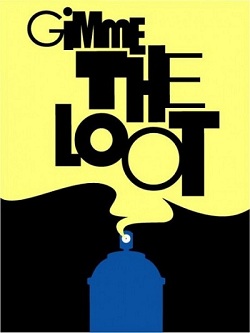
If SFIFF55 is in need of a poster boy, director / actor Mark Duplass is the one to recruit, as he appears in both Lawrence "The Big Chill" Kasdan's Darling Companion and Lynn "Humpday" Shelton's Your Sister's Sister (the latter being SFIFF55's Centerpiece Film). Although I'll probably give those movies a pass, I am dying to see Mark and Jay Duplass' The Do-Deca Pentathlon, a hilarious-sounding comedy the brothers shot in between Baghead and Cyrus, which recently premiered to acclaim at SXSW. The Grand Jury Prize winner at that festival was Adam Leon's Gimme the Loot, in which two NYC graffiti artists scramble to set up their biggest "bombing" to date. At the SFIFF55 press conference, it was stressed that Gimme the Loot had been programmed into the fest long before its significant SXSW win. Two other U.S. narrative features I'm aiming to see are Compliance by Craig Zobel (Great World of Sound), reportedly the most divisive film at Sundance 2012, and Julia Loktev's The Loneliest Planet. Gael Garcia Bernal stars here as one half of a couple whose relationship is thrown off course during a backpacking trek through the Caucasus Mountains. Loktev's 2006 breakthrough film Day Night, Day Night, never screened in the Bay Area, so it was especially nice to find The Loneliest Planet in the SFIFF55 line-up.

My enthusiasm for this year's U.S. narrative features carries over to the fest's documentary selections as well, with some of America's best known non-fiction filmmakers represented. The name Alex Gibney (Enron, Taxi to the Dark Side, Magic Trip) is almost enough to make me want to watch ice hockey doc The Last Gladiators. Last Call at the Oasis is Jessica Yu's (In the Realms of the Unreal, Protagonist) take on the global water crisis. Kirby Dick (Sick, This Film is Not Yet Rated, Outrage) is no stranger to controversy and takes on the subject of rape in the U.S. military with his latest, The Invisible War. Then ex-Bay Area gadfly Caveh Zahedi (I Am a Sex Addict), stirs up plenty of debate in The Sheik and I, in which he goads his way through a commissioned film project in the United Arab Emirates.

Elsewhere on the domestic doc front, I'm debating whether to subject myself to The Queen of Versailles, Lauren Greenfield's portrait of a repellent family of American one-percenters getting their comeuppance. A queenly portrait of another sort is Diana Vreeland: The Eye Has to Travel, granddaughter-in-law Lisa Immordino Vreeland's film about the greatest fashion maven of all time. I saw this at Palm Springs and it's enormous fun, especially when viewed with an audience that's almost all well-to-do ladies of a certain age. Another documentary about a famous woman directed by a relative is Ethel, by Ethel and Robert Kennedy's youngest daughter, Rory. For more hard-hitting subject matter, I'm hoping to check out Peter Nicks' The Waiting Room, which surveys a day in the life of Oakland's Highland Hospital, and David France's history of AIDS activism, How to Survive a Plague.

Cross-published on film-415.

SFIFF55—Michael Hawley Previews the Line-Up: Part One

The Bay Area's press corps gathered at the Fairmont Hotel's breathtaking Crown Room last week for the unveiling of the 55th San Francisco International Film Festival (SFIFF55)'s full line-up. SF Film Society (SFFS) Board President Pat McBain, himself pinch-hitting for acting Executive Director Melanie Blum, spoke about the "unbelievably sad and challenging past year" and revealed plans to honor former Executive Directors Graham Leggat and Bingham Ray during the festival. Opening Night on April 19 will be dedicated to Leggat, "who led us with his passion and leadership and vision for 5½ years." Bingham Ray, who succeeded Leggat for a brief two months, will be honored at the Castro Theatre on April 28 with a screening of Carol Reed's The Third Man, his all-time favorite film. Prior to turning the press conference over to Director of Programming Rachel Rosen and her team, McBain stressed that the search for a new Executive Director was well under way and would go "full throttle" once this year's festival wrapped.

Before diving into the nitty gritty of this year's line-up, Rosen prefaced that "our best revenge against what life has handed us this year is to put on the best, most celebratory festival that we could in honor of Graham and Bingham and to all of you who support us." Indeed, it appears they've done just that. In a previous post at film-415 I gathered up all the early announcements of SFIFF55's special awards and programs, to which we can now add the following: The festival will close on May 3 with Ramona Diaz' documentary Don't Stop Believin': Everyman's Journey, the story of a Journey cover band singer from the Philippines who became a member of the actual group. The Kanbar Award for screenwriting will go to David Webb Peoples, who penned such films as Blade Runner, 12 Monkeys and Unforgiven (the latter of which will be shown at the awards presentation). And while the Peter J. Owens Award for acting wasn't ready to be announced at the press conference, it has just been revealed that Australian actress Judy Davis will be the recipient, a choice certainly as inspired as last year's selection of Terence Stamp. Following an on-stage interview and clips reel, the festival will show Fred Schepisi's new film The Eye of the Storm, in which Davis stars with Geoffrey Rush and Charlotte Rampling.

I've attended SFIFF every year since 1976 and this will be my sixth year writing about it as accredited press. As has become tradition, I kick off my coverage with a broad overview of the line-up, which contains over 100 narrative and documentary features. I'll touch upon the ones I'm dying to see as well as those that have piqued my interest, all loosely organized under geographic headings.

Europe

French language films are always my top priority, so that's where we'll begin. While it was disappointing not to find the new films of such SFIFF alumni as Bruno Dumont, Christophe Honoré, André Téchiné, Chantal Akerman, Philippe Garrel and Lucas Belvaux in SFIFF55, I'm more than pleased by the selections on hand. First, a big thumbs up for Robert Guédiguian's The Snows of Kilimanjaro, which sees the prolific director return to the working class milieu of Marseilles that marked his 1997 breakthrough hit, Marius and Jeanette. Guédiguian is one of my favorite filmmakers and I've always been grateful that this festival has consistently supported his work. I caught this one at Palm Springs and am likely to see it again.

Also high on my must-see list are three films by directors best known for their acting careers. In Bouli Lanners' The Giants, three teenage boys are left to fend for themselves in rural Belgium. The festival mini-guide incorrectly lists this as Lanners' feature directorial debut (his last film Eldorado played the SFFS Kabuki screen in 2009). The Giants won several awards in the Directors' Fortnight sidebar at Cannes last year. Mathieu Kassovitz is probably best known in this country for playing Amélie Poulain's object of desire. He both directs and stars in Rebellion, based on a bloody 1988 insurgency in the French Pacific island territory of New Caledonia. Mono-monikered actress Maïwenn won Cannes' Jury Prize for her third feature directorial effort, Polisse. This drama about a Parisian Child Protective Custody unit was perhaps the most divisive film in competition at Cannes last year. While some critics found it brilliant, others dismissed it as a shallow TV cop show on steroids.

Nearly all of this year's French language selections were already on my radar—the two which were not sound like potential winners. Vincent Garenq's Guilty is the true story of a husband and wife wrongly imprisoned for pedophilia. In his favorable review for Variety, Boyd Van Hoeij says this "stomach-churning thriller-drama hybrid … dissects one of Gaul's most famous miscarriages of justice with chilling precision." Van Hoeij was somewhat less enthusiastic about Rabah Ameur-Zaïmeche's 18th century historical drama, Smuggler's Songs. This represents a new direction for the director, whose other three films explored issues surrounding contemporary French-Arab immigration (SFFS screened Adhen at 2009's French Cinema Now, and Wesh Wesh and Bled Number One played our 2006 Arab Film Festival). Smuggler's Songs co-stars (along with Ameur-Zaïmeche) the always interesting actor/director Jacques Nolot (Before I Forget).

Amongst the remaining French films, I'm sure everyone is looking forward to Chicken with Plums, Marjane Satrapi and Vincent Paronnaud's follow-up to the wildly successful Persepolis. Again working from one of her graphic novels, this is the story of Satrapi's Iranian musician great-uncle, who's played by Mathieu Amalric. Two French selections are competing for SFIFF55's New Directors Prize. Delphine and Muriel Coulin's 17 Girls concerns the circumstances surrounding a port town's massive outbreak of teen pregnancy and John Shenk's Last Winter explores the struggles of a young farmer. The latter stars Vincent Rottiers, who made such a strong impression in last year's I'm Glad My Mother is Alive. Anyone desiring a look at populist French cinema won't want to miss The Intouchables, which is now France's second most popular film of all time in terms of domestic admissions (the first being Welcome to the Sticks, which played French Cinema Now in 2008). At this year's Cesar Awards, Intouchables co-star Omar Sy bested The Artist's Jean Dujardin for meilleur acteur. For a taste of French horror from the festival's The Late Show sidebar, there's Last Screening, a shocker about a psychopathic cinema projectionist. Finally, whether you love him or hate him, there's no denying that SF Chronicle film critic Mick LaSalle is a passionate and knowledgeable advocate of French cinema. That's why I plan to sit in on his master class, Mick LaSalle: The Beauty of the Real, based on his new book about contemporary French actresses.

At the festival press conference, SFFS programmer Rod Armstrong revealed that he had long suggested Ken Russell for the Founder's Directing Award, an idea Graham Leggat nixed as "crazy." Alas, Russell passed away in November and the festival now honors him posthumously, in raucous Peaches Christ-style, with a Late Show screening of 1975's Tommy. Equally exciting, SFIFF55 will present the other filmic adaptation of a rock opera by The Who, Franc Roddam's 1979 Quadrophenia, in a rare 35mm print at the Castro. A pair of contemporary UK films programmed in the festival finds two acclaimed British directors reimagining works of classic 19th century literature. Ultra-versatile Michael Winterbottom transports Thomas Hardy's Tess of the d'Ubervilles to modern day India in Trishna, which stars Slumdog Millionaire's Freida Pinto. Then in Andrea Arnold's follow-up to Fish Tank, the character of Heathcliff in Wuthering Heights is recast as a former Afro-Caribbean slave. Both films were well received at their respective Toronto and Venice premieres. The fest will also be screening Tanya Wexler's Hysteria, a romantic comedy about the invention of the vibrator (opening May 25 at Landmark's Embarcadero Cinema).

Shifting back to (non-French speaking) continental Europe, I spy five films I'm especially hot to see. When local festivals Berlin & Beyond and German Gems both passed on screening the Dreileben Trilogy following its 2011 Berlin Film Festival premiere, I feared it had forever passed us by. Characteristically, SFIFF55 has now stepped up to the plate. Dreileben (meaning "three lives") consists of three loosely interlocking films about the manhunt for an escaped murderer. Each is told from a different point of view, in radically different filmmaking styles, by three of Germany's most important contemporary directors: Christian Petzold (Beats Being Dead), Dominik Graf (Don't Follow Me Around) and Christoph Hochhäusler (One Minute of Darkness). Petzold is certainly the most renowned of the three (Yella, Jerichow) and Hochhäusler's unsettling The City Below was in last year's festival. SFIFF55 presents three opportunities to view the trilogy; twice as an all-day marathon and once spread over three consecutive days. My two remaining compulsory European films are Norway's Oslo, August 31, Joachim Trier's follow-up to his astonishing 2006 debut, Reprise, and what is possibly my most anticipated film of the entire festival, Yorgos Lanthimos' ALPS. It's been two years since Greece's Dogtooth became the most transgressive film ever nominated for an Oscar® and I'm ready to be shocked silly all over again.

Finally, here are a few remaining European films of potential interest. There's a second Greek film in the fest, Filippos Tsitos' Unfair World, which took prizes for best director and actor at San Sebastian last year. The trailer for Morten Tyldum's Norwegian genre thriller Headhunters looks like a real kick in the head. It screens in the festival's The Late Show sidebar and will open theatrically at a Landmark Theatre on May 4. Russia is represented at SFIFF55 with two films, Alexander Zeldovich's futuristic epic Target, and Michale Boganim's post-Chernobyl drama Land of Oblivion (which is technically from the Ukraine). Italian director Emanuele Crialese's Golden Door opened the festival in 2007 and I caught his latest, Terraferma at Palm Springs. What's important to know is that the film's ubiquitous poster / still of young hotties diving off the sides of a fishing boat has virtually nothing to do with the movie itself. Another Italy-set film, Rolando Colla's Summer Games, was Switzerland's 2011 Oscar® submission. Those disappointed that the festival didn't program Tabu, Miguel Gomes' follow-up to Our Beloved Month of August (the big discovery of SFIFF52), might console themselves with Gonçalo Tocha's three-hour plus Portuguese doc, It's the Earth Not the Moon, about the remote Azores island of Corvo. Lastly, and for me personally, leastly, those who can't get enough of farm animal documentaries should find pleasure in Winter Nomads and Women with Cows.

Click here for Part Two, where I discuss SFIFF55's line-up of films from Asia/Pacific, Middle East/Africa, Latin America and the USA.

Cross-published on film-415.

Wednesday, March 28, 2012

SDFF 2012—The Evening Class Interview With Program Director Jason Perdue

In their Fall 2011 issue, Moviemaker proclaimed the Sebastopol Documentary Film Festival (SDFF) as one of the "can't miss cool fests of 2011" and SDFF wears that laurel proudly, continuing to bring independent film to West Sonoma County for their fifth edition, which kicks off March 29 and continues through April 1, 2012. "Community is key at this doc fest," writes Moviemaker, "which serves as a catalyst for strengthening the local film community, developing an independent moviemaking program for nearby youth and eventually launching a year-round series of cinema screenings, salons and workshops."

My thanks to SDFF Program Director Jason Perdue for sitting down to discuss the festival's continuing growth, indicated this year by a multi-page program, an official opening night with reception, and new screening venues.


* * *

Michael Guillén: The proliferation of film festivals has been a subject of concern in recent years. What encouraged you to take on the challenge of creating a new film festival in an area inundated with film festivals?

Jason Perdue: That wasn't even part of the consideration, really. At the time that the festival's original founder Eliza Hemenway and the Sebastopol Center for the Arts decided to create SDFF, that concern wasn't necessarily the case. In Sonoma there was the Sonoma Valley Film Festival—which later became the Sonoma International Film Festival—and the nearby Mill Valley Film Festival. They were the two main festivals. Since then, several smaller niche festivals like our's have popped up; but, the key to our survival has been that—since the beginning—it was a documentary-only film festival. Documentaries are what inspired us and gave us passion and focus as programmers, and this has carried over to our audiences who have a love for documentaries.

Guillén: At what point did you take over from Eliza Hemenway?

Perdue: Eliza not only founded the festival but—in that first year—pretty much did everything. She set up the partnership with the Sebastopol Center for the Arts. By the time I got on board, she had been planning the festival with them for several months. She had just opened the call for entries and needed help taking a look at the first films.

Guillén: So you were on a screening committee?

Perdue: That's right. We helped her plan the event, but she already had it pretty much mapped out. She had secured the venue and had a shell of a website and four or five of us were brought in to help her screen the incoming entries.

Guillén: What was your background in film? How did you end up on that screening committee?

Perdue: I was really just a huge film festival fan. The first film festival I ever attended was the San Francisco International; a friend brought me to the closing night entry
Crooklyn (1994) and Spike Lee was in the audience. I was instantly addicted. I was living in San Francisco at the time, working at the Stock Exchange, when I discovered many of the other community-based film festivals, as well as programming at the Roxie—IndieFest kicked into gear in the mid-'90s—but, I was just a consumer. I was just in the audience watching films and had my ideas of what did and did not work at these programs and always had in the back of my mind that programming a film festival would be a cool thing to do. But I didn't have any access and didn't know anything about putting on a film festival. Still, it became a passionate hobby. I would take weeks off to attend film festivals, became a benefactor of the San Francisco Film Society so I could take advantage of press screenings and one year saw more than a hundred movies; I was obsessed. So it was through that experience of attending film festivals that I developed my understanding of how festivals should work, at least from an audience standpoint. I didn't know anything about projection or filmmaking or even film criticism. I just knew what I liked or didn't like.

Guillén: So as a consummate cinephile, Eliza pulled you in to help her screen films and organize the festival. Then at one point you became the programming director yourself. It's perhaps obvious, but why did you decide to take on that role?

Perdue: I don't want to speak for Eliza, but after that first year of pretty much doing everything on her own, with some assistance from a core group of volunteers, she didn't want to go into a second year without divvying out duties. She wanted someone to at least take over as Program Director to organize the call for entries, to organize the screening committee and how films would be parceled out for consideration, to determine what the program was going to be and to make it happen. She wanted to be involved in other ways and having that piece of the festival off her plate would help her a lot. She put this out into the group and everyone didn't know what to do or say, but, after a couple of days I realized I wanted to try it. I volunteered and everyone said, "Great!"

Guillén: How fortuitous! I'm sure you recognize in retrospect that the opportunity to program a festival is a dream position for many people?

Perdue: Yeah, but here's the thing. We started from nothing and we had no contacts with other festivals so it wasn't like the word went out to the festival world. There were just four or five of us who knew that one of us was going to do what we considered to be basically a secretarial position. We didn't think of it as a coveted position. We had no plans of bringing in anyone from the outside. I will admit, however, that the moment I put the title "Program Director" under my name, my eyes opened to the opportunities for access.

Guillén: How important was the involvement of the Sebastopol Center for the Arts in helping you further this festival?

Perdue: The Sebastopol Center for the Arts is a 25+-year nonprofit institution in the town of Sebastopol that has tons of members, high visibility, and puts on events that a lot of people know about. Branding the festival back to the Sebastopol Center for the Arts was an ongoing challenge. A lot of people came to the festival in its first few years without any understanding that the festival was a program of the Center for the Arts; but, I'm confident the co-branding is now firm. Thus, the Executive Director of the SDFF is the Executive Director of the Sebastopol Center for the Arts (Linda Galletta). That relationship has allowed the festival to make it. The Center had a history of curating events; they had a built-in membership base interested in their events; and they had an established infrastructure of box office and volunteer coordination. Due to that, the SDFF didn't have to reinvent the wheel just to get started.

Further, as a fiscally-tight organization, the Sebastopol Center for the Arts has taught me a lot about how to run the festival in the sense that you don't spend a penny until you've brought it in. You don't make promises to organizations and individuals that you can't actually pay for.
Guillén: I imagine working under the aegis of an established arts center has likewise helped in securing corporate sponsorship?

Perdue: Having a nonprofit status carries a certain cachet in corporate sponsorship and marketing spheres. They want to have their brand associated with an event in that nonprofit space, especially an event that's popular in the community.

Guillén: With the documentary genre as your niche focus, how did you strengthen that identity?

Perdue: Shortly after becoming the Program Director and sending out the call for entries, I got an email from a documentary filmmaker asking if I could waive the entry fee for his film? He described his film and I liked the sound of it so I agreed to waive the fee in exchange for his helping me to promote the festival in documentary circles. He promised to post information about SDFF to the D-Word, which is a website / bulletin board / social network—though it was created before that term came into existence—of documentary professionals that come together to support and help each other. When he told me about it, I joined up as a member and began promoting my event. Then filmmakers who screened at SDFF went back to this environment to report on the experience. They said, "Sebastopol is doing something special here." That was immensely meaningful for me and inspired me to continue.

Guillén: "Sebastopol is doing something special here." And then Moviemaker called you one of the coolest film festivals of 2011. Why? What had you done to distinguish yourselves? What makes SDFF "cool"?

Perdue: From the first year and every year since, it's always been about the programming; about finding the best films that we can and not pandering to the audience or worrying about premiere status or if the film has already shown in other festivals or if it's already available on Netflix. If we feel a film is a great film that has probably not been seen by most of our audience, we'll program it. When the filmmakers came to the festival and found the company they were in and began interacting with other filmmakers—many who had already won awards and done well with their films at other festivals—it proved an important experience to them. Our audience appreciated that they were being given a curated group of films, not a random group of films.

Guillén: I like that. A lot could be said about the distinction between programming films and curating films. When I first glanced through your glossy new program guide for your fifth edition of the festival, one of the first things that struck me was that the programming was a mix between new and tried-and-true films. Case in point: your Latino program spotlights the investigative work of Pamela Yates, which includes her invaluable 1983 entry When the Mountains Tremble coupled with her most recent film Granito: How To Nail A Dictator (2011). As value added, Yates will be in attendance at your festival to discuss both her films.

Perdue: We've built a precedent for that kind of programming. In a previous edition we had the 25-year anniversary of Word Is Out (1977) with the entire directing crew present. My co-creative directors are both filmmakers who take the history of documentary film seriously—especially in the Bay Area where they're very much entrenched—and they don't want to lose touch with that. We have always managed to honor that history in some way.

Guillén: Let's talk about some of the other entries in this year's festival. Opening night is Mark Cousins' The First Movie (2009).

Perdue: It's a great film. I saw
The First Movie at Silverdocs last year and immediately as soon as it was over said, "I've got to get that film." But let me be clear, all the members of the SDFF programming staff keep their eyes and ears open about what's coming up but we make no promises to anyone. If I see the greatest film I've ever seen at Silverdocs with my programming staff 3000 miles away, I will never tell a filmmaker, "We're going to show your film." Never. Because programming for SDFF is a collaborative effort.

Guillén: Did you know even then that it would be your opening night film?

Perdue: Not really. This is the first year that we're doing an opening night event with one film in a big venue where everybody's seeing the same film. We've never done that before. The first four years we showed four or five films in small venues all around town and then everybody came together for the opening night reception afterwards. So this is a little bit of an experiment for us.

Guillén: It's more a traditional structure to a film festival: opening night, centerpiece, closing night.

Perdue: I feel we've been bringing a film festival experience to Sebastopol in a lot of ways by bringing in filmmakers, bringing in films of various subjects, creating opportunities for conversation with the audience, creating the party environments, but the one thing we didn't have was the opening night experience. There's a difference between seeing a film with 100 people than seeing a film with 500 people and the opening night experience is something I wanted to bring to Sebastopol.

Guillén: Tell me about your special program "Peer Pitch".

Perdue: Peer Pitch comes from a Washington, D.C.-based organization called Docs in Progress, run for several years by Erica Ginsberg. As the title of the organization implies, they help documentaries that are in progress from the beginning stages of "I have an idea. I've sketched out this. I've shot this few minutes or hours and I'm not sure exactly what to do next" to "I'm almost done with this but I need some advice on how to either distribute or edit it or put the finishing touches on it." Docs in Progress works with filmmakers through classes. Every year Silverdocs schedules a Docs in Progress program called Peer Pitch, where they invite participants to do a no-pressure pitch of their work to a group of other filmmakers for feedback. I participated in Peer Pitch at Silverdocs this year and befriended Erica and—as I was preparing my festival—she said, "What do you think about bringing Peer Pitch to the West Coast?" I thought it was a great idea. I've opened up the space but she's pretty much organized the entire thing. She's rounded up the media and is running it as she runs it. People are signing up for it. It's definitely new for the North Bay.

Guillén: I firmly believe in the cross-pollination of ideas between film festivals to develop film culture, so I'm supportive of this collaboration between SDFF and Docs in Progress. Now, I don't intend to make you go film by film through this year's program, but what do you really want audiences to catch this year?

Perdue: I think our closing night film Everyday Sunshine: The Story of Fishbone (2010) is going to be
huge. We're staging it at Hopmonk Tavern, which is the local venue where big bands come to play. We'll show the movie in the venue, then take down the screen, and then the band will perform in concert right afterwards. We're really excited about that. Fishbone was a band that was one of my favorites in the mid to late eighties. I went to several of their concerts in the Bay Area. We're partnering with Claypool Cellars, the winery owned by Les Claypool, who's the lead singer and bass player for the band Primus, and is featured in the film.

Guillén: Sounds like a blast, Jason! Thanks for taking the time to talk with me today and I wish you the best with SDFF: 4 days with 53 films!

Friday, March 16, 2012

SFSFF: NAPOLÉON (1927)—The Evening Class Interview With Charles ("Charlie") Tabesh

I first met Charles ("Charlie") Tabesh, the Senior Vice President of Programming for Turner Classic Movies (TCM), when Tabesh and Robert Osborne attended the 2007 summer edition of the San Francisco Silent Film Festival (SFSFF). Not only was Osborne on hand to introduce Camille (1921), but—on behalf of TCM—he accepted SFSFF's commendation to TCM for their continuing contributions to the silent film genre.

At that time I asked Charlie Tabesh to talk about TCM's commitment to the silent film genre and he replied: "As far as the silent film programming and why we do it and why it's important to us, there are three things I can think of off the top of my head that really explain it: One, we are not ad-supported. As a programmer, that's great because it gives us all sorts of flexibility and it allows us to not do things that advertisers would want to try to reach a mass audience, or whatever. Strategically, then, doing something niche like silent film, gives us really passionate advocates for the channel because we're the only place you can get it. There are a lot of people all over the country where the only way you're going to see a silent film is on Turner Classic Movies and that's really key because then you have those people going to their cable affiliates saying, 'I really want TCM. Give me TCM.' From a business perspective, that really helps us. It helps us and we're not hurt by the fact that it's very niche because we don't have to worry about advertisers. That's really good.

"The second thing on that is that our general programming strategy and philosophy is we're the history of movies. We're the history of the film and we're the place to go to learn about it. Of course, that means sometimes that includes newer films and people might complain when we play a newer film, but that also includes silent films. You can't be the history of movies and not include silent movies. [Third,] to narrow that further, we're also very much about context. We don't just put movies up on there; everything is themed and there is an idea or a reason behind it. So not only are we about film history, but in the way we look at film history by looking at actors, or directors, or various themes. No matter what theme you do—if you're doing romantic comedies—silent film is a part of that. They're actors and actresses that were both in silent films and sound films and—if we're going to do a tribute to Garbo—we're going to show both her silent and sound films. Silent films are a piece of film history and that's what TCM is all about."

When it was announced in January that TCM had signed on to be the media sponsor for SFSFF's upcoming international premiere of Abel Gance's Napoléon (1927), fully-restored by Kevin Brownlow with the original score by Carl Davis, I was delighted and contacted Charlie Tabesh to congratulate TCM. My thanks to Heather Sautter for facilitating our recent conversation.

* * *

Michael Guillén: Charlie, thanks for taking a few minutes this morning to talk to me about the international premiere of Abel Gance's Napoléon. You are no stranger to interacting with the San Francisco Silent Film Festival. I first met you and Robert Osborne back in July of 2007 when you were brought out to San Francisco to be honored by SFSFF for Turner Classic Movies (TCM) silent film programming on Sunday nights.

Charlie Tabesh: That was great. It was really a fantastic experience.


Guillén: In January of this year SFSFF announced that TCM had signed on to be the official media sponsor for the Napoléon premiere. Can you talk to how that came about?

Tabesh: We are friendly and have a good relationship with the various people that are putting it on, both people from SFSFF and Patrick Stanbury and Kevin Brownlow, all of who are working on the project. They approached us about being partners and for TCM this
Napoléon premiere is such an important event for film lovers and for film history that we really wanted to be affiliated and associated with it. We figured out a way to work with them and I'm really glad.

Guillén: What does TCM's involvement as an official media sponsor actually entail?

Tabesh: Well, that's not really my area. That gets into the marketing department and how they handle the sponsorship. I know we've done some programming on air in support of it. There was some
Napoléon-themed programming in January around it to help talk about it and there will be Abel Gance films coming up in March to lead people into it.

Guillén: Will TCM in any way be filming the event? Or doing any interstitial footage of the event?

Tabesh: No, we won't be filming, partly because the legal rights—as you know—are what have kept this film out of circulation for so long. Filming around the event would be problematic and so we aren't planning on doing that.


Guillén: We've spoken before about TCM's silent film programming and discussed TCM's Young Composers initiative. Is that initiative still in effect?

Tabesh: No. We don't do that particular program any longer. It was a great experience and a great program for us but, to be honest, it was very expensive. But TCM is still funding the scoring of silent films.


Guillén: I'm aware that the third edition of the TCM Classic Film Festival in Hollywood is coming up soon. Do you screen silent films there?

Tabesh: We've programmed silent films the last two years and we will continue to do so this year. Every year we do silent films. Some are big name well-known films and others are more obscure; but, we do have a silent film program.


Guillén: One of the things we discussed when you were in San Francisco was after Robert Osborne commented that the appreciation of silent cinema appears to be a bit stronger on the West Coast due to an advantageous time zone. Your Sunday night programming hits us at prime time, whereas it's airing at midnight on the East Coast. Has that issue ever been addressed?

Tabesh: You're exactly right and that's still true. It's a challenge. Anything we do is a bit of a challenge because we have one feed. It's true that the silent films are smackdab in prime time for the West Coast. The one thing that has maybe changed since we last talked is the prevalence of DVRs so that our audience on the East Coast can now tape the silent films if midnight is too late for them. Again, that applies to all things that we do. We have an 8:00 franchise on Saturday nights that is perfect for the East Coast but it's maybe a little bit early for the West Coast. TCM has to try to balance that and make each coast as happy as we can.


Guillén: In recent years I've been intrigued to witness this resurgence of interest in silent cinema, of which TCM has clearly played a part. Do you have any thoughts on why there has been this rekindled interest in silent cinema?

Tabesh: I hope that's true that TCM has had something to do with that. The only thing I can think of is consistency. We've stayed with silent cinema and it's always been part of our mission so maybe just over time people have had the opportunity to catch some silent programming on air and discovered they're really good films. Initially, when you're not used to it, when it's not something you're familiar with, you might put up a little bit of a block and say, "I don't want to sit there and watch a silent movie. What do you mean no dialogue?" But once you give it a try, you're hooked, depending on the film and what your own tastes are. It's great that a movie like
The Artist (2011) has helped to revive an interest in silent film.

Guillén: Can you speak to the amount and/or the quality of silent films TCM has in their library?

Tabesh: Within the Turner library itself we have the MGM and the Warner Brothers silents. Not all of them are in great shape so we've gone through a process of determining which materials are good and what we can save, preserve and score from that list. We also work with various studios whose films we license and we work with a lot of independent companies like Milestone Films, Kino and Jeff Mosino from Flicker Alley who has helped fund a lot of great restoration work. A lot of what we do is directly from the library that Ted Turner bought a few years ago, and a lot of what we do is working with these other companies that are as passionate about silent film who are putting them out on DVD. TCM is their television partner in a lot of cases. It just depends on the project. Sometimes Jeff will approach us and he's so passionate about a particular project and is persuasive enough that TCM goes, "Sold. Let's do it." A good example would be J'Accuse! (1919), the Abel Gance film that TCM will be screening [on Sunday, March 18, 9:00PM PT]. TCM funded that restoration some years ago. We can't do all of the restoration of silent films, but we can do quite a bit.


Guillén: I recall when the newly-restored print of J'Accuse! was screened at SFSFF in 2009. I wasn't aware that TCM was involved in that restoration; but, it's great to hear. I was actually going to ask if TCM has screened any Abel Gance films on the network?

Tabesh: We've screened
J'Accuse! and La Roue (1923) and a version of Napoléon, but not the version that will be screening in the Bay Area.

Guillén: Will there be any chance of Brownlow's current restoration of Napoléon ever being screened on TCM?

Tabesh: It's so complicated. I hope we can someday; but, for right now, it's a long shot that it would be done anytime soon.


Guillén: All the more reason to catch the Paramount screening! Another wonderful feature of TCM's programming is your invitation to guest hosts to educate audiences about film. Will you have Brownlow or Carl Davis on TCM to speak about silent cinema?

Tabesh: It's funny you ask that. I was just thinking yesterday—not specifically about that idea—but, thinking about doing something with film historians and having them come on TCM. I don't know. Both Brownlow and Davis are in London, you know. We had Kevin Brownlow out last year at the TCM Classic Film Festival and I was really hoping that Carl Davis—when he was out in San Francisco—would stick around and come to our festival too; but, unfortunately, he's not going to be able to do that. I'm hoping we can invite him out next year or some time down the line. If we can get them here and set up a time for them to co-host movies on TCM, I would love to make that work, with them or other historians.


Guillén: Charlies, thanks again for taking the time today. I want to congratulate TCM on its continuing support of silent cinema. It was fantastic to hear that you signed on to be the media sponsor for the Napoléon screening and—if I don't see you at The Paramount—I will certainly see you in Hollywood at the Classic Film Festival.

Tabesh: Oh good! I'm really glad.

Thursday, March 15, 2012

SFIAAFF 2012—YouTube Clips of In the Family Q&A

My thanks to Michael Hawley for uploading his footage of the recent Q&A session for Patrick Wang’s In the Family at the 30th edition of the San Francisco International Asian American Film Festival (SFIAFF).

Part One:


Part Two: