As synopsized by PSIFF: "Rooted in the reality of the corruption and violence of Buenos Aires, this gritty modern-day noir features Ricardo Darín (The Secret In Their Eyes and The Son Of The Bride) as Hector Sosa who, like the titular vulture-like bird, swoops down on unfortunate victims of Argentina's shockingly commonplace road accidents. Having lost his law license, he is relegated to the role of ambulance chaser for his thuggish employers who profit from a flourishing industry of false claims and insurance scams, fleecing victims of the bulk of any settlement received through their 'foundation.'
"When he meets Luján [Martina Gusmán (Lion's Den)], an overworked medic who is wrestling with her own demons as she tries to save the lives of Sosa's 'clients,' he has a dramatic change of heart, but his plans to escape this life and change his ways go horribly awry. With crisp, tight editing, this lean and suspenseful thriller takes us through accident sites, hospital wards, and seedy interior settings that would be perfectly in place in a Hollywood noir. Carancho is the latest example of director Trapero's trademark socially realistic cinema."
Carancho explores the notion that "behind every tragedy, there is an industry." As Diana Sanchez detailed in her program notes for Carancho's North American premiere at TIFF 2010, Trapero's film is "a story drawn from the alarming violence on his country's streets" and "an engrossing love story set among people who trade in sudden tragedy and death." Tracking the film's press notes, Sanchez writes: "Each year, more than eight thousand people are killed on the road and over a hundred thousand are injured. As a result, a disturbingly large part of the Argentine economy revolves around traffic accidents, and a profit stands to be made from the ongoing flow of medical expenses and insurance claims. Trapero's sixth feature plunges into this murky world of opportunism, spotlighting the crooks that swoop in on emergency rooms and accident scenes."
At Twitch, Todd Brown reported from the film's Cannes premiere: "A film that fuses stellar character work and intimate drama with larger thriller and heist moments with a few elements of shocking violence thrown in for good measure, Carancho is a masterful piece of work from writer / director / producer / editor Pablo Trapero. Trapero serves notice here that he is one of the very best film makers in the world today. Period. The complexity of his characters, the technical quality of the film work, his ability to balance intimate emotion with realistic and brutal action sequences, his obvious skill in working with actors—though that is made easier when you have actors the caliber of [Ricardo] Darín to work with—Trapero is at the highest level in all of these. Flawless? Carancho comes pretty damn close." As if to cinch the deal, Brown has included Carancho in his year-end top picks, emphasizing that "Ricardo Darín anchors Pablo Trapero's Carancho with a riveting, complex performance as a broken man slowly unraveling thanks to the tiny moré of conscience he retains. Classic noir in content if not in style, Trapero's film spins its amoral tale of insurance scams and ambulance chasing in as unaffected a style as possible, letting events play out in a cold, almost clinical fashion as his characters stumble inevitably to a bad end. The always stellar Darín has never been better and he's perfectly matched to both director and story."
At MUBI, Daniel Kasman praises Trapero as a steady, sure-handed genre craftsman. Kasman reported from TIFF: "Carancho has the solidity of construction and reliance on conventional character types and story arcs to effectively normalize a highly specific and localized setting. The result, like an early '30s Hollywood entry, is a workman film, one made by a director prodigious enough to pick such a unglamorous setting and proceed to cast it in a reliably realistic and unappealing light—'cause that's the way it really is. ...The film is so solid that any room for ambiguity is left out of the digital masonry of the mise-en-scène, which builds a clear schema where, simply, anyone involved in the nocturnal world of deaths and near-deaths, accidents and 'incidents' is implicated in the gloom, no questions asked. Thus the modest ambitions of a genre film stay within its modest limits, rather than escaping into the unease of the shadows, blossoming within gray shades of morality, or aesthetically expanded in risky angles, lighting, and other stylistics."
Pablo Trapero was born in San Justo, Buenos Aires, Argentina in 1971. He wrote, directed and edited the short films Mocoso Malcriado (1993) and Negocios (1995) before directing his feature debut, the award-winning Crane World (1999), a black and white 16mm film that proved to be a breaking point in Argentine cinema and that encouraged dozens of young directors into their first features. Crane World was released internationally at Venice, harvesting awards and critical acclaim at film festivals around the world.
In 2002, his second feature El Bonaerense premiered at Un Certain Regard in the Cannes Film Festival, again to critical and audience acclaim. That same year he opened his own production company Matanza Cine in Buenos Aires, from which he has produced ever since not only his own features but also those of other Argentine and Latin American filmmakers, including Lisandro Alonso, Enrique Bellande and Raúl Perrone. "Matanza", Trapero informed me, is the name of the neighborhood where he was born and raised and literally means "the killing." El Bonoaerense was filmed there, as were several sequences for Carancho (2010), Trapero's sixth feature and Argentina's official submission to the Foreign Language category of the 2011 Academy Awards®. It's been picked up for North American distribution by Strand Releasing.
As a director, between shorts and TV films, his credits include Rolling Family (2004), Born and Bred (2006), and Lion's Den (2008). Carancho explores the notion that "behind every tragedy, there is an industry." As Diana Sanchez detailed in her program notes for Carancho's North American premiere at TIFF 2010, Trapero's film is "a story drawn from the alarming violence on his country's streets" and "an engrossing love story set among people who trade in sudden tragedy and death." Tracking the film's press notes, Sanchez writes: "Each year, more than eight thousand people are killed on the road and over a hundred thousand are injured. As a result, a disturbingly large part of the Argentine economy revolves around traffic accidents, and a profit stands to be made from the ongoing flow of medical expenses and insurance claims. Trapero's sixth feature plunges into this murky world of opportunism, spotlighting the crooks that swoop in on emergency rooms and accident scenes."
At Twitch, Todd Brown reported from the film's Cannes premiere: "A film that fuses stellar character work and intimate drama with larger thriller and heist moments with a few elements of shocking violence thrown in for good measure, Carancho is a masterful piece of work from writer / director / producer / editor Pablo Trapero. Trapero serves notice here that he is one of the very best film makers in the world today. Period. The complexity of his characters, the technical quality of the film work, his ability to balance intimate emotion with realistic and brutal action sequences, his obvious skill in working with actors—though that is made easier when you have actors the caliber of [Ricardo] Darín to work with—Trapero is at the highest level in all of these. Flawless? Carancho comes pretty damn close."
At MUBI, Daniel Kasman praises Trapero as a steady, sure-handed genre craftsman. Kasman reports from the film's North American premiere at Toronto: "Carancho has the solidity of construction and reliance on conventional character types and story arcs to effectively normalize a highly specific and localized setting. The result, like an early 30s Hollywood entry, is a workman film, one made by a director prodigious enough to pick such a unglamorous setting and proceed to cast it in a reliably realistic and unappealing light—'cause that's the way it really is. ...The film is so solid that any room for ambiguity is left out of the digital masonry of the mise-en-scène, which builds a clear schema where, simply, anyone involved in the nocturnal world of deaths and near-deaths, accidents and 'incidents' is implicated in the gloom, no questions asked. Thus the modest ambitions of a genre film stay within its modest limits, rather than escaping into the unease of the shadows, blossoming within gray shades of morality, or aesthetically expanded in risky angles, lighting, and other stylistics."
My thanks to Marcus Hu of Strand Releasing for setting me up to interview Pablo Trapero at the Toronto International and to Doug Cummings for publishing the transcript of our conversation on his AFI Fest website [here] in conjunction with the film's screening this evening at the Mann Chinese 6 Theatre in Hollywood.
This was the first year—more than any other year I've attended the Toronto International—that its signature as a programmers festival seemed especially pronounced, which drew my attention to how the festival lineup has been selected, shaped and promoted largely through curatorial taste and whether, indeed, it could be accomplished any other way? As Mark Peranson has asserted in his introduction to the current issue of Cinema Scope, the preoccupation by "a certain bored segment of the film world today" with "the relationship between programming and film criticism" enforces his general instincts "that the two are one and the same." I'm inclined to agree and—though perhaps suffering less from ennui than Peranson on this topic, angling in by way of film festival studies rather than film criticism, and largely based on the pleasant conversation I had with Diana Sanchez at last year's TIFF—I decided to structure my own "microfestival" this year by exploring the curatorial instincts of three of TIFF's veteran programmers: Diana Sanchez, Colin Geddes and Kate Lawrie Van de Ven. For myself, this was quite a different approach to the festival—I'm usually chasing auteurs, national cinemas or the annointed darlings from Cannes, Venice and Locarno—and it took a measure of trust to surrender myself to the curatorial (i.e., critical) sensibility of three individuals and to limit my festival experience to their selections; but, it seemed a fair experiment. For me, it was a different way to understand the festival.
TIFF is also one of the few festivals I'm aware of—within my limited festival experience—where the program capsules have been written and signed off by the programmers who have selected the films. Naturally, the purpose of a program capsule has an administrative specificity and TIFF's capsules are no less obsessively promotional and adulatory than any other festival I've ever attended. If I were to believe every word I read, every film boasts a brand new vision and every introduced filmmaker is a brand new auteur, and such has been the Faustian pact with festival marketing for longer than I can remember. Devil be damned, however, James Quandt has conservatively argued with a wry raised eyebrow that there can only be 10 great films a year, if that. So there you have it. Caught between the Devil and an endless blue sea.
Over the years as I've honed the practice of festival attendance, I've learned to maintain a certain resistance to what I've been promised, to nonetheless appreciate how it has been promised to me, and—perhaps most importantly—by whom. As someone who is interested in the art and craft of programming, I enjoy discerning signature elements of personal taste hidden in plain sight between the lines of a program capsule. My festival experience will either chafe against or gladly embrace these paragraphs of curatorial enthusiasm (sleight of hand?), and I set about to further adjust my experience by indulging directorial intent (admittedly, authorial self-promotion) by conversing directly with filmmakers. Finally, over a second cup or twobeer or a shared meal, I mix it all up with the received wisdom and unrestrained opinions of my colleagues wherein taste is either distilled to consensus (call it an uneasy truce) or remains rebelliously idiosyncratic. And of course, it always comes down to my own personal taste: what I do and do not like; that final sober arbiter.
As extolled at TIFF's website: "Diana Sanchez is an International Programmer for the Toronto International Film Festival, responsible for introducing audiences to the best in Latin American cinema.
"The year after she joined the Festival in 2002, she programmed the Festival's spotlight on Brazil, Vida de Novo. Sanchez subsequently programmed two surveys of Argentine Cinema for TIFF Cinematheque, in 2004 and 2006. Also in 2006, she programmed a week of Cuban cinema at the Royal Ontario Museum.
"Sanchez is currently a programme consultant for the International Film Festival Rotterdam and has been involved in a variety of other festivals and cinematic presentations. In 2010 she programmed Calgary Latin, a selection of eight Latin American films, with the PROA Foundation in Argentina. In 2007 Sanchez was on the Ecuadorian Ministry of Culture Film Fund jury and in 2008 was on the first Premiera Copia jury at the Havana Film Festival. She has also been a jury member for the script development fund at the Colombian Ministry of Culture."
I was delighted to have the opportunity to sit down and catch up with her current selections as inflected through my current interests.
* * *
Michael Guillén: Diana, our conversation last year had an influence on—not only enhancing my appreciation of the films you selected for that edition of the festival—but, my understanding of curatorial taste in general. We spoke some about your method for selecting films for the festival and how you hoped they would represent the best of each country's national cinema(s). After the fact, certain colleagues of mine took objection to that statement. They argued, "How can she know what is the best of any national cinema?" Which provoked me to wonder: at what point does the primacy of personal taste enter into your selection of films?
Diana Sanchez: Personal taste is obviously going to affect a programmer's vision; but, that's not only what's involved because I do show films that aren't really within my personal taste but that I think will work with an audience. I try to balance that with what I think is interesting in cinema: filmmakers who are taking risks or filmmakers who are good storytellers. It's a difficult question. More what I meant by "best" was that I try to find the best 18 films that I can find; but—how to define "best"?—that's a difficult question obviously. As a programmer, I try to find films that are well-told; that are well-made. It's like when you're reading a novel, you can tell which writer has more craftsmanship than another.
Guillén: Do you have a literary preference towards narrative film?
Sanchez: I do not. My big thing now is this new genre that I'm seeing in films like Alamar, Crab Trap, and the films of Lisandro Alonso, José Luis Guerín, Miguel Gomes: this new genre which is a mix of documentary and fiction with a real sense of play between these two forms. I find that hybrid fascinating.
Guillén: So you mentioned you're looking for the best 18 films you can find, is that an allotment you're given as a TIFF programmer?
Sanchez: Yes, I'm given an allotment of 18 films.
Guillén: So your task is to go out and discover 18 films that you think will work for any given year?
Sanchez: That's right.
Guillén: Since "best" is such a nebulous term, let's approach another term which I've heard bandied about lately: "contemporary." Can you speak to what is a "contemporary" Latin American, Spanish or Portuguese film? Do you have a sense of that?
Sanchez: It's an interesting question. I've actually wondered what that is myself. Would an example be this new genre I'm talking about? Sometimes when people talk about contemporary cinema, I wonder if they're talking about subject matter? Or a matter of form?
Guillén: I bring it up because—though I am delighted in what I believe to be one of TIFF's strongest line-ups since I've been coming to the festival—there are, on the other hand, the inevitable detractors who argue, "No, it's not a strong line-up. The program is being padded with too many contemporary films." As valid a criticism as that might be, I still have no sense of what is meant by such a complaint because I'm not sure how the term "contemporary" is being used. I'm forced to question what "contemporary" means when used to describe a film, especially when it's used to dismiss a film, and I'm not sure there's even an answer to that question, let alone any consensual definition of the term.
Sanchez: A lot of people use that term "contemporary" to describe the subject matters that films are dealing with, which—for me, I would have to agree—are sometimes not the most interesting films to see.
Guillén: Another criticism levied against TIFF's program this year—aimed particularly at the City to City program—has been concern over the loss of national cinema retrospectives, which TIFF explored in past editions. But, for me, that's a concern that must necessarily address the changing face of national cinemas, especially factoring in financing and co-production. Within your domain of Latin American programming, let's say, where films exist only through the combined financing of several countries, what for you at this time determines a national cinema? Is it the content? Is it the nationality of the director? Is it the lead financier?
Sanchez: That's also another question I've asked myself as well. I do go by director. There's two great examples in this year's festival that address this complicated issue. There's Lope, a Spanish film directed by Brazilian director Andrucha Waddington with a Spanish cast about a Spanish playwright Lope de Vega. And then there's Biutiful, which has a mostly Spanish cast shot by Mexican director Alejandro González Iñárritu in Barcelona. I look at Biutiful as a Mexican-Spanish co-production and I look at Lope as a Spanish-Brazilian co-production. So the lines are being crossed. If I were programming a retrospective on Spain, I would include Biutiful. If I were programming a retrospective on Mexico, I would include Biutiful. The film can fit both. They're both very Spanish films but the topics are different.
Guillén: My premise is that the concept of the national cinema is becoming increasingly elastic.
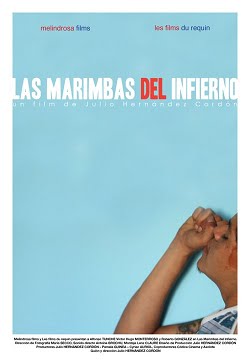
Sanchez: It is. But then there's films like Marimbas From Hell, which is a Guatemalan-Mexican-French co-production; but, that's a Guatemalan film. It's an absolutely Guatemalan story, a Guatemalan director, and you can feel Central America within that film.
Guillén: So is it safe to say then that a national cinema can be defined by its cultural sensibility, irregardless of external financing?
Sanchez: Yes, a cultural sensibility is important to defining a national cinema.
Guillén: This year I've shaped my festival itinerary to include approximately 10 of the 18 films you've programmed for the festival so I'm hoping we can, perhaps, briefly touch upon those films and then add mention of those I'm not able to catch?
Sanchez: Okay.
Guillén: You've already touched upon the Guatemalan entry Marimbas From Hell. I caught Julio Hernández Cordón's first film Gasolina at the San Francisco International and so I'm curious to see if he has matured as a filmmaker? Do you see a maturation in his work?
Sanchez: Absolutely. Marimbas is a more mature work than Gasolina. It's playful. It's funny. It's melancholic. Cordón has taken characters he's known within Guatemala and meshed them together to create a whole new story that really gives you a sense of the place.
Sanchez: It's a black and white film, 67 minutes, in two parts. The first part is about a cinematheque in Uruguay and a man who has been working there daily for 25 years. It's also funny. You can tell that the director has great in-depth knowledge of what it's like to work at a film museum. Lack of funding leads to the closure of the cinematheque and then he finds himself without a job. It's about dealing with life without cinema. A Useful Life is an homage to cinema but also a lament for lesser public investment in important institutions like cinematheques.
Sanchez: Carancho is a mix of genres. It's a noir; but, it's also a social issues story and at its heart it's a love story. So Trapero mixes a lot of genres in there. I saw it at Cannes and really liked it; but, not everyone agrees with me.
Guillén: I'm intrigued that you would characterize Carancho as a noir. What are the elements that you see in it that lead you to characterize it as a noir?
Sanchez: Stylistic elements. It focuses on the underbelly of Argentine life, especially the corrupt economy surrounding traffic accidents.
Sanchez: Yes, it has a similar feel to The Orphanage; but, it has a bit more gore in it. It's by the same production team that made The Orphanage: Guillermo del Toro, etc. It's about a woman who is losing her eyesight and starts to sense an invisible man. The question is whether there really is an invisible man or not. I was terrified.
Sanchez: It kind of does; but, it's more a classic essay documentary. It's about astronomers in the Atacama Desert peering into space trying to figure out the mysteries of the universe of the past. At the same desert, you have these women sifting through the sand looking for the remains of the disappeared. Guzmán is asking, "Why, in a country where we can look billions of years into the past, do we turn our backs on and not see what happened 40 years ago?" It's quite impressive.
Sanchez: It's crazy. A very dark sadomasochistic love affair. As you say, it won the Camera d'Or at Cannes.
Guillén: This has been a great year for Peruvian cinema and I was pleased to see that you included Daniel and Diego Vega's October among your 18. Can you speak to why you chose that film? I presume they're a brother team?
Sanchez: Y'know, it's funny; but, I try not to include too many Cannes films; but, it was impossible this year. I used to run a program in Miami—and I'm going to be running it again—called Encuentros Projects and I brought one of the brothers there. I met him about five years ago through that project. Then, out of the blue, the first time I heard of him again was at Cannes with this film October. It's a dark, but funny, story about a money lender in Peru who can only relate to other people through money exchanges. His "personal" relationships are all through prostitutes so one day one of them leaves him a baby and he's got to deal with this baby. A woman, one of his clients, steps in to help him out and the film is all about how they try to form a new kind of family.
Guillén: Talk to me a little bit more about this Encuentros Projects you run in Miami. When is that held?
Sanchez: March.
Guillén: Is it a film festival?
Sanchez: No. In 2003 we brought nine projects to Miami either to find co-production or just to get the word out on the projects. That became known as the Encuentros Projects.
Guillén: Is this a public event?
Sanchez: No.
Guillén: So it's more a venture to put filmmakers and their projects in touch with production money?
Sanchez: She's a Spanish filmmaker and her film is about a crew of Spanish filmmakers who go to Bolivia to make a film about the conquest of America. They arrive during the water crisis in Cochabamba when a lot of demonstrations are happening. So it's a film within a film; but, it's also about past tensions in Latin America as well as these present tensions. It's written by Paul Laverty who is Ken Loach's frequent screenwriter and both Loach and Laverty will be coming to the public screening to introduce the film and conduct a Q&A. I'm very excited about that.
Guillén: We touched upon Lope, which I'm highly anticipating. I was a fan of Andrucha Waddington's House of Sand and interviewed him when that film made its rounds. Lope has a beautiful look and promises a swashbuckling historical sweep.
Sanchez: It's an epic but it's also a lot of fun with beautiful actors and actresses.
Guillén: Is it a film you can see gaining traction on the circuit?
Sanchez: I wonder. I don't know. I hope so. It's hard with historical dramas.
Guillén: I guess so much is contingent upon whether or not audiences are engaged with any particular history?
Sanchez: Exactly.
Guillén: For me Lope de Vega is a master not known to most and so I'm intrigued by this biopic.
Sanchez: It's just such a wonderful story about an artist coming into his own. I think for Andrucha it's a parallel story to becoming a filmmaker. That's one of the things that's interesting about it. Andrucha will be here, straight from Venice.
Sanchez: That is the first feature film by Delfina Castagnino, who was previously the editor for Lisandro Alonso's Los Muertos and Fantasma. She's young and this debut is a very small personal film from Patagonia about two female friends that are going through difficult times of loss in their lives—one of them has lost her father and the other is going through a break-up of a relationship—and it's incredibly acted. I love it when films are this personal and you can feel the director's anxieties, which I find fascinating.
Sanchez: That film is by Achero Mañas who a few years back did a film called November, which won the FIPRESCI Award that year. This is his first film in eight years. I really like it but I'm wondering how the audience is going to react? It might be an audience favorite. It's a weird story about a little girl who loses her mother. Her father—played by Juan Diego Botto, who I consider one of Spain's best actors—in order to help the little girl go through her grieving process, approaches a drag queen to help him dress up as a woman so at night he can pretend to be her mother. But then—because she always wants her mother—he starts to lose his identity. [We both laugh.] It's kind of morally nebulous because you're thinking, "Ay, is that good for the kid?" So we'll see how that one works out.
Guillén: So of the ones remaining on your slate that I'm not going to be able to catch at official TIFF screenings, which would you recommend I keep an eye on?
Sanchez: Daniel Hendler's comedy Norberto's Deadline, which played in Locarno. Also, you must see José Luis Guerín's Guest; it's wonderful and special. His film definitely falls into that hybrid genre we were talking about earlier and he's a master at it. He goes to all these film festivals and you think the film's going to go one way; but, then he leaves the festivals behind and he gets into the street life of each place he visits. He explores little neighborhoods in Colombia that I didn't even know existed! In hardly any time at all, he achieves an intimacy with the people he meets.
Sanchez: Another nice film from Spain. Cuenca has made two films before but neither have shown in North America and Half Of Oscar is a truly different look at Spain set in the mountains of Almeria. The landscape becomes a vital part of the film and was one of the elements I found most fascinating about it. I would strongly recommend it. And you have to see Nicolás Pereda's Summer of Goliath.
Guillén: Why are you so enthused about that film?
Sanchez: It's another documentary-fiction hybrid; but visually, it's experimental, unexpected and visceral. Like Crab Trap last year, Summer of Goliath really achieves a sense of place, of this small town in Mexico.
Guillén: So we touched upon this when we were talking about the contemporary, but you seem to have programmed several of these hybrid films that blend documentary, fiction and essay. Is this a particular development you're seeing in the films of Latin America?
Sanchez: Again, this is a question I've asked myself because these films mostly seem to be coming from Latin America, Spain and Portugal. Is it particular to those cultures? I know that Lisandro Alonso is beloved by many of these filmmakers. They watch his films faithfully. No doubt the new Argentine cinema in general affected the region so, yes, I suspect there must be some Latin American sensibility that is related to the development of the genre. Then again, it's not just being expressed in Latin America. Apichatpong, for example, would speak to its presence in Thailand.
Guillén: When I tell people that I mainly focus on Latin American cinema, I often hear the complaint that Latin American films rely too much on the genre of melodrama, emulating telenovelas to achieve popular success. Can you speak to that?
Sanchez: Well, many of them are overtly melodramatic; but, I try not to select those for the festival.
Guillén: One or two are fine for their broad humor but they tend to wear me out. Well, Diana, thanks again for the preview and your insights into how you developed this year's Latin American, Spanish and Portuguese program and congratulations again on the success of some of your films from last year, namely Alamar and Crab Trap. I look forward to comparing impressions after the festival.
Though the touring Hola Mexico Film Festival (HMFF) was woefully under-attended during its San Francisco stint at Landmark's Embarcadero Cinema, it nonetheless provided a welcome program of both arthouse and popular films representing Mexico's cinematic output in the past year or so. The festival received some assistance from the Mexican Consulate, and near-to-negligible support from Landmark's publicist Steve Indig (an e-mail blast in the middle of the festival? A "you're on your own" attitude? C'mon, Steve!). Hopefully next year HMFF will hire a publicist and not rely exclusively on either the Mexican Consulate or Landmark to generate buzz on the event and, hopefully, they time the festival to not run the day after the San Francisco International wraps, by which time even the most resilient cinephiles are exhausted. I know I was. I would hate to think that—in a community that boasts such a large Latino demographic—support for HMFF will not increase in the years to come.
HMFF is continuing its national tour, currently screening in Miami at the Tower Theater through May 16, next in Chicago at Landmark's Century Centre Cinemas (May 20-25), then Washington, D.C. at Landmark's E Street Cinemas (May 27-June 1), wrapping up in New York at the Quad Cinema (June 2-June 6). Keep abreast of developments at HMFF's Facebook page.
As Festival Director Samuel Douek states in his introduction to HMFF's souvenir program: "Film has always been an important part of [Mexico's] culture and heritage, but we are now beginning to form a new chapter in Mexico's film history. More than 80 films have been produced this last year in Mexico, the government is giving filmmakers incentives, and numerous private production companies are emerging. Even more exciting, film festivals around the world are continuing to award Mexican films and the new wave of brilliant talent is beginning to emerge. Some would call this the modern day Golden Age of Mexican Cinema."
The proof's in the pudding. No less than a few days before HMFF launched at Landmark's Embarcadero Cinema, Alamar—Pedro González-Rubio's sophomore feature—won the New Directors Award at the 53rd edition of the San Francisco International Film Festival. Alamar was just one of the excellent films hand-picked by Douek for his festival.
Australia's strategic concept of touring festivals that spotlight national cinemas and the communities imagined as their respective audiences have been interestingly discussed by Adrian Martin and Dina Iordanova in the recently-published Film Festival Yearbook 2: Film Festivals and Imagined Communities. At her site DinaView, Iordanova has offered up their exchange. How this strategy applies in the United States is just one of the many topics touched upon in my conversation with HMFF Director Samuel Douek.
Samuel Douek is a man who appreciates film, international travel and—above all—his heritage. Combining his three favorite things, Douek founded HMFF in 2006 with the goal of exposing the international community to the creativity, ingenuity and charm of Mexican culture through film. Douek was raised in Mexico City and at age 23 moved to Sydney, Australia where he received a Marketing degree from Mcquarie University in 2002 and a Masters degree in Event Management from UTS. Once in Sydney, Douek began to visit local festivals in the Sydney area and noticed the lack of Mexican influence in cinema. From that point on, he became inspired to create an international Mexican film festival and HMFF was eventually born. Douek's festival brings misunderstood Mexican culture to educate the entire world, one film at a time. His diverse but well-edited selection of 20+ films allows viewers to experience the unique walks of life that characterize Mexican identity and culture. Over the past four years, the festival has extended its reach to the United States, providing an opportunity for American citizens to experience the beauty, creativity and talent in Mexican film. Currently, Douek splits his time between Australia and Mexico, while also taking advantage of travel opportunities that send him across the globe. Inbetween afternoon screenings, we sat down to talk.
* * *
Michael Guillén: Samuel, what motivated you to create a traveling film festival of Mexican cinema?
Samuel Douek: I didn't know I was doing a traveling film festival at the beginning. I was just following the trend in Australia, which was that all these different film festivals were organized to be ready to travel. They would screen in Sydney, then the next week they would be in Melbourne, then Brisbane, then Adelaide, then to Perth. Two or three of these festivals would run in those cities. For example, they would buy the rights for all these Italian films and screen them. Then the Goethe Institut did the same in Sydney, Melbourne, Brisbane. And then there was a Spanish Film Festival and a French Film Festival and all of them used the same strategy. I decided I wanted to do a Mexican Film Festival using the same idea.
My first year (2006) I did it only in Sydney and Melbourne and we did really well so the year afterwards we added Brisbane and Perth. In our fourth year, last year, we went to six cities: Sydney, Brisbane, Melbourne, Adelaide, Canberra and Perth.
During the second year of my festival, I came to the U.S. on holiday. I saw that there wasn't a Mexican Film Festival at all: not in New York, not in L.A., not anywhere! I thought about doing the same festival I was doing in cities in Australia, only here in cities in the U.S. Although it's not the same because in Australia the festival has the same sponsors everywhere. In the U.S. every city has its own sponsors.
Also, in Australia HMFF plays in the same chain of cinemas, whereas in the U.S. I work with Landmark, the independent Quad Cinema in New York, the independent Tower Theater in Miami, and the Arclight Cinema in L.A. So it's different in every city with marketing. The U.S. is much bigger and it's harder to do everything. The news spreads faster in Australia. If there's news in Sydney, it will go everywhere; if there's news in Melourne, as well—it's a 22-million people country—whereas in the U.S., if things are going on in L.A., people in San Francisco won't know. Same with New York. Every city is their own, so marketing is much more difficult than I thought it was going to be at the beginning when I was trying to replicate in the U.S.A. what I was doing in Australia.
Guillén: In Australia, what's your estimate of the Latino population? Are they coming to see your festival? Who comprises your audience?
Douek: It's 70% Australian, 30% Latino. Sometimes there's more, sometimes there's less. Mexico is seen as unique and "exotic" in Australia.
Guillén: Ah, that explains why in your press release you bill HMFF as "Your Escape to Exotic Mexico"?
Douek: In Australia they really enjoy watching Mexican stuff because they don't have that much. HMFF has built a great audience there. It works very well for us.
Guillén: At last year's Toronto International Film Festival I had the opportunity to talk to Diana Sanchez who programs most of their Latino films. After acknowledging that Toronto does not have a sizeable enough Latino demographic to target, she indicated to me that she programs films more with a non-Latino audience in mind, aware that many of these are films that Latinos themselves wouldn't go see because they're more arthouse than genre and don't have enough charge. Do you find that to be true?
Douek: A hundred percent. There are amazing Mexican films that go out into the film festival circuit and win awards all around the world but—when they open in the cinemas in Mexico—Mexicans won't go out to see them. That's due to a lot of things. A film like Silent Light by Carlos Reygadas wins awards everywhere in the world, but then he could hardly sell it in Mexico.
Guillén: He told me he initially had difficulty selling the U.S. distribution rights for $10,000.
Douek: So it's not something that just happens in Mexico. A Romanian film that wins top honors at the Cannes Film Festival doesn't know if they'll go home and make a lot of money. Usually those films—though talented and amazing, breaking through with cinematic achievements—don't translate into financial success, and vice versa. Some films like El Estudiante (The Student, 2009) or Arráncame la vida (Tear This Heart Out, 2008) that make millions of dollars in Mexican box office wouldn't go to any festivals around the world because they don't translate. Film festivals are more about the art part of cinema, whereas the box office is more about the commercial side. In saying that, HMFF is a portrait of Mexican cinema and we bring films like El Estudiante and Amor En Fin (Love On A Wknd, 2009), which are both commercial, but then we also bring films like Vaho (Becloud, 2009) or Norteado (Northless, 2009), which are more artistic. At the end, we're just trying to bring cinema that's well-produced with good sound, good acting.
Guillén: I understand that you scout for most of your films at the Guadalajara Film Festival?
Douek: That's where I've started to try and build the core of my festival for the last few years; but, this last year there weren't many good films there.
Guillén: Do you scout at the Morelia Film Festival?
Douek: I haven't been there because it's very close to the time that I'm in Australia launching the new HMFF. It's too problematic to go for a week to Morelia and then back to Australia. But this year I'm really looking forward to going to Morelia because now I think it's the festival to go to. The bulk of great Mexican films this year—Vaho, Norteado, Alamar and La Mitad Del Mundo (The Half of the World, 2009)—all came from the Morelia Film Festival. From Guadalajara this year, I only have Bala Mordida (Bitten Bullet, 2009) and Oveja Negra (Black Sheep, 2009).
Guillén: Since it narrows down to a matter of personal taste, what is it that you're looking for when you scout for films at these festivals? And how do you go about negotiating and securing these films for HMFF?
Douek: What I'm looking for is, as I said, films that are well-produced, that have something unique, that tell a story, that have something to say—not necessarily about Mexico—but a story. I want to see films that are edited well, that have good sound and lighting, and that have good acting: all in all, well done. Unfortunately, a lot of Mexican films are still being made under bad conditions. It's unbelievable that these badly-made films are being made simply because there's the production money to make them. I also look for variety in my program. I want a film like El Estudiante—which is a charming family-oriented film—and then a film like Alamar, a film festival favorite that has won awards all around the world.
To negotiate for the films, if I know the directors I will contact them. If not, I will contact the producers, the distribution company or IMCINE. By now, any film that's Mexican I have a way to get to.
Guillén: What do you offer your filmmakers? Why should they participate with HMFF?
Douek: We offer them the opportunity to screen their films in other countries. There are a lot of Mexican films that would never come to the U.S. if HMFF didn't bring them.
Guillén: I am personally grateful to HMFF for that.
Douek: Thank you. So that's one thing we offer. We also promote each film individually the best we can. At each city where HMFF plays, we invite the filmmakers to travel with us. [Laughs.] Imagine a huge touring bus with about 20 bunk beds so that the 12 filmmakers could travel with me for one month from city to city. Imagine me driving the bus with all the 35mm cannisters loaded underneath! That would be interesting to do ... once!
Guillén: Speaking of the spectacular dimension of HMFF, I'm aware that Alejandro Gerber Bicecci (Vaho) is the only director attending the San Francisco festival; but, there were several of your directors in attendance in Los Angeles?
Douek: We had a lot of talent, about 15 people. We had an opening night red carpet event for all the Hollywood media and received national coverage from Univision and Telemundo.
Guillén: Will there be talent at the remaining venues on the HMFF tour?
Douek: We always, at least, try to bring the director of the opening night film and one or two more, if possible. The important distinction is that HMFF is a festival but not a festival in the usual sense. In another way, we want to establish ourselves as a week of Mexican films in each city. For one week people can come and know that every time they go to the cinema they're going to see Mexican movies.
Guillén: I mentioned to you that one of the factors I feel is working against you this go-round is the fact that HMFF opened one day after the San Francisco International finished. What determined the timing of HMFF in San Francisco?
Douek: This year, in particular, there is the World Cup coming up on June 11 so we finish up in New York on June 6. Working back from that date, we set up the festival dates by working backwards every week. Unfortunately, San Francisco's dates were very close to the San Francisco International Film Festival. We didn't do that on purpose. Originally we were going to open in L.A., then go to Miami and then San Francisco and on to Washington D.C., but that became a bit of a logistic nightmare. Next year we would love to tour in June.
* * *
Here is is the promotional video for HMFF USA 2010, made by Jason Archer. Archer has worked with Radiohead, Molotov and on such films as A Scanner Darkly and Waking Life.
"The voice of the woman is a reflection of her condition on Earth. Air echoes in a chest that is smaller, vibrates vocal cords that are smaller and that produce a higher, thinner sound. It requires twice the energy, twice the intensity of a man's voice to be heard. This is why I learned to shout for those who couldn't ... and to cry so many times for and with so many women, girls and boys whose voices and whose lives have been crushed by the impunity of our state and our nation."—Esther Chavez.
As detailed in the press book for Carlos Carerra's most recent feature Backyard (El Traspatio), the film's narrative is based on actual events that took place in 1996 in Ciudad Juárez: a Mexican border city sustained by American-owned factories, or maquiladoras, that sprang up on the Mexican side of the border after the NAFTA agreement went into effect. "1996 was the year when people on both sides of the border began to grow accustomed to the fact that every month or every week in Juárez, a young woman would turn up dead. The screenplay was written in the year 2001 as the murders continued: three or four bodies appeared like clockwork every month, while the author [Sabina Berman] was writing her screenplay in the local Holiday Inn. Backyard was filmed on location in 2008, when each week murdered women continued to appear—in keeping with what is now a local Juárez custom."
As Diana Sanchez specified in her program capsule for the 2009 Toronto International Film Festival (where Backyard saw its international premiere in the Contemporary World Cinema sidebar): "This ongoing tragedy remains a painful stain on Mexican history and has been the subject of numerous films, articles and books", including the 2006 Jennifer Lopez vehicle Bordertown and Lourdes Portillo's 2001 documentary Señorita extraviada (Missing Young Woman), in which Portillo sought to give voice to the many victims and to understand how these awful crimes could take place. In her onstage interview with Variety critic John Anderson at the 52nd San Francisco International Film Festival, Portillo detailed the death threats she received after making Señorita extraviada and the debilitating effect it had on her.
Similar threats were levied at the cast and crew of Backyard, as outlined in Guy Adam's report to The Independent: "Last year, the makers of … El Traspatio (The Backyard) reported that an actress from Ciudad Juárez, where they were shooting, had found a slaughtered lamb on her doorstep, with a death threat pinned to it. She was replaced, for her own safety. Several other crew members on the film, about local drug murders, reported receiving sinister anonymous phone calls." Carrera's crew shot their film surrounded by two bands of armed men. One of these rings was formed by agents from the government Division of Investigation Specializing in Organized Crime (SIEDO), the other by soldiers with rifles. Two police commanders assigned to security duty were slain and a third had to flee in fear of her life. Although the governments of Juárez and Mexico ultimately decided to provide protection to Carrera and his film crew, they first tried to dissuade Carrera from the project, hoping he would instead shoot a romantic comedy in Cancun; but, Carrera and Berman remained committed to the subject of femicide in Juárez. As reported by Tracy Wilkinson to the Los Angeles Times, "Local government officials do not come off well in the film, having often preferred to downplay the murders of easily replaced female factory workers in order to prop up business interests."
Perhaps best known for El crimen del Padre Amaro (2002), which was nominated for the Academy Award for Best Foreign Language Film, Carlos Carrera is expected to attend Backyard's screening at the 2010 Palm Springs International Film Festival (PSIFF), where it has been included in PSIFF's Modern Masters sidebar. Backyard is likewise Mexico's entry this year in the Academy Awards® foreign-language film category.
As Diana Sanchez has written: "Presented as a fiction, Carrera's film is all the more moving given that the events he recounts are based on true stories and touch upon the various theories that have been put forward as to the cause of the murders. Hypotheses range from a serial killer, to drug cartels, to the more abstract pains of globalization, and it is easy to see how any of these factors could be at work in this Mexican town, which is a backyard to El Paso, Texas. Through his film, Carrera is able to denounce culprits who have never been brought to justice. However, the most devastating truth he illuminates is that these murders continue to happen because they have become commonplace. Today, some men kill women in Ciudad Juárez simply because they can."
The topic of femicide is unquestionably important and Backyard aims its statistics of sex-related murders from other Mexican cities and other South American countries with stern verve, pointedly wrapping up with sobering statistics from New York City where 3,200 murders of women remain unsolved. A worldwide issue, femicide is clearly not exclusive to Juárez; yet—though conceding the necessity of keeping the issue in public focus to counter its statistical frequency—I have mixed feelings about Backyard. Though it has high production values, with a strong turn by Ana de la Reguera in the lead role of Police Captain Blanca Bravo, I have substantive concerns with Berman's script which—though it informs through dramatization—offers questionable solutions, primarily through a revenge scenario towards film's end that has been both applauded and deplored by audiences. Though Berman has defended her scriptural choice as morally unambiguous, it remains excessively dramatic and—oddly enough—counterproductive. As Marilyn Ferdinand opines at Ferdy on Films, the dramatic violence of the subject scene provides the audience cathartic relief from their frustration but possibly sends them home "without really taking the message of the film to heart." In this instance, cathartic release falls far short of viable solutions. It's too easy to kill the killer and be done with it. Not to say that Berman should pretend she has solutions, but at the same time she shouldn't really defuse their absence through compounded violence. Acknowledging that the wall of indifference and denial in Mexican society is a horrible problem, there's a defeatist edge to Berman's vision: "We can't solve it," she said to the L.A. Times, "let's change the subject." I'm not criticizing her defeatism. I think it's a healthy and honest response. I'm not so sure, however, about her dramatized solutions which offer false remedy.
Ferdinand does a solid job of synopsizing Berman's narrative and endorsing the "important message of this grave film", even as she stages a cogent complaint that despite Carrera's disclaimer that Backyard is not intended as "entertainment" certain "touches—particularly the attractive lady detective in the Law & Order mold—are right out of the Hollywood play book." Ferdinand's concern that reviews that read and critique Backyard as a thriller "underplay or ignore its message—a rather chilling commentary on how even the most hideous violence against women has so completely infiltrated the entertainment industry." Again, no solutions appear ready to present themselves. For now, a sober eye on the information is in order.
 Programmed within my favorite sidebar at the Palm Springs International Film Festival (PSIFF)—i.e., Awards Buzz: Best Foreign Language Film (which this year is featuring 40 of the 65 official submissions to the 2011 Academy Awards®)—Pablo Trapero's Carancho (2010) chases the shrill sound of ambulance sirens. I first caught this film at the 2010 Toronto International Film Festival (TIFF) and feel now is a good time to revisit those notes.
 "When he meets Luján [Martina Gusmán (Lion's Den)], an overworked medic who is wrestling with her own demons as she tries to save the lives of Sosa's 'clients,' he has a dramatic change of heart, but his plans to escape this life and change his ways go horribly awry. With crisp, tight editing, this lean and suspenseful thriller takes us through accident sites, hospital wards, and seedy interior settings that would be perfectly in place in a Hollywood noir. Carancho is the latest example of director Trapero's trademark socially realistic cinema."
 At Twitch, Todd Brown reported from the film's Cannes premiere: "A film that fuses stellar character work and intimate drama with larger thriller and heist moments with a few elements of shocking violence thrown in for good measure, Carancho is a masterful piece of work from writer / director / producer / editor Pablo Trapero. Trapero serves notice here that he is one of the very best film makers in the world today. Period. The complexity of his characters, the technical quality of the film work, his ability to balance intimate emotion with realistic and brutal action sequences, his obvious skill in working with actors—though that is made easier when you have actors the caliber of [Ricardo] Darín to work with—Trapero is at the highest level in all of these. Flawless? Carancho comes pretty damn close." As if to cinch the deal, Brown has included Carancho in his year-end top picks, emphasizing that "Ricardo Darín anchors Pablo Trapero's Carancho with a riveting, complex performance as a broken man slowly unraveling thanks to the tiny moré of conscience he retains. Classic noir in content if not in style, Trapero's film spins its amoral tale of insurance scams and ambulance chasing in as unaffected a style as possible, letting events play out in a cold, almost clinical fashion as his characters stumble inevitably to a bad end. The always stellar Darín has never been better and he's perfectly matched to both director and story."
 At MUBI, Daniel Kasman praises Trapero as a steady, sure-handed genre craftsman. Kasman reported from TIFF: "Carancho has the solidity of construction and reliance on conventional character types and story arcs to effectively normalize a highly specific and localized setting. The result, like an early '30s Hollywood entry, is a workman film, one made by a director prodigious enough to pick such a unglamorous setting and proceed to cast it in a reliably realistic and unappealing light—'cause that's the way it really is. ...The film is so solid that any room for ambiguity is left out of the digital masonry of the mise-en-scène, which builds a clear schema where, simply, anyone involved in the nocturnal world of deaths and near-deaths, accidents and 'incidents' is implicated in the gloom, no questions asked. Thus the modest ambitions of a genre film stay within its modest limits, rather than escaping into the unease of the shadows, blossoming within gray shades of morality, or aesthetically expanded in risky angles, lighting, and other stylistics."