Showing posts with label Film Noir. Show all posts

Monday, May 20, 2013

ROXIE THEATER: I WAKE UP DREAMING: 99 44/100% NOIRThe Evening Class Interview With Wayne Shellabarger

Elliot Lavine [interviews one and two] continues to entertain his San Franciscan audiences with noir oddities culled from studio vaults, private collections and Blu-rays, curatorially assembled into his 2013 edition of "I Wake Up Dreaming: 99 44/100% Noir", which continues its run through Thursday, May 23, 2013 at the Roxie. Dennis Harvey wrote up the series for The San Francisco Bay Guardian, as did Erin Blackwell for The Bay Area Reporter, Pam Grady for Cinezine Kane, Casey Burchby for The SF Weekly, and G. Allen Johnson for the San Francisco Chronicle.

Ever ahead of the curve when it comes to value added to the theatrical experience, Elliot invited Wayne Shellabarger to contribute a slide show of comic book panels to complement the series inbetween screenings and the effect has been stunning. I cornered Shellabarger in a dark alley near the Roxie where, unfortunately, the trash cans were only grey.

* * *

Michael Guillén: Wayne, how did you become interested in comic book panels as a slide show project to accompany Elliot Lavine's "I Wake Up Dreaming: 99 44/100% Noir" series for the Roxie Theater?

Wayne Shellabarger: I had access to a large digital archive of comics and—as I started reading through them—I discovered artists and stories that I had never heard of or read about or seen; most importantly seen reprinted or anthologized. The vibrancy, urgency and energy of certain panels gave me a buzz—whatever you want to call it—and struck me for some reason. I felt the visceral energy of these panels. They hit me. So I began to collect them through screencaps for my personal enjoyment and to look at again for later reference.

I built up quite a library of these and decided to review what I had captured by setting up a slide show to sit back and watch them. What I discovered was that—rather than looking at a series of panels—the slide show created a third form. It wasn't cinema, it wasn't comics, and it wasn't just a slide show. The way that the panels related to each other and were juxtaposed against each other in non-predictable ways created an interesting effect. Watching this slide show for the first time, I felt something new since seeing the panels as I had collected them. I thought, "This would be a really great thing to show before a movie." Especially before a film noir, because what I was collecting was mainly crime comics.

Guillén: In some respects, I consider your slide show project an installation piece.

Shellabarger: Whatever form this slide show has ended up taking at this festival is something I never intended. It unfolded organically and kind of happened as I kept working at it, looking at the panels more, adding to the slide show.

Guillén: Elliot Lavine is a comic book fan? He's been posting several comic book panels on his Facebook timeline. Is that your influence?

Shellabarger: Probably, yeah, though he posted a lot of cool comic book stuff before I started doing this.

Guillén: What caught my eye with your slide show project is that—although the appropriation and recontextualization of comic book panels is readily apparent in American culture through the paintings of Roy Lichtenstein—his project remains essentially a parody. What you're doing is more complementary or supplementary, especially with regard to partnering it with noir films, because you have culled out a collection of panels that are genre-specific.

Shellabarger: I would like to avoid using words like "re-appropriate" or "recontextualize" because there was no brain work that went into this, no intellectual effort at all, the panels just hit me at a gut level.

Guillén: Well, I'd argue that gut reactions fall within the domain of emotional intelligence, which doesn't necessarily have anything to do with intellectuality, and is no less smart for it. As I watched your slide show at the festival, and monitored how well-received it was by your audience, it made me aware of the project's visceral aesthetics: the colors are primary; the frames are succinct, self-explanatory and complete in themselves. Your skill as the compiler of these frames is to single out, for wont of a better term, the focus through light (and darkness)—and, in your case, color—on the essential dramatic moment.

Shellabarger: Yeah! For every one I picked, I saw hundreds that didn't do it for me. It was not like there were gems lying everywhere, for me personally at least, and what I respond to might be different for someone else, but it seems like a lot of people are responding to the selfsame elements that I'm responding to.

Guillén: Do you come from an art history background?

Shellabarger: Well, I've collected comics since I was a kid and then I did art history in college and I draw and illustrate and things like that. Once this slide show started to take shape, then it began to speak to me and dictated what it needed to build itself. Once I had in mind that it might be shown in this form, then it was easier to find a path—"This will work. This goes with this theme or that motif."—which I discovered as I was reviewing my collection. It's not that I'm imposing these themes or motifs. I'm receptive to what's already there.

Guillén: Which is where I would agree with you that this is not recontextualized art. If anything, it's punctuating or emphasizing what's intrinsic to the images.

Shellabarger: Or celebrating them. I'm not trying to make something different out of them.

Guillén: The simple genius of this project is the converging of two popular forms that focus on generic elements.

Shellabarger: One really nice surprise that I noticed was that—if these are noir panels (and I do think there's a hardcore noir sensibility to every single one of them)—they're at the same time the most garish, brightly-hued, and colorful comics, much more so than the comics I grew up reading in the '70s and '80s. For example, there will be a guy walking down a deserted alley and the trash cans will be a bright blue, bright green and bright red. The coloring works perfectly and doesn't take away from the dark attitude of the panel. It's very strange that it works.


Guillén: Even as a child reading comics, I became aware early on of the importance of inking and the individuals responsible for adding color to the stories. I noticed how sometimes the bleeding of color added to the effect, whether intended or not, and that quality especially stood out watching your panels projected onto a large screen.

You mentioned earlier that you were taken by panels unfamiliar to you. I was sitting in the theater with a fellow comics enthusiast and both of us couldn't recognize or source a single frame.

Shellabarger: Yeah, I thought that was another really attractive trait. What attracted me was that I was unfamiliar with a lot of these artists, probably because most of them are anonymous to this day in a lot of cases, except for people like Craig Yoe [official website].

Guillén: So these comics are from the '50s?

Shellabarger: Yeah, they're late '40s and then early '50s before the Comics Code. It seemed like it took the noir sensibility a little longer to inject itself in comics than in film. I noticed that it's in 1948 that it starts in comics more.

Guillén: So did the Comics Code prohibit these kinds of images?

Shellabarger: Exactly. That's what it was designed to do. I mean, look at them! They're terribly harmful. [Laughs.]

Guillén: But then if you look at contemporary comics they're filled with violence.

Shellabarger: Yeah, but it's senseless, not beautiful.

Guillén: So what you're offering in your slide show are significant pre-Code panels that mirror but don't actually time with pre-Code film?

Shellabarger: Right. The same phenomenon happened in comics as happened in film but some 20+ years later.

Guillén: Other than by way of this slide show at the festival, do you intend to further this project in any way?

Shellabarger: A friend of mine compelled me to gather some of the panels together that he'd seen me post to accompany a musical performance that he was doing and that's when I started to gather them with the idea in mind of presenting them publically, rather than just for my personal use. So that's made me aware that I can build different programs to accompany different events, be they music or film. So there might be more slide shows coming. I've also collected a lot of romance panels, and monster panels, and surrealistic panels.

Guillén: About how many images did you use for this slide show?

Shellabarger: Just under 500, about 450, in constant rotation. The randomness of it helps underscore its effect.

Guillén: We're saying "slide show", but are these actually slides?

Shellabarger: No, they're jpegs and they're intended to run in a completely random order. Whatever juxtapositions and connections people make between the panels is what's most interesting about the project. The randomness allows new juxtapositions and connections to be constantly made and I find that stimulating, and—combined with the soundtrack underneath them to glue the images together—I'm surprised how well it works.

Guillén: Did you compile the soundtrack as well?

Shellabarger: I actually got a couple of my buddies—Tom Lynch and Jeremy Wheat, who are as much into music as I am into comics and who share my sensibility on a lot of things—to create the soundtrack. They hooked in to what I was wanting to do and they came up with these great mixes of '40s-'50s jazz and TV crime soundtracks.

Guillén: Thanks, Wayne, for taking the time to talk with me.

Shellabarger: Thanks to Elliot Lavine for creating a forum for this project!

Saturday, December 31, 2011

NOIR CITY XMAS—Eddie Muller Intro to Deanna Durbin Doublebill

The Film Noir Foundation's second annual Noir City Xmas was held December 14, 2011 at San Francisco's historic Castro Theatre, offering a double-feature of rare noir-stained yuletide classics "to darken our spirits this holiday season." The evening also featured the unveiling of the full schedule for Noir City X, the 10th anniversary of the world's most popular film noir festival, coming to the Castro Theatre January 20-29, 2012.

Bill Arney—the now legendary disembodied "Voice of Film Noir"—hesitated to welcome the audience to the second "annual" Noir City Xmas because "just how many Noir City Xmas movies can there
be?" Asking if the audience had been good this year, Arney was met with a resounding, "NO!" to which he responded, "What the hell is wrong with you? There's still a little over a week," he added "to get over yourself and make some trouble. Santa will be sorely disappointed if he doesn't get to fill every stocking in Noir City with coal this year. In some places this holiday is a winter wonderland, but here in Noir City it's just cold." Varney then introduced his boss, the "Czar of Noir" Eddie Muller: "The guy who only puts goodies in your cinematic stocking."

Muller took to the Castro stage and wished everyone a "cruel Yule." "You learn to expect the unexpected at Noir City," he offered. "Hence, a film noir double-bill starring Deanna Durbin. Here's the reality of film programming in 2011. As Bill said in his introduction, how many film noir Christmas movies can there be, right? So we have to parcel these out very intelligently. The plan originally was to show Christmas Holiday (1944) and Holiday Affair (1949) as our double-bill this year and next year we would have Lady On a Train (1945) and The Lady in the Lake (1947), which was set at Christmas, right? But, could we get
Holiday Affair in a 35mm print? No. Because it no longer exists. This is a major problem. And that is why—when someone asked me earlier, 'What's the theme of this year's Noir City festival?'—I said, 'The theme is you better see it in 35mm while you can.' That is actually the theme of the festival and I'm very happy to say and proud to say that everything we will be screening at Noir City X will be in 35mm."

"I will not be on the soapbox tonight," Muller assured us, "but, I will be stationed on that soapbox during January because this has really become a serious issue. We cannot actually fight the tide forever—we are going to be living in a digital future—but, we have to do everything we possibly can to insure that films that do not exist digitally or on 35mm are preserved as
films, or they will never be able to be shown in the future digitally or any other way."

Excited that his audience had been given a peek at the upcoming line-up for Noir City X, Muller emphasized he was especially excited because of his super special guest who would be appearing on the first Saturday night with The Killers (1964) and Point Blank (1967): Angie Dickinson! "I've already been warned to lay off the stuff about the White House and Jack Kennedy and all of that—I'm not going there—so I'll get it all out right now: they say she went in Police Girl and she came out Police Woman."

Among the marvelous preservations that will be shown at Noir City X is a brand new print of Naked Alibi (1954) starring Gloria Grahame, struck by Universal specifically for Noir City. "All you need to know," Muller insisted, "is that it's called
Naked Alibi." Further, in light of the upcoming Baz Luhrmann adaptation of F. Scott Fitzgerald's 1925 classic The Great Gatsby (featuring Leonardo DiCaprio), Noir City has rescued from obscurity the 1949 film noir version of Fitzgerald's The Great Gatsby starring Alan Ladd, which has not been shown theatrically since 1974 when it was put into deep storage to make way for the Robert Redford-Mia Farrow vehicle. Thanks to Noir City's good friends at Universal Studios, the 1949 version will finally be seen again. The Great Gatsby will be shown with Three Strangers (1946), whose preservation has been funded by the Film Noir Foundation. Finally, last but not least, The Film Noir Foundation vied with Martin Scorsese's Film Foundation to restore The Breaking Point (1950). Scorsese won that particular competition but Muller bears no regrets since it's one of his favorite films, one he has shown at other film noir festivals, thereby singlehandedly destroying the only existing good print left of the film. Muller is delighted that the film has been completely restored and that Scorsese and the Film Foundation have graciously allowed Noir City to be the first venue to show that brand-new print.

To celebrate Noir City's 10th anniversary in style, on Saturday night, January 28, Noir City will be hosting its first-ever Noir City Nightclub called—appropriately enough—"Everyone Comes to Eddie's". Noir City is converting the Swedish American Hall into a sexy and sinister 1940s nightclub with live entertainment "for your edification."

Another highlight of Noir City X will be the all-day Dashiell Hammett marathon, featuring films based on Hammett's stories, including such rareties as Roadhouse Nights (1930) and Mister Dynamite (1935). Richard Laymann, the world's foremost scholar on Dashiell Hammett (Shadowman: The Life of Dashiell Hammett, 1981), will be flying in to Noir City because he has never seen Mister Dynamite, that's how rarely it's shown.

Finally, with regard to "the super sexy poster" for Noir City X, the photograph was actually taken in Dashiell Hammett's San Francisco apartment where he lived and wrote
The Dain Curse (1929), Red Harvest (1929) and The Maltese Falcon (1930). Bill Arney, the "Voice of Noir City" resided in Hammett's apartment for many years and—looking at this poster—Muller had to ask Arney why he ever left? "Well," Arney responded, "the last one of those dames that came over there told me that the Murphy bed was very comfortable. I told her not to get too comfortable. And then I married her."

Turning to the evening's double-bill, Muller recalled that Deanna Durbin was once one of the highest-paid actresses in Hollywood and, as a girl, was credited with rescuing Universal Studios from bankruptcy in the 1930s when she became, by far, the most popular female performer in the United States. She had an outstanding singing voice and an amazing on-screen charisma and was everybody's favorite "girl next door" and the Great American Gal. But, of course, as she grew older, she chafed at being typecast in such roles. As she grew up into a woman, she wanted to stretch out and do other things.

In
Lady on a Train, Nikki Collins (Durbin) witnesses a murder while waiting for a train, but can't get the police to believe her when no body is discovered. While they dismiss her as daft, she enlists the help of a mystery writer to sleuth out the culprits on her own. Based on a story by veteran mystery writer Leslie Charteris (The Saint), this is a wildly entertaining mix of comedy, musical, and suspense, rendered in evocative noir style by cameraman Woody Bredell (Phantom Lady, Christmas Holiday, The Killers), and featuring a superb cast of sinister and suspicious supporting players swirling ominously around "America's Sweetheart."

Muller promised his audience that they would love
Lady On A Train. "You'll laugh. You'll cry. You'll tap your feet to this charming film that is, unfortunately, not very well known." Lady On a Train was one of only two films directed by Charles Henri David who would—after this film—become Mr. Deanna Durbin. In 1948 when Durbin decided that her string had played out in Hollywood, she married David and smartly moved to France where, Muller was happy to say, she lives to this day, having recently turned 90 years old on December 4.

Watching Lady On a Train with me was my friend Mike Black who reminded me of an anecdote from Gore Vidal's memoir Palimpsest: "Deanna Durbin [was] a child soprano and competitor of Judy Garland, whose imitations of her rival were marvelously cruel, invoking a crooked arm and a radiant mad smile to match luminous crossed eyes. But Garland could be equally mordant about herself. When she had made her triumphant comeback at the Palladium in London, inspired by merry schadenfreude, she rang her now-forgotten rival. After many delays and false starts, Garland got the sleepy, ill-tempered Durbin at home in the French countryside. 'Tonight I had the greatest audience of my life!' At length, Judy recounted her triumph. Finally, out of breath, she stopped. There was a long silence. Then a pitying voice said: 'Are you still in that asshole business?' "

In
Christmas Holiday, a young soldier gets more than he bargained for on a holiday stopover in New Orleans when he is introduced to a young "singer" (prostitute) and a local "nightclub" (brothel) and he learns the tale of her descent into degradation. Venerable scribe Herman Mankiewicz hews Somerset Maugham's novel into a brilliant script, directed with delirious intensity by Siodmak. Deanna Durbin is memorable in her first adult role, and Gene Kelly is unforgettable as the murderous cad with whom she tragically falls in love. Unquestionably the most romantically soul-crushing Christmas movie ever made.

Muller considers Siodmak to be the greatest director of film noir there ever was and describes
Christmas Holiday as a strange and mesmerizing film. "Why it's called Christmas Holiday, who the hell knows," Muller laughed but assured his audience that by the end of the film they would leave the Castro Theater thoroughly depressed. "That's our mission. Happy to fulfill it."

Muller dedicated the evening to Deanna Durbin, as well as to an old friend of his who passed away this year—one he recalls watching Christmas Holiday with in the Castro Theater—his great pal and mentor George Kuchar.

Of related interest: At Greenbriar Picture Shows, John McElwee responds to Noir City Xmas with a write-up on the Durbin films plus a lovely gallery.

DARK COUNTRY (2009)—On-stage Conversation With Thomas Jane and Eddie Muller

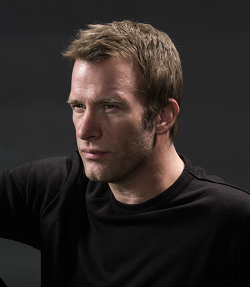
As dreadful and terrifying as Dark Country (2009) became by film's end, Eddie Muller insisted this horror-noir thriller was his type of a fun movie. With director-actor Thomas Jane joining him on-stage at the Castro Theatre for the film's one-off theatrical screening on November 18, 2011, and with their conversation being filmed (in 3D) for inclusion in the deluxe DVD release, Muller wasted no time eliciting Jane's commentary on the making of the film and tracing Dark Country's inspirations. "Was it obvious," Muller asked, "when you were finally going to direct the film that it was going to be a film like this?"

Jane responded that—for his first-time directorial effort—he had been looking for a project small enough to contain, which even then turned out to have its own set of incredible problems. A huge film noir fan, Jane had grown up reading EC comic books and watching
The Twilight Zone: all influences on Dark Country. The project kicked off when a good friend of his sent him a dark and twisted short story by Tab Murphy—known more for writing screenplays for Disney's animated films The Hunchback of Notre Dame (1996) and Tarzan (1999)—and Jane knew right off that it would make a good film. Since after doing The Punisher (2004) Jane had a deal with Lionsgate, they bought the idea for Dark Country for $3,000,000 and hired Murphy to draft a script. But when at their first production meeting Jane proposed to Lionsgate that the film should be shot in 3D, they balked and backed out. No one was doing 3D at that time. Jane's suggestion was at least a full year ahead of the 3D curve.

But Jane was committed to the idea, having already met Ray "3D" Zone, who was known for his pioneering methods of converting flat images (in particular, comic books) into 3D images. Jane had grown up reading 3D comics like
The Rocketeer and Twisted Tales that featured Zone's stereoscopic effects and so—when they met at a meeting of the Stereo Club of Southern California (SCSC), an organization formed in 1950—Jane took the opportunity to express his admiration of Zone's 3D comics and mentioned that he wanted to work with him. Jane joked that the SCSC gets together in a church basement once a month to show each other nudie pictures in 3D; but, the bottom line was that SCSC members are the leading experts in their craft. They encouraged Jane to consider making a film in 3D and were already creating work on their own jerryrigged 3D cameras back when people were first starting to make their own movies on the RED and DSLRs. It was at the SCSC meetings that Jane learned about how technological advancements were affecting the way 3D movies were being made and how the seeds of the 3D movement were being planted.

Once Lionsgate backed away from the concept, wishing him good luck, Jane arranged for a meeting with Sony Home Video, who agreed to the project because they were hoping for homegrown content to support the 3D televisions they knew they would be placing in people's homes in the near future. Unfortunately there were no cameras to shoot a 3D film and no experienced 3D cinematographers so Jane hunted down Paradise FX who had done all the 3D effects for amusement park rides and convinced them to jump on board to engineer a 3D movie. They broke new ground. They rigged up huge cameras out in the desert with operators connected to cables, cables running all along the ground, and often the weather was so cold that the static electricity froze the cables up so that they couldn't shoot. A simple story with four characters that Jane thought would be a great way to "pop his cherry" as a director turned into a little bit more than he could chew.

Nonetheless, Jane persevered because he wanted the film to look like Edward Ulmer's Detour (1945), one of his favorite noirs. Paying homage to films from the '30s and the '40s, Jane utilized rear screen projections to create effects Muller described as "fabulous artificiality." Muller praised that Jane sought to create "a complete non-existent netherworld out there in the desert where anything can happen. How many claps of lightning can you have in one shot? I mean, it's fantastic." The film was shot quickly over two weeks and Jane pursued the feel of "hand-made set pieces" characteristic of noirs-made-on-the-cheap-and-dirty. When Jane cast Lauren German as Gina, he gave her a copy of
Detour as homework for her part. Other direct influences on Dark Country besides Detour were Otto Preminger's Where the Sidewalk Ends (1950), from which Jane cribbed. A few ideas were also lifted from David Lynch's Lost Highway (1997).

Muller singled out the shot where Jane comes out of the diner and the camera circles 360° around his car at the gaspump. "I could almost feel Tom Neal and Ann Savage hitchhiking on the side of the road," Muller evoked. "I could almost feel the black and white creeping in." Jane had, in fact, tried to convince Sony to shoot the film in black and white—an idea that didn't go over well—even though he was convinced it would be "cool." Muller was wondering what gave Jane "the stones" to go into Sony and ask for 3D and B&W? Jane admitted: "I was just excited by the possibility of breaking new ground and doing something that hadn't been done before on a budget where no risk was involved."

Jane's ideal version of Dark Country would have been 79 minutes long and that was the way he planned it because it was the way he'd always wanted it. As a further homage to Detour (which Ulmer pared down to a concise 68 minutes), Jane wanted his film short. He fantasized that—with Eddie Muller doing commentary on his 79-minute film—it would become the noir of his dreams. But when Sony saw the film they gave him a note that the film needed to be at least five minutes longer. "Are you kidding me?" he thought. "This is a note from the studio? They want me to add something back in? Seriously?" Sony insisted because—in order for certain of their territories to buy and distribute the DVD—the film had to be 84 minutes long. That's why, Jane apologized, some of the scenes in the car are desultory and a bit talky. Originally, those scenes had fallen to the editing room floor on day one.

How tough was it, Muller queried, to not only come up with all these technological advances and direct the film but to also perform in front of the camera? Overwhelmed, Jane phoned up Mel Gibson. "The first guy to go to for advice, right?" Muller quipped. Jane told Gibson he was making this little movie over at Sony that was going straight to video but that he was also directing it, as well as acting in it, and how would one go about that? Gibson sympathized, "Yup. Yup. My first film was this little film Man Without A Face (1993) and it occurred to me that I had never directed so I nervously phoned up Clint Eastwood." Eastwood told Gibson he had experienced the same problem. "Don't tell me Clint called up Kevin Costner?" Muller laughingly interjected. No, Jane rallied, Eastwood didn't call Kevin Costner; but, he did call his buddy Don Siegel who told Eastwood not to shortchange himself as an actor just because he was directing as well. He told him to treat himself like he treated any other actor. "The tendency would be to shoot yourself and get on with it," Siegel warned, "but don't do that. Take the time and do what you would do acting with anyone else. Watch playback and treat it like a job. Take it seriously." Gibson talked to Jane for over an hour, offered all kinds of advice, and after their conversation Jane felt he might be able to pull the film off after all.

To make sure, Jane strategized that it would help to have extra eyes around on set so he hired Ray Zone as his 3D consultant. [Zone speaks to the experience on his own website.] Jane had already overprepared for the film by storyboarding every shot of the movie with storyboard artist Dave Allcock. They used a little toy car to set up the shots, which was a lot of fun. ( Dave, incidentally, has a cameo in
Dark Country. He and his girlfriend are on the missing poster.)

Then Ray Zone and Jane sat down at Jane's kitchen table and worked on the storyboard Jane had developed with Allcock. They developed a fun, color-coded system where they used magic markers to color every storyboard frame with different colors to indicate where they wanted the 3D to sit. Blue was in the frame, red was outside the frame and yellow was somewhere in the middle. That was their method for constructing the 3D in such a way that there would be continuity to the shots and they wouldn't be jarring or out of focus. But most importantly, learning from and building upon the mistakes that were made with 3D in the 1950s, Jane challenged himself by questioning how 3D effects could be used as part of the storytelling rather than mere spectacle? In
Dark Country Jane tried to harness 3D to create a psychological landscape within the interior of the car. Muller riffed: "It's interesting you cite Detour. All the times that I've introduced Detour at film noir festivals, I always say, 'This movie is so cheap. It's so simple. It goes to show you that all you need to make film noir is a man, a woman, and a locked hotel room. And so you now prove that all you need is a man, a woman and a car in the desert. That's it!"

Jane qualified it should be a sexy car, which led Muller to mention that he originally thought Jane had removed the rear view mirror from the window of the car and placed it on the dashboard as a way to get around issues with the 3D filming, but Jane advised him that, no, the 1960-1961 Dodge Phoenix came with the rear view mirror on the dashboard; but, the real challenge was that they had to find three cars: two for use on the road and one in the studio. Thus, the initial 360° shot of the car confirmed it was a major character in the film.

Muller offered that Jane had created what had now become one of his favorite noir scenes of all time. "You have to love it when you and Gina are in the parking lot of the rest stop and she complains, 'We've run over a guy. I've seen you murder somebody. We buried the body in the desert. All on our wedding day.
It's not supposed to be like this!"

When Muller added that
Dark Country was like "a comic book come to life", Jane was visibly pleased and admitted he loved hearing that because that was exactly what he wanted to create. He wanted the film to have that alternate reality comic book look without aping other comic adaptations like Dick Tracy (1990) or Sin City (2005). Though so many great comic book artists go unsung, they've influenced such well-known directors as Francis Ford Coppola, Martin Scorsese, among others, who have recognized the great shots to be gleaned from these graphics. "I stole as much as I possibly could," Jane confessed.

Pointing out that most people probably didn't know that Jane owned Raw Studios and was publishing comic books, he wondered who some of the unsung heroes were who influenced Jane? Jane recalled that his Dad bought him an issue of
Mad Magazine when he was eight years old "and that was it." From there he made the leap to EC Comics. In the town where he grew up in Maryland there was a bookstore called Barbarian Books that was, in effect, his "home away from home". He had to walk sideways to make his way through overstuffed aisles. That was where he found all his EC reprints and Gladstone stuff and really got into "the joy and the art of the illustrated story." He fell in love with "the great beautiful world" of illustrators: Johnny Craig, Bernie Krigstein, Wally Wood, Frank Frazetta, Al Williamson, among so many others. Jane's concern is keeping this culture alive for upcoming generations. He fears we're losing this "great beautiful world" to video games but believes there's still room for inspiring people and "doing work that lives in your brain and affects the way you see the world." When he got turned on to Berni Wrightson, for example, he saw the whole world through Bernie's eyes for months. He would see a girl and wonder how Bernie would draw the seams and creases in her skirt or the veins in her hands.

The greatest influence on the film, however, was Thomas Ott's graphic novels, from which Jane admittedly lifted specific shots. Ott draws black and white stories without dialogue and his work resembles woodcuts or etchings. His framing in a story called
Dead End in particular—which includes a long sequence of a guy driving through the desert—was a direct influence on Dark Country. To bring it full circle, Thomas Ott saw Dark Country and really liked it and—without knowing he was the inspiration—mentioned to Jane that he saw a lot of his own work in the movie. Jane asked him what he would think of doing a graphic novel adaptation of the film? Ott agreed to the suggestion, which Jane will put out through Raw Studios. On a recent trip to London Jane got together with Ott to take a look at the first pages and the experience was way too cool for him: he had envisioned Dark Country as a Thomas Ott novel and was now seeing it come to life through Ott's pen.

Before he discovered acting, Jane had drawn a lot in high school. He had wanted to be an illustrator but decided he'd get laid a lot more if he acted. Though he was good, he didn't have the necessary discipline, that "thing" that allows an illustrator to zone in and get lost in the work, which is what separates the men from the boys: that ability to "sit down, roll up your sleeves, and knock it out." Because he didn't have that, he knew he would never really be a great artist. Jane mollifed himself by considering he might paint when he becomes an old man.

Muller then invited Ray Zone to the stage and explained that Ray was responsible for setting the Castro screening of
Dark Country into motion. Ray had attended some of the Noir City screenings in Los Angeles, met Muller, and they had talked about Inferno (1953) and I, the Jury (1953), early film noirs that experimented with 3D. Then Zone asked Muller if he had seen Jane's 3D neo-noir Dark Country? They came up with the idea of screening Dark Country at the Castro and filming the on-stage conversation in 3D as a DVD extra and—as if to prove the point—Zone arrived on stage with paddle balls so that he, Jane and Muller could bounce paddle balls at the 3D camera set up off stage. Of course this was in homage to another 3D movie from 1953, Andre de Toth's House of Wax, wherein a paddleball man offered one of the best examples of the 3D experience at the time. Andre de Toth didn't want to include the scene, felt it distracted from the main narrative, but was forced to include it by Jack Warner and other studio execs. Some consider House of Wax the best 3D movie of all time, Muller reminded, even though it was made by a filmmaker with one eye who had no depth perception whatsoever.

Jane quoted John Ford as saying that it's the mistakes that are often the most interesting parts of a movie. Ron Perlman's line about leaving "no turn unstoned" was an adlib. Ron—sloughing 90 pounds of make-up—had flown directly to New Mexico from the set of
Hellboy 2 to shoot Dark Country.

Although
Dark Country was set on a hot summer night in the desert, in reality they were shooting in November in New Mexico and it was "butt ugly cold." The ground was frozen rock hard. The actors had to use tricks like sucking on ice cubes before delivering lines so that their breath wouldn't vaporize. (Sucking on ice cubes gives an actor about 30 seconds where their breath doesn't show in cold air.) Hearing this made Muller appreciate the scene where Lauren German hangs her head out the window and moans, "It's soooooo hot." Jane recalled that German wore a tiny shift as thin as tissue paper during those cold night shoots. She was the smallest, thinnest person on the crew and was freezing. They had to to give her vitamin shots and fly her home to Los Angeles on the weekends to warm her up.

As for whether Jane would take on directing another 3D film? Absolutely. In the spirit of John Wayne's 3D western Hondo (1953), Jane would like to film a 3D gothic western, perhaps even a noir western. Ray Zone brought up that Raoul Walsh, another great noir director, also directed westerns that had dark tones. Wrapping up, Jane said that screening
Dark Country in 3D on the Castro Theater's large screen was the pinnacle of his whole experience of making the film because it was the way the film was meant to be seen, by an audience who "got" it. He never thought the day would come. "I literally built this film for this audience in this theater," he beamed.

Muller admitted that hosting the
Dark Country event was a crossroads for him in his career as the "Czar of Noir" because the entire event was digital. Earlier in the day, he had a conversation with a friend in the Castro about the future of 35mm film projection and how difficult it's becoming to get the studios to continue shipping 35mm prints. Three major studios—Warner Brothers, Paramount and Fox—are completely shutting down shipment of 35mm prints. Within the year, these studios will no longer allow Noir City to show their slate in 35mm. Noir City X (January 20-29, 2012) might possibly be the Film Noir Foundation's final 35mm-exclusive festival. It might certainly be the last time some of the films on the Noir City X program will be shown to the public in 35mm. "There's nothing anyone can do to stop this," Muller sighed. "The future is happening right now."

Muller qualified that—as long as they preserve a film somehow
on film—then he can live with the changes to come. They can digitize the prints and make film trafficking wonderful and easy and all that but he insists they mustn't lose the film in the process while converting inventory over to new digital formats. There are certain titles that are becoming extinct because they are being ignored in the rush to digital. It's well-known that film remains the best medium for preserving film and that digital copies are too volatile, requiring migration from one form of storage to the next as hardware and storage systems change.

Wednesday, July 29, 2009

NOIR CITY: CHICAGO—The Evening Class Interview With Eddie Muller

As announced in Eddie Muller's introduction to this year's edition of Noir City, the festival's traveling road show—already situated in Hollywood, Seattle, and Washington, D.C.—will include Chicago to its roster of cities, come Friday. Venued at the Music Box Theatre, Noir City: Chicago will give Muller an opportunity to once again share the stage with Foster Hirsch—who Eddie once quipped has forgotten more about noir than he'll ever know—as well as the legendary Harry Belafonte (in conjunction with a screening of the 1959 film noir Odds Against Tomorrow). By phone, Eddie Muller and I discussed this upcoming event.

* * *

Michael Guillén: Eddie, let's talk a bit about your taking Noir City on the road. Are these programs one-shot events or are they annual?

Eddie Muller: There's no contract with these people to say Noir City must be an annual event. Quite honestly, Michael, repertory cinema these days is not only a year-by-year thing; it's a month-by-month thing it seems. The economy of the festival circuit is such that you can't really count on anything at this point. Noir City has been fortunate in that—in Los Angeles for example—we've been one of the biggest-earning festivals at the Egyptian Theatre each year. Whenever we bring Noir City to a new city, we go in on a trial basis and see how it does. So far, so good. All the venues definitely want Noir City to become an annual event.

Guillén: Speaking of venues, you host Noir City in San Francisco at the Castro Theatre, the Egyptian in Los Angeles, and the Music Box in Chicago. Can you speak to the importance of "fitting" the festival to its venue?

Muller: Certainly. The reason the festival is so hugely successful in San Francisco—and that one far outpaces all the others in terms of attendance—is because of the perfect match between films and venue. In addition to San Francisco being a great film community where people actually believe in going to the movies, there is one main thing required of a venue in order for Noir City to work and that is that they be able to properly present archival films. On the technical end, that is a requirement. One of the things we do—as you obviously understand—is that we show films you can't see anywhere else. A big part of the draw for Noir City is you can't see most of these films on DVD or even in many cases on broadcast TV or cable TV. You need to come to the theater to see these movies; but, in order for that to happen, the venue itself must be certified to show archival prints because in many cases we are showing the only existing print of a movie. When it turns out that the theater is also a wonderful vintage theater like the Music Box in Chicago, that's a bonus. We can market that. We can say, "See these films the way they were originally screened, in a vintage theater that's as close to the movie going experience of 1948 that you can possibly get." We love it when that happens. I'm aware of the venues when we do this because—part of what you have to do to make a festival successful—is to make it a communal experience that people will leave their house for. It has to be something they cannot get at home.

It's so funny, Michael, I feel at times like I am actually living through the exact predicament that the movie business faced in the original film noir era, right? In 1948-1949 they were asking, "How do we make people come to the theater when they can stay home and watch that newfangled damn television?" It's exactly the same thing going on now.

Guillén: So along with adding Chicago to Noir City's national road show, you mentioned in your introduction to this year's San Franciscan edition of Noir City that you're also considering taking it to France?

Muller: That's definite. I'm going to France in October. But that's not technically a Noir City event. I was invited by the
Lyon Film Festival to come over and present a rare noir series as part of this year's festival. We're not marketing it as a Noir City event; but, there's a fine distinction. I will certainly be there as a representative of the Film Noir Foundation to advocate that the French come to San Francisco.

Guillén: I think it's great that you're strengthening the axial conversation between France and San Francisco. As a film historian, can you speak a bit about the relationship between film noir and its influence on the nouvelle vague?

Muller: Especially in cinema, and in the genre of literature that I enjoy, there's always been this wonderful relationship between France and the United States. It's not breaking news that the French in many ways understand noir and American hardboiled fiction better than the average American; that's a given at this point. Part of the reason that I've made these in-roads in France—I'm delighted to say—is because the French have embraced my fiction. My two novels [The Distance and Shadow Boxer] have been published in France to some acclaim. What's interesting is that in France I'm known primarily as a novelist and then—what a surprise! Look!—I'm also into film noir and the director of a foundation that promotes film preservation, which is gravy. Whereas in the United States, it's the other way around. Here I'm known as the guy who restores the films and all that and: "Oh, he wrote a novel too? That's interesting!"

Cross-published on
Twitch.