Friday, June 12, 2015

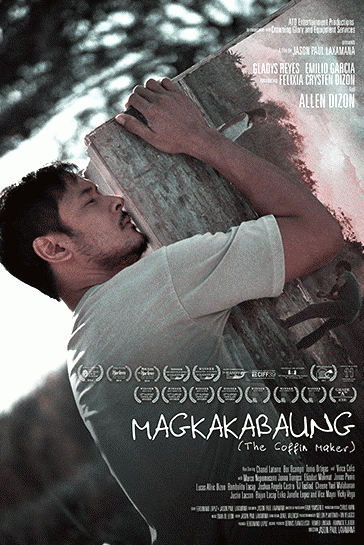
NEW FILIPINO CINEMA—The Coffin Maker (Magkakabaung, 2014)

You're in luck! For the fourth edition of New Filipino Cinema (NFC), Yerba Buena Center for the Arts (YBCA) programmer Joel Shepard has elected to repeat screenings of the NFC line-up the following weekend, so those of you who missed last night's opening reception of Jason Paul Laxamana's The Coffin Maker (Magkakabaung, 2014) [IMDb / Wikipedia / Facebook], will have a second opportunity on Friday, Jun 19, 7:00 PM to watch the film heralded by Shepard as his favorite in the series.

As encapsulated by YBCA: "In one of the most highly praised Filipino films of the year, a hard-working father tries his best to raise a young daughter alone in a rural area, but he is ill-prepared for what fate throws their way. The film takes us on a deeply emotional journey, free of cliché and sentimentality, slowly unveiling the struggles of a man who must confront his guilt and remorse."

Chale Nafus, Director of Programming for the Austin Film Society has, perhaps, best situated the importance of Laxamana's films within the current resurgence of Filipino filmmaking: "Jason Paul Laxamana is a Filipino cultural warrior with a mission—to preserve and promote the Kapampangan language, culture, and identity through film, video, music, and online. The majority of Filipino films are in Tagalog, but the independent film movement based on digital technology has allowed filmmakers like Laxamana to make films in regional languages and in areas not usually explored by Manila-based mainstream media." Nafus's interview with the director is well worth the read and a perusal of Laxamana's website is likewise encouraged. But before checking those out, I need to offer a spoiler alert that it's near to impossible to discuss this film without revealing narrative details (which even the film's trailer cannot avoid).

So from hereon in: SPOILER ALERT.

Courtesy: Cinemalaya
Laxamana's third film The Coffin Maker premiered at the Montreal World Film Festival and has since been on festival track. It won Best Asian Film at the 3rd Hanoi International Film Festival in Vietnam on November 2014. As recounted to Nafus, Laxaman's involvement with the film came about in an interesting way. His producers approached him to develop a story set in the town of Santo Tomas, Pampanga (the casket capital of the Philippines) based on the true story of a father who had to steal the body of his daughter from the morgue due to financial incapacity. One of his producers, Ferdinand Lapuz, was likewise the agent for Allen Dizon, and Laxamana was encouraged to develop a story with Dizon in the lead role. Dizon inhabits the character of Randy, the titular coffin maker, with a taciturn pathos that slowly builds to bewildered rage, exhaustion, and a cascading series of inescapably bad decisions. A genuine sense of affection exists between Randy and his daughter Angeline, as Felixia Crysten Dizon is the real-life daughter of lead actor Dizon (especially in a scene where he prepares her a sandwich and she smiles in delight with her first bite). While researching the material, Laxamana encountered other interesting true accounts—such as the buying and selling of cadavers and the costly and bureaucratic way of disposing the dead—which serves to texture a narrative wholly centered on death and its processes, both bureaucratic and physiological.

Courtesy: Cinemalaya
The film's technical merits are immediately engaging. Shot by Rain Yamson in handheld widescreen long continuous takes, The Coffin Maker provides a palpable sense of place and movement through space and—especially in the sequence where the children are playing—an immersive grasp of their innocent world, with the boys playing "bang / stab" and then, later, splashing around in the shallow waters near a dike. Much of the narrative consists of the coffin maker's mobility around the streets of his home town in a pedal buggy and, thereby, offers observational moments that are notably brilliant; particularly, a scene seen in passing where a young boy is being throttled for breaking a merchant's clay jars, introduced ahead of the visual reveal by the sound of their argument. Here, I shout out to Junel Valencia's layered sound design in effective collaboration with Diwa de Leon's restrained music score.

Courtesy: Cinemalaya
Perhaps the film's most satisfying elements are the way it frames the film's central tragedy against a background of disregard, frivolity and opportunism registered in an ensemble of minor characters from Neri (Chanel Latorre)—Randy the coffin maker's pretty, vapid love interest who likes him only for the credits he can load onto her cell phone—to the funeral home director (Emilio Garcia) who seeks to profit off Angeline's corpse. Equally effective are the film's touches of mordant humor, indirect justice, and its flourishes of magical realism to visualize Randy's torturous regret and guilt. Angeline's shrouded cadaver speaks up and asks her father, "Daddy, when do I get to go back to school?" The film's final scene sends a chill through the viewer as we see the coffin maker vigorously digging a hidden grave for his daughter, who stands silently looking down at his labor. A final moment of decency in a largely indecent universe.


Thursday, June 04, 2015

FANTASIA 2015—THE FIRST WAVE TRAILER PARK


Anyone game for available trailers for the First Wave announcements for the 19th edition of the Fantasia International Film Festival (Fantasia)? Montreal's Fantasia runs for three weeks (July 14-August 4, 2015) and—judging from these trailers—promises to be the festival event of the summer!

Ant-Man (U.S., dir. Peyton Reed)—Heroes just don't get any bigger.


Big Match (South Korea, dir. Choi Ho)—Although an English-subtitled trailer is not yet available, this one suffices to teasingly exhibit the exciting high octane action fun of Big Match. From the director of such past Fantasia favorites as Go-Go 70s (2008) and Bloody Tie (2006), Big Match was one of the first movies booked for Fantasia 2015. Canadian Premiere. Official site [Korean]. IMDb.  Wikipedia.


Crumbs (Ethiopia / Spain / Finland, dir. Miguel Llansó)—Canadian Premiere. Official site. IMDb. Facebook.


Deathgasm (New Zealand, dir. Jason Lei Howden)—Canadian Premiere. Official site. IMDb. Wikipedia. Facebook.


The Demolisher (Canada, dir. Gabriel Carrer)—World Premiere. Official site. IMDb. Facebook.


Experimenter (USA, dir. Michael Almereyda)—Canadian Premiere. Official site. IMDb. Wikipedia. Facebook.


Fatal Frame / Gekijô-ban: Zero (Japan, dir. Mari Asato)—Although it lacks English sub-titles, this Japanese trailer suggests the film's atmospherics. North American Premiere. Official site [Japanese]. IMDb. Wikipedia.


Full Strike (Hong Kong, dirs. Derek Kwok, Henri Wong)—Fantasia has been a proud supporter of Hong Kong director Derek Kwok since his debut feature The Pye Dog (Fantasia 2008) and his smash hit Gallants (Fantasia 2010), and they're thrilled to have him back with his new action comedy Full Strike, co-directed with Henri Wong. "Not only is it one of the most entertaining Hong Kong comedies we've seen in a while," they state on their Facebook page, "it's also the best badminton movie ever made, albeit it's also the only one we've ever seen." It's great, silly fun, they assert, and sure to be one of the biggest crowd-pleasers of Fantasia 2015. Canadian Premiere. IMDb. Wikipedia.


The Golden Cane Warrior / Pendekar Tongkat Emas (Indonesia, dir. Ifa Isfansyah)—Canadian Premiere. IMDb. Wikipedia. Facebook.


JeruZalem (dirs. Doron Paz, Yoav Paz)—World Premiere. IMDb. Facebook.


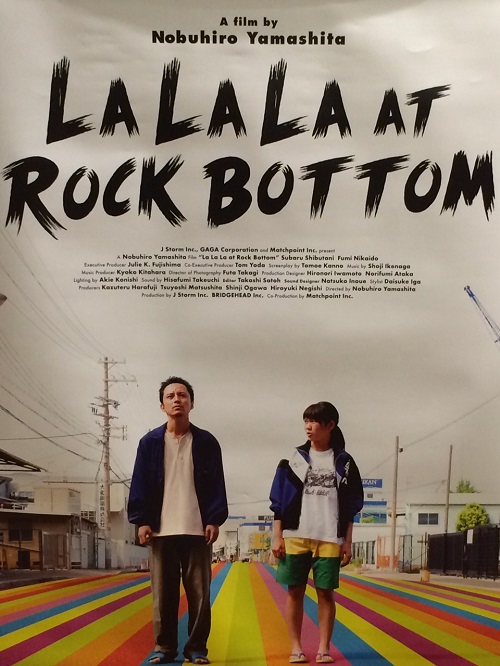
La La La At Rock Bottom (Japan, dir. Nobuhiro Yamashita)—Canadian Premiere. Official site [Japanese]. IMDb.


Miss Hokusai (Japan, dir. Keiichi Hara)—North American Premiere. Official Site [Japanese]. IMDb.


Possessed / Pos Eso (Spain, dir. Sam Ortí Martí)—Described on Fantasia's Facebook page as "rude, crude and explosively funny", Possessed (2014) is being billed as "a hilarious Spanish stop-motion parody of The Exorcist by way of Wallace & Grommit meets South Park." Featuring a cast of some of Spain's top comedy talents—including Álex de la Iglesia regular Santiago Segura and filmmaker Nacho Vigalondo (Open Windows, 2014)—Possessed is boasting its Canadian premiere at Fantasia 2015 and is easily one of the craziest films on their slate. Official site. IMDb.


The Visit (Denmark, dir: Michael Madsen)—Quebec Premiere. IMDb.


FANTASIA 2015—OPENING NIGHT & WORLD PREMIERES

A few more announcements included in the First Wave from the Fantasia International Film Festival (Fantasia)—scheduled to run for three weeks (July 14-August 4, 2015) in Montreal, Quebec, Canada—include the opening night features Miss Hokusai and Ant-Man, as well as the World Premieres of Jeruzalem and Tales of Halloween.

Miss Hokusai (Japan, dir. Keiichi Hara)—Fantasia is proud to open its 2015 edition with the North American Premiere of the astonishingly beautiful Miss Hokusai (2015), one of this year's most heralded animated films. Katsushika Hokusai is perhaps the most renowned ukiyo-e (woodblock prints) artist, but very few are aware of his talented daughter O-Ei's influence on his work. Centered on their relationship and the young woman's rebellious personality, this mix of classical art and pop-culture, based on Hinako Sugiura's manga Sarusuberi, is masterfully brought to the screen by multiple award winning director Keiichi Hara (Colorful, 2010) and Production I.G, the legendary studio behind such contemporary animated masterpieces as A Letter to Momo (2011) and Giovanni's Island (2014). North American Premiere. Official Site [Japanese]. IMDb.

At The Asahai Shimbun, Atsushi Ohara claims that Miss Hokusai shines with its superb attention to detail. Ohara writes: "Having paid close attention to detail, the imagery of the film conveys the pleasing atmosphere of Edo, or present-day Tokyo. Scenes featured in the movie range from people crossing the Ryogokubashi bridge to the hustle and bustle of the Yoshiwara red-light district and the heat and excitement of a fire raging out of control." Ohara particularly praises a fantasy sequence where the film's protagonists wander into the world of the famous ukiyo-e titled "Under the Wave off Kanagawa" (aka "The Great Wave") from Hokusai's "Thirty-six Views of Mount Fuji."

Ant-Man (U.S., dir. Peyton Reed)—One of the most anticipated tent pole summer releases is Marvel's Ant-Man (2015), starring Paul Rudd, Corey Stoll and Michael Douglas. Fantasia shifted its dates two days earlier this year to ensure Ant-Man's Opening Night status, several days before the film's theatrical release. In Ant-Man, Scott Lang (Rudd) must help defend the Ant-Man technology of Dr. "Hank" Pym (Douglas)—the original Ant-Man in the Marvel universe—and plot a heist with worldwide ramifications. His nemesis? Darren Cross (Stoll), a former protégé of Pym, who has taken over Pym's company and militarized a similar version of the Ant-Man technology to create his own suit as the villainous Yellowjacket. Official Site. IMDb. Wikipedia. Facebook.

JeruZalem (dirs. Doron Paz, Yoav Paz)—The Paz Brothers (Phobidilia, 2009) have crafted a chillingly intense found-footage horror film set in Jerusalem. JeruZalem follows two American teenage girls and a handsome anthropology student whose visit to Jerusalem on Yom Kippur turns into an unimaginable nightmare as the city's prophecies and superstitions prove terrifyingly real. Trapped between the ancient walls of the holy city, the three travelers must survive long enough to find a way out as the fury of hell is unleashed upon them. "Jerusalem is normally seen through the lens of news coverage," Doron Paz recently commented. "We wanted to show the city through the eyes of a backpacker. There's no better way to do it than a genre film." World Premiere. IMDb. Facebook.

Tales of HalloweenThis horror anthology features 10 stories woven together by their shared theme of Halloween night in a sleepy American suburb, where ghouls, imps, aliens and axe murderers appear for one night only to terrorize unsuspecting residents. Segments include nightmares by Darren Lynn Bousman (Saw II), Mike Mendez (Big Ass Spider), and Neil Marshall (The Descent), among others (dubbed "The October Society"), with a stellar assortment of genre icons among the cast (including Joe Dante, John Landis, Adam Green, Stuart Gordon, Barry Bostwick, and Adrienne Barbeau). World Premiere. IMDb. Facebook.

Wednesday, June 03, 2015

FANTASIA 2015—THE FIRST WAVE

The administrative minutiae following the death last April of my beloved sister Barbara Guillén made it impossible for me to attend the 2014 edition of the Fantasia International Film Festival (Fantasia), which makes my being able to attend this Summer's 19th edition that much more of a recovery and a rebound. I dedicate my coverage of Fantasia 2015 to Barbara.

Montreal's Fantasia runs for three weeks (July 14-August 4, 2015) and returns to the Concordia Hall Cinema as its main venue. What follows is the first wave of announcements released May 6, 2015 to whet appetites for what promises to be another exciting line-up. A second wave announcement of titles will be released in June with the festival's full lineup of screenings and events to be announced on July 7th.

Big Match (South Korea, dir. Choi Ho)—Lee Jeong-jae (The Thieves), Shin Ha-kyun (Thirst) and K-Pop star BoA enters a dangerous death game in this high octane action comedy where a Mixed Martial Arts fighter must play a deadly urban chess confrontation created by a Machiavellian mastermind. Canadian Premiere. Official site [Korean]. IMDb. Wikipedia.

Crumbs (Ethiopia / Spain / Finland, dir. Miguel Llansó)—Ethiopia's first sci-fi feature also happens to be a post apocalyptic black comedy, an eccentric love story and a brilliant blast of politically-charged surrealism that exists in a space between Alex Cox and Alejandro Jodorowsky. Probably the single most unusual and unforgettable film you will see anywhere this year, screening in Fantasia's Camera Lucida section. Official Selection: Rotterdam International Film Festival. Canadian Premiere. Official site. IMDb. Facebook.

At The Hollywood Reporter, Neil Young characterizes Crumbs as an "unpredictable filmic oddity" that "takes an exotic and sometimes surreal approach to what's essentially a simple, touching love story." At Indiewire, Tambay A. Obenson bills it as "the first ever Ethiopian post-apocalyptic, surreal, sci-fi feature length film." At Eye For Film, Rebecca Naughten writes that Llansó "manages to combine the poetic sci-fi of Andrei Tarkovsky with the surrealism and dark humor of his fellow countrymen such as Luis Buñuel, Luis García Berlanga, or more recently Sergio Caballero."

Deathgasm (New Zealand, dir. Jason Lei Howden)—Behold, the riotous heavy metal Kiwi splatter-comedy-horror-monster-demon-freakout the world's been begging for has arrived. Packed with lunatic gore reminiscent of early Peter Jackson and volume-11 riffage harkening back to that same era's most ferocious metal, Deathgasm absolutely shreds. In every sense. Official Selection: SXSW, Stanley, Fantaspoa. Canadian Premiere. Official site. IMDb. Wikipedia. Facebook.

At Variety, Dennis Harvey claims that the script for this "rude, bloody mess" does not live up the vivid splatter effects, but the film's "consistent if undiscriminating high energy engenders a certain persuasive goodwill." At Twitch, Zach Gayne qualifies that the "voice that shines through the hysterical dialogue and playfully comic editing, is so teenage, so punk, it makes a beat-to-death genre feel refreshing." At Bloody Disgusting, Brad Miska praises it as "the most metal horror film ever", and Drew Tinnin of Dread Central adds: "Deathgasm knows exactly what it is and where its heart is, giving genre fans a welcome return to heavy metal in horror without cutting back on any of the splatstick that New Zealand has become known for, for better or worse."

The Demolisher (Canada, dir. Gabriel Carrer)—An unstable repairman tending to his crippled wife—an ex-cop brutalized by gang violence—sneaks out at night to unleash his rage on any criminals he can find. An atmospheric and poetic reinterpretation of the urban Vigilante Film as a psychological examination of trauma. World Premiere. Official site. IMDb. Facebook.

Experimenter (USA, dir. Michael Almereyda)—Gifted indie trailblazer Almereyda (Nadja, Cymbeline) turns his unconventional gaze towards the controversial social experiments of Stanley Milgram (brilliantly portrayed by Peter Sarsgaard). Co-starring Winona Ryder, Anton Yelchin, Taryn Manning, John Leguizamo and Anthony Edwards. Official Selection: Sundance, Beijing International Film Festival, and the recent San Francisco International Film Festival (where Experimenter served as its Closing Night entry). Canadian Premiere. Official site. IMDb. Wikipedia. Facebook.

At Variety, Scott Foundas calls Experimenter "a highly formal, always fascinating movie" and notes: "Almereyda conceives of Milgram's life and work as a kind of constantly evolving theater piece and runs with the idea, resulting in a decidedly Brechtian bit of filmmaking that routinely breaks the fourth wall and employs other bits of theatrical artifice to tell its tale." Countering at Indiewire, Katie Walsh states that—whereas Dr. Stanley Milgram's Obedience to Authority experiment itself is fascinating—"the approach taken by Almereyda in using distractingly peculiar storytelling techniques only succeed in distancing the audience from the film's inspiration." At Ioncinema, Nicholas Bell writes: "Filmed with a desaturated palette and utilizing props and set backdrops to inflect rather than convey period, Almereyda's created a cold, clinical portrait of a man whose own familial background informed his timely social experiment, one that's been referenced and recreated as a tenet of understanding unnerving truths as concerns human behavior." Bell asserts Sarsgaard "is convincing as an overly composed man secretly irritated by the nearsighted colleagues and culture that reigned in the greatness he could have received during his lifetime."

Fatal Frame / Gekijô-ban: Zero (Japan, dir. Mari Asato)—A deadly curse hits a gothic style convent in this brilliant atmospheric adaptation of the hit horror video game Fatal Frame, where flawless storytelling and character development, a creepy ambiance taking advantage of every inch of its location and a haunting music score bring the audience back to the golden age of J-Horror. Official Selection: Stockholm International Film Festival. North American Premiere. Official site [Japanese]. IMDb. Wikipedia.

At The Japan Times, Mark Schilling writes that, thankfully, there is "not a single jack-in-the-box scare in Fatal Frame and that, instead, "Working from a novel by Eiji Otsuka, which is in turn based on a popular series of video games, Asato builds her fright effects more from whispered rumors, girlish crushes and the nebulous border between dreams and reality, the living and the dead. ... Even so, Fatal Frame gets a lot right, beginning with its casting of real, if unknown teens, instead of the usual name actors a decade or so older than their characters." Schilling concludes, "Not quite down to zero degrees, but close enough."

Full Strike (Hong Kong, dirs. Derek Kwok, Henri Wong)—When ex cons discover their love for badminton, they ask a fallen former champion to lead them to victory. Derek Kwok and Henri Wong co-direct this hilarious comedy centered on over-the-top characters reminiscent of Stephen Chow's spectacular Shaolin Soccer. Canadian Premiere. IMDb. Wikipedia.

At Variety, Maggie Lee specifies that Full Strike is "more acrobatic caper than motivational sports film" and a "kooky laffer" that's "goofily enjoyable", making "marvelous use of its ensemble cast of B-list and been-around stars." At 48 Hours, Edmund Lee declares Full Strike "tickles the funny bone."

The Golden Cane Warrior / Pendekar Tongkat Emas (Indonesia, dir. Ifa Isfansyah)—Aging female warrior Cempaka is the most respected fighter in the Golden Cane clan, but she must now find a successor among her disciples. Coming on the heels of the wildly popular The Raid series, this flawlessly executed epic actioner by Ifa Isfansyah is here to confirm Indonesia's place in the leading nations of martial arts cinema. Canadian Premiere. IMDb. Wikipedia. Facebook.

La La La At Rock Bottom (Japan, dir. Nobuhiro Yamashita)—Nobuhiro Yamashita, director of the contemporary classic Linda Linda Linda, is back in musical comedy / drama territory with a fighter attitude! Rising super star Fumi Nikaido (Why Don't You Play In Hell?) and J-Pop sensation Subaru Shibutani, member of Kanjani Eight, shine in this remarkable underdog tale. Official Selection: Rotterdam International Film Festival. Canadian Premiere. Official site [Japanese]. IMDb.

At The Japan Times, Mark Schilling claims that "instead of the expected pop confection, the film is a sharp-edged character study set on society’s margins, with a comic undertone that at times bubbles into slapstick farce and at other times disappears entirely. It's not hard to see where the film is going, but the emotional payoffs are genuinely earned rather than formulaically calculated." At Twitch, Ard Vijn writes that Yamashita "delivers a pleasant film where all the actors shine" and that, all in all, La La La at Rock Bottom "is good, pleasant fun. Not laugh-out-loud funny, not soul-rendingly devastating, but very well made, and treating its audience as a bit more intelligent than usual. Definitely recommended!"

Observance (Australia, dir. Joseph Sims-Dennett)—His job is to observe, observe a beautiful woman. Soon enough, he discovers his gig implies more than he ever asked for. A poignant and terrifying thriller in the vein of Polanski's Repulsion, and among the first 2015 Camera Lucida selections to be announced, Observance promises to haunt your nightmares. World premiere. Official site. IMDb. Facebook.

Possessed / Pos Eso (Spain, dir. Sam Ortí Martí)—An instant-classic of wickedly fun (and imaginatively grotesque) stop-motion comedy / horror that many have described as Paranorman meets Wallace & Gromit by way of South Park, Possessed is the manic creation of Goya-nominated anima-lunatic Sam Ortí Martí (aka "Sam"), featuring the voices of Santiago Segura, Anabel Alonso and Nacho Vigalondo. Official Selection Sitges, Athens Animfest. Canadian Premiere. Official site. IMDb.

They Look Like People (USA, dir. Perry Blackshear)—A smart, haunting psychological horror masterpiece that Verite Film hailed as "unbearably tense and profoundly moving." Despite having only been playing on the fest circuit for five months, They Look Like People has already won awards at Slamdance, SF Indiefest, IFF Boston and the Nashville Film Festival. International Premiere. Official site. IMDb. Facebook.

At Killer Movie Reviews, Andrea Chase praised They Look Like People as "a first-rate existential horror film, as well as a psychological thriller" that's "as emotionally engrossing as it is suspenseful" and "wildly entertaining." She concludes: "Questions of alienation, trust, and the societal presumptions and demands about masculinity combine in a provocative tale of the more subtle definitions of reality, as well as what to do with a friend in need who may end up killing you." At Hammer to Nail, Paul Sbrizzi proclaims: "Director Perry Blackshear takes a premise that could easily have come across sensationalistic and roots it in fully developed characters; he creates what feels like a big movie with a beautifully simple production." At Twitch, Ben Umstead says Blackshear's feature debut "crackles with technical and narrative ingenuity, exploring the fragile state of the schizophrenic mind with micro-budget genre trappings."

The Visit (Denmark, dir: Michael Madsen)—Is Earth ready for an alien visitation? Michael Madsen's fascinating follow-up to Into Eternity reflects on this interrogation through a simulation with scientists and philosophers. A powerful and groundbreaking documentary. Official Selection: Sundance, Hot Docs. Quebec Premiere. IMDb.

Reviews for Madsen's "simulated" documentary have been fair to mixed. At Variety, Ben Kenigsberg writes: "Filled with sleek and often surreal imagery, The Visit is served at a cool temperature; it fluctuates from fascinating to banal depending on the logistics under discussion. A feat of speculation that amounts more to a curiosity than a major sci-fi movie...." At The Hollywood Reporter, Justin Lowe characterizes Madsen's examination of humankind's potential response to extraterrestrial contact as (at turns) "realistic", "contemplative", "surprisingly credulous", "insistently experimental" and definitely "individualistic". His bottom line is that The Visit is "thinking the unknowable." At Smells Like Screen Spirit, Don Simpson adds: "The Visit is a full immersive experience that allows the audience to play the role of the alien." At The House Next Door, Clayton Dillard counters: "Were Madsen inclined to critique Hollywood fantasies of destruction rather than ape them, The Visit would be a notable rebuttal rather than disposable speculative fiction." Bears Fonte—who considered The Visit "the most fascinating film" he saw at Sundance—interviews Madsen for AMFM Magazine.

Tuesday, June 02, 2015

SFIFF58—LOVE & MERCY (2014): An Evening Class Question For Bill Pohlad

In the spirit of Bill Pohlad's choice to cast two actors to portray Beach Boys' visionary Brian Wilson in Pohlad's winning biopic Love & Mercy (2014) [official site], two Evening Class correspondents wrote, in effect, similar hold review capsules in anticipation of the film's June 5, 2015 release.

I noted that Pohlad's marquee presentation of Love & Mercy emerged from the surf as my favorite film of the 58th edition of the San Francisco International Film Festival (SFIFF). I watched it twice at SFIFF and anticipate catching it yet again come Friday. An ingenious revamp of the biopic genre, Love & Mercy profiles Wilson through Oren Moverman's tried-and-true narrative device of dividing representation among multiple actors; familiar to fans of his screenplay for the Bob Dylan biopic I'm Not There (2007), and similarly effective in Love & Mercy. A lookalike Paul Dano (as the youthful Wilson) and John Cusack (as Wilson in his later years) embody Wilson with ranged experience; but, the real discovery here is the Oscar®-worthy supporting turn of Elizabeth Banks as Wilson's love interest who remedies the film's narrative plight with humor and a fierce heart.

Michael Hawley added: "My favorite film of the fest by far was this transcendent biopic of the Beach Boys' troubled genius, Brian Wilson. Starring Paul Dano and John Cusack as the younger and older Wilson, the film alternates emotionally interlocking vignettes set during the mid-60's creation of his masterpiece LPs, Pet Sounds and Smile, with those of Wilson in the early 90's, a broken man subjected to the dictatorial control of his evil psychiatrist Eugene Landy (an effective Paul Giamatti). A shortlist of Love & Mercy's highlights would include the opening montage of early Beach Boys iconography, the lovingly recreated recording sessions (especially of "Good Vibrations") and the phenomenal sound design that conveys the explosion of musical ideas coursing through Wilson's overheated brain. The movie's revelation, however, is the achingly heartfelt performance by Elizabeth Banks as Melinda Ledbetter, the Cadillac saleswoman who selflessly comes to Wilson's emotional rescue. To my surprise, a review of her extensive IMDb credits tells me I've only seen one other Banks performance—as Laura Bush in Oliver Stone's W. (2008). You heard it here first; she's the supporting actress to beat comes 2015's year-end awards season."

During the film's Q&A session, I queried:

Michael Guillén: Along with the beautiful harmonic music that Brian Wilson was creating, I was equally struck by the dissonant compositions created for your film to represent Wilson's chaotic state of mind. Can you speak to how you constructed those compositions?

Bill Pohlad: Yeah, I mean it's one of my favorite parts of this project if I'm being really honest. Once I got to know Brian, and tried to understand what he'd gone through—what he goes through even now—trying to portray that and communicate that in a movie was a big challenge, but an exciting one. Part of Brian's condition is that he suffers from hallucinations, but they're not visual, they're auditory. He hears these incredibly complicated arrangements, orchestrations and harmonies that nobody else can hear and/or understand. He can't stop them or turn them off. That was always intriguing to me as both a blessing and a curse.

Cinematically, of course, you can always fall back on some visual representation of those hallucinations, but that's not what he experienced. It was a challenge to figure out how to represent what he experienced. For me, the first thing that I struck on was "Revolution No. 9" from The Beatles "White Album" as a way to figure out a dissonant soundscape and so I passed that on to Atticus Ross and he caught onto that right away and ran with it and did an amazing job bringing that to life.

* * *

In his on-stage conversation with Pohlad, SFIFF programmer Rod Armstrong asked about the decision to cast two actors to portray Brian Wilson, effectively resulting in "a duet between Paul Dano and John Cusack." He wondered if the idea of using two actors had always been in the script? Or did that decision come at a later date? And how did Pohlad decide upon which two actors to cast?

Pohlad confirmed the idea had been there from the beginning. A script had been circulating that conveyed a more conventional narrative but—once he became involved—he decided to start over. He wanted to find a more intimate way to create a portrait of Wilson where they wouldn't be tied into telling every linear beat of a conventional biopic. He wanted the narrative to be more interwoven. The progression of that idea was to have two different actors playing separate roles, which just seemed more interesting creatively but would also reflect where Brian had been, and what he had gone through, so that was how he developed the script with Moverman.

As for deciding upon the actors, Paul Dano was an easy choice and at the top of the list when they were talking about the earlier period of Brian's life. When he cast Dano, Pohlad didn't know if he could even sing or not; he just seemed so right for the role. He had a feeling that maybe he could sing but, just to be sure, they sent Brian's musical director out to New York to meet with Dano and, within 45 minutes, they received a video back from him about how excited he was that Dano could—first time through—hit all the notes and do such a fantastic job.

Casting what they called "Brian Future" was a bit more difficult because of how Brian changed and all he went through in the '80s. A lot of people come up to Pohlad now and say that Paul Dano looks exactly like Brian did in the '60s but John Cusack doesn't; but, actually, in a documentary that was made in the early '90s there was an opening shot of Brian where he looked just like Cusack. Cusack does resemble him at that period; but, the goal was never to do imitations with either of the actors.

Was there any issue, Armstrong asked, with the music rights? Were Brian, Melinda, and the other members of the Beach Boys forthcoming?

Brian and Melinda were on board early on, Pohlad answered, and when he sat down to talk to them about the new narrative approach to the script, they grew even more enthused. They became great partners in making the movie. Whenever you make a movie about real people, Pohlad cautioned, you run the risk of having them constantly looking over your shoulder to say, "I was funnier than that." But Brian and Melinda were great about just letting them tell the story as they needed to, but would be there to draw on when required, to make sure they were being true to the story.

It was not so easy with the rest of the group. Both Dennis and Carl Wilson had, unfortunately, passed away by that point, and Mike Love and Al Jardine were around for part of the shooting, but it had pretty much become the decision to tell the story from Brian's point of view by way of the two actors. It's all in the eye of the beholder, of course, but Mike often gets seen in a negative light by the media; but, Pohlad doesn't see him that way and really hoped that in the film he wouldn't come across as just a negative guy. Love was a human being who had a great thing going and didn't want to change, and there's nothing really wrong with that. He didn't want to celebrate Brian's kind of groundbreaking creativity that wanted to go off and try new things; but, that doesn't make him better or worse than anyone else and he had a certain right to want to stick to the plan. Pohlad made a special effort not to make him come off as a villain.

Asked by an audience participant if Dano and Cusack had a chance to confer about their separate portrayals to sustain a continuity of Wilson's character, Pohlad said they had the chance but he never encouraged them to do so. He directed both of them and encouraged them to find their own Brian Wilson. The continuity resided in his direction and he didn't want them to feel that they had to coordinate their portrayals through facial tics or shared movements. They both found their own independent and organic way, both inspired by Brian himself. Dano didn't even meet Brian until the first day of shooting and, even then, didn't spend much time with him, whereas Cusack did spend more time with Brian.

Asked by another audience participant if Stanley Kubrick's 2001: A Space Odyssey directly influenced the later scene where Brian is lying in his Malibu bed reflecting back on his childhood, Pohlad hoped that wouldn't be an unfair reference. The process of writing a script and then bringing that script to completion in a film doesn't always work the way a filmmaker initially intends. The intention was to do a three-act structure with the first act being from the young Brian Wilson's point of the view, the second act from Melinda's point of the view, and the third from Future Brian's point of view. When he first started talking to John Cusack about the role and showed him the script, Cusack wanted to know where the scene was where he got to punch Landy out. That's a natural reaction from an actor playing a character in a script; but, Brian Wilson himself was a childlike guy and would never do such a thing. It turned out that Landy was pulled away from him by his family, by Carl and by Melinda. However, to come to some kind of resolution in the movie, the first and second acts intertwine the young Brian and Melinda's points of view, and the idea of the third act was that you go to Brian Future's point of view and have some kind of catharsis. But he doesn't arrive at a catharsis through a dramatic film conclusion. Brian Future's point of view is an awareness that everything that has happened to him—good and bad—is what has made him who he is; it's all a part of him. That awareness is the only true resolution. That Brian as the abused kid, and then Dano's Brian, both end up in the same bed with him is a visual reference to Brian Future's awareness and acceptance of his own life.

Throughout the film, one audience member observed, there were visual representations of iconic album covers and familiar TV footage. He was curious how Pohlad—after sifting through the archival material—settled on which imagery would provide historical and emotional veracity? Pohlad credited his collaboration with Oren Moverman in developing the script. Moverman was more versed in the Brian Wilson minutiae. Pohlad grew up more as a Beatles fan than a Beach Boys fan. Moverman did an amazing job of sorting through all that material and as the project progressed it became a balance of satisfying all the Beach Boy fanatics as well as telling the story. Truthfully, there were many people who wanted to be involved with the project, either with the music or the writing, but they were such Brian Wilson fanatics that Pohlad feared they would not have the objectivity necessary to tell the story.

One of the aspects he most enjoyed replicating were the recording sessions for the "Pet Sounds" album. He'd heard about the sessions but didn't really get into them until a few years ago so he was keyed up for filming that part of the story and of creating a behind-the-scenes look at the making of such an important album. The first big thing was that they shot in the actual studio where Brian recorded "Pet Sounds." It hadn't changed much and there was a palpable spirit of place. It was amazing to shoot there. They hired real musicians to play The Wrecking Crew and they didn't rehearse. They just had them come in, gave them the material, and they played. Paul Dano had studied the "Pet Sounds" sessions by that point so he knew Brian's cadence and how he behaved in the studio. They just let him go at it and they had two 16mm cameras shooting in the room and shot it literally like a documentary as they progressed through these songs. It was a magical time. The cast, the crew, the musicians, all of them were being able to live this for two to three weeks in that studio.

The next question from the audience concerned the validity of the portrayal of Dr. Eugene Landy. It appeared that Brian Wilson was his only patient? Was he really that demanding and demonstrative? What was his diagnosis of Brian's condition? First of all, Pohlad responded, as a filmmaker you want to treat people fairly and Dr. Landy, unfortunately, is one of those characters who's very polarizing, mostly towards the negative. Pohlad couldn't find a lot of people who had good things to say about Landy and, unfortunately, he was not around to speak for himself. Nonetheless, Pohlad still wanted to be fair. He didn't want to make a movie where a character is one-dimensional. That being said, Dr. Landy did everything that was shown in the movie, plus more. Again, Brian is a pure and child-like guy and if you were to ask him, he would be the first to say, "I wouldn't be alive if it weren't for Dr. Landy." But, at the same time, the first time he saw the movie he told Pohlad he was treating Landy "overly nicely." So there was a bit of a conflict there.

He had other patients before Brian Wilson—he had treated Alice Cooper, the actor Gig Young, and a number of other celebrity patients—but then his whole life (and practice) became wrapped up in Brian. As for Brian's final diagnosis, what the UCLA doctors finally decided was that Brian suffered from what is called schizoaffective disorder and you don't treat schizoaffective disorder like you do schizophrenia, which is what Landy was doing. All those years he was overmedicating Brian with anti-schizophrenic drugs, which did him more harm than good. Once the UCLA doctors got that reversed, Brian began to improve.

Love & Mercy opens in Boise at The Flicks Friday, June 5, 2015. In the Bay Area it opens in the East Bay at Landmark Cinema's Shattuck and Piedmont venues. Surprisingly, it's only opening at the CinéArts @ Empire in San Francisco proper. I have to trust it will roll out to other venues in the near future?

Monday, June 01, 2015

SFIFF58—VIGGO MORTENSEN DOUBLE-BILL: FAR FROM MEN (LOIN DES HOMMES, 2014) / JAUJA (2014)

Far From Men / Loin Des Hommes (dir. David Oelhoffen, 2014)—Choice under pressure is the gist of this genre hybrid that borrows tropes from war films as well as westerns. Shot on the Algerian / Moroccan border, John Ford would have had a heyday with these vast and bleak vistas. Based on Albert Camus's short story "The Guest", David Oelhoffen's film expands past that story to incorporate the struggle for Algerian independence and how it impacts individuals caught in the crossfire. Viggo Mortensen's eyes carry existential weight as he guides Reda Kateb away from cultural duty to personal survival, and then—in turn—must make the same decision for himself. Original music by Nick Cave and Warren Ellis. Critics Roundup has done exactly that.

Jauja (dir. Lisandro Alonso, 2014)—There's something about Lisandro Alonso's introductory shot framed in Academy aspect ratio that instantly propels you into his oneiric universe where a bleak desert of rock and pampas grass can—as his daughter in the film puts it—"literally fill you up." Jauja is rich with landscape poetry and the sonambulist circumambulations of nested narratives. The last time I spoke with Lisandro, he told me he was going to take a break from filmmaking to go work on his father's ranch with his brothers. Clearly that time back on the land shifted him away from his urban discontents to dream big with the stars. Along with Far From Men, Viggo Mortensen has become the go-to actor for neo-westerns. He embodies the solitary anti-hero plagued by existential doubts.

Despite Jauja being on "hold review" during SFIFF (in anticipation of its Bay Area theatrical release), reams of critical praise have been written about Alonso's film since it first premiered at the 2014 Cannes Film Festival. Reliably, Dave Hudson at Fandor's Keyframe Daily aggregated the reviews from Cannes, and its subsequent screenings at last Fall's New York Film Festival.

Photo: Cinema Guild / Cinema Guild
Bayside, Brian Darr's capsule at Hell on Frisco Bay noted: "Viggo Mortensen's a Danish cavalryman seeking his teenaged daughter in remote Patagonia. He simultaneously exudes power and frailty, dwarfed as he often is by expanses separating him from the square frame, rounded at the corners as if to suggest Carleton Watkins' mammoth plates. When these curves disappear into blackness, it's one of the film's sublime moments, at least as many as there were co-producing nations (according to IMDb, eight!)" I might argue that Alonso has put the nail in the coffin of the festival concept of national cinemas once and for all, so why bother to even look at films through that lens any longer? Consider them emancipated from catalog indices.

Photo: Cinema Guild / Cinema Guild
At the San Francisco Chronicle, San Francisco Film Critics Circle (SFFCC) colleague Pam Grady conducted a brief but insightful email interview with lead actor Mortensen (who was unable to attend the festival), articulating the tension between his rational character ("a sort of Danish Don Quixote") and the irrational, nearly surreal, events transpiring around him in his search for his missing daughter. For Playboy, yet another SFFCC colleague Sam Fragoso culled from Mortensen his thoughts on Albert Camus, on whose short story Far From Men was based, comparing Camus to Mortensen: "With the passage of time, both artists are tangentially unified both by their inability to mince words, and an uncompromising commitment to seeking out the truth, no matter where it may take them."

There's no dearth of interviews with Mortensen regarding these two films as well as future projects, including Martin Dale's for Variety, Alice Fischer for The Guardian, Eric Benson for Hollywood Prospectus, Nicolas Rapold's for Film Comment, and Calum Marsh's joint interview with Mortensen and Alonso for Hazlitt. At Reverse Shot, Adam Nayman queries Alonso, whereas Dustin Chang does those honors for Twitch.

Thursday, May 28, 2015

SFSFF20 (2015)—MICHAEL HAWLEY PREVIEWS THE LINE-UP

Over the span of two decades, the San Francisco Silent Film Festival (SFSFF) has transformed itself from a one-day, three-film event into the second most prestigious silent movie showcase in the world. As you would expect, all the stops are being pulled for the 20th anniversary edition which begins Thursday, May 28 and runs through Monday. The staggering 21-program line-up includes a quartet of canon-worthy classics nestled alongside several highly anticipated restorations. There'll also be Pauline Kael's all-time favorite film (the 1926 French short Ménilmontant), Harold Lloyd's last silent picture (Speedy) and Frank Capra's first sound film (The Donovan Affair, whose lost soundtrack will be recreated by live actors). The roster of high-profile guests includes Kevin Brownlow, Serge Bromberg and Leonard Maltin.

All of this goes down, as it has for 20 years, at San Francisco's beloved 1922 movie palace, the Castro Theatre. All programs but one feature live music from SFSFF's stable of world-renowned silent movie accompanists, and every attendee receives a program guide full of enlightening essays about the films—all written specifically for the festival. Lovers of bona fide celluloid should find reason to cheer, with a dozen programs boasting at least some element of 35mm film exhibition. (I'll be indicating which ones based on information from the indispensable Film on Film Foundation.) Finally—if you'll permit a sentimental moment from a 40-year SF resident who barely recognizes his cherished city these days—congratulations SFSFF on your 20th anniversary, with wishes for 20 more. You continue to embody all that's ever been unique and wonderful about San Francisco. Now here's my overview of the 2015 line-up.

Classics Silent film virgins could scarcely receive a better education in what made the era great than by checking out the four gems SFSFF has placed in the festival's evening primetime slots. Kicking things off on opening night will be Lewis Milestone's brutally affecting anti-war drama All Quiet on the Western Front (1930, 35mm), which won Academy Awards for Outstanding Production and Best Director. Filmed with side-by-side cameras as both a sync-sound silent and as a talkie, it's the silent version that most film historians now consider superior. The presentation will be introduced by Mike Mason of the U.S. Library of Congress, which recently restored the silent version to commemorate WWI's centennial. My favorite bit of All Quiet trivia has it that comedic actress Zazu Pitts originally played the main character's mother, but erroneous laughter at preview screenings resulted in her scenes being reshot with a different actress. After the screening, opening night revelers will party at the McRoskey Mattress Company, whose top floor loft will be transformed into a 1920's era Berlin cabaret.

Closing out the fest on Monday night is Fred Niblo's Ben-Hur: A Tale of the Christ (1925, 35mm), which is the movie I'm most anticipating. It was one of three films shown at the inaugural SFSFF in 1996, but alas I've never seen it (or the 1959 remake for that matter). Considered the most expensive Hollywood production of its time and the third highest grossing film of the silent era, Ben-Hur is best known for its legendary chariot race, which was shot with 42 cameras at what's now the intersection of La Cienega and Venice Boulevards in Los Angeles. The long list of stars believed to have worked as extras includes Fay Wray, Gary Cooper, Joan Crawford and Lionel Barrymore. Legend further has it that Clark Gable and Carole Lombard first met on the Ben-Hur set. The Jesus sequences employ two-strip Technicolor, which is perhaps why it was promoted as "The Picture Every Christian Should See!" Ben-Hur: A Tale of the Christ will be the only SFSFF20 presentation not to include live musical accompaniment. In its stead, we'll hear a prerecorded score by revered silent film composer Carl Davis, which totally works for me. The program will be preceded by an on-stage conversation between Serge Bromberg and Kevin Brownlow, Ben-Hur having been restored by Brownlow's company, Photoplay.

Occupying the festival's primetime slot on Friday and Saturday evening respectively will be F.W. Murnau's The Last Laugh (1924) and Clarence Brown's Flesh and the Devil (1926, 35mm). The Murnau, which I'm shocked hasn't screened at SFSFF previously, stars the great Emil Jannings as a Grand Hotel doorman who faces societal shame when demoted to washroom attendant. This immortal, humanist film is noted for its near total absence of intertitles and the kinetic "unchained camera" technique that was revolutionary for its time. Renowned cinematographer Karl Freund would go on to shoot Fritz Lang's Metropolis, Tod Browning's Dracula and 150 episodes of I Love Lucy. Three years after The Last Laugh, Murnau came to Hollywood and made his masterpiece, Sunrise: A Song of Two Humans. Flesh and the Devil, which SFSFF previously presented in 2007, is remembered for the on-screen chemistry of its two stars, Greta Garbo and John Gilbert. The handsome pair fell in love while making the film and were reportedly living together by the end of shooting. Kevin Brownlow will introduce this melodrama about two childhood friends whose lives are destroyed by a love for the same femme fatale.

Restoration Spotlights

There's no better way to get a leg up on the latest silent discoveries and restorations than by attending the free admission Amazing Tales from the Archives, which gets Friday's programming underway. This year Serge Bromberg will discuss and screen Figures de cire (House of Wax), a newly uncovered 1914 short by Maurice Tourneur (father of Jacques Tourneur, of Cat People and I Walked with a Zombie fame). Then the British Film Institute's Bryony Dixon will present new footage pertaining to the infamous RMS Lusitania, with actor Paul McGann (the "I" in Withnail and I) narrating. In recognition of the Technicolor Corporation's centenary, we'll also get to see a two-strip Technicolor tour of Hearst Castle conducted by its architect, Julia Morgan and Hearst himself. Finally, film restorer and SFSFF Board of Directors President Rob Byrne will discuss the restoration of Sherlock Holmes (1916, 35mm), which will screen on Sunday night and is considered THE big archival discovery of the past year. Considered lost until its recent uncovering at the Cinémathèque Française—it had been improperly labeled—the film stars William Gillette as the quintessential Holmes. Gillette performed as the famed detective over 1,300 times on stage, and his mannerisms and costuming are said to be responsible for the Holmes-ian image we still carry today. Sherlock Holmes is believed the only record of his performance. This not-to-be missed event will be the U.S. premiere of a co-restoration undertaken by the Cinémathèque Française and the SFSFF.

Two additional programs highlight recent restorations. In 100 Years in Post-Production: Resurrecting a Lost Landmark of Black History (1913, 35mm), we'll experience the raw footage shot for an all African-American feature, starring Caribbean-American entertainer Bert Williams. Unedited and unreleased due to abandonment by its white producers, the seven reels of footage were discovered hiding in the MoMA's Biograph Studio collection. Highlights are said to include a jubilant two-minute dance sequence and unheard of for its time physical affection between its male and female leads. MoMA Associate Curator Ron Magliozzi will present a slideshow of stills and other materials relating to the would-be film. Another exciting new restoration is the U.S. premiere of Barry O'Neill's When the Earth Trembled (1913, 35mm), a 3-reel spectacular depicting the 1906 earthquake and fire. Rob Byrne introduces and discusses the restoration, which was performed by SFSFF in conjunction with Amsterdam's EYE Filmmuseum. That program will also include the now iconic A Trip Down Market Street, shot days before the earthquake. It's a film this San Franciscan can't watch too many times.

Cinéma muet

This year's festival includes a welcome collection of French silents, beginning with the double-billed shorts of Avant-Garde Paris. First on that program will be Man Ray's Emak-Bakia (1927, 35mm). I'm excited to finally see this after having experienced Oskar Alegria's weird and wonderful documentary The Search for Emak Bakia at the 2013 SF International Film Festival. "Emak Bakia" is a Basque term roughly meaning "leave me alone," and Alegria's film is about, amongst other things, a search for the Biarritz seaside mansion (named Emak Bakia) where Man Ray shot this experimental short. Sharing the program will be Dimitri Kirsanoff's Ménilmontant (1926), which Pauline Kael once called the favorite film of her "entire life." Director Kirsanoff was a Russian aristocrat who fled the revolution, and his 44-minute experimental melodrama is said to be an unforgettable record of 1920's Paris. The story concerns two sisters struggling to survive in the titular working class district, having fled the countryside as children following the double axe-murder of their parents (!?) There are no intertitles, with the movie's narrative being exclusively telegraphed via "the elegance of its images."

A pair of French narrative features also graces this year's SFSFF line-up. Director Jacques Feyder, best known for his 1935 classic Carnival in Flanders, shot Visages d'enfants in 1923 but didn't see its release until two years later. (His following film, Gribiche, played the fest in 2013). Set in the Swiss mountains, this psychological drama explores the consequences of a young man's cruel resentment towards his stepmother. The film is remembered for its "simple intimacy and emotional poignancy," as well as the authenticity of its setting (Visages d'enfants begins with an 11-minute depiction of a village funeral). Prior to the screening, Serge Bromberg will be awarded the 2015 SF Silent Film Festival Award—his company Lobster Films having completed the restoration of Visages d'enfants in 2004. The other French narrative is André Antoine's The Swallow and the Titmouse (1920). This tale of life aboard two Belgian cargo barges was the director's tenth and final feature. It was never released because the producers found Antoine's raw footage too "documentary-like" and refused the necessary financing to complete the picture. Nor was it ever edited—that is until Henri Colpi, co-editor on such classics as Hiroshima Mon Amour and Last Year at Marienbad, sculpted a completed film from the existing footage in 1984.

Although he was born in Iowa and worked exclusively in the U.S., I'm lumping The Amazing Charley Bowers in with the French because of his championing by André Breton and the surrealists. Originally an animator on Mutt and Jeff cartoons, Bowers eventually created his own comedies that blended live action, animation and a penchant for Rube Goldberg-like contraptions. The program will spotlight four of his 15 surviving films, including A Wild Roomer (1926), Now You Tell One (1926), Many a Slip (1927) and There It Is (1928), the latter starring a cockroach detective. Bowers' shorts were restored by Lobster Films and appropriately enough, Serge Bromberg will provide the musical accompaniment.

Comedies

At this point it's worth mentioning that children 12 and under enjoy greatly reduced ticket prices for all SFSFF programs. Over past years I've come to gleefully anticipate the sound of 21st century children howling at the antics of silent comedy on weekend mornings at the festival. Charley Bowers occupies that timeslot on Sunday this year, while on Saturday it'll be Harold Lloyd's final silent feature Speedy (1928). Lloyd plays a failed soda jerk turned distracted cab driver who's also a diehard NY Yankees fan trying to save his girlfriend's grandfather's horse-drawn streetcar business. I'm especially dying to see the 20-minute segment set at Coney Island's legendary Luna amusement park, where Lloyd gives himself "the finger" in a funhouse mirror. It represents the first on-screen delivery of the now-obscene gesture. Another Speedy highlight is a frantic taxi ride Lloyd gives Babe Ruth, who was just weeks away from hitting his record-breaking 60th season home run. Director Ted Wilde, who also made Lloyd's Kid Brother, directed the baseball star in the previous year's now-lost feature Babe Comes Home. This program is co-presented by the San Francisco Giants and the comedian's granddaughter Suzanne Lloyd will do the introduction.

Comedy continues with a pair of films starring actresses who were enormous stars in their heyday, but whose legacies are now somewhat muted. Robert Thornby's The Deadlier Sex (1920, 35mm) stars Blanche Sweet, who made her first film in 1909 with D.W. Griffith's Biograph Studios. Sweet was known for her independence and vivaciousness, qualities not normally accorded Griffith heroines. Her popularity lasted until the end of the silent era, with Sweet's IMDb profile listing 164 credits (the final one being an appearance on the 1960 TV sitcom, The Many Loves of Dobie Gillis). The Deadlier Sex will be introduced by Josef Linder of the Academy Film Archive, which restored the film, and will be preceded by Dave Fleischer's Koko's Queen (1926), an animated Koko the Clown short restored by the National Film Preservation Board and EYE Filmmuseum. William Seiter's Why Be Good? (1929) was the final silent film for actress Colleen Moore, who soon retired from Hollywood after making three unsuccessful talkies. Moore plays a "shop girl by day and flapper by night" in a film that was accompanied by a Vitaphone soundtrack with music and sound effects. Why Be Good? was considered a lost film until a print was discovered in Italy sometime in the late '90s. Restoration was completed just last year. The screening will be introduced by Leonard Maltin.

For those who dig comedy with a darker edge, SFSFF20 offers two movies that'll fit the bill. Géza von Bolváry's The Ghost Train (1927, 35mm) is said to give comedy and horror equal weight, with a story about passengers stranded at a haunted station where a phantom train passes each year on the anniversary of a grisly train wreck. The film was a true international co-production, with a Hungarian director and both British and German actors. (It was shot a UFA Studios in Berlin). The print we'll see contains French intertitles, which will be translated live by actor Paul McGann. Next, Frank Capra's The Donovan Affair (1929) was the director's first "100% all-Dialogue Picture." The soundtrack, however, is permanently lost, in effect rendering the film silent. That imagined soundtrack will be recreated live at the Castro Theatre with actors from the Gower Gulch Players, along with music and sound effects by Bruce Goldstein, Repertory Director at NYC's famed Film Forum. Starring Columbia Pictures' square-jawed leading man Jack Holt, The Donovan Affair's plot is one I'm sure you've heard before. The lights go out at a high society dinner party and the titular Mr. Donovan gets a knife in the back. Inspector Killigan (Holt) is called to investigate and he insists on recreating the crime by cutting the lights again. Somebody else gets murdered. Rinse and repeat.

This and That

Rounding out the 2015 SFSFF line-up are two films from Scandinavia. Per Lindberg's Norrtullsligan (1923, 35mm) stars the terrific Swedish actress Tora Teje, whom SFSFF audiences have seen previously in Mauritz Stiller's 1920 Erotikon and Benjamin Christensen's 1922 Haxan: Witchcraft through the Ages. She plays one of four secretaries who share an apartment, and her sardonic observations provide the movie's narration via verbose intertitles lifted directly from the 1908 source novel. The other Scandinavian film is also a novel adaptation, this time from Norwegian Nobel prize-winning author Knut Hamsum. Pan (1922, 35mm) is the only film ever directed by actor Harald Schwenzen and it's a romantic tale about a wealthy woman and a reclusive ex-soldier/hunter.

Last but not least, perhaps the most singular selection at this year's fest is Dan Duyu's fantastical Cave of the Spider Woman (1927, 35mm). A prime example of the "magic spirit" films popular in Shanghai at the time, Cave is based on a chapter from Journey to the West, a Ming Dynasty-era literary work considered one of China's great classical novels. Although it set box office records in 1927, the film was considered lost until its recent discovery and restoration by the National Library of Norway (whose representative Tina Anckarman will be on hand to give an introduction). This program will also include the U.S. premiere of Modern China, an eight-minute look at 1910 Beijing, recently restored by the British Film Institute.

And finally, the last day of the festival commences with the free admission program So You Think You Know Silents, a silent movie trivia contest hosted by Bruce Goldstein of NYC's Film Forum. Yes, there will be prizes!

Cross-published on film-415.