 Brazilian filmmaker José Padilha first caught my attention with his riveting documentary Bus 174 (2002), which became the first in a trilogy of films examining the rampant violence of Rio de Janeiro's favelas. One could argue that Bus 174 put Rio's favelas on the cinematic map, along with Fernando Meirelles and Kátia Lund's City of God (Cidade de Deus), released the same year and the inspiration for the popular Brazilian TV series and its subsequent filmic adaptation City of Men (Cidade dos Homens, 2007). Also in 2007, Padilha directed The Elite Squad (Tropa de Elite), which (amidst controversy) won the Golden Bear at the 2008 Berlin Film Festival.
 With Elite Squad: The Enemy Within (Tropa de Elite: O Inimigo Agora E Outro, 2010) [official site], situated in the "Awards Buzz" sidebar at the 2012 Palm Springs International Film Festival as Brazil's official submission to the foreign language category of the Academy Awards®, director / writer José Padilha has amped up the violence and made the verisimilitude of his narrative even more visceral. Evolving from the personal tragedy and intimate scale of Bus 174 to the systemic corruption of Enemy Within, Padilha has won the hearts of Brazilian moviegoers along the way with his well-researched semi-fictional reconstructions of corruption. He casts his net further in Enemy Within to catch the slippierest of fish: politicians. The flawlessly choreographed action sequences are worth the price of admission alone, which Variety critic Robert Koehler concedes are "wildly entertaining", even as he stages reservations about the film's overall appeal. Koehler summons the spectre of controversy surrounding Elite Squad's Berlin win when the film's detractors criticized Padilha for championing right-wing, law-and-order sympathies (a charge I never felt had much credence). I placed Elite Squad alongside such other consummate satires on fascism as Paul Verhoeven's earlier Starship Troopers (1997), though with much less clear-cut camp. Koehler likewise intriguingly characterizes Padilha as "a filmmaker who remains hard to get a grip on in terms of ideas, content or style" who settles for "sensationalism, hyperactivity and obvious dramatics."
In a recent exchange on Facebook, Nathaniel Drake Carlson commented that he had just secured a DVD copy of Enemy Within from a UK distributor when it was released over the Christmas holiday and commented: "The original is easily one of the finest films of the last decade; brilliantly constructed, bracing as hell and genuinely profound. Film students need to witness it and the sequel to understand what constitutes a true mastery of film irony." I asked Nathaniel to expand on what he meant by that and he obliged: "It has to do with Padilha's total commitment to representing Nascimento's point of view, an alignment forged through combining his rhythmic, propulsive cutting and overall intensity with a voiceover of unrelenting rationalization and self-justification. There was much criticism, assuming Padilha shared that perspective and was advancing some kind of fascist agenda (the new film is more obviously complex and that's defused some of it). That critique always floored me as it missed what made Elite Squad so powerful in the first place, which was its power to persuade you of the necessity and even value of Nascimento's actions while, at the same time, communicating all too well its ultimate inadequacy. Padilha goes far to situate his sympathetic portrait within a broad context that allows us to get a larger perspective on the action and Nascimento's blinkered vision (and here I mean not just the far reaching, corrupted social circumstances but the effects upon the Captain and his family). The ending of the first film, brutal and blunt force as it is, doesn't condemn BOPE anymore than it celebrates their actions. It is simply an accurately depicted, brute fact result of a certain ideology completely committed to. It is exactly the ending this movie needs to have.
 "It is interesting to note, however, having said all that, how tremendously popular these films are in Brazil (the sequel is the biggest financial success there in history) and how revered, almost to an iconic degree, Captain Nascimento has become. This is pretty fascinating given the implicit and explicit politics of the films and the admittedly persuasive power of their forceful surfaces. It's also intriguing as a kind of reverse to the pop culture adoration in the States of someone like Tony Montana in [Brian] De Palma's Scarface [1983]. Perhaps the urge to sympathize fully and heroize utterly (missing the irony of the toll it takes to adhere to an uncomplicated vision in complicated circumstances) is simply too strong to resist, especially if the cauldron-like environment the films depict is indeed as accurate as I suspect it is."
Nathaniel's fascinating and thoughtful response helped me articulate the "ironic" tension between the film's violence and Nascimento's self-justifying voiceover (which Koehler criticizes as a "massive wall" that will be "a turnoff to auds (especially non-Portuguese speakers) unwilling to wade through huge slabs of subtitled text. Indeed, while the v.o. is key to the franchise's local popularity—as is its ripped-from-the-headlines sensibility—it could be the very element that keeps the film from translating well internationally." Despite his concern, I had no issue with either the voiceover or its subtitles and suspect American audiences will be jacked up not only by the film's action sequences but will find its socio-political critiques apt and relevant. This is a film for the 99% to cheer on and enjoy.
I'm grateful to Nathaniel Drake Carlson for his generous perspective and to Jan Kean and Deborah Kolar of Kean & Kolar Communications for setting me up to speak with José Padilha in the lobby of the Renaissance Hotel. After a flurry of iPhone messages worrying that Padilha might be late due to an afternoon hike at Joshua Tree, he arrived exactly on time and ready to converse. [This conversation is not for the spoiler-wary!!]
* * *
Michael Guillén: José, with Elite Squad: The Enemy Within, you have effectively created something of a Favela Trilogy addressing the concern of violence in Rio de Janeiro. How did you graph out how you wanted to approach this issue?
 José Padilha: The first film I made was a documentary called Bus 174, which was about a street kid Sandro Nascimento who took hostages at gunpoint inside a public bus in a fancy area of Rio. The bus was quickly surrounded by police, but Sandro would not exit the bus. The bus was also surrounded by the media who broadcast the incident live to the whole country. Bus 174 was not just about how the police negotiated the hostage situation, but questioned what in Sandro's life had turned him so violent on that night in that bus? What you learn in Bus 174 is that the State—by having poor schools for juvenile delinquents and a corrupt and violent police force—have mistreated the small criminals and street kids and, by doing so, have created violent criminals. The story ends up sad with the death of Sandro and one of his hostages.
 Then I did the second movie The Elite Squad, which was about how the State also restricts the policemen by paying very low wages, giving them bad training and, therefore, creating a corrupt and violent police force. If you look at those two movies together, what I was trying to say was: one of the reasons we have so much violence in Rio is the State itself because the State mishandles the institutions that are supposed to help street kids recover, and properly train and take care of the police.
 Elite Squad: The Enemy Within is an attempt to explain how the State has created this violence. It examines the processes that have generated this state of affairs. Therefore, the character Nascimento (Wagner Moura)—whose day-to-day life as a policeman you see in the first Elite Squad—has now been promoted to a position between the police and the politicians. As the film goes on, he learns that his real enemies are within the government, and that they are the biggest reason for the violence in Brazil. Enemy Within is made to shed light on the first two films but to go a little bit broader and deeper into the politics.
Guillén: Can you speak to your process of how you went about making this trilogy of films?
Padilha: I am primarily a documentary filmmaker so I'm accustomed to doing a lot of research to prepare for making my movies. I love to make movies about reality. Elite Squad was originally going to be a documentary to follow suit with Bus 174—I interviewed a lot of policemen—but, the reason I made it into a fictional movie is not very honorable actually. I felt that if I made Elite Squad as a documentary, I might get killed. I wouldn't have been able to capture the images of what the police were doing in Rio without a certain amount of risk so I decided to make it a fiction film. I wrote the screenplay with a policeman who had participated in my research, and I brought in a lot of policemen from the elite squad—i.e., the BOPE (Batalhão de Operações Policiais Especiais, or the Special Forces Unit of the Brazilian Military Police)—to work with the actors for two months to help them prepare for their roles. If an actor was going to portray a member of the elite squad, he had to actually go and train with them for two weeks, which was hard training. If the actor was going to portray a congressman, he spent a lot of time in Rio de Janeiro's State Congress. The character of Fraga (Irandhir Santos), for example, was based on a real-life congressman Marcelo Freixo. As a documentary filmmaker I tried to have as much verisimilitude as possible. All my work is driven this way: with the screenplay, with the actors, and even with the locations.
 Guillén: The success of Enemy Within rests upon the collaborative shoulders of a top-notch ensemble—the acting, the cinematography, the music—each element is professionally in place.
Padilha: This has actually been an issue for me in Brazil for a while. I don't take the credit of "film by" and never have with any of my movies because I'm of the philosophy—as expressed by the French filmmaker Jean Renoir—that "films have no authors." In a sense, this is true. A film is not like a book or a painting where its creator totally controls the outcome of the work. There's no way that a director is going to control a certain way of expression that an actor comes up with on the set. That's his input into the film. It's the same way with the camera. My cinematographer Lula Carvalho might make a certain camera movement that reveals something essential to the narrative. When I make my films, they are a collective creation of art. I think directors should only take the credit "directed by" and not "a film by"; that's it.
 That being said, I should mention some of the people involved in Enemy Within. Bráulio Mantovani, who co-wrote the screenplay for both Elite Squad and Enemy Within, is also the writer of City of God. Rodrigo Pentimel, who was the policeman who helped me with the screenplay, was (like the character Nascimento) a violent policeman who eventually realized what he was doing and got the press involved to go after the police. For this, he was expelled from the police force and came to help me with my research. Daniel Rezende was my editor. He's edited City of God, Elite Squad 1 and 2, and parts of Terrence Malick's Tree of Life (2011). The actor Wagner Moura who plays Nascimento in both films really went for it, both during the phases where he was training with the Brazilian police, but also on set. It was a great life shooting this film with such good people.
Guillén: It's my understanding that Moura's portrayal of Nascimento has become one of the most beloved characters in Brazil? He's something of an icon? Even something of a superhero in the way he evades death in Enemy Within's thrillingly choreographed shoot-out?
Padilha: [Laughs.] Well, it's the movies, eh? He's like James Bond or Spiderman. Miraculous things happen in the movies. But you're right, the character of Nascimento became very popular in Brazil with the first movie. I would say he's actually become the most popular film character in Brazilian film history. Brazilians have fallen in love with him. Creating a dramatic situation at the beginning of Enemy Within which suggests to the audience that Nascimento was going to die and then going on with the film and saving him proved so effective that people jumped up and cheered when they found out he survived. [Laughs.] Why not? It's the idea.
 Guillén: We could probably make a game of identifying the real-life personages behind each of your characters. You mention Rodrigo Pentimel influenced the characterization of Nascimento and that Fraga is patterned after a real-life congressman. How about Fortunato (André Mattos), the State Representative and host of the tabloid TV show?
Padilha: Yes, you're totally correct, he's a real-life person. I'm not going to attempt to dance like he dances because that would be ridiculous, but he actually does that dance and is one of those crazy, conservative news people. We have them in Brazil too. [Laughs.] Not only is Fortunato based on a true person, but a lot of what you see in the movie has actually happened. There was a rebellion in the jail in Rio in which one group of drug dealers tried to kill another group and Marcelo Freixo was the NGO leader who was standing between the prisoners and the police and who was later elected to the State legislature in Rio and who began investigating the police militias. In November of last year, he had to flee Brazil. Amnesty International had to take him to Europe because he was going to be assassinated. So, though I'm not in hiding, some people are. People know me as a filmmaker. They know my first films have reached a big audience. And though my films might address these issues of violence and corruption, the films themselves are not going to change any of the crimes in which specific groups are engaged. My films make a general statement about these affairs so it's safer for me than Marcelo. Marcelo's a great guy but, unfortunately, he has to wear a bullet-proof vest, has to travel in bullet-proof cars, and has two kids he has to continually protect. It's very serious for him.
Guillén: Well, with your films referencing so much that is dangerously incriminating, were you obliged to change anything in Enemy Within to pass the scrutiny of the authorities?
Padilha: I didn't have to change anything because I didn't show anything to the politicians until the movie opened.
Guillén: Tell me a bit about your background and how you came to making such controversial movies?
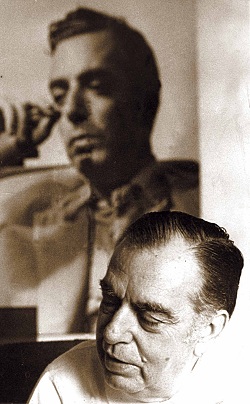 Padilha: My family is a family of scientists. My father earned a Ph.d. in physics from Houston and worked a little bit at NASA. I always tell him he almost got Tom Hanks killed in Apollo 13. I'm a trained physicist too; but, being a physicist in Brazil is a good way of being unemployed, so I ended up being a filmmaker. But I'd always loved film. My grandfather was the famous Brazilian playwright Nelson Rodrigues. My cousins produced films about the plays Nelson wrote and I was always on the set and fell in love with films. Even though I went to college and studied physics, I started filming documentaries right away even though I never studied film. I learned film by trial and error.
Guillén: What branch of physics did you study?
Padilha: My specialization was the interpretation of quantum physics, so it's somewhere inbetween physics and philosophy. Quantum theory works perfectly, y'know, we just don't know why. [Laughs.]
Guillén: Has anything carried over from your training in quantum physics that applies to your filmmaking? Or would you ever make a film about quantum physics?
Padilha: No, I wouldn't. It's not so much physics; it's more logic. But in order to prepare a film and to shoot a film there needs to be organization and there is a logical structure to storytelling. As a matter of fact, the person who first analyzed storytelling and dramaturgy was Aristotle and he was also the inventor of logistics. So, to answer your question, yes, in a way, there are some things you can take from the hard sciences to apply to filmmaking; but, you can also make a great film without knowing anything about logic or mathematics, as history has proven. Film is an open medium. There are so many different ways you can use film. If you are making a film that seeks to analyze a social process, then—I guess—having a background in science is a good thing; but, you don't need one to make a more metaphorical film like Tree of Life, which is a film that's open to different interpretations. So the correct answer, I guess, is that for my kind of films, having had some training in the hard sciences has helped.
Guillén: Elite Squad: The Enemy Within is a testosterone-fueled masculine narrative. There are few women characters in your film. You have the worried mother, you have the executed journalist, but otherwise not much of a female presence. Which leads me to ask what significance women play within the crime of the favelas?
 Padilha: Interestingly, women are usually much less involved with violence than men, though that's not a cultural thing across all cultures. There's been an interesting book written by a Harvard psychologist / biologist called Demonic Males: Apes and the Origins of Human Violence, and—though I'm not going to say that I subscribe to everything that's written in their book—it makes the point that, among the primates, males are violent and females are not, which is pretty much true. My movie is about violence and tries to pinpoint how politicians play a part in the origination of violence and does so through the perspective of a cop. So Enemy Within is a cop movie, it's a guy's movie, and the women within it—journalists and cop's wives—are pretty much as these women would be in real life and how most of them are involved with the violence. But there are exceptions in real life, as well. A couple of months ago for the very first time a female judge Patrícia Acioli was killed in Brazil and the investigation revealed that she had been killed by policemen because she was investigating the militias. So there are women involved in this social problem of violence and sometimes they are victims; but, not a lot. It's pretty much a man's world, like in a war movie.
 Guillén: That being said, within the narrative structure of your film I felt the role of Rosane (Maria Ribeiro), the ex-wife of Nascimento and the mother of his son, was important for framing the relationship of the father with his boy and Nascimento's struggle to maintain a relationship with his son, which was an emotionally distinct theme from the first Elite Squad. You end Enemy Within with that lovely grace note of the boy in his hospital bed opening his eyes and—in a sense—returning to his father. Why this soft ending for such a violent film?
Padilha: You might recall that Elite Squad ended with someone closing their eyes. It's a close-up of a guy who's pulling the trigger of a gun that's shooting someone in the face. That's the final shot of the first Elite Squad. Because of that final image, a lot of people asked me, "So you don't think there's any solution?" Which is incorrect. I do think there is a solution. The basic thesis behind my films—if I can be said to have one—is that the State is creating a lot of the violence that we have to cope with. In a certain sense, we are doing it to ourselves; therefore, we can undo it. It's about changing our behavior, really. That's something that's doable. So I decided to end Enemy Within in the exact opposite way as Elite Squad. Instead of a man closing his eyes to take a shot, a kid opens his eyes. It was a way of saying, "This is how Brazil is working right now. If we acknowledge it, it's already a start." That's what I was thinking. But sometimes filmmakers are the only ones who think about their movies in a certain way. Sometimes no one else notices what they tried to do in a final shot like that, which is fine.
Guillén: I may not have made an immediate association with the ending of the first film, but I felt the hopefulness implicit in Enemy Within's final frame. It worked for me. In fact, I feel Enemy Within is altogether successful in its sociological critique of the systemic origins of violence; but, philosophically, I can't watch a movie like Enemy Within and not consider the nature of evil. In the face of so much violence, my gut feeling as I've grown older is that evil comes somehow natural to the human animal whereas good is something that has to be learned and requires an effort. What do you think?
 Padilha: I'll give you a two-part answer. First, the nature of evil is something I feel I've learned something about. I did a documentary on the origins of violence called Secrets of the Tribe (2010) in which I interviewed anthropologists from all around the globe on this exact subject matter of violence. When I asked the famous American anthropologist Napoleon Chagnon what he felt was the explanation for violence, he said that—if you look at the history of mankind—violence doesn't need an explanation. What needs an explanation is peace. It seems obvious that there's much more violence than peace. Sometimes I hear people say, "Oh, it was good in the old days when men were more closely related to nature, as in the times of Greece." But in Greece, they killed people just as easily, and people were slaves. The truth is, if you look back it gets worse as far as violence goes.
Having said that, I'm aware that you didn't ask me about the origin of violence; you asked me about the origin of evil. Violence is an objective thing that you can define in behavioral terms. Evil is a moral category, which is a different thing. A mother in India may look at a tiger eating a kid and think it's evil; but, it's not. It's nature. It's the nature of the tiger to eat the kid if the kid is available when the tiger is hungry. Because evil is a moral construct, it always has to do with a point of view as it applies to some sort of moral code. Evil, then, is really a human construct. Nature doesn't care. Nature doesn't have categories like good and evil. Those are human constructs. Violence is another matter. But since you're asking me about the nature of evil, then I would have to say it has to do with mankind and their capacity to create moral codes that arbitrarily define categories like good and evil.
Guillén: I ask because—as I stated earlier—the ending of Enemy Within made me feel hopeful. After an experience of such protracted violence, I wasn't expecting to feel that there might be something good that could come out of it.
 Padilha: One of the arcs in Enemy Within is not the central opposition but is more between Nascimento who is trying to do something good—even though his way of understanding society is in my mind clearly wrong—and Fraga, who is also trying to do something good. One of them is conservative and the other is a liberal, right? They hate each other on those grounds but they also hate each other because they're fighting for the same kid and they (kind of) have the same wife. One of the ideas of my movie was to make a plot that would force those two characters with two opposing world views to work together at the end of the movie to accomplish something. One American journalist picked up on that and compared it to what's going on in the United States: you have Democrats, you have Republicans, and they have lost the capacity to work together. They would rather have the country go down the drain to win an election and to destroy the other party. The situation has become polarized with no middle ground for negotiation and compromise. As an outsider visiting your country, I can confirm that this is what I'm seeing and that, perhaps, this is what makes my film Enemy Within applicable to American audiences in a very specific way?
Guillén: Polarized politics certainly seem to be the nature of the beast, that's for sure. Shifting gears, many people are dubbing 2012 as the Death of Celluloid. And yet, while doing research to prepare for this interview, I was intrigued to read that you insisted upon using celluloid to film your movie as a strategic means to discourage piracy?
Padilha: Yes, everything was on celluloid; no digital.
Guillén: What a stroke of genius. I've never known anyone to strategize making a film on film for purposes of keeping it close to the vest.
Padilha: But it makes sense. First, film is bulkier and more difficult to control. Secondly, if someone gets a hold of a 35mm print, they have to have a telecine or a projector in order to make a pirate copy. Because my first movie was heavily pirated—months before it even opened it was already a hit—I decided not to run the same risk. I did everything in 35mm.
Guillén: Even the editing?
Padilha: No, that just wouldn't have been practical. The only thing I did digitally was the editing and here's what I did. I rented an apartment with security codes that I had, that the editor had, and that the assistant editor had. We had no internet access. We edited on a cryptographic hard disk. At the end of each day we would save the work to the cryptographic hard disk for which only the editor had the security code. He would take the hard disk out of the machine and hand it over to a policeman who took it to a safe. The next morning the policeman would bring it back and we would put it back into the machine.
Guillén: Amazing.
Padilha: Insane.
Guillén: But it worked?
Padilha: It worked.
Guillén: Though you used celluloid to prevent piracy, my understanding is that the film will be projected by digital masters? What are your thoughts on the future of digital projection?
Padilha: Listen, it's unavoidable that in the future there will only be digital projection. The cost of making prints compared to the cost of making digital masters or the cost of streaming by satellite is just too huge a difference to ignore.
Guillén: What will then happen to your 35mm strategy to avoid piracy?
 Padilha: It will be gone because I won't be able to find screening rooms equipped to handle the projection of 35mm prints. So the future of digital projection is unavoidable. But shooting on film is a different matter. You can shoot on film and then transfer it to digital. Even when you end up with a digital master, shooting on film has a different look and a different texture than shooting digitally. Of that, I have no doubt. All my films have been shot on film. Is film itself going to end? Well, Kodak is going down the drain so, yes, it might end. I'll be sad about that.
Guillén: I've already retrained my mind to distinguish between talking about film and talking about the moving image.
Padilha: I understand because film soon will be gone; but, until then, a lot of movies are still being shot on film before being digitally remastered. It's going to take a while for film to completely disappear. There are people who are resisting. Certainly there will still be a niche, a place somewhere, for people who are making movies on film? It's kind of how people talked about black-and-white once color came onto the scene; but, people still shoot in black and white. I just shot a whole documentary in black and white and people still make black and white features, even though it's harder and harder to get black and white negative film. A time will come when people will say, "Oh look, this was shot on film!"
Guillén: You've come to film first as a documentary filmmaker so you have that documentary impulse in your feature work. There's a lot of talk about the documentary-fiction hybrids coming out of Latin America that, to some, have even come to characterize Latin American filmmaking. Unfortunately, I've not been able to watch your first documentary film Garapa (2009)....
 Padilha: That's the one I shot in black and white.
Guillén: Nor have I had the chance to see the one that played at Sundance.
Padilha: Secrets of the Tribe.
Guillén: How will I get a chance to see these films?
Padilha: Well, Garapa is on DVD in Brazil. I don't know if it's on DVD anywhere else. It played at Sundance and Tribeca. It's on black and white, in mono, and slow-paced: I'm following a family that is starving. It's a hard film to watch. Garapa is never going to get distribution in this country. It won't. But I'm going to subtitle it in English and put it up on Amazon so people can get it. Secrets of the Tribe is HBO's. They've already screened it in this country and you can watch it there.
Guillén: Returning to the idea of the documentary impulse within fiction, I thought of that instantly when you spoke about wanting to achieve verisimilitude in your feature narratives. But does it work in reverse? When you're making a documentary, do you in any way fictionalize it to make it a better story?
Padilha: No, that's exactly the constraint. If you're making a documentary—at least in my mind—you can use all the techniques of film. You can use flashbacks, flash forwards, or slow-motion to make the narrative more interesting from a dramatic point of view because, at the end of the day, a documentary is also a movie and films have their own logic, and the logic of dramaturgy is not the same logic as ethnography. They're not the same thing, right? It's a different thing to cut a documentary that will work as a film than to create a descriptive document that serves ethnography. You need a dramatic structure to make a documentary and every documentary filmmaker knows that you look for that dramatic structure when you're in the editing room. Even purists like Albert Maysles know they are making dramatic choices in the way they structure their movies. All the techniques and dramaturgy of film are available to documentary filmmakers; but, they have to respect one condition, which is: you cannot change reality to make a better drama. You can't. I can't have a scene in Bus 174 where Sandro shoots somebody on the bus or kills a cop, because it's something that never happened. You have to respect the facts. That's what's characteristic of a documentary.
When I made the first Elite Squad and then Enemy Within, I was looking for verisimilitude but the correspondence with reality was not fact-based—it was structure-based—and so what I was trying to see was that parts of the movie corresponded to reality. It was more like the interaction between those social groups in the movie reflected the interaction of those social groups in the real world. The way the politicians acted with the militia, with the press, with the police, and the police with the inhabitants of the slums, and the way the kids in the slums talked about smoking grass, all of that, was my goal. That's where the fictional world, for me, corresponds to reality. It's not just the actual facts. There's more freedom with the dramaturgy of fictional movies than with documentaries because you can make whatever you want to make in the story creatively take place, provided you don't change the ways the different parts of the social groups interact with each other within the society you're trying to represent. That's the importance of the social analysis in a movie. Analysis is the process of breaking things down into parts. Social analysis is the process of breaking a society down into parts that interact with each other.
Guillén: This social analysis of urban violence in Rio de Janeiro rests so much on the powerful action sequences of your film, which have been excellently choreographed. Can you give me a sense of how you choreographed these sequences?
Padilha: First of all, there are no computer graphics in my movie because we didn't have a budget for them. What happens in the film is—as you say—choreographed and it happens on camera. So what was the challenge? My challenge was that I had a camera and a helicopter. I had the lead actor in the helicopter looking down at this slum. I had to time this with someone running over the rooftops and then jumping when a bomb blows up. How do you time all these things to be filmed by the camera at the same time? This is the challenge of any action sequence that is complex, if you're going for those kind of shots.
 Here's a little secret of the trade. If you're looking at an action movie, everything that happens in an action sequence is separated and filmed separately. You see a bomb go off, then you see a body flying, and then you see a helicopter, and that—to me—is a bad action film. What makes an action scene good is when the shot connects all the levels of an action within the same shot; but, that takes a lot of work. You have to time it. In Brazil, we don't have a tradition of making action movies or filming action sequences. When I decided to make Elite Squad, I asked the policemen who I was researching to recommend an American action film they liked. Many of them said, "We love a movie called Black Hawk Down (2001)", the film by Ridley Scott. "That's the action film," they said, "that feels the same way it feels for us." So I took a plane to Los Angeles and met Phil Neilson, the stunt coordinator for Black Hawk Down. I brought Neilson to Rio and I told him, "Phil, I don't have any money. I know that your personal budget is probably more than my entire budget for the film; but, I want to make this movie of how crazy the violence is in Rio and you have to help me out here to create some good action sequences." Phil liked the idea and he agreed to do it. We developed a way of filming the action sequences that mixed the American know-how of synching things—when a bomb explodes in an American film, it explodes right on time because American filmmakers know how to deal with explosives—and the Brazilian way of shooting with handheld cameras. I guess what we developed together helps to make the action look fresh and it's a perfect example of two different types of filmmaking coming together to create an effect.
Guillén: I guess I'm also curious about how you choreographed the action sequences with regard to your locations. Enemy Within has a fantastic aesthetic of spatiality. My understanding is that when you made the first Elite Squad you filmed it in the slums that were run by the drug lords? But that with Enemy Within you filmed it in the slums that were run by the militias?
Padilha: Yes.
Guillén: Can you to speak to the differences, if any, of shooting in the different locations?
 Padilha: Oh, the shoots were very different. When you're filming in a slum that's run by drug dealers, they have no sense of social processes outside their environment. That's why a drug dealer famously killed the journalist from Globo thinking it would be okay. By doing that, he had the biggest media conglomerate in Brazil asking the police to pressure the politicians to arrest him and, of course, he was arrested. Regular drug dealers don't understand these processes. Thus, the risk of shooting with drug dealers is much bigger because a drug dealer won't think, "Well, if I kill someone from this movie, I'm doomed because this is a big movie and everybody knows it." They don't think that way. They're crazy.
Guillén: You were threatened when you were shooting the first Elite Squad?
Padilha: Yes, we were. But in a slum run by the militia, they are policemen who—in their day-to-day lives—don't live confined to a slum. They deal with people from the slum but they also deal with judges. They understand what the media does. If a policeman makes a mistake and it's in the press, he'll get arrested. So it's much easier to shoot in a slum run by the militia. They often don't even show up while you're shooting. You don't see them. When you're shooting in a slum run by drug dealers, there are lots of drug dealers with guns around the set. It's a totally different environment.
Guillén: Speaking of the power of the media, one of the narrative elements in Enemy Within that most intrigued me was the way you wove the television broadcasts into the narrative to reveal the damaging effect of inaccurate reportage on the lives of your characters. Why was it important for you to depict this manipulation?
Padilha: Actually, that's very common in Brazil. The media in Brazil, for better or worse—and I mean better or worse by their own point of view—commonly stir up and try to steer political issues towards what they think is better for the country.
Guillén: Similar to what Fox News does to Americans?
Padilha: Kind of, though Fox does it openly. It's more veiled in Brazil, even though everybody understands what they're doing. By way of example, you might know that Rio de Janeiro is scheduled to host the Olympics in 2014 followed by the World Cup, for which the current governor of Rio is promoting a pacificiation program. A huge group of the media think the pacificiation program is great and a good thing—and it is!—but, therefore, if the governor is caught in a corruption scandal, the media won't tend to report it because it would hurt this good pacification program and could result in the Olympics and the World Cup going, instead, to Argentina. But once you buy into that kind of reasoning, verisimilitude goes down the drain. It goes out the window. It's not even in the room anymore. The media is not being constrained by true reporting; it's constrained by how they can report on things in such a way that is okay with whatever agenda the media thinks is good for the country. The media may think they're doing a good thing by doing this, but, in fact, they're doing something quite wrong, because they are forfeiting what I believe is one of the most important things of a democracy: freedom of the press and the ability of the free press to report what is truly going on. Instead, the media is killing the freedom of the press by purposely advancing their own biases. Most of the big press or media conglomerates in Brazil are biased in this fashion and operate off the idea that—through their reportage—they can influence politics towards their biases. All for the good of the country. They think they're doing a good thing but I don't think they are. Yet, in the long run, the only sound position is to say things as you see them.
Guillén: That pacification program, I understand, has not been totally without repercussion?
Padilha: No. Many Brazilians are annoyed and even revolted by the governor's program to clean up the drug dealing in some of the slums. Rio has about 1,700 slums, most of them controlled by different groups of drug dealers, and so the first thing the government did was to set apart key slums that would be close to venues of the Olympic games. He ordered the police to take over those slums. The program then proceeded like this: government would contact the press and say, "We are going to take over Slum A and we're going to send our police force of 40,000 policemen into that particular slum to drive out the drug dealers." No one would really be arrested but the end result would be that the police had taken over the slum. The governor, however, knows that his police force is very much like the police force portrayed in Enemy Within. So he knows not to use the regular police to occupy the slums. Instead, he trains new policemen to occupy those slums. The governor has already done this with 13 slums, but of course there's a risk that the new policemen exist in the same organization as the old policemen and who's to know if they will become militia in the long run? There has been progress but Brazilians are skeptical; still, the pacification program has been an improvement.
There was an instance last year of the drug dealers coming out of the slums and taking over the city; but, it was short-lived. The government and the military reacted and it ended up with many of the drug dealers being cornered in an important slum called Alemão. The government took over that slum and the media sold the event as a decisive battle against Rio's violence. Which is a lie. To win the battle against violence in Rio, Rio needs better schools and less class inequality. Rio needs a lot more than taking over one slum.
 In fact, this is one of the things that annoys many Brazilians—revolts them really—about government trying to clean up the slums: it's only being done to woo the Olympics and the World Cup. And perhaps that accounts for some of Enemy Within's amazing popularity among Brazilians. Enemy Within is a completely independently produced and distributed movie. We had no studio behind us. We distributed this film from my garage. It's true. I had a table, five guys, a computer and we hired a retired guy who had distributed films in Brazil and we set out to distribute the film ourselves. The movie ended up grossing $70,000,000 in Brazil alone; the highest-grossing movie ever in Brazil. In my opinion that's because people bonded with something the movie does: it goes after the politicians. I can't express to you how annoyed Brazilians are with our politicians. My movie is violent because the reality of the Rio it is portraying is violent. Compare these statistics. In the U.S. every year the police kill about 250 people out of its 300,000,000 inhabitants. Rio de Janeiro has 7,000,000 inhabitants and the police on average in any given year kill 1000 people. That's how preposterously violent Rio is and, as I've suggested in my movie, much of the violence comes from crooked politicians. So when you make a film that really goes after politicians, the people get behind it. It's like they're saying to the politicians, "We can't really do anything about you but we see you in the movies."
Interestingly enough, the politicians haven't said a thing about the film's success. I thought I was going to be sued. When I made Elite Squad, I was sued by several policemen because the film detailed police torture; but, we won all the lawsuits because everyone knew it was true. With Enemy Within, I wasn't sued. The politicians didn't say anything. Perhaps because the movie was so popular and they wouldn't get a lot of votes if they went against such a popular film?
Guillén: I can't help but chuckle when you talk about how annoyed Brazilians are with their politicians because, as well you know, a majority of American citizens are likewise annoyed and quite frustrated with our politicians. Do you have any thoughts on America's Occupy Movement?
Padilha: I've heard a lot of people say that the problem with the Occupy Movement is that its aims are not articulate and that there's no clear-cut agenda. The feeling of the movement is more one of being simply fed up and wanting to express that feeling. What happened in the United States with all its economic deregulation was a gigantic crime.
Guillén: No past tense; it's a continuing crime.
Padilha: Agreed. It's a continuing crime. I, for one, as a Brazilian had sincerely hoped that President Obama would confront this crime head-on; but, unfortunately, this is not what we've seen. We've seen a lot of maneuvering. Perhaps in the long run the maneuvering will be understood as having been the best option? But right now it's frustrating. It's hard for me to judge. Who am I to judge? I don't have all the information that President Obama has. But, fundamentally, there has been no punishment for those who have committed and continue to commit these crimes against the American people. This is something that's important to me and something I'm trying to explore. If you shoot someone in the head, it's very easy to say you've killed someone, right? Because there's a cause and effect, a direct relationship between what you've done—which is to press a trigger—and somebody falling to the ground and dying.
Guillén: We're back to physics.
Padilha: Yeah, with the causal chain being simple; but, bankers and very rich people doing what they've done out of sheer greed and bringing the economy down have likewise killed a lot of people; much more people than criminals kill. And they've done it in several different places through several different ways. They kill people through hunger. They make people too poor to afford the medicines they need to stay well and, in some instances, to stay alive. There is a direct relationship between a depressed economy and an increase in people dying from several different causes; but, the causal chain is no longer simple, it's become complex, and not as direct. Therefore, these bankers and rich people don't feel guilty at all.
Guillén: Exactly. There's no accountability.
Padilha: Right? But the truth of the matter is that they are guilty and, in a certain sense, there is blood on their hands. You don't see whose blood it is—the blood belongs to someone far away in the causal chain—but it's blood. You vote for Bush and, indirectly, you've caused a lot of innocent people to die in Iraq. I've seen several documentaries made by Iraqi filmmakers that don't get much, if any, publicity in the United States; but, they document how devastating the war has been among the civilian population. We're talking about the death of children. But somehow in this country that's the truth that gets lost. The value of Occupy Wall Street is somehow about reminding Americans that those connections in the causal chain have become lost. What the United States has done has had far-reaching serious consequences, and not just in bringing down the economy, which in turn has decreased funding for education, for health care, etc.
The tragic irony of it all is that the United States keeps repeating its mistakes. What depresses an economy and causes such severe crashes is leverage: how much can a bank bet against the capital the bank has? If you can bet one times your capital, you're good, because if you lose the bet you can pay for it. If you bet 200 times your capital and you lose it, then you leave a gigantic debt. Deregulation in the United States has put leverage out of control. Brazil doesn't have a comparable economic crisis because we have strict leverage rules. In Brazil, you can't leverage 100 times your capital in the stock market. In this country, you can. It's not rocket science. They make it appear like it's rocket science with all sorts of economic jargon; but, actually, it's very simple. In fact, I saw a documentary at Sundance that made a clear correlation between the capacity of doing leverage in the financial system, the concentration of revenue in the hands of a few people, and subsequent crashes throughout the history of this country. It's crystal clear. I hope that this is a mistake that is not going to be made again and—in the spirit of that hope—I am all for Occupy Wall Street.
 Guillén: I can't let you go, of course, without hearing a bit about your plans for the upcoming remake of Robocop. I was delighted that you were tagged for the project. I've admired Paul Verhoeven's work as far back as his films from the late '70s and early '80s, including Robocop (1987), and particularly such later satires of fascism as Starship Troopers (1997). Your choice as the director of the Robocop remake seemed appropriate in that you yourself came under fire for allegedly endorsing fascism, particularly with the first Elite Squad. Can you speak to how you will approach shooting on location in Detroit? And how you will take the themes that inform your work and address them to American concerns?
Padilha: No, the Robocop project is a different thing than Elite Squad, which is the social analysis of a city and of a certain society that is going to exist for a certain period of time in history and is then going to disappear (as all societies actually). Robocop is more universal than that. The concept of Robocop, the idea that corporations can get men—a man in this case—and turn them into a product is an interesting concept. The concept lends itself to several different kinds of films or ideas around them.
 Then you have another concept involved, which is the idea that robots with their automated systems are used to enforce the law. This is not only interesting but timely because it's going to happen. It is happening. This poses a lot of philosophical questions that are universal. Can a robot think? What does it mean to say that someone thinks? If a robot makes a mistake, is it the robot's mistake or the mistake of the corporation who manufactured the robot? Is it fair to fight wars using robots against people? Can a robot arrest someone? Can a robot provide testimony in a court of law? All of these questions revolve around the central question: what does it mean to be conscious? Can a machine be conscious? We don't know. Maybe a machine can evolve into consciousness? If a machine can evolve consciousness, can we then start attributing moral responsibilities to this machine? Would that mean that the corporation that built the robot won't have to share the blame if the robot kills someone? All of these interrelated issues may appear alien to us now, but they're going to be right here in the world in force within 10 years. They will! And Robocop lends itself to a redemption of this in film.
My Robocop will not be a repetition of Verhoeven's Robocop because I can't possibly do that better than Verhoeven did. Besides, it's done. Why would I do that? I have no interest in exploring lands already explored, so to speak. So my Robocop is actually about the making of Robocop. In Verhoeven's movie, Alex Murphy is gunned down, there's a short scene in the hospital, and then you see the famous shot of Robocop's leg coming out of the car and there's Robocop. My movie will be between those two scenes.
Guillén: Have you in any way collaborated with Verhoeven? Compared notes?
 Padilha: No, not at all. I'm doing my thing. Verhoeven brilliantly did his thing and, like you, I loved Starship Troopers. It's such a great, funny and smart movie. Of course, a lot of people misunderstood Verhoeven. I remember Robocop being called "fascism for liberals", which of course it's not. But I will keep some of the things that Verhoeven used in his movie and, in fact, they will be in Elite Squad style. I'm interested in creating a world in which those things that I've just mentioned to you are becoming real—so my movie will be set in the near future—but, I also want to show what the press would say about these events within the narrative of the film. I want to have that character of the media in my film.
Guillén: Two final questions and I'll let you go. I was struck by a statement you made about "making the camera move to find the story" and that you don't make your actors hit marks, you make your cameras hit marks. Can you elaborate on that?
Padilha: Because I do that, the location becomes a part of the film. The actors organize themselves. I don't tell an actor where he's going to be. Let's say I'm shooting a scene where a woman is meeting a man in a hotel lobby. I place her in the lobby. I know that the actor is going to come into the lobby and look for her, right? He's going to spot her, walk to her, and naturally find a place to sit beside her. I don't have to tell the actor what to do if the set is there.
Guillén: Ah. The spatiality choreographs the performance rather than the performance being choreographed for the location?
Padilha: All I have to do is give the actors starting places, right? But there is a visual element that is necessary for the story so I need the camera to find that visual element. The woman in this scene is sitting here, the man comes inside the lobby and, let's say, the man loves the woman but the woman has decided to kill him. At a certain point, she's going to pull out a gun. My cinematographer has to find the gun in order to tell the story.
It seems natural for me to shoot in this way because I come from documentary filmmaking and—when you shoot a documentary—that's what you do. You try to be aware of what's going to happen next that's relevant for the film and get it, right? This is just a technique that I've sort of invented on how to put the documentary way of shooting inside a fictional set. It has drawbacks. A lot of the positioning of the actors in regular films is done because of the lighting. The director puts the actor in a specific spot in which there's going to be a reflection in his eye, right? Sometimes it's even a weird place to put an actor as far as the set goes. If that's what you care about, you can't shoot how I shoot. I don't care about those things at all.
Guillén: So if I'm understanding you correctly, you're talking about how an emphasis on style can interfere with the verisimilitude you're seeking?
Padilha: Yeah. Some filmmakers care about the light a lot and they're great at framing that. I'm not saying there's a wrong or right way to do this. It's just what I do. Of course, in some scenes I have to give the actor marks because there are going to be cranes overhead, etc., but I try not to do it more than I have to.
Guillén: So improvisation becomes key among your actors in trying to capture that documentary impulse in your fiction?
Padilha: Yeah.
Guillén: My final question involves the unusual choice of Enemy Within as Brazil's official submission to the Foreign Language category of the Academy Awards®. I read somewhere that the selection committee expressed that they were tired of trying to second guess the Academy by submitting films that the Academy members would like. This is the first time they've chosen a film that they consider to be truly Brazilian on the basis of its popular box office appeal and one that the Brazilian people like?
Padilha: Yes, that's true. Listen, it's interesting actually. I also don't like to second guess the audience. I don't write screenplays, I don't make my movies, I don't edit my movies trying to make a movie that the audience is going to like. I've never done that and never will. I do a lot of work to come up with a screenplay and a dramatic structure that is going to capture a certain social environment. If I try to submit this process to what I think the audience will like, I will kill it. You can't do both things at the same time.
Guillén: You can't be the servant of two masters?
Padilha: Exactly. I suppose the Brazilian Ministry of Culture—who makes the selection by way of committee and so on—chose Enemy Within probably for several reasons. First, because in the past they tried to second guess what the Academy would think and for the last three years they haven't picked up any nominations, which is anyway a stupid thing. You may be right on all those second guesses. You may be selecting the best film that the Academy would like out of Brazil but still not be nominated because there are so many great movies from all the different countries, y'know? But that's how it was in Brazil. So there started to be some criticism in Brazil about how the movies were being picked. It didn't help the Ministry much that they invited public recommendations on their website. The big websites, like Globo's, would each make a list of the ten movies they thought were good and send them in to the Ministry who then assembled a list of all these recommendations and put them up for public vote. The Ministry of Culture ended up in a bad spot because, let's say, if a movie that 80% of Brazilians thought was their best movie was not the movie the Ministry selected, and then that movie didn't get a nomination, all those Brazilians who voted would complain, "See? You picked the wrong one." So after three of years of that, the Ministry decided they had enough and they said, "Okay, let's get the movie that everybody likes." That's how it went.
Actually, if I were an Academy member, I would rather see the movie that the specific culture who submitted it likes. That would be better. I think the Academy members would prefer to see them. It would be much more fun and diverse. If all the movies that the Academy receives are different countries trying to second guess what the Academy members like best, it's probably going to end up homogenous and not so good. For the sake of the members who have to work at watching so many entries, I think it's a good thing when countries send the movies that they like themselves.
02/17/12 UPDATE: Elite Squad: Enemy Within has just been released on Netflix Instant Watch.


