Saturday, April 09, 2011

DFF 2011: AND THE WINNERS ARE....

Thrush by Gabriel Bisset-Smith won the Grand Prize at the 2011 Disposable Film Festival (DFF), cleverly narrating a relationship from start to finish through sequences of photographs. It reminded me of when Jack Kerouac wrote that a day would come when he and his friends would look at their photos in albums and recognize their "sad and ragged lives forever."

Thrush from Disposable Film Festival on Vimeo.

The Audience Choice Award went to Theo Putzu's Paper Memories, wherein photos once again served a narrative of memory. But in this short film photographs also become the doors to an alternate future that resolves the sadness of the past.

Paper Memories from Disposable Film Festival on Vimeo.

For the remaining winners, check out the DFF website. Videos courtesy of Vimeo.

Cross-published on Twitch.

Thursday, April 07, 2011

SFIFF54—Crossovers From ND/NF

The San Francisco International Film Festival (SFIFF54) arrives late in the film festival calendar year and arguments can be made pro and con about this timing; but, looking at the bright side, those of us who have had the good fortune to attend other international film festivals this past year are given the opportunity to revisit favorites and—for someone as fond of critical overviews as I am—the conduits of critical appraisal streaming West towards the Pacific in ever accelerating momentum are as good a way as any to select what to watch from SFIFF's impressive program of 189 films from 40 countries (and counting). It never hurts to be informed about films. I find it helps me appreciate them more.

Although I've been cautioned to guard against my tendency to chase after whatever is new on the horizon, the discovery and cultivation of talent remains what most appeals to me as a cinephile. SFIFF may have had some uncharacteristic difficulty this year scoring red carpet talent for its big-ticket tributes, but there has
never been a shortage of fresh talent showing up with their first or second films to the oldest festival in the Americas.

The New Directors / New Films (ND/NF) series organized by New York's Lincoln Center and MoMA dovetails neatly with SFIFF and David Hudson's ND/NF index at
MUBI reveals no less than six crossovers this year. Once again, short capsules are lifted from SFIFF's mini-guide, expanded capsules are linked to the film title, and MUBI's review round-ups from ND/NF are provided for easy reference, along with hyperlinks to the films' original web sites, IMDb, Wikipedia and Facebook (where available).

* * *

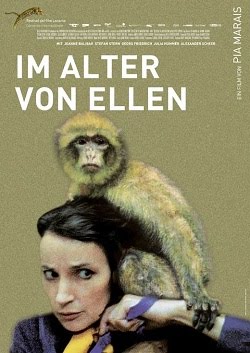
At Ellen's Age / Im Alter von Ellen (dir. Pia Marais, Germany, 2010)—When the thoughtless comfort of her middle-class life is disrupted, a German flight attendant (Jeanne Balibar) suddenly ditches it all in pursuit of new meaning, making her way through a series of unexpected, oddly humorous and slightly surreal encounters in her search for grounding in a complex and dislocated world. Official site [German]. IMDb. Facebook. MUBI. Pia Marais is expected to attend.

Attenberg (dir. Athena Rachel Tsangari, Greece, 2010)—In a crumbling town, a father prepares for death as his daughter awkwardly journeys into adulthood. Marina craves life amid her desolate world: She experiments with sex, rocks out to the band Suicide and watches nature documentaries on TV. As her father deteriorates, she tries to glean from him some of the secrets of life. IMDb. Wikipedia. Facebook. MUBI.

Black Tower Mixtape (1967-1975), The (dir. Göran Hugo Olsson, Sweden / USA, 2011)—This collage-style documentary combines recently rediscovered Swedish footage of the American 1967–75 Black Power movement with new and insightful commentary by leading African American artists, activists, musicians and scholars, all set to an evocative soundtrack with original music by Questlove of the Roots and Om'Mas Keith. Official site. IMDb. MUBI.

Circumstance (dir. Maryam Keshavarz, France / USA / Iran / Lebanon, 2011)—This debut feature—winner of a Sundance Film Festival Audience Award—is an exhilarating political drama and love story about a burgeoning romance between two young Iranian women and the fraught allegiances of a single Tehrani family. IMDb. Facebook. MUBI. Maryam Keshavarz is expected to attend.

Incendies (dir. Denis Villaneuve, Canada / France, 2010)—This gloriously sprawling Academy Award®–nominated epic has Canadian twins traveling to the Middle East, charged by their late mother's will with finding their long-lost father and a brother they didn't know existed. Along the way, they uncover the scars left on their mother's life by the war she fled, and the sources of her mental and emotional instability. Official site. IMDb. Wikipedia. Facebook. MUBI.

Microphone / ميكروفون (dir. Ahmad Abdalla, Egypt, 2010)—Hip-hop courses through this prescient, vibrant second feature about art and the struggle to make it in Alexandria. The film follows an engineer at loose ends trying to throw a concert of young musicians whose general dissatisfaction is balanced by their musical spirit and energy pulsing throughout. Official site. IMDb. Wikipedia. Facebook. MUBI.

Cross-published on Twitch.

SFIFF54 2011 Press Conference—Highlights by Michael Hawley

An invigorated Executive Director Graham Leggat welcomed the crowd to the Opening Press Conference for the 54th edition of the San Francisco International Film Festival (SFIFF54), then proceeded to justifiably boast about the expansion of San Francisco Film Society (SFFS) programming activities since 2005. "We now provide dynamic, daily year-round programming in the core areas of education, exhibition and filmmaker services. And in so doing we've created an organization unparalleled in scope and vision, by any in the country except those in the much larger markets of New York and Los Angeles." Calling the Bay Area a "great region of film culture and cinematic activity," Leggat placed the SFFS squarely alongside such organizations as the Tribeca Film Institute, Sundance Institute, American Film Institute (AFI) and the Film Society of Lincoln Center (for whom Leggat was Director of Communications before coming to San Francisco).

Before turning the press conference over to the programming team, Leggat thanked numerous sponsors and made mention of three noteworthy milestones associated with this year's SFIFF. "This year marks the 45th year of involvement by George Gund, the festival's chairman of the board. In 1967, he walked into Claude Jarman's office and plunked a check for $1,000 down on the table—unsolicited, unbidden, with no strings attached. That sort of enlightened patronage has marked George's association with the SFFS and the International for 45 years. This year we'll hold a special tribute to him at the Film Society's Awards Night, and we've marked a screening by one of his favorite directors, Otar Iosseliani, as a special tribute to George. I think you'll whole-heartedly agree with me he's a saint, and the Film Society would not be here today if not for his unstinting support over these last five decades."

The other two milestones noted by Leggat were the 20th anniversary of Schools at the Festival, and the fifth anniversary of SF360.org, the Film Society's daily on-line magazine. "It's the only independent, regional film magazine in the country. Funded solely by the Film Society, but categorically not a house organ, SF360 surveys the length and breadth of a vibrant SF/Bay Area filmmaking scene. We would like to think it gives identity, character and strength to that scene, as much as it draws from it."

"There are 189 films in this year's festival from more than 40 countries, with plenty of highlights to mention. In the next hour we'll run through many of them—being comprehensive but not exhausting, enlightening but not highhanded, humorous but not frivolous, informational but not dry, modest but not sanctimonious, and impressive but not boastful." And with that intro, Leggat brought to the stage Director of Programming Rachel Rosen, programmers Sean Uyehara and Rod Armstrong, and Golden Gate Awards Manager Audrey Chang.

Rachel Rosen provided insight into this year's special spotlight on world cinema, which benefits from an annual Academy of Motion Picture Arts and Sciences grant: "This year our spotlight is called
Painting with Light. We found that there were three very unusual films about 'flat art' and it's representation through film. What's interesting is the different ways they bring this flat art into full dimensionality, and also the way they enliven the history of the time in which the art was created. The centerpiece of Painting with Light is Werner Herzog's new documentary Cave of Forgotten Dreams, a wonderful 3-D exploration of French caves that have 30,000-year-old drawings. Mr. Herzog has been entrusted with showing these drawings to the world, and of course he does it in his inimitable way. Also in the spotlight is the Polish film The Mill and the Cross, which brings to life Brueghel's 16th century painting, "The Way to Calvary," and also a wonderful new Indian film called Nainsukh, which is about an 18th century Indian miniaturist."

Before the Q&A portion of the press conference got underway, Rosen presaged and addressed the inevitable question about trends in this year's line-up. (Last year's trend, if you remember, was individual films directed by three or more people). "We don't set out an agenda in order to find a theme or make a point. We're really just looking for the individual films that we love, and try to put them together in a group for San Francisco audiences. But I would say the trend this year is 'films that find their own length'—or the 'correct length' for their stories. So we have five films in the festival that are 75 minutes or shorter, and then we have seven films that are 130 minutes of longer. They run the gamut from A Cat in Paris at a lean 65 minutes to Raoul Ruiz' Mysteries of Lisbon at 257 minutes if you don't include the intermission." Other possible trends noted by Rosen include more films than usual from Scandinavia and Eastern Europe, and a number of films set in a vague near future, which "create an off-kilter feeling, or a sense of dis-ease—not with special effects, but with the wonder of good filmmaking craft and storytelling."

Cross-published at film-415 (in an expanded version) and Twitch. Photos courtesy of SFFS.

Tuesday, April 05, 2011

AS IF!—The Evening Class Interview With Em Gift and Liz Franczak

The movie as backdrop projected in a social environment is already familiar to anyone in San Francisco who's spent an evening at Foreign Cinema, where the TV tray dinner has been elevated to fine dining. (Currently you can chew your steaks while watching the early George Lucas vehicle THX-1138, for example.)

The movie as psychological backdrop, however,
informing a social event without the need for the movie to be physically projected has surfaced in an intriguing intermedial theater piece that caters to audiences who enjoy having a lot to look at and experience all at once, especially their own memories. The piece is called As If! Like, a performance, Duh (As If!) and it's an adaptation of Clueless, the 1995 American comedy film loosely based on Jane Austen's 1815 novel, Emma. Written and directed by Amy Heckerling and set in Beverly Hills at a nearby high school, Clueless was a touchstone filmic experience central to the lives of an entire generation, who are now in the position to pay (and play) nostalgic homage.
As If!, the brainchild of Em Gift, Leslie Kulesh, and Liz Franczak, produced under the aegis of Energy Club Unlimited, has already sold out its six-performance run at Engine Works, kicking off this Friday with their premiere performance at 8:00PM. If you didn't score a ticket already, you better hope they add performances. Otherwise slap a big ol' "L" on your forehead.

As they pitched during their successful Kickstarter campaign, As If! "is a play in four acts, taking inspiration from the film Clueless while constructing a new space for it to thrive in. We plan to create an all-encompassing environment that moves the audience not just through the story but through the experience of adolescence: re-living the excitement and fear of walking down the school hallways, going to the parties, figuring out who we were and who we wanted to be, and like, picking out what to wear in the morning! ...While staying true to the colorful visual language of the film, As If! turns up the volume, building a hyper-stylized, neon-fuzzy, MTV-fried, dream-scape for our audience. The performance invites audience members to sing-a-long and quote-a-long, wear themed attire, attend the val-party, take notes with their fuzzy pens and more!

"...
As If! showcases this early digital age in conjunction with new technologies, creating a hyper-reality out of this influential commentary on the modern teenage experience. Audience members can expect live and playable media that will thrust them into a created memory of past and present. In a generation of such pause-able and download-able entertainment, the anticipation for a live production has never been so palpable. This is an exciting project that serves as the perfect bait to interact on an alternative, visceral level with its audience."

I caught up with producer-director Em Gift and producer-adapter Liz Franczak at the event's launch party a few weeks back to talk about the project.

* * *

Michael Guillén: Em, can you tell me a little bit about yourself?

Em Gift: I went to school in Santa Cruz in their theater department; but—though I'd studied directing—I somehow ended up in San Francisco doing a lot of performance. I've done everything from being the front singer for Ocean Spray, a Cranberries cover band, to a lot of dance, to theater (though not conventional theater; I've never been interested in that). So I've done performance and art for a while now but this is my first big production. The scale of it is much larger than I would have ever imagined as far as being received so well so early and people being excited for theater—which is the shocking part—but it's because the subject matter is
Clueless. I feel this is a new chapter of Em Gift.
Guillén: And Energy Club Unlimited, the production company you've started with Liz Franczak and Leslie Kulesh?

Gift: The production company started out of this project. Liz and I have had mutual friends for a while. I'd heard through the grapevine: "Oh, you and Liz should hang out. You guys would really get along." Finally she contacted me on
Facebook and said, "Hey girl, let's get some coffee. I want to talk to you about a project to see if you want to be involved." So we met in front of Sight Glass and sat down on the curb. She said, "I want to do a staged production of Clueless." I instantly responded, "I want to produce it with you!" Because I knew how to do it. I had interned at CounterPULSE and had learned how to promote and how to find and figure out a space, so I was like, "Yes! Let's do this. I know we could make this work."

Liz originally thought that I would play Cher Horowitz, the character played by Alicia Silverstone in the movie, but instead it turned out that I'm directing and producing. The first person that I thought of that we needed to get on board was Leslie Kulesh because I had been wanting to work with her for so long. She's a dear old friend of mine. She was living in London at the time but she was coming out to San Francisco for Christmas so I was like, "Hey girl, what if you do sets for this?" She's a great installation artist. She was coming to San Francisco to do a window in the Haight anyways so these wheels started going and the three of us joined together to move this thing forward. In many ways I've become the face of the project, but we all have equally produced it. It's taken quite a bit of energy.
Guillén: Synopsize the concept of As If! for me. What are you offering your audience?

Gift: The concept is that
Clueless is the perfect bait for alternative theater, for an alternative nighttime experience, outside of a band showing, outside of going to A.C.T., outside of going to a movie. This is something that encompasses all of those areas and is interactive in many ways. Because it's such familiar material and because my generation—and really beyond!—can quote a majority of this movie verbatim is interesting in itself, it has such buzz, so clearly, we had to pay some serious homage. The music is also a huge motivator and its '90s stylings, which are hip again; the '90s are not retro, the '90s are in again.
Guillén: So you're enacting the movie?

Gift: We're enacting the movie.
Guillén: Are you showing any clips from it within your performance?

Gift: No.
Guillén: So it's primarily a live performance of a movie that influenced your generation?

Gift: Yes. In combination with music and lots of media. We have a whole media projection. We're using 21st century mechanisms to further this '90s homage; but using them in a downplayed way.
Clueless was cutting edge in its own time because the kids had cell phones. Now it's common, everyone has a cellphone, my 11-year-old niece has a cellphone and my 4-year-old nephew can send me Garage Band voice recordings on his dad's iPad. It's insane! But it's still, nonetheless, a marvel in many ways. These kids in Clueless are so privileged, which at the time was very Beverly Hills, though now that culture has taken over and it's not just Beverly Hills.
Guillén: You've generated a lot of interest in the project through social media like Facebook and Kickstarter, where you succeeded at achieving your funding goal. Why do you think that worked?

Gift: It's the material. People love
Clueless. I don't have an explanation for it. In 1995, Clueless received rave reviews. It's written so well. It's acted so well. Every teenager at the time who is now 20-something, 30-something, 40-something are still caught up in the film's lifestyle. It's been codified in such a way that the words they made up for the movie, the language, is still being used today. Jeepin. As if. Whatever.
Guillén: Are you anticipating a costume event?

Gift: I'm anticipating plenty of people dressing up. We're
encouraging people to. I would be totally happy if people quoted along with the performance. People who love the film are going to know exactly what's coming next, they'll know the music, and the thing that's really going to be fun is that—during the intermission—the intermission itself is going to be interactive. Scenes from the film are going to be interspersed into the intermission. People aren't just going to be watching it; they'll be reliving it. They'll actually get to participate, perhaps in a way they've always wanted to while watching the movie. It's great to watch film but it's not life. You can't actually experience it on a 3-dimensional level. But with As If! people will actually get to bear witness and also be involved.
Guillén: So what's next?

Gift: I want to do
The Craft. I want to do Party Girl. I want to do all of my favorites because it's fun to do and quote and reenact but it's also interesting to add our level to it, add our costumes, our aesthetic.

* * *

Guillén: Liz, can you tell me a little bit about yourself and how you became involved with Energy Club Unlimited?

Liz Franczak: Basically, one night I was with a friend and we were talking about theater productions and, like, the last good thing we saw. Actually, I was wearing this very top that I'm wearing and my tag was sticking out and it's a Contempo Casuals tag and my friend commented on it. She was like, "
Oh, Contempo Casuals" and I was like, "As if I would shop at Judy's"—which is a line from Clueless—and I've known the entire film start to finish since I was probably 13. It was a very formative movie for me growing up and, I think, for a lot of people. So this comical bubble-like idea got in my head and I thought, "Oh my God, I have to do this." My head was like, "How do we do this? It could be so cool. Can it even be done? I don't know."

I'd met Em a couple of times and knew that she was involved with theater. I sent her a little message on
Facebook. We met up and I told her, "This is what I'm thinking" and she was like "Yes! Oh my God, have to!" Since then it's been a whirlwind.

Guillén: You're the writer for the project? What are you doing as the writer?

Franczak: Well, I adapted it for the stage. It's an interpretation but it's still very true to the material.
Guillén: What were the challenges of adaptation?

Franczak: It actually goes quite a bit quicker; just the nature of translating films to stage. You're not dealing with camera work. You're not dealing with montages or anything. It's a quick show and runs quickly. I only cut maybe one or two scenes. The difficulty is that the driving force of wanting to do this specific production with this material—I love this movie so much—is a difficult dance. You want to be true to the material but you also want to put a spin on it. By the nature of just staging it, you're totally changing it. It's suddenly very interactive and different. It's a much different way of consuming an art than just watching a film.

Guillén: Speak to me about the decision to create an intermedial texture for this event? How does that help you in your inflection of this film?

Franczak: Especially now when I look back to the first few times I watched the film and where I was, it's such a memory. Part of the fun of staging this production is that we get to rebuild that memory. For especially people our age—mid to late twenties—it was such a big movie. It's one of the big teen girl movies. There is a lot of attachment to it. When we're creating that texture that you're talking about, it's like building a collective memory, a consciousness, that isn't just about watching something, it's about interacting with something. When you're in the space it's overwhelming and you're in a new space, which is sort of a constructed memory.

It's actually a form of media collage. Our generation doesn't consume print media like past generations. We consume
YouTube videos and Facebook photos and messages and digital films and digital photography, which is all just a new way of collaging. It's just a different medium.

What's also interesting is that none of our friends are like, "Hey, A.C.T. is doing this new production of
Our Town, you wanna go see that play?" But so many people are so excited for a live production. I haven't seen that from our peers in a long time.
Guillén: Any issues with rights?

Franczak: That's something that makes me pretty nervous. We're not screening any parts of the actual film. We're making it very clear that it's an adapted script. That being said, there's not a lot of law that has to do with theater production and adaptation, or copyright law around performance. If you change a certain amount, it's okay because then it's parody.
Guillén: Have you considered reaching out to anyone from the original creative team?

Franczak: I've done some work with that. I don't want to give away any juicy bits, but we're working on that. I'm a really big fan of Amy Heckerling. I think she's just fantastic. I love
Clueless. I love Fast Times. I think she's a great writer. I wear all black just like her. I think she would think this is great.


Video by Eric Slatkin.

Monday, April 04, 2011

SFIAAFF 2011: BAY RONG (CLASH, 2009)—VCinema Podcast Interview With Johnny Tri Nguyen & Thanh Van "Veronica" Ngo

"The New Wave has been the template for so many emerging national cinemas. If you come from a country that has had, for instance, a fairly consistent film industry but of films that outside their own country nobody knows and nobody wants to see ... the moment that you then have a generation that has a chance to go to a film school in California or New York or somewhere else, when they go back they want to start a new wave. That's their model. There is no other model for saying, 'How can I go back to my own country and do something that is not the industry and is not television?' It has to be a new wave. ...It usually takes only one film to suddenly create a national cinema with a new wave effect."—Thomas Elsaesser.

Elsaesser's formula requires no further proof than the Vietnamese action film The Rebel (Dòng Máu Anh Hùng, 2007), which catapulted its director Charlie Nguyen and its two lead actors Johnny Tri Nguyen and Thanh Van "Veronica" Ngo into the international spotlight while kickstarting a new wave of Vietnamese filmmaking. Their follow-up effort Clash (Bay Rong, 2009) was an even-greater box-office success in Vietnam and arrived in the Bay Area as the centerpiece film for the 29th edition of the San Francisco International Asian American Film Festival (SFIAAFF), where I had the pleasure of sitting down with this charming and refreshingly down-to-earth couple to discuss their stardom and what it means for the future of Vietnam's film industry.

My thanks go out to Jon Jung ("Coffin Jon") who accepted this conversation for podcast at his site VCinema, which specializes in Asian film from cult to the classics. B
e sure to check out Jon's archives at VCinema for past podcasts relating to films from environs East, and enjoy my conversation with Vietnam's most glamorous duo Johnny and Veronica.

Cross-published on Twitch.

WONDERCON 2011—PRIEST (2011)

The resuscitation of the classic western genre seems to occur whenever it's fused with another genre, producing dissonant hybrids, intriguing for their anachronistic elements. These hybrids seem to negate the threat mumbled through clenched teeth that, "There's just not room enough for both of us in this here town." Whereas with Cowboys & Aliens Jon Favreau has pursued the "science fiction western"—following on the outlaw trail of such steampunk narratives as Wild Wild West (1999), Back to the Future III (1990) and the ridiculous but oddly entertaining The Valley of Gwangi (1969)—the category of the "weird west" is even richer in representation, ranging from Billy the Kid vs. Dracula and Jesse James Meets Frankenstein's Daughter (both released in 1966), through Ravenous (1999), The Burrowers (2009), right on up to this summer's blockbuster release of Scott Stewart's Priest (2011), based on the manhwa by Hyung Min-woo.

Consciously tipping its dusty hat in homage to John Ford's The Searchers (1956)—where the vampires become the Comanche and Paul Bettany steps in for John Wayne—Priest is a post-apocalyptic action thriller set in an alternate world, one ravaged by centuries of war between man and vampires. The war has been won by warrior priests trained in specialized combat; but, once their mission is accomplished, the Church decommissions them into thankless obsolescence and exerts a tight grip on the populace by confining them behind walled-in dystopian cities where cathedral smokestacks belch black ash over the inhabitants. When his niece is abducted by vampires, Priest (Bettany) breaks his sacred vows to venture into the wastelands after them, joined by his niece's boyfriend (Cam Gigandet).

Stewart was joined at the WonderCon panel by actors Paul Bettany, Cam Gigandet, Lily Collins, and graphic novelist Hyung Min-woo, who flew in from Korea specifically for the event. In his entry earlier this year posting the film's "surprisingly solid" trailer, Twitch teammate Todd Brown argued: "Despite being enormously talented Paul Bettany has been on a downward slide lately, some dodgy decisions pretty much killing him as a viable box office star." Judging from Bettany's screaming coterie of female fans (some sitting right next to me) at WonderCon, however, I wouldn't write him off so fast. With lethal equanimity, Bettany creates a focused and precise executioner in his portrayal of Priest. Todd's subsequent reassessment that the trailer suggests a film that is "big and burly and stupid in all the right, escapist ways" that "could actually be a lot of fun" might end up proving spot on. I offer a recording of the WonderCon panel Q&A.

Cross-published on Twitch.

Sunday, April 03, 2011

WONDERCON 2011—Jon Favreau on COWBOYS & ALIENS (2011)

WonderCon fans started lining up three hours in advance to insure entrance into the Esplanade Ballroom to catch their first glimpse of exclusive footage from Jon Favreau's anticipated summer blockbuster Cowboys & Aliens (2011), an imaginative hybrid of the classic Western with the alien-invasion movie, based on Scott Mitchell Rosenberg's 1997 graphic novel and due to be released by Dreamworks / Universal Pictures on July 29, 2011. Joined by an arsenal of top moviemakers—Steven Spielberg, Ron Howard, Brian Grazer, Alex Kurtzman and Roberto Orci—Favreau corrals audiences into 1873 Arizona where lone cowboy Jake Lonergan (Daniel Craig) leads an uprising against an extraterrestrial terror. Although actors Craig, Harrison Ford and Olivia Wilde weren't able to attend WonderCon, director Favreau (who admitted he felt like a rock star) and producer Orci were on hand to enthuse their cheering WonderCon crowd.

On Attending WonderCon

I was here in 2008 to promote
Iron Man. It really was a wonderful moment, similar to this in that people didn't know what to expect. We were a bit of an underdog back then. ComicCon has turned into this huge thing and it's a lot of fun; but, WonderCon reminds me a lot of what ComicCon was like when I first started going to ComicCon. ComicCon has been so instrumental in so many movies really arriving that everybody focuses a lot of attention there; but, it's more like a big festival or big party. What's nice about WonderCon is it's a little bit more intimate and we can really have a dialogue here and talk about things. It's not like a big carnival. I think it also shows you guys who really cares about this group of people and I, for one, am very grateful for what you guys have all done for my career. So I want to make sure that this remains a priority. There's a much more limited slate of films that have prioritized this event so it allows for a better dialogue.

On Why He Became Intrigued By Cowboys & Aliens

First of all, Bob [Orci]—in addition to being producer on the film—is one of the writers of the draft; he, along with Alex Kurtzman and Damon Lindelof. They had worked together on the
Star Trek film, which I thought was great. I had heard about Cowboys & Aliens many times. I heard about it first when Fergus and Ostby—the writing team that wrote the first Iron Man film—had been hired to do a first draft so I was really intrigued. Then when we were working on Iron Man 2, Robert [Downey] was flirting with the project as well so I kept hearing that there was this really great version of the film Cowboys & Aliens—there were a lot of really bad versions of the film named Cowboys & Aliens too—but, if it were done right (and I heard Ron Howard and Steven Spielberg were all attached to this thing), it was a very intriguing idea.

On Working With Daniel Craig and Harrison Ford

These guys were great. Daniel Craig is just an awesome, professional, great dude. I admired his work in Layer Cake and, of course, later in the Bond films where he was a sort of a vulnerable but really badass hero, where the wheels were always turning. He's really invested in the stakes of the moment. So you have that generation. And then, of course, Harrison was a late-breaking idea because we didn't think it was doable at all. We never thought he would want to come back to genre and—as most of the people in this room feel—we fell in love with the guy through films like Star Wars and Indiana Jones. To have him bring that pedigree was almost like when you would cast John Wayne in a western. He brings this entire history and so you have two generations of action stars who reluctantly have to work together—we start them very much at odds in a cruel environment—to rescue their people. It was just great. They both care deeply about the process, they were a lot of fun, we were all living out in Santa Fe for the summer, and it was a dream project.

On Olivia Wilde's Character

She's awesome, first of all. I said, "Olivia, please try to come down"—she was working—I said, "Please come down. All your fans who have crushes on you are here. Do you have any message I should pass along?" And she literally texted me to tell you guys that she sleeps naked. She's the best. She's wonderful. Her character is somebody who's a little bit more in the know than she seems to be and she's a key to the film in many ways.

On Why—As An Actor—He Wasn't Tempted To Put Himself In the Movie

I really
wanted to, but on Family Guy Seth McFarlane made fun of me for putting myself in all my movies. I didn't want to blow the reality of the film either. So much of this film is the tone and you have to feel so invested in the western that when the aliens come—even though you know it's Cowboys & Aliens—it feels like a surprise. Although the movie is fun, I wanted the fun to come from the mash-up of the genres, not because the people in the western didn't think it was real or were winking. I wanted the characters to be freaked out and the audience to be laughing. Even when I do comedy, that's something I like. I like the people to be worried about what's going to happen next and I want the excitement to come from just the juxtapositioning of things. So much of this is about hitting the tone square on and I feel that we did that quite well.

On Whether He Prefers Acting to Directing

I enjoy directing more to be honest with you because—now that
this [attending WonderCon] has become part of directing; now that we're trying to lock picture and finish off effects and get the music in and this is the moment when it tends to become the most trying and there's the most anxiety from the studios and you're trying to figure out your release and your marketing campaign—to be able to come here and show you this and to feel like we're throwing a party and have it be appreciated so much, it makes directing the most fun job there is in the world, for sure.

On the Value of Fans and Social Networking

I'm speaking and showing a lot to the people who run the blogs. In this day and age with social networking and
Twitter, what's nice is—if you have the goods and you get the word out—it spreads. It's good to have marketing to get the message out there; but, more importantly, much like political campaigning, you got to get your message out with the people. We thought WonderCon would be a really great venue to show some stuff.

Generally you show—what?—a few minutes? But I heard the
Green Lantern footage was really good and they showed nine minutes, right? So I guess we better show nine minutes! What we're showing you is not going online. This is not the trailer that's going to be cut down from this. It's purely some footage that we put together for this room and this room only and there are things that we've never shown before in it and things that we'll probably never show again until the film comes out; but, this is our last moment. ComicCon will come about a week before the film comes out so we've either got to go big or go home there; but, it's too late. There the marketing machines will have already taken over. This is really our last moment to be in communication with the fans and so we thought WonderCon would be a great opportunity to make it worth your while for coming to San Francisco.

[They roll the preview reel, after which the audience roars with applause.]

You don't know how good this makes us feel right now! By the way, you're the only ones who get to see that alien there in the end. We're not showing it to anybody else. It's not going into marketing material so you get the only glimpse. Everyone's going to ask you, "What did it look like? Was it scary?" We're going to try to keep it as much a mystery as we can. There's a whole end of the movie that's all about the aliens on the ground that we're kind of holding back from showing because we want to keep the sense of mystery. That's not popular but we want the campaign to leave something to the imagination so that—when you actually pay to see the film—you actually don't feel like you've seen it already. And, by the way, it will be shown in glorious 2D! Come early and often and help us fight through a competitive summer. If you want to see movies shot on film in 2D, let the theater owners know that the fans still think that 2D is not dead yet.

On the Purposeful Avoidance of Historical Figures in Cowboys & Aliens

Part of making too many historical figures in it, it starts to feel cute. You guys
got it. You guys are the first audience to really see what this movie is about and where the fun is. The fun isn't in making fun of the fact that they're in a western; the fun is about it blowing their minds and their trying to wrap their heads around what they're experiencing and how do these small people fight against such long odds with such superior technology? That's the fun of this film. By peppering in cute cameos of historical figures, I loved it in Deadwood but in this film it would have interfered and made it a little less mythic.

On Cameos in Westerns

[This is Robert Orci's comment.] In the western there's a long history of cameos. The reason why you get people like Sam Rockwell, Paul Dano, Walt Goggins or Ana de la Reguera—the reason they all come out of the woodwork—is because every part matters. There's no small parts in a western.

On the Value of Tax Incentives for Filming in New Mexico

We shot in a combination of California and New Mexico. I'm in a place in my career where I never really chase the tax breaks. We went with New Mexico primarily for the look of it. We liked it and to film in the summer worked well for us. There's a really good film infrastructure. We built a lot of our sets in California. The tax break situation is a tricky one because the film quality shouldn't be compromised by chasing tighter margins; but, if it's best for the film—as it was in our case to shoot a combination of L.A. and New Mexico—I thought it was great. Rather than do CG set extensions, you really had beautiful landscapes and a great community of filmmakers there in New Mexico as well, but I prefer shooting in California when I can.

On Which Comic Character He Would Like to Film Next

I would like to play Groo someday. That's my dream. Sergio Aragonés, thank you!

On Whether the Film's Genre Hybrid Comments On Manifest Destiny

What's happened in the post-Vietnam era is that manifest destiny kind of went out the window as a simple thought. We began to sympathize more with indigenous populations. The colonial age was ending and we began to see ourselves as a world community. I think that's a positive thing. The bad thing about filmmaking is that we've often dealt with archetypes that weren't related to the reality of who those people were and we've lost a lot of the traditions of filmmaking. What's fun with all these alien invasion movies is that you can make the aliens an ineffable force of evil and allow the cowboys and Indians to come together to fight them and fall back on very old traditions of what you would see in the older westerns. Because you're dealing with an alien force and it's no longer people fighting against people. It opens up the door in a way to make the filmmaking a lot more rough and brutal and simplistic and that was a big appeal for this. I think you're seeing it in war movies. In a lot of alien movies you're going to start to see a lot of the old traditions of filmmaking come back because you're not as concerned with the political correctness of what you're dealing with. You can make a PG-13 movie really brutal too if you're not killing real people, which is also fun. There are heads coming off in
Lord of the Rings and that's PG-13, right?

Cross-published on Twitch.