Wednesday, June 14, 2006

The Night Buffalo—The Evening Class Interview With Guillermo Arriaga


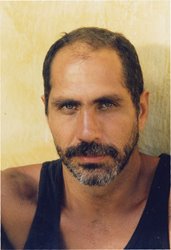
I recently met Guillermo Arriaga in the lobby of the Monaco Hotel where he was lodged while promoting his new novel in San Francisco. After introducing myself, he asked where my family was from, and my family name, and queried whether I knew that I shared the name Guillén with the Subcomandante Marcos. Of course, I smiled, my friends always wonder where I go when I'm missing for weeks at a time. He laughed. Our brief conversation was engaging and a bit unnerving as Guillermo never once averted his gaze. He has a shaman's piercing stare.

The Evening Class: Guillermo, thank you for meeting with me; I really appreciate that.

GA: Don't think about it.

EC: I understand that you're in town to promote the Simon and Schuster publication of The Night Buffalo ….

GA: Yeah, that's right.

EC: … and also to help Gary Meyer introduce The Three Burials of Melquiades Estrada out at the Balboa this evening. I will be out there this evening as well.

GA: Okay. Thank you.

EC: I'm going to focus on the novel because I think that's what you're primarily here for ….

GA: Absolutely.

EC: … but before I do, I want to congratulate you on your wins at Cannes, last year for the screenplay of Three Burials, and then this year for Babel; I understand it did very well.

GA: Thank you very much.

EC: The Night Buffalo. This is the first novel you are publishing here in the United States?

GA: Yes, it's my first novel.

EC: But it's actually the third novel you've written?

GA: Yes, it's my third novel and I wrote all of my books before writing screenplays.

EC: The first two novels are also going to be published?

GA: Yes. One of them's published in English but in England and all the English territories, well, former English territories.

EC: Can you synopsize The Night Buffalo?


GA: This is the story of a man who has a very good friend who's called Gregorio. Gregorio is a schizophrenic young man and he has a great love for his girlfriend Tania and a great trust and love for his best friend Manuel. These are the people he trusts the most. But while he's going in and out of the mental asylums, his girl friend and his best friend begin having a relationship until they fall in love. Obviously the relationship between Gregorio and his girlfriend is broken and the friendship is broken. When these friends seem to reconcile, Gregorio kills himself, and he leaves Manuel a box with secret messages after being dead, with letters, photographs, tapes, and slowly Manuel begins to get into the spiral of madness that his friend has been living. So this is a story of madness, of love, of a sense of being lost, of guilt, and how in the end you have to realize and assume the consequences of your acts and the valued importance of love.

EC: "Consequences" is a term I see applied to your writing a lot. Mainly I know your writing through your screenplays and it strikes me as a blend between quantum physics and eastern metaphysics. [Guillermo chuckles.] In physics they say every action has a reaction, but with you it seems more like it's a richocheted reaction, more of an indirect reaction. Why the interest so much in consequences? Or culpability?

GA: Because we have been very superficial in many [ways], even in the news, no one cares about human life. In the movies right now the hero kills, everyone has accidents and no one cares … it's not about moral consequences. It's like having some gravity on human acts. Having some substance with what's going on with the human condition. Assuming that your decisions have consequences is part of the human condition. The existentialistas—the existential philosophers—were always very aware of these things. Your life is defined by the decisions you [take] and you are your decisions. I am obsessed with this way of thinking.

EC: I commend you for wanting to add that depth to human understanding because I agree with you there is a lack of understanding. Another aspect of that blend between Eastern metaphysics and quantum physics is the term tat tvam asi—thou are that—which means that we are not separated at all. Separation is an illusion that physics and metaphysics discount. What I see in your writing is a lot of that quality, that you strive to profile the connections between people even if they're not aware that there are connections, but moreso to show that the separations are false, the politics are false, the obvious is false, and you make a viewer strive to understand what's deeper in human interaction.

GA: My basic themes and concerns are the human substances. Other people are more into style, or more into the structures, but I'm trying always to write everything into the service of trying to understand humanity, especially contradictions in human conditions. My teachers told me in literature and cinema that I must create loveable characters and I am against that. I must create interesting characters. And the way for me to create interesting characters is to portray the contradictions of humanity.

EC: Your narrative style—speaking of style—is what poet Gary Snyder might call a riprap style, a backtracking narrative overlap style. How did that develop? Why did that become a narrative tool for you?

GA: First of all, I have ADD, Attention Deficit Disorder, so I jump from one place to another. Second, I am very influenced by Juan Rulfo and William Faulkner who say each story has a way to be told. And third I'm influenced by the way we tell stories. In our daily basis we never go linear.

EC: That's true.

GA: You tell me my parents come from Michoacan, or maybe they come from France, and now you know I have a girlfriend in France, and that's the way we tell stories. So that's the three reasons I write—riprop, you say?

EC: Riprap. Which, if you're backpacking or hiking, it's the way you zigzag up or down the mountain. Even as I was reading the first chapter of The Night Buffalo, when you were describing the gun Gregorio uses to kill himself and he summons the image or memory of how he stole it from a convenience store police man, I could already see how you might film that memory, because in your past films you often flash back to some earlier, important moment to deepen and amplify the plot. I agree with you that we operate on many levels at the same time.

GA: And we never get lost. We're telling stories and we go back and forth but we never get lost.

EC: I think because the storytelling is genuine. That's probably why people are relating to it so much and why you're doing so well. The next two novels, what are they going to be about? Are they related to The Night Buffalo?

GA: They are related thematically but the settings are completely different. The Sweet Scent of Death is set in rural Mexico and also has to do with the importance of death, especially of the survivors, as in this one. And the other is The Guillotine Squad, it's a story of the guillotine in the Mexican Revolution. There was no guillotine in the Mexican Revolution. I made everything up.

EC: That's your right as a writer.

GA: That's a comedy, by the way, it's black humor all the way along.

EC: Speaking of black humor, here in San Francisco our local film critic Mick LaSalle took offense by Three Burials because he said it had too much corpse violation humor. Now, I'm a Chicano, and I understand the role of death in Three Burials, but how would you defend yourself against a statement such as LaSalle's?

GA: I will tell you something. When I was young at high school we had a skeleton, a real human skeleton in the classroom, in high school. I grew up with a skeleton. And no one seemed bothered by the skeleton. You can put a skeleton here and people will say, "Ah, a skeleton." But if I put a corpse, it becomes threatening because it reminds us of where are we going? And how we are going to transform ourselves. The body is going to be devoured by worms. I wanted to take the danger of [the] corpse and make it more real, more close, more like a friend, the corpse being a character. To take out the threatening parts of it and make some humor about it. I know that some people get offended because of the presence of a corpse but that means that they are threatened by the presence of death. In a society where they are taking our sense of death, they are also taking our sense of life. If you don't have thoughts about death, you won't have thoughts about life. It becomes a bland substance, like a gelatina, a gel, so I think confronting yourself with death makes you reconsider your life. That's the purpose.

EC: The decaying of the body is mentally challenging. The skeleton, the bone, the hueso—the word is the same for a bone and the seed of an avocado—it's something that's actually living, a bone can bloom. But a decaying body is something different, it challenges the mind.

GA: Challenges, yes, it's threatening.

EC: What I appreciated about Three Burials was the love he had for his friend. He was able to get over and basically accompany that decaying corpse to its rightful place of burial. That was a powerful, beautiful image.

GA: I think, as all of my work, this is a story of love. Friendship is a manifestation of love.

EC: Babel, which did so well this year at Cannes, referencing its Biblical origin, are you trying to say that people are not as disconnected as we think we are?

GA: Something that globalization has taught us is that human beings have much more in common than differences. We have essential things in common—love, power, death, hate, fear—it's the same in every culture. That's a little bit why it's about Babel. At some point it seems we are suspicious, one of the other, but in the end we have the same worries, and the same concerns. Now in a world where everyone is suspected of being a terrorist, y'know?—everyone is suspicious—we have to get closer and understand that we have much more things in common. That's what is running beneath Babel, the movie.

EC: The Night Buffalo is going to be turned into a movie?

GA: It's already turned into a movie; it's in post-production.

EC: Oh it is already? Did you do it with Iñárritu?

GA: No, no, I produced it myself.

EC: Great! Did you direct it?

GA: No, I co-wrote but I was very close to the process. I have been on the set and in the editing room. It's directed by a great director Jorge Hernandez Aldana, a first-time director I hired and I'm very happy. With Iñárritu Babel is our last collaboration together.

EC: Oh it is? You did a trilogy with him?

GA: A trilogy, yes. A trilogy I envisioned a long time ago. I always write by trilogies and this was a trilogy I envisioned. But now we have three films and I think that's enough for now.

EC: Time to move on.

GA: Yeah. We have different interests.

EC: In terms of the filming of The Night Buffalo, can you say who you've cast?

GA: Diego Luna. He's the anchor of the film and he's surrounded by newcomers who have never been in a film before.

EC: That's great. I like new faces myself. I just saw Diego in Sólo Dios Sabe.

GA: How was it?

EC: I enjoyed it very much, but primarily because of Alice Braga who I've been watching, I think she's a promising young actress.

GA: From City of God, she was good, yeah.

EC: And then she did Sólo Dios Sabe and Lower City, both of which I got to see a few months ago….

GA: Cidade Baixa. Portuguese.

EC: Exactly. So … influences? You were saying earlier you were influenced by Rulfo and Faulkner about narrative structure. Who else has influenced you?

GA: First of all I must say that my major influence is life itself. I'm not a derivative author who takes from other [writers]. Basically, my stories come from my own life, from what I have experienced directly. I'm not like I write something where I want to be like that. I live something and I want to put it into [words], express it. Life is my basic influence. If this is going to be other writers' influence I would put Juan Rulfo also and Faulkner and Villarojas and Martinez Guzman.

EC: Faulkner I know, of course, but the others I've not read. Thanks for the tips. My main influences are Miguel Angel Asturias and Julio Cortazar, of course, because of his narrative devices, I love his narrative structures. So what's in the future? You said you worked very closely with the editing of The Night Buffalo, do you want to direct yourself?

GA: Yes, I want to direct myself. I'm writing another film about the border now and then I am going to write another one which I want to direct.

EC: I'm very glad to hear that because I think a screenwriter is often the most misunderstood agent in an artistic production, they're almost invisible. I know it irritated me whenever I read reviews of Babel how they kept saying it was Iñárritu's film. I didn't think of it that way.

GA: I agree with you. [Smiling.]

EC: I think it's the writing, or at least the teamwork, the collaboration, that makes a film. We have a celebrity culture that puts too much emphasis on the auteur theory of directorship, saying the director is doing everything.

GA: I have a disagreement with Alejandro myself. I don't think it's an auteur film, it's auteurs, it's an authors thing, not an author.

EC: All the more reason that it's great that you won best screenplay at Cannes last year for Three Burials. I loved The Three Burials of Melquiades Estrada!

GA: Thank you.

EC: Such an intriguing story. One of the best things Tommy Lee Jones has ever done in terms of his acting. The new film that you're doing, what will it be about?

GA: I want to explore the border. The border is not only immigration and drugs. There's also love stories between Mexicans and Americans. You must have witnessed this?

EC: I owe my life to it!

GA: I also want to explore that. The romantic and love exchanges between people from two sides of the border. Then I want to explore the death penalty. Now I am also involved in a project that is exploring jealousy.

EC: You're tackling all the great themes, the big mythic themes that humankind is dealing with. Your films are never easy. They require some work on the part of your audiences to understand how the story is developing and the quality in your work that I'm intrigued in as a writer is the forward-leaning momentum of your stories. Even when you don't exactly know what's going on, you know something is going to happen, some kind of resolution is going to happen. Do you think resolution is a thing we can really get in life?

GA: Yeah, but, I was born into Marxism and the Marxists have this dialectic way of thinking—thesis, antithesis, synthesis—which become the thesis for another antithesis. So, yeah, there's resolution but there comes the question of a new thing that has to be answered. Everywhere solution is part of a new triangle.

EC: In terms of the screenwriting, are there other screenwriters that you admire?

GA: Yes. Well, he's not a screenwriter, but he has written screenplays—Sam Shephard. Of course I think Sam Shephard is great. Almodovar I think is great. Bright!

EC: Did you see Volver at Cannes?

GA: No, I haven't seen it yet. I think Lars von Trier is a good writer also. I think Michael Haneke is a good writer.

EC: Are you a film maker who actually goes out to see other films? Some folks have mentioned to me that they don't watch other people's movies.

GA: Sometimes. It depends. For example, now with this film we were on the set and in the editing room for so long that I have very little time to see movies. But last year I was a juror in a film festival so I saw—and the Mexican Film Festival, it has the best films from around the world without any doubt, they have the winners from Berlin, Cannes, St. Sebastian, Venice….

EC: This is true?

GA: It's true.

EC: When is that held?

GA: In February. I saw great films like Head On, a great German film, Turtles Can Fly….

EC: I love Turtles Can Fly!

GA: This Thai movie [Guillermo snaps his fingers repeatedly to remember], the one where the man becomes a tiger…?

EC: Ah yes, Tropical Malady.

GA: With those three films—Head On, Turtles Can Fly, Tropical Malady—you have enough. It's great filmmaking.

EC: I got a chance to speak with Apichatpong Weerasethakul when he came to San Francisco. He did a residency at our Center for the Arts. Joe is brilliant. I think he has shoved the envelope of how a story can be told and rendered in film.

GA: Yeah.

EC: Well, Guillermo, I want to thank you for taking the time to talk with me. I'll probably be seeing you this evening.

GA: I hope so and I hope you will enjoy the book to the very end.

EC: Could I get you to sign it by any chance?

GA: Yes, of course! Como le pongo? Miguel?

Sunday, June 04, 2006

PROGRAMMER PROFILE—Jesse Hawthorne Ficks


Earlier this year at the press conference for the San Francisco International Film Festival where the program line-up was announced, I was genuinely surprised to see the bellyaching begin hardly before the conference was over. Granted, some of the immediate complaints had valence—not a single true African film in the bunch, a low representation of women directors—but, what struck me more was the general disgruntlement about everything that was absent, and everything the programming team had not done right. Which led to the question of what is it exactly that programmers do—wrong or right—when they're organizing a film festival for the Bay Area? I realized I really didn't know. Up until now it's always been a kind of taken-for-granted magic.

Reporting from the San Francisco International Film Festival afforded the welcome opportunity to mingle with many individuals behind the scenes, allowing me my first chance to see how a festival is not only put together but run. I decided I wanted to give the programmers a chance to defend their choices and to speak for themselves so I approached Graham Leggat about doing a series of profiles of the programming team. He seemed amenable enough to the idea but the programming team then skillfully avoided any interviews during the run of the festival. Such a protean bunch! That proved disappointing, but—ever the old dog who worries the bone—I decided that if for whatever (I'm sure, valid) reasons they had for not granting me an interview, I would find other programmers who would and have been conducting a series of interviews which I will be sharing on The Evening Class in the months to come. Hopefully that will help all of us gain a deepened appreciation of the art and hard work of programming.

I considered that—perhaps because the San Francisco International has such a high profile among festivals—they're necessarily tethered to a public relations protocol that I am wholly ignorant of. So I turned in the other direction, to "smaller" though no less important programs and their respective programmers.

To start with, I decided to interview Jesse Hawthorne Ficks whose upcoming Latch-Key Kids Quadruple Feature will be screening at the Castro Theatre come Friday, June 9 as part of their MiDNiTES FOR MANiACS series. This series has had a popular run in San Francisco, long before it was adopted by the Castro Theatre. Jesse took time from screenings at this year's Cannes Film Festival to answer my questions.

* * *

The Evening Class: Jesse, you've been entertaining San Franciscan audiences for several years now with your MiDNiTES FOR MANiACS series, which have graced various venues, including the 4Star, the Red Vic and most recently the Castro Theatre. Can you tell me where this brainchild was conceived?

JHF: In 1991, I was 15 years old, living in SLC punk (Salt Lake City Utah). I acquired my first job at Trolley Corners Movie Theatre by lying about my age. My manager (and immediately my cinema mentor) Mark E. Johnson let me program David Lynch's Blue Velvet and Wild At Heart as part of the summer midnight series. The blurb for Blue Velvet was my first published piece, "It's like Twin Peaks, only moreso." Johnson (who was 23) and I began watching films after closing time and at his house video on the weekends. His poor wife must have hated having a teenager hanging out, talking all night long about Chantel Ackerman, The French New Wave, Orsen Welles, and David Cronenberg.

In 1998, Frank Lee at the 4Star movie theater trained me to be the projectionist. He and Uncle Lam not only mentored me through the technical aspects, but they opened my eyes to dozens of unknown Kung-fu, wu-xia, and action films from Hong Kong and Mainland China (emphasizing on the 1970's, 80's and 90's). I began hosting an HK film series Kung-Fu Kult Klassics every Thursday as well as the more insane HK films at midnight. Everything changed when I tracked down a print of The Garbage Pail Kids Movie. The owner of the print had given his other print to Sean Astin (Lord Of The Rings) because his little brother Mackenzie stars in the film. I screened this lost film (it had been dropped from theatres after barely a week) as part of my series MiDNiTES FOR MANiACS and the poor little 4Star Theatre didn't know what hit 'em. We sold out so hard that we had people sitting in the aisles, having come all the way out from Oakland. After that, I was allowed to program much more obscure stuff: Bo-Dacious B-Movies, Slumber Parties and a series devoted to Chang Cheh.

EC: What were the Slumber Parties at the 4Star all about?

JHF: The Slumber Parties were something I had always wanted more of when growing up. A theater in SLC, the Villa, did a couple of nights like this (the Star Wars trilogy beginning at midnight and ending around 7am, the entire Star Trek series 1-6 from 10am till 2am). I fell in love with the cinephiles around me, even if they were wearing Spock ears and Stormtrooper helmets.) The three Slumber Parties at the 4Star are some of the greatest nights of my life.

EC: I'm intrigued by your tenacity at keeping the MiDNiTES FOR MANiACS series alive. How did your association with the Castro Theatre develop? What lured you away from the Red Vic, and before that, the 4Star?

JHF: The 4Star had run into some legal issues with the building and Lee was putting most of his time into The Presidio. So I moved on.

The Red Vic series was the first thing I set up after moving back from a year in New York. The Red Vic was very nervous about doing a midnight series there because—like all the other theaters (4Star, Castro)—they had never done one. They were very excited but very tentative. People need to support the Red Vic or they won't be around much longer. I needed more financial support than the Red Vic could offer. I keep this series alive through sheer enthusiasm (and insanity of course.) The Castro developed out of the years at the 4Star. A small following of devoted kids (16-69 year olds) helped by consistently coming out over the years, so when I pursued the Castro Theatre, the extremely supportive Bill Longen and Brian (last name?) gave me an amazing amount [of] reinforcement, especially due to the fact that the theater had never done a midnight series.

EC: Have the various venues altered the tenor of your programs? Have they created different audiences? Or have you found that your core audience is traveling with you from venue to venue?

JHF: Yes. Different theaters will bring out different audiences. Yet a main core of cinefreeks have followed the series around from place to place. I don't think any theater in the country would have sold out as strongly for the rollerskating disco films Rollerboogie, Xanadu, and Skatetown USA. Yet, where else would you want to host a series but in a 1400-seat movie palace where a live organ performance precedes each screening?

EC: You've spoken about the all-night slumber parties at the 4Star whereas at the Castro it seems they're more evening programs crossing over into midnight. Any plans to do a slumber party at the Castro? Would they allow that?

JHF: I pitched the Slumber Party idea to [Bill and Brian] and we reinvented [it] into the Freeky Friday night: A series of thematically similar films from 7pm-2am, once a month or so. This way more people could come out as opposed to ONLY the totally awesome freeks who would come dressed up in their pajamas to the Slumber Parties and yet keep the concept there.

EC: Any Castro Theatre experiences of note?

JHF: Two of my favorite moments at the Castro performances so far: (1) During Xanadu, Olivia Newton John sang "Suspended In Time", one of the most lackluster songs ever filmed. And suddenly instead of going to the bathroom, dozens of audience members pulled out there modern day lighters—the cellphone—and methodically waved them back and forth, singing each and every word throughout the entire song. (2) Two guys had answered the correct trivia question before Flashdance. Both were just about the shyest people you have ever seen. So I decided to have them have an aerobicize-dance off. I don't think they had ever danced in their life before, much less in front a packed movie palace!

EC: You're rough! Remind me to never be shy around you. Googling you revealed you have worked in various capacities with the Sundance Festival for over nine years, that you've served as box office manager for several years for the SF Asian-American International Film Festival and have even been a publicity intern for the Jewish Film Festival. Further, you've worked as a production assistant and recordist on Scumrock. Aside from MiDNiTES FOR MANiACS, what other projects are you currently involved in?

JHF: Recently I began teaching Film History 2 at the Academy Of Art University. Interacting with 18 to 24 year olds of 2006 is so important to me for my programming. You can love a film all you want, but is it the right time to be screening it? I enjoy midnight series that show contemporary fad films, but what interests me most is finding the forgotten, the overlooked and the dismissed films of decades past and helping them reach a new audience. Some of the films [are] receiving more viewers now, than they ever had before!

EC: Why the particular emphasis on the 1970s through the 1990s? What do you seek to recover?

JHF: The MiDNITES FOR MANiACS series has two major purposes for me: I have always wanted somewhere to go after hours that wasn't just a place in which getting fucked-up was the only goal. There are so many people wandering around, looking for something different to do. And many nights, it feels like a bar is a last resort. My other goal is to create a place to honor films that high-brow and uninspired critics dismissed.

EC: In his write-up of one of your programs Bay Guardian critic Dennis Harvey distinguished between movies that "remain bad, as opposed to so bad they're good." What do you think makes a movie so bad it's good?

JHF: Dennis Harvey's quote "films so bad they're good" is a great subject. I truly love those "bad" films. Many of my friends and family have complained that I have horrible taste. And it may be difficult for them when I drag them to the opening of Son Of The Mask and love it. (Don't get me started on my digitally enhanced baby genre obsession.) So a lot of times, audiences come out to laugh at a bad film because they think they are better than the film. That's not my goal as a programmer. In fact, quite the opposite. I believe there are no guilty pleasures at the cinema. If you love something, you love it. It's fucking hard to make a good bad film. There's plenty of bad bad films to prove it.

EC: What do you think makes a movie so bad it's good?

JHF: "Bad movies" are very difficult to make. There are two kinds of bad movies: Big budget and small budget. They both need an amazing amount of passion, either by the makers or often by even just one actor. Many truly bad films are just plain lackluster. There's nothing worse than a half-assed movie. Most importantly, there needs to be no irony. This is why so many Saturday Night Live films are unwatchable. A great big budget bad movie is one that truly attempts greatness. And my main view is that those films [that] fail so miserably—Costner's The Postman, Singleton's Higher Learning, Friedkin's Jade—truly transcend to greatness. A great small-budget bad movie is one that attempts to achieve something unimaginable (often times sci-fi or horror). Many people don't understand what the film's rules are and end up passing the film off as crazy or so horrible they can't even explain it. These are the masterpieces of the film world for me. These are some of my most favorite movies, ones that I constantly get into fights over. (Troll 2, Ghost Of Mars, She Hate Me). People need to destroy the term "guilty pleasures." I know it's difficult to confront yourself. I just ran into a Reality TV show that I have no clue why I like it.

EC: Troll 2, eh? I didn't even know there was a Troll 1!

JHF: Most recently, R. Kelly's egomaniacal Trapped In the Closet has reached this level of greatness for me. If you've never watched this, you are in for one helluva a treat!

EC: Recently I was at the Castro for their mini-Minnelli retrospective and was disappointed to find out that the last existing print of Tell Me You Love Me, Junie Moon was found to be unplayable. For some reason this totally took me by surprise. You hear all the time about silent features being restored and preserved but I wasn't expecting the films of my own adolescence to already be falling into disrepair. With film preservation an acknowledged necessity, choosing which will be preserved will undoubtedly be a daunting, thankless task. If it was up to you, what movie from the 70s-90s would you definitely want to see preserved?

JHF: Many of the films that I play at midnight fall into this category. The most important film for me to get preserved is Ladies and Gentlemen, The Fabulous Stains. It has never even been officially released in theaters, much less been distributed on video or dvd. Everything about the film is important. It needs to happen. Seriously.

EC: You've worn many hats: intern, projectionist, cinematographer, recordist, box office manager, and programmer. Regarding the latter, what is it you look for when you're planning a program? How do you go about choosing and securing your films? Are there enough films from the 70s through 90s to keep MiDNiTES FOR MANiACS alive for many more years, or do you want to venture into other time periods of film history?

JHF: All of the films I program are personal favorites from my lifetime. Some of the films, people might not have ever heard of and some, others may have watched dozens of times. [Having] curated films for five years now in SF, I hope that I have gained the trust from audiences who have made the trek all the way out to the 4Star and The Castro Movie Palace.

It's always been important for me to be on the pulse of the community around me. When I was younger, I would sluff school just to watch films with the older kids. For the past 15 years I have been working at film festivals such as Sundance, New York Underground, Telluride, Toronto, Cannes and the half a dozen festivals that inhabit San Francisco every year. Basically I grew up at film festivals and the impact of seeing alternative films thoughout my life has really made me one happy guy.

EC: Regarding your upcoming Latch-Key Kids program, I realized these were movies I never saw when they were in the theaters, I saw them first on video, and now I find myself excited to experience them projected on the Castro's large screen. I saw the trailer for Rumble Fish the other day and it looked beautiful! There's a lot of testosterone in this particular selection. Are you catering to your Castro crowd? Can you synopsize the four films?

JHF: The Latch-Key Kids Quadruple feature is a program that begins with a young boy in the early 70's with Cipher In The Snow. I've been trying to find this film since I was young. This student film was made at Brigham Young University, a Mormon-based college in Utah. The Salt Lake City school district used to show this film to our elementary classes every year. Heartbreaking and totally terrifying, the film exaggerates what happens to a kid if he is neglected or overlooked. I can't wait to traumatize a whole new generation. The main difference is that the Castro audience will know why they are watching the film.

Rumble Fish was a very difficult booking. I am very thankful to Brian and Bill at the Castro for getting Francis Ford Coppola to allow the screening. The film was made at the same time as Coppola's other S.E . Hinton adaption The Outsiders but for some reason never received the glory it most definitely deserves.

The Warriors not only just came out in a new revised director's cut, complete with lame modern animation, the film has been adapted into an amazing interactive video game as well as being remade by Tony Scott later on this year. I feel it is important to accept all versions of the film's journey, I just happen to prefer the original OG version. It's also important for audiences to know about all versions so that they can choose as well. (Seriously, I love many of the new remakes . . . Zack Snyder's Dawn Of The Dead is fucking brilliant!)

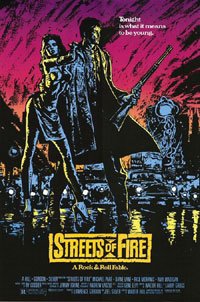
And lastly, Streets Of Fire, which is probably the most unknown film of the bunch. A few years following The Warriors, director Walter Hill designed this gang-infested comic book world that explosively combines the greasers of the 50's and the New Wavers of the 80's. Epic in concept, the film was years ahead of its time and with the exciting combination of comic book elements in campy big budget cinema (Miller's Sin City, Raimi's Spiderman 2) this little obscurity should blow more than a few minds away.

EC: I know you're currently enjoying the Cannes Film Festival, have you seen anything that you think 20 years down the line, 30 years down the line, might serve for some future programmer's MiDNiTES FOR MANiACS?

JHF: What new cinema will be good for future programming is a very important issue to stay up on. Just like that guy who is still only listening to The Pixies and Nick Cave and The Smiths, you have to adapt with [the] times. And be filing them away for when audiences will connect with that time period in [a] reminscent way (as opposed to hating the film due to it being a product of everything that's wrong with the society!)

EC: Any hints of future programs in the works?

JHF: On Freeky Friday August 25th I have a Digital Sex: 80's Style including John Hughes Weird Science, Andy Kaufman's Heartbeeps and Greydon Clark's Joysticks. September and October are both being confirmed as we speak. I am happy that these late 70's/early 80's events are connecting with so many people and I hope that The Castro allows me to host my events there as long as possible. It will probably be a long while before a Uwe Boll program of Video Game adaptations will be programmed (Alone In The Dark, Bloodrayne) but I can hint that the late 80's/early 90's are due for their limelight. Can anyone say the Teenage Mutant Ninja Turtles Part 2!

EC: Do you have any recommendations for young upstarts who want to do programming? Any tips on how to enter the field? Any advice?

JHF: Watch the movies that you yourself are passionate about and make sure to talk to people about them. A lot [of] times, I meet fellow movie lovers and they've obviously been keeping the information to themselves for much too long. Don't be afraid to somehow bring up Mac & Me in a conversation with strangers. Don't keep all of these treasures in your heart. And who cares if someone yells at you later for hailing White Chicks as brilliant. In 15 years, those same people will have transcended their scenester clique and probably be attending some midnight series where they can finally appreciate great "bad" movies

EC: Well, Jesse, thanks so much for taking the time to talk with me.

JHF: My pleasure.

06/05/06 ADDENDUM: Great minds think alike!! Dave Hudson at the Greencine Daily advised that SF360's Max Goldberg likewise interviewed Jesse.

Wednesday, May 31, 2006

2006 FRAMELINE XXX—Persistent Vision Conference

The Persistent Vision film conference, presented by Frameline.


Every five years on the anniversary of their film festival Frameline presents Persistent Vision, an international conference that brings together leaders in the field of queer cinema to look at the past, present and future of LGBT media. Michael Lumpkin introduced the "two outstanding talents"—Meg Daly and Matt Florence—who have led and organized the 2006 Persistent Vision Conference.

Matt Florence began the commentary by stating that Frameline is very pleased to present Persistent Vision: Envisioning the future of queer media arts. "The first Persistent Vision was presented back in 2001 at the 25th anniversary of Frameline," he recalled. At that conference the organizers promised to return in five years to let the LGBT community know "where we are" and to chart queer cinema's future. "This year we are celebrating so much that has happened over the last five years including of course—as Michael talked about—Transamerica and Brokeback Mountain. We'll be highlighting three different questions: where are we in terms of queer media arts? Whose images and voices are missing from our representations? And where are we going?"

Addressing these questions will be three wonderful speakers: B. Ruby Rich, the cultural and film critic who addressed Frameline's last conference and who coined the term "new queer cinema"; Keith Boykin, the cultural critic, author, former Clinton official, and now currently BET host; and John Cameron Mitchell, the filmmaker who did Hedvig and the Angry Inch as well as the current controversial, Cannes-premiered Shortbus.

The conference will have 18 panels and workshops spread out over three days, spanning topics of distribution, exhibition, and filmmaker support, in line with Frameline's mission. A few examples of those panels include "Queer Channel Explosion", a panel that will look at the cultural impact of LGBT media arts specific channels. Do these channels help connect people to a larger queer community? Did they help create that community or simply reflect what's already there? And how are consumers engaging with these channels?

There will also be a panel—"Rebels With A Cause"—focusing on niche festivals. Niche festivals representing specific parts of the queer community are popping up all over. Directors from several alternative or niche LGBT film festivals will discuss why they do what they do and why a diversity of festivals is good for queer cinema.

Yet one more panel will be called "We Want Our Dykeback Mountain." Addressing the fact that not many dyke features are being made but that they are also being made with far less money than gay male features. "Nobody wins in this current scenario," Meg Daly cautioned, "audiences, programmers, and filmmakers themselves all want more and better lesbian films. What will it take to make that desire a reality?"

The conference boasts over 60 panelists, including director Angela Robinson, director Cheryl Dunye, actor/writer Guinivere Turner, producer Stephen Israel, director Rodney Evans, director Jamie Babbit, Marcus Hu—founder of Strand Releasing—and director/producer Susan Stryker who just won the Northern California Emmy for Screaming Queens: The Riot at Compton's Cafeteria, just to mention a few.

Specific details of the remaining conference panels and their topics can be found at the Persistent Visions website which also hosts an ongoing blog site administered by Daly and Florence.

2006 FRAMELINE XXX—Press Conference Announcements

frameline.jpg

Last week on Tuesday, May 23, Michael Lumpkin, Executive Director of Frameline, and Jennifer Morris, Director of Programming, announced this year's Frameline XXX festival line-up at a press conference held at the Castro Theatre. Meg Daly and Matt Florence were also on hand to profile the Persistent Vision Conference and, after all that was said and done, François Ozon's feature Time To Leave and Freida Lee Mock's documentary on playwright Tony Kushner, Wrestling With Angels, were screened for the press.

Having moved to San Francisco in the summer of 1975, the growth of the Frameline Film Festival has paralleled my own growth in San Francisco. As Frameline celebrates its 30th year, I am effortlessly pulled in to remembrances of festivals past hinged to individual events in my own life. It's amazing to consider how much a part I have been of all this history just by the sheer fact of being in the right place during the right decades.

Michael Lumpkin launched the session by noting that the evolution of queer cinema for the last 30 years has been truly remarkable. "In fact," he stated enthusiastically, "we think it's been revolutionary." Gay men living in the U.S. in 1976 were represented by only a handful of films—Carwash, Next Stop Greenwich Village, Norman Is That You?, The Ritz and The Rocky Horror Picture Show. For lesbians there was one lone television production broadcast on PBS. "Not that these all were not good and entertaining films in their own right," Lumpkin qualified, "but that was basically it."

"Luckily for us," he continued, "gay filmmakers in San Francisco were shooting a variety of somewhat crude yet very gay Super8 films" which they brought together in a public screening on February, 1977. That screening would become the world's first gay film festival. "And now 30 years later, and having witnessed a remarkable year of queer cinema with Brokeback Mountain and Transamerica vying for Oscar, this year's San Francisco International LGBT film festival received over 500 entries of new queer films from around the world."

The festival is organized by Frameline and Frameline's mission for the past three decades has been to strengthen the diverse lesbian, gay, bisexual and transgender community and further its visibility by supporting and promoting a broad array of cultural representation and artistic expression in film, video and other media arts. Frameline accomplishes this mission in three program areas: exhibition, distribution and filmmaker support.

Exhibition includes not only their annual film festival but also their monthly free screenings—Frameline at the Center—which takes place at San Francisco's LGBT community center and special screenings throughout the year like last November's premiere of Brokeback Mountain which included an on-stage discussion with the film's director, Ang Lee.

Frameline distribution has had "a banner year", acquiring more films than ever before with queer representation showing on Logo, Sundance Channel and Queer TV. Frameline has expanded its range in the educational market and will soon begin providing queer content for Internet delivery and delivery on mobile devices in Asia and Australia. This summer they are launching a new dvd line in partnership with Strand Releasing. Next month they'll be releasing Is It Really So Strange?, William E. Jones' documentary about Morrissey fans, followed in July by Jenni Olsen's Joy of Life and then Milford Thomas' silent film Claire.

"Filmmaker support is not only about giving much-needed cash directly to filmmakers," Lumpkin explained, "but also providing training to LGBT youth through the Wells Fargo and Frameline Youth Filmmaker Workshop, now in its second year. Direct cash support to filmmakers is provided by the Frameline Completion Fund and this December will be awarding $40,000 directly to queer filmmakers. Filmmakers also receive direct cash support from awards given at the festival each year. In addition to the $10,000 Dockers First Feature award and the $10,000 Michael J. Berg Documentary Award, each of this year's audience awards will be accompanied by a $25,000 cash award."

Recognizing his significant contributions to LGBT cinema, the 2006 Frameline award will be presented to French director François Ozon "whose cinematic trajectory marks him as a major talent on the international scene." Ozon will be presented with the Frameline Award at the Centerpiece screening of his new film Time To Leave on June 20th, at the Castro Theatre.

Jennifer Morris detailed the many films scheduled at the festival, all of which can be explored on the festival's website.

Tuesday, May 30, 2006

2006 SF HOLEHEAD—The Evening Class Interview With The Butcher Brothers

butcher brothers_twitch.jpg

Recently I met with Mitchell Altieri and Phil Flores, aka The Butcher Brothers, at what I felt was an appropriate venue—Martha Brothers—to savor a double cappuccino and talk about their current feature, The Hamiltons, scheduled to screen at this year's Holehead on Monday, June 12, 7:00 pm, and Thursday, June 15, 2:30 pm at the Roxie Film Center. The Hamiltons was previously previewed both here on The Evening Class and on Twitch.

Today also marks the dvd release of their previous feature, Lurking In Suburbia, available on Amazon, and I hope to have a review of that up soon as well. But for now, the interview.

* * *

The Evening Class: Yesterday I was at an advance screening of X-Men III at the Metreon and there were four kids next to me in line who I ended up talking to because it was almost a three-hour wait to see the movie. They were talking about how they wanted to make films. This made me think about you two. You guys started out as high school friends in South San Francisco, did you always know that you wanted to make movies? My understanding is that you found a camera at a car accident site and shamelessly took it, but, was that the first time you started thinking about making movies, or had you already been writing together?

Phil: We were both writers in high school and happened to meet each other and realized we both really loved storytelling. We connected over that more than anything else. There was no one else in high school like that [who] were avid, passionate storytellers so Mitch and I worked off each other and started to create stories off each other. Of course, working within our own realms but making these stories together. We continued writing since then. We write independently but we write together a lot too.

EC: Because that's what I first noticed—I'm a writer too, right?—and it's the writing that first struck me in The Hamiltons and that was what made me think that it was through writing that you guys got started.

Mitch: We feel that one of our strong points is the writing because number one, as Phil said, we both are into different things but, since we grew up together, we pull off the same experiences, same kind of neighborhoods, growing up in South City, very blue collar style neighborhood. The things that influence us and the things that we like, the things that made us grow creatively as writers are the same things even though we have different approaches. When you put it together it's not like we need to sit there and argue over things. We have a very nice balance. The writing really works when we write together.

EC: So you had been collaborating on writing even before you picked up that camera?

Phil: It all happened around the same time, to tell you the truth. To answer your question, yeah, I think we both wanted to be filmmakers. It's a little different now than it was when we were growing up in high school. It's not too different, but…. Now, everything's so accessible. Video cameras, editing, it all can be done on the computer, so that when a 12 or 13-year-old kid says he wants to make films, it can actually happen. He can make a great film. But at our age we had crappy VHS/Beta stuff—I don't want to date ourselves—but, for us, to put a film together was a big deal. We ended up making something that got some notoriety, the first stuff that we did won a local Bay Area award.

EC: Which film was that?

Mitch: King's River.

EC: Because I know that you, Phil, had done one called The Little Thing?

Phil: Yeah, just a couple of shorts.

EC: And White Trash also?

Phil: Mitch and I both did White Trash.

EC: The guy down in Montecito that interviewed you two for their local newspaper was saying that "The Butcher Brothers"—the aegis of "The Butcher Brothers"—is to represent your darker side. Because actually, The Hamiltons isn't your first feature together. You've done other features using your individual names.

Mitch: Exactly.

EC: So what is the concept behind The Butcher Brothers? What are you going to be doing with The Butcher Brothers?

Mitch: It was stuff for our darker side. We want to create something where we go to this place where we can become very different writers. Where Lurking in Suburbia is a very fun, wild film—even though it's very deep; the things they say about Lurking is that it's a wild party movie but with a lot of heart—it's not like Animal House where the climax of the film is this wild thing where they have to take out a parade, or something that's so outrageous. Lurking in Suburbia pulls into the heart and reflects the human side of things. I think we've always had that. I think when we created The Butcher Brothers we wanted to bring that same thing but into a very dark side. It's like the idea of when you go out wearing a mask you feel like a whole different person or if you wear a different outfit you feel you can really hide. I think that's what The Butcher Brothers made for us.

EC: Masks hide and conceal, but they also reveal, and what they reveal is often fascinating. Are you guys going to get schizy now though? You're still going to be doing other projects, right?

Phil: You never know! We have offshoots of The Butcher Brothers too, it depends on the content I think, y'know? The Butcher Brothers is meant to create dark content and to allow us to channel some of the stuff that we didn't want necessarily to put into the other films. It's not that we're not willing to but it's more like we can really go to that dark place.

EC: So you're experimenting a little bit? You're testing the waters so that, if this doesn't work, you don't ruin your names?

Phil: Yes. Exactly. That's kind of the genesis where The Butcher Brothers came from a little bit. We want to do horror but we thought we could use an alter ego so that way we have separation of our different types of [work].

EC: I understand because I do that kind of persona shifting stuff myself. I think a lot of people do.

Phil: Cool.

Mitch: A lot of writers do.

EC: Yeah. The good news being that the experiment appears to have worked! The Hamiltons is a successful fun movie. I wanted to talk a little bit about how you define it. When I was talking to you, Mitch, on the phone, I mentioned to you that for me it kind of came off as a black comedy, that it was funny.

Mitch: A lot of people say that.

EC: It didn't seem like that was what you intended it to be.

Phil: I think it's inherent in our writing. Going back to Lurking, it's a complete comedy so I think we automatically have that in us and we're also dramatic writers as well. I think that—probably not knowing it—we brought that into the story. We wanted to write something that was unique. We didn't want to make a cookie cutter film. There's no reason for us to go into that genre at all. When the idea of The Hamiltons came up, we decided that if we were going to do a horror film, we have to do something completely different, something that we can say, "Look, we like this. You can't compare it to anything else." And I think we've succeeded in doing so.

EC: Unfortunately, no matter what, you're going to be compared to other people. Some of those comparisons include David Lynch and David Cronenberg, which in your instance, I can understand. With Lynch, what I always remember about Blue Velvet is that white picket fence through which you enter the movie and then the camera pans down into the grass to expose the bugs. That was an effective understanding of a darkness that's underlying the veneer of suburbia. Which appears to be something you guys are interested in, if not the darkness, then the depth of appearances.

Phil: [Which is] one of the themes that we work with, not just as The Butcher Brothers but in all of the other stories too. We grew up in South City, which I would say is the New Jersey of the Bay Area, it's real blue collar, real suburban, and growing up in that kind of atmosphere you get this skewed vision of it. I think we brought a little bit of that suburbia to The Hamiltons and wanted to create that American façade. One of the characters tries to make everything normal but everything is not normal. The deeper you go the darker the secrets get.

EC: The truth is suburbia is terrifying! I come from the country and made the transition directly from the country to the city and all the middle region—suburbia—terrifies me. I remember recently being in Mill Valley and sensing violence everywhere. What you're tapping into is a very intriguing reality. Cronenberg, on the other hand, is also dealing with appearances but is using the body as the liminal space so that the horror is within. Are you also playing with that?

Phil: Yeah. You kind of summed it up right there.

EC: Just testing my own instincts. Returning to the Brothers concept of you guys working together, you cast yourself as the McQuade Brothers in Long Cut, one of your earlier pieces.

Phil: Where'd you find that out?

EC: I try to do my research.

Phil: No kidding. That's funny. Yeah. It comes from the high school drama background. That's where Mitch and I met, was in drama actually. It's like any kid emulating the big screen. You want to be that. Sometimes acting is your first desire and then from there you realize acting might not be your niche but storytelling might be, directing might be, and we kind of evolved from that point. So in our first film we had a couple of characters who we loved a lot, these two Latinos, but they're white Latinos, y'know? Guys who grew up in Latino culture and adopted the Latino culture and they were the McQuade Brothers.

EC: Asimilados I call them.

Phil: Okay, asimilados. That's who the McQuade Brothers were. And after we did that, our first experience of acting, we're like, "That's enough! That's enough casting of ourselves." Although we did make a cameo in Lurking.

EC: Why I bring it up is because, again, I'm thinking of these kids I met in line yesterday. Obviously, your friendship has helped you further your individual goals. Is there any advice you would give to young kids like that? You mentioned already that the tools are more accessible but I feel you also represent an inspiring collaborative work ethic.

Mitch: Oh yeah, it helps. It definitely keeps you on your toes. Especially working outside of Los Angeles, which is a lot harder, you enter your own little vacuum where you're going, "Okay, I think this is great" but who knows how it's going to relate to the real world? When you're collaborating, it's easier because you're bouncing ideas off and you're getting more things coming into it and it really helps. You see them a lot more now. There's a lot more teams of filmmakers. It's definitely a hard thing to do because obviously directing a film, making a film, is definitely a vision. But if you get good enough people who can see that vision at once, it really helps, because—as we all know—making an independent film is probably one of the hardest things to do on the face of the planet. So teams are good as long as you're not resisting. I read up on so many teams and people working together now. You even can see the bigger directors and people that have been in the system for a long time are joining forces, like Clooney and Soderbergh. All of a sudden they're always collaborating on stuff. You start pulling your team together.

Phil: Like Rodriguez and Frank Miller.

Mitch: And Rodriguez and Tarantino. How many things have they done?

EC: And Rodriguez's loyalty to Miller, to actually drop out of the Directors Guild in protest on Miller's behalf, which I found impressive.

Phil: It worked to his benefit.

EC: Long Cut. This early short feature looked interesting. Is it available? These earlier pieces, are they available?

Mitch: They're locked away. We really consider Lurking our first piece. Long Cut, maybe in time perhaps we can do something with it. We consider it more of a thesis film. It really helped us get to where we're at now. I love the film itself.

EC: It looks beautiful.

Mitch: It's beautifully shot and it's very well done and things like that. But it's one of those films where it's our out-of-college film, it's very artistic, and we're really going for just what we wanted, and then you slowly start to realize that, no, there's a whole business and a whole audience that you need to ….

EC: Damn!

Mitch: Yeah! But it's a beautiful film.

EC: So I don't get to see the McQuade Brothers?

Mitch: In time.

Phil: Maybe for a 20-year retrospective, it might be good.

Mitch: In time.

EC: Okay, okay, then I'll leave you alone about that one. Do you consider The Hamiltons to be a genre mash-up?

Phil: Yeah, a lot of times it's pitched as a coming-of-age horror film, or horror with a heart. There aren't many films like that. Even though you say it's a black comedy, I think it's definitely subjective. We didn't necessarily realize that even as we were writing it because, like I said, we have a dramatic and comedic background so this is our version of a horror film, but we knew we wanted to make a good horror film, something that we would actually like to watch. So it came out to this mash-up, using our backgrounds. We love coming-of-age stories, we love family dramas. But we also love exploitive films too. We kind of put it together. That's kind of what happened I think.

EC: Because some of the criticism I've read is that it isn't enough horror.

Phil: Right, sure. It's not.

EC: But like you, that's what I liked. It wasn't that I necessarily wanted to watch a lot of gore. You handled the gore quickly. Your editing was swiftly paced when it came to the gore.

Mitch: It's funny because some people say that but other people go, "This film really freaked me out. I've been thinking about it for days and days." It sticks in your head. It's not buckets of blood and machetes slashing everybody. The good side of The Hamiltons is that it will get you four days later. It sticks within your head. You get things and symbols that we've put in there that you think, "Oh! I get it now!" and things like that. We're slow—like Novocane—slow but it will get to you in the end.

EC: I'm looking forward to seeing the film again because I think what you're saying is accurate. One of the things that bothered me about The Hamiltons was David cooking for the family. It really bothered me when I thought about it afterwards. And how nobody really seemed to like the food.

Mitch: Right. The first time we ever showed it in Santa Barbara, we won the Gold Vision award….

EC: Congratulations!

Mitch: Thank you.

EC: Thirty grand.

Mitch: Thirty grand, you can't go wrong with that. It was for the most unique, groundbreaking vision, things like that.

Phil: Innovative.

Mitch: Innovative. A lot of people were stunned because—if it's not a genre festival, if it's a straight out festival, we were competing against some politically-charged films, some big films, and for us to walk away with an award as a horror film, said a lot to us. Our first comparison, the first write-up that we got in the Santa Barbara News Press, they automatically compared us to Scream. The first thing they did was they compared us to Kevin Williamson about redefining the genre, about bringing something new to it and that was what was really exciting. Then we turned around and we won in Malibu as well. One of the things that's really fun about making The Hamiltons is that you're seeing something new. It's a horror film that's out there winning awards at festivals that is competing with straight-out Indie dramas, with a lot of fire behind it. And then they start comparing it to Tobe Hooper and things like that. That was really great. And to be compared to Scream, people are saying we're redefining the genres, very very good, and a lot of horror fans have come up to us and said, "It's so nice to see a fresh view on the genre." Because you get a lot of people who are hardcore horror fans and horror fan directors they love to stick to their thing, but we've seen that a lot. With Phil and I coming in as The Butcher Brothers and making a fresh take, not being horror guys, bringing that in, that's very gratifying.

EC: With the success of it then, I read this rumor that there possibly might be a follow-up, The Thompsons?

Mitch: Well, if there is a follow-up, it would be The Thompsons.

EC: But that's not definite?

Mitch: It all depends.

Phil: No comment. Can't talk about it.

Mitch: It would be fun to work on. We could definitely see a franchise bursting out from the story because there's a lot of more room to grow. A little secret—it's definitely in the back of our minds, it's poking out—I'll say that.

EC: It would be great to see a follow-up.

Phil: Yeah, it'd be a lot of fun.

Mitch: A lot of people want to see it so that's really great.

EC: I want to be in it! [Laughter.] Anyways, comparison-wise, you've also been compared—along with Kevin Williamson and Tobe Hooper—to the Coen Brothers. Do you find that comparison apt? Or relevant? Or do you care?

Mitch: I think they're incredible. For me, being compared to them, is incredible. We grew up loving their work and their stuff is just incredible and so being comedic and dramatic writers too—that's a really big thing for us. And trying to bring their flavor into what we do as well. To me it's an honor being compared to them.

EC: I think that's what satisfies people too, don't you? It's not that we just want to go see a comedy. It's not that we just want to see something serious. It's really the blend that approximates life as we know it?

Phil: Yeah, I think that's the model we use for all our stories. Talking about mash-ups, it's a popular word right now, but, I think film is a mash-up. It combines just those aspects, and the Coen Brothers actually do a good job of that too. Even though they're labeled comedy, some of their stuff is the most serious content you've ever seen.

EC: Very dark, yeah.

Phil: So, yeah, I think we're in the same category. I hope so at least.

EC: Speaking of influences, we've talked about Lynch and Cronenberg who I think are obvious for The Hamiltons, but Truffaut?

Phil: We just threw that in for the coming-of-age films. Though I love Truffaut.

EC: I love Truffaut too.

Mitch: I'm a big Lynch fan; I love Lynch. Phil is a big Lynch fan. To look at him I think he's one of the greatest American directors ever.

Phil: Plus he still tackles—you talk about that grey area between the city and country, suburbia—Lynch always tackles suburbia in his own aspect as well. I think that's a theme you'll keep seeing from The Butcher Brothers.

EC: Because suburbia really is America.

Phil: And it's frightening!

EC: Lynch has a searing edge; it's like he brands your psyche with images.

Phil: More than anyone else can, I agree, definitely. You see things that you don't want to happen.

EC: On your website you offer two visual novels—Mexican Porn and Angel. Is that something you're going to further?

Mitch: Yeah, definitely! We work with a great photographer out of San Francisco, his name is Michael Jang. His stuff's in SFMoma in the permanent collection. He's been around for a great while in San Francisco. Through the years we've collaborated with him, doing a lot of photography work and writing, Phil and I both write for it. Unfortunately, film making just takes up so much of your time. [The visual novels are] like side pockets that we have, we have a bunch of stuff going on constantly, but once a film is greenlit, two years of your life, bye-bye, gone. We rarely get time to even socialize.

EC: Well, what was refreshing about the visual novels was, again, their collaborative spirit.

Phil: It might just be our generation, all us latchkey kids. Mitch and I are only children too. In an odd way it's like ironic I guess two only children come together and work together harmoniously. I think, like you said, there's a lot of brother teams, a lot of people are collaborating because we kind of grew up by ourselves and we want more, we want to reach out. You start to see that materialize.

EC: Speaking of reaching out, who are you imagining as your audience?

Phil: That's interesting, man. I don't know necessarily but I guess, imagining, the people who are going to like The Hamiltons would be an artistic crowd, a little bit of an indie crowd.

Mitch: The horror crowd.

Phil: But at the same time, you get that and then you get these people who want to see a good movie but they want to see something besides someone dying of cancer, something horrible that's really going to bring them down, they want some entertainment too. I think we bring that crowd in but also the horror crowd. We have 16-year-old kids and 80-year-old women coming to our screenings and saying they love it.

EC: The Hamiltons has been picked up by Lions Gate?

Mitch: Yeah.

EC: Do we know when it's going to be distributed?

Phil: No, no.

Mitch: We're still in negotiations with everything but we're wrapping things up.

EC: As a self-identified gay male I was naturally intrigued by the character of David Hamilton. He struck me as a Clark Kent type with the slicked-back hair and the buttoned-up collar and the almost desperate attempt to be normative, hiding a big secret. It was an intriguing underlayer to then have his evil twin siblings telling him, "You're not that. You're not that no matter how much you pretend you're that." You incorporated several diverse minority representations, people on the fringe. I think that's what's going to be one of the appeals of The Hamiltons. It's going to talk to a lot of people who are marginalized one way or the other.

Phil: Right. I think we're character-heavy. That's one of our strengths. That's what we love about storytelling, are the characters. When you watch our films you'll see that's what stands out the most. Concerning David, I think, since growing up in the Bay Area, a gay person is probably an archetype of the palette that you work with. It's almost indigenous to the work that you do. There's a character in Lurking who's gay too. It's not that all of our films have to have a gay person in them but it's part of our make-up of archetypes.

Mitch: Just growing up in the Bay Area, we're a little bit more familiar with it as well.

EC: Well, it's appreciated.

Mitch: It's our ode to the Bay Area as well. Phil and I are not gay but just growing up here, for us, it's San Francisco, it's the Bay Area, this is like our ode. The other thing with David's character I would say that—I wonder how to say this without giving away the story or anything ….

EC: Be careful!

Mitch: It's also like, as you said, when the twins are saying, "Look, this is what you are." Him just trying to be normal. It's like saying, "Be who you are." There's a duality to it. So with Francis, and David, those characters, really had to face things other than just the horror aspects of it, but also just in general life.

Phil: I think that's kind of the whole thing about our story, the horror is not the thing that they do, the horror is the family, the dysfunction.

EC: And also the layerings. Because some people have double shadows. David's is unique. The others' are unique. They each have their own personal shadow on top of this family shadow. Within the genre of horror, another place where I thought you were skillful, is that David's particular horror is never seen, it's only heard, which just makes the imagination go all over the place. We'll just leave that there. But I just want to say that if you do film The Thompsons and you need a gay victim, I'm happy to be killed off in the first two minutes! [Laughter.]

Phil: We've got plans for David.

EC: Samuel Child, who played David Hamilton, you've worked with him before?

Mitch: He's one of the leads in Lurking In Suburbia as well.

EC: I'm really looking forward to seeing Lurking In Suburbia.

Mitch: Tuesday, May 30, it's coming out on dvd, and you get to see Samuel Child play a completely different character. He plays like a stockbroker wild guy who's gone through two divorces and just wants to have a great time. In Lurking In Suburbia he's happy to be who he is. He says, "I don't want to grow up. I just want to be who I am." I can't say enough about him. You're going to see him. He's on his way. He's done so many independent films. He's well-know in the independent film world. Film Threat has already quoted him as one of the hot up-and-comers. He's just a joy to work with.

EC: Your actors, you started pulling them from people you knew in the Bay Area?

Phil: We ran the regular routes. We have good stories behind all of them really. We became close to a few of the actors in Lurking and we brought them over, crossed over into The Hamiltons, and they knew people who knew people and it became a family of actors and then we talked to a few of them, didn't even audition a few of them because we knew they'd be good for the part.

Mitch: Like Mackenzie Firgens, she's a big Bay Area celebrity.

EC: The goth girl….

Mitch: Yeah, the goth girl! She got her start in Groove, which was a big Bay Area film.

EC: And she was in Rent too.

Mitch: Yeah, she was in Rent too. With her, we knew we wanted to work with her and, again, going back to our Bay Area ties just felt great. A lot of the actors did come up from L.A. but we really liked the idea that she was here, that she was a celebrity here. We also have Brittany Daniel in the film too who's been in Joe Dirt, That 70's Show and Dawson's Creek.

EC: Going back to appearances and playing with appearances, the movie looks good partly because everyone looks good in this movie. You have lovely young actresses and handsome young actors and, when I was looking at the trailer for Lurking, it seems to be the same there. Are you conscious of the goodlooking part of this?

Phil: That's kind of strange. It's not like we can necessarily answer the question by saying we just hire models. I think we want characters who reflect the characters we see in our heads. Obviously it helps the film. But it's not like we're necessarily going after actors who are just goodlooking….

EC: Then I have a chance!! [Laughter.]

Phil: It's characters who are real. Actually, it seems like a lot of the time we go for people who are—usually it's never based on looks, it's based on talent.

Mitch: Very much, yes. Talent always comes first.

Phil: Yeah, and then the looks are important but it's more about the film characters in your head.

Mitch: And also getting the three brothers to look alike, that was a big thing. A lot of that, we had restrictions on that as well. We had to make sure that they looked like brothers. And I think the other thing is that their being a goodlooking family made it even a little bit more scary. It's not only Joseph McKelheer, who was just incredible in the film. Some of our female audiences will come up and say, "Oh my god, he's so scary, but I'd still hang out with him." I think you wrote something about that.

EC: I've been there, done that!! [Laughter.] One thing I like to enquire when film makers are relatively new to the festival circuit is what their experience of the circuit has been. You're wrapping it up for The Hamiltons here in San Francisco at Hole in the Head….

Mitch: Yeah, back home.

Phil: Nice.

EC: How has this festival run been?

Phil: It's been great! It's everything you could want really. I think it's a pleasure to travel with your film and introduce it to new audiences. What's great about The Hamiltons—as you've surmised—is it's a different breed of film. People recognize that. And people really want to see that. They want something new. We've been given such good energy from people. We weren't expecting an 80-year-old woman to love the film who comes up to us to say, "I want my husband to see this film."

Mitch: It was a very fast run. Our first premiere was in February and we're finishing our run in June. It was a very fast run, and we did a lot, and the film just kind of took off. But every single festival that we went to was just great. At our first showing of the film, so many people were turned away at the door just to see the first screening. We had no idea. We showed up. We had no idea what the reception of the film was going to be or how people were going to take it, if people were even going to like it. Just the first minute of it, when we saw the lines around the block, people were walking in, the stars of the film were walking in, and after them they closed off the rope, they said, "We can't even take it." They had to bump our film up and brought the film back to show it because it was in such demand. All of a sudden we're just going from festival to festival to festival and we're winning the awards. At the end of the day you feel very satisfied, you go, "Look, this is our first attempt at horror and we did good."

EC: I know Bruce Fletcher is impressed with the film and excited about screening it at this year's Hole in the Head. Did he approach you or did you submit?

Mitch: I think he approached us. Ever since Santa Barbara people have been calling asking for the film; we haven't really done much.

Phil: It helps winning an award at your first screening ever.

Mitch: The other thing too with Bruce Fletcher and the Hole in the Head, it's incredible just to be back home in San Francisco and to end the run here.

Phil: It couldn't be a better place. It's the perfect festival for this film.

Mitch: Just to be back home. We love San Francisco.

EC: And you'll be at the screenings I imagine for Q&A?

Mitch: Yeah, we'll be there. I think Cory Knauf will be there, who plays Francis.

Phil: Mackenzie will probably be there too.

EC: Great! Maybe I'll get a chance to talk to them both?

Mitch: That would be great. That would be awesome.

Phil: They'd probably love it. They're both very well-spoken.

EC: Well, I want to thank you two for taking the time to talk with me and, again, congratulations on The Hamiltons.

Mitch/Phil: Thank you!

Friday, May 26, 2006

2006 SF HOLEHEAD—Room 6

room6.jpg

At a time when most people are terrified that they will not be able to afford hospital care, Michael Hurst's Room 6 cautions that hospital care might actually be the ultimate horror! Like Jacob's Ladder, Room 6 ruminates upon a bardo state, setting it in a haunted hospital—St. Rosemary's—where ambulances deliver accident victims who are never heard from again! I'm not the only one who's made that comparison. Room 6 has been described as "Jacob's Ladder meets The Sixth Sense." Which is to admit that it's somewhat derivative but competent enough to engage, largely through a capable acting ensemble and startling make-up effects. Besides, Bruce Fletcher is providing a rare opportunity to see the world premiere of this movie projected onto a big screen since it's going directly to dvd next month. That opportunity alone is worth the price of admission!

Staci Layne Wilson details the dvd release and interviews Christine Taylor who plays Amy Roberts, "a young woman troubled by visions which torment her dreams and cloud her waking judgment." If Amy's not bolting upright in bed startled by a dream within a dream, she's gasping at briefly-glimpsed horrors behind the surface of things. As a trivia tidbit, Wilson notes that Linda Vista—the hospital used in Room 6 and allegedly truly haunted—was also the location of Freddy Kruger's boiler room, and is the site of the upcoming ghost flick, Boo.

Married to comedic actor Ben Stiller and 5½ months pregnant during the 18-day shoot, Taylor cornered the role of Amy, who she describes as "completely confused throughout the movie", not knowing how much of what is happening to her is real and how much is fake but trying to find a balance. As the trailer attests, what begins as an accident becomes a mystery and who can Amy trust when she can't trust herself? Her hallucinatory quest for answers allows for lesbian zombie nurse orgies and Twilight Zone-style timeloops where you keep ending up where you started; the anxious repetitions of nightmares.

R. L. Shaffer reviews the dvd's production values and details its extras for dvdfuture.com, as does Rees Savidis for Arrow In the Head. So what's Savidis' last call? "At the end of the day if it's a perfectly entertaining (albeit instantly forgettable) little demon-infused time-waster you're after, you could do a hell-of-a-lot worse than Room 6."

Though I really wanted Room 6 to be a wry genre skewer of the horrific state of American health care, it's really just a director's phobia as Hurst admitted to Patrick Lee, News Editor for scifi.com: "How many buildings are there in society where you go in and you might not come out? Not many. So hospitals, like, they f--king freak me out. So . . . the whole thing's based on my incredible fear of hospitals. That's where the whole idea started from."

The world premiere of Room 6 takes place at Holehead on Sunday, June 11, 2006, 2:30 at the Roxie Film Center.

Tuesday, May 23, 2006

MALAYSIAN CINEMA—The Evening Class Interview With Amir Muhammad

Michael Guillén: Amir, thank you for allowing me to be the opportunist I am, taking advantage of the fact you've lost your voice and luring you into an email interview. First of all, congratulations on the favorable reviews that your most recent documentary The Last Communist has been receiving on the international festival circuit! I've gathered together a smidgeon of them for The Evening Class, with more to come I'm sure.

Amir Muhammad: Is that all there is? I want more!

Guillén: Well, I couldn't possibly outdo Fathi Aris Omar's incredible coverage so I'll concede to him! Allow me to express, however, my solidarity with all those within the world's film community at the recent ban of The Last Communist in your home country. Your initial refutation on the film's blogsite skewered the hypocrisy of the situation and categorically stressed the danger of having a newspaper like Berita Harian wield so much power. Can you name the columnist who has been giving you and Yasmin so much flak? What do you predict? Will the ban be lifted? Or is this the beginning of a long haul for Malaysian filmmakers? Can you briefly profile Berita Harian for American/Canadian readers unfamiliar with their editorial policy?

Muhammad: Berita Harian is one of the two best-selling newspapers in the country, the other being Utusan Malaysia. It's read by about 20% of the population. It's owned by a large conglomerate called Media Prima that also runs other newspapers, TV stations and a film production company. Like many large enterprises in Malaysia, it is closely linked with the ruling party UMNO (United Malay National Organisation). Berita Harian is simply (at this moment) the mouthpiece for the more conservative, reactionary segment of this party. If it didn't exist something else would take its place. The columnist is also fulfilling his function as the mouthpiece du jour for this conservative faction. He was indeed named in my blog. So it's not like one newspaper per se has so much power, but that it reflects certain tendencies within the ruling elite.

We are currently appealing against the ban. Most of the articles in the mainstream media (including the other newspapers in the Media Prima stable) have been supportive of us, so we hope for the best.

Guillén: Brian Darr has opined that the ban is "seemingly another example of the trend of censorship or denunciation of a film making it all the more viable in the marketplace. In the case of censorship, the neighboring country's marketplace, and probably the black marketplace too." Has that proven to be the case? Is it true that there is no such thing as bad publicity? Does this hinder financing of your future projects? Is your horror musical still in the pipeline?

Muhammad: Actually the pirates might be reluctant to take it because it's a local product that is banned, and so the pirates who sell it will be likelier subjects for police raids. Local films aren't pirated nearly as heavily as foreign ones.

My horror movie Susuk is now being edited. Here is irony number 1: The company that is funding it, Grand Brilliance, is owned by Media Prima too.

I haven't started looking for funding for the next project so I wouldn't know if it's going to be difficult.

Guillén: Let's hope not! Obviously censorship has been an ongoing issue in Malaysia, giving birth to a lucrative black market for pirated dvds. I recall when you were here in San Francisco that you quipped that pirated dvds were Malaysia's best film school. I imagine that a financial return on your investment would have to come from movie house screenings and dvd sales and that you won't see a red cent (so to speak) from any black market traffic, if any? How do you feel about that? Can you recover any of your costs on the festival circuit?

Muhammad: It's a pretty low-budget documentary (US$20,000) and part of it was covered by a grant from the Jan Vrijman Fund, so I wouldn't be a pariah if it loses money. The Singapore box-office might help a bit. There is interest to market the dvd in Singapore but this entails getting a separate Singapore censorship clearance, which we are looking into now.

Speaking of piracy: There is an upcoming independent Malaysian comedy called Ciplak that revolves around a dvd pirate. I haven't seen it, though.

Guillén: Thanks for the heads-up on Ciplak. Over at Twitch, Gommorahizer has been recently profiling a batch of Malaysian horror features—including Susuk—along with Osman Ali's Puaka Tebing Biru and Michael Chuah's Chinese-language (Cantonese and Mandarin) Malaysian horror movie Nephesh Seed. Have you seen either of those? Any dirt on Osman Ali or Michael Chuah? Sounds like M-horror is just about to carry on Asia's alphabetical thirst for the genre!

Muhammad: Osman is a terrific director whose debut feature Bukak Api remains one of the best Malaysian films ever made. It started off as an HIV educational tool for transvestite prostitutes (although I am sure you in San Francisco would call them sex-workers) but he developed it as a strong melodrama about community. I know Michael only slightly; he always looks somewhat shifty, which might be a good thing. I have not seen either film.

Guillén: What drew you to the horror genre? And where did this idea of the susuk originate? It seems so local and unique!

Muhammad: It wasn't my idea to do a horror film. I was approached by the production company. "I've never been so insulted in my life!" I said. But actually, I have: all my other movies had been "festival favorites", which is a euphemism for "flop." So I figured on laughing to the bank for a change. Susuk is a practice in Indonesia and Malaysia. Since it's unIslamic, of course it's taboo. No other local film had been made on it. So it fit well with my motto: It's not important to be the best, but it's important to be the first.

Guillén: I think it's great that Yasmin Ahmad is in it!

Muhammad: She wears a kinky nurse uniform.

Guillén: Ooooooooh!! If you ever do another horror film, will you set it in San Francisco and allow me to be killed off in the first scene? That's a dream of mine!!

Muhammad: Vertigo is already the ultimate San Francisco horror film.

Guillén: Will you be starting up a blog site for Susuk as you did for The Last Communist?

Muhammad: We shall see . . . .

Guillén: For those of us a little rusty on our Malay can you synopsize what's being said in those video diaries? Or offer any up-to-date scoop on the film or anecdotes from the filming?

Muhammad: Oh, the video diaries are basically people pretending to know what they're doing. The shoot itself was not smooth; it was supposed to last six weeks but dragged on for three months. One of our locations was a terrific house that had no roof but unfortunately the weather was atypically rainy. There were so many other delays as well. People kept threatening to walk off the set. The co-director Naeim Ghalili says his next film will be a comedy about the making of Susuk. Needless to say, I enjoyed the process tremendously.

Guillén: As ever, the brilliance of your intellect shines through your wry acerbic humor. Recently on the Twitch Forum someone shared an article they had found that was about the Malaysian censors' upset with The DaVinci Code. They didn't provide a working url so I couldn't confirm it, but, I'm convinced you wrote this. Did you? I've seen other pieces where you are spoofing the censors (one regarding a Harry Potter movie that hasn't even been made or named yet and another about dangling participles). This is not only brave, but effective of you to shift this "debate" away from false censorship issues into a satirical send-up of bureaucratic ineptitude. You use humor as a weapon and an educational tool, don't you? Where can we find these columns?

Muhammad: Using humor as an educational tool sounds way too dour and deterministic. I use humor because that's the way I like to write most of the time. I've been writing columns, on and off, since the age of 14. I am trying to bully a publisher into compiling these new spoof columns into a book next year. It might need footnotes as some of the references are really local. Here's irony number 2: The newspaper I contribute to—The New Straits Times—is owned by Media Prima too.

Guillén: A collection of those spoof columns would be fantastic!! What would you call it?

Muhammad: Not Strictly True, since the paper they appeared in is called NST.

Guillén: What, if anything, can non-Malaysians do to counter the ban? What are Malaysians doing? You've received considerable online support at the film's blogsite, has this mobilized into any effective campaign against the ban?

Muhammad: The online commentaries have been transmuted into articles in the print media, which will more likely be read by those in power. So of course we hope these will be considered when we appeal against the ban.

People in North America can show solidarity by buying a dvd of my landmark 2003 work The Big Durian. After all, words of support can only do so much; putting cash into my account proves that you really love me.

Guillén: Ka-CHING!! Just ordered mine. Can you feel the love? Would you ever consider working in exile if the climate becomes too oppressive? Or have you developed a style of working through such oppression?

Muhammad: I don't think I could ever live anywhere else. For starters, we have the best food. I'd probably get some international media coverage out of coming across like a helpless victim of a tyrannical regime but the truth isn't nearly so severe. I feel very comfortable here and don't suffer any harassment. Most intelligent Malaysians have a healthily skeptical view of authority anyway.

Guillén: Food determines all my major life-changing decisions also. I have long said that eating is my spiritual path. Knowing that discussion of communism is taboo in Malaysia, are you guilty of poking the hornet's nest with a stick somewhat?

Muhammad: In a free country, one should be free to poke one's stick anywhere.

Guillén: Heh! What is the best case scenario you can see coming out of this unfortunate situation? What about a worst case scenario?

Muhammad: The best-case scenario is it persuades other Malaysians to take up the documentary form. The Last Communist would have been the first to get a theatrical release. I wanted potential filmmakers to look at it and say, "Is that all? I can do better" and then go ahead and indeed do better. The worst-case scenario is that it will scare people away from any remotely unorthodox subject. Oh, and that I will be unemployable.

Guillén: How has the Malaysian filmmaking community rallied, if at all? As a maker of independent and experimental films, do you receive support from your peers? Has there been support from the international film community?

Muhammad: Malaysian directors, even the really mainstream ones, have either openly supported me or refused to say anything against me. But the head of the Producers' Association and the head of the Film Workers' Association were baited into criticizing me. But this too shall pass.

Guillén: How have festival audience Q&As been reacting to the ban?

Muhammad: The ban occurred while I was attending Toronto's Hot Docs, in between my two screenings in fact. I told the second crowd: "You really got your money's worth. The first crowd wasn't watching a banned film but you are." Needless to say, they were quite curious as to the reasons. Some people found my Q&A more entertaining than the documentary but I am quite used to this by now.

Guillén: There are stand-up comics who would kill for what you throw away. How has the ban affected your day-to-day operations? Have you been distracted into necessary debate? Or are you moving on to your next project? If so, can you tell us a little about that and what your hopes are?

Muhammad: Never has Googling myself been such a fruitful enterprise. But other than that, nothing has changed. We are still doing the post for Susuk.

I've got a few other documentary and feature ideas but these will depend on which gets the necessary funding first. I'd like to shoot something in Peru at the end of the year. Because Peru is the antipodes of Malaysia so I'm curious to see what it's like.

I'd also like to do something about a murder that occurred in Kuala Lumpur in 1911 which became the basis for the Bette Davis movie The Letter . . . but my take might be closer to early Fassbinder than good old Willie Wyler's.

Guillén: That sounds fascinating!! And a touch of Fassbinder always brightens a melodrama, don't you think? Anyways, thanks so much for taking the time to "talk" with me. I hope you feel better soon. Keep me posted on your projects! I look forward to watching The Big Durian.

AM: Thank you!

Saturday, May 20, 2006

2006 SF HOLEHEAD—The Hamiltons

HamiltonPortraittiny.jpg

What Hitchock's Shadow Of A Doubt did for Santa Rosa, the Butcher Brothers' The Hamiltons has done for Petaluma. But whereas Charlie's uncle was essentially unsympathetic in Shadow Of A Doubt, your heart bleeds for The Hamiltons, this poor little family trying to make ends meat in northern California. Har har.

As the Holehead program notes advise: "The Hamiltons is the twisted tale of a picture-perfect American family. David, Wendell, Darlene and Francis Hamilton are siblings who have recently moved to a quaint town in Northern California. They are struggling to settle in and adjust to the new area, while still grieving the recent (and mysterious) death of their parents. They are hardworking community members; giving to their local charities, attending Town Hall meetings, and always respectful to their neighbors . . . except the ones that end up chained in the basement." There's some talk that a sequel to The Hamiltons—tentatively entitled The Thompsons—will reveal what happened to the parents.

But for now, I admire the polymorphous perversity of The Hamiltons. Its gore is uncomfortably sexy: rape, incest, lesbianism, ménage a tois, and a new bite in some offscreen gay cocksucking. Ouch! All this mixed with the family dysfunction that most of us have come to recognize and love.

The notion that family is a kind of claustrophobic horror is certainly not anything new but is engagingly inflected in The Hamiltons. From the moment Adam and Eve had their first offspring, sibling rivalries have led to one kind of murder or another. But underappreciated elder brother David Hamilton (Samuel Child) really has his hands full stepping into his recently-deceased father's shoes, trying to keep the family together, trying to keep food on the table, while his dark twin siblings—Wendell Hamilton (hunk Joseph McKelheer, the kind of bad boy you want to fuck around with) and Darlene Hamilton (charismatic Mackenzie Firgens, the kind of bad goth girl you want to fuck around with)—thwart his good intentions at every turn, perhaps more comfortable with who they really are than David, who is carrying a double shadow. Meanwhile, Francis (in a striking debut performance by Cory Knauf)—whose narrative voiceovers solicit sympathy and understanding—is going through something of a teen identity crisis, not fitting in at school, and really fed up with his wacko family. Who couldn't relate? His coming-of-age and coming to terms with his family's murderous habits is what makes The Hamiltons wry and edgy.

The Butcher Brothers grew up in San Francisco. They're brothers from different mothers, of course, The Butcher Brothers being "an alter ego for [their] darker material." They're actually Mitchell Altieri and Phil Flores, friends of 18 years. They made their first film after finding a damaged camera near a car accident. Their influences include Truffaut, Cronenberg, and Lynch. The Hamiltons is their debut feature film and is returning triumphantly home to Holehead, which is the end of the line for the film's festival circuit. It won the Golden Vision award and $30,000 in distribution funds at the Santa Barbara International Film Festival ("For the most innovative and unique film with an inspiring and groundbreaking vision") and the Jury Award at the Malibu Film Festival and has been picked up by Lions Gate Films, distribution details to follow.

Variety's Robert Koehler reviewed The Hamiltons at the Santa Barbara International. "What appears to be a suburban Donner Party becomes something even more disturbing," Koehler writes and describes "cheeky horror" as the tone "for this archly surreal telling of how a family of peculiar siblings manages to raise themselves without their late parents." Koehler summarizes: "For about as long as it can, The Hamiltons refuses to play by most of the genre rules, and is best experienced as a ghoulish comedic take on the post-modern American family, in which the chain of command is up for grabs."

Don R. Lewis, writing for Film Threat, asserts The Hamiltons is "one of the best indie horror films in a great long while" and claims it separates "the wheat from the chaff" in a market "flooded with self-described B movies that are more like C or D movies." He culls out the Six Feet Under influence which The Butcher Brothers readily admit. David Hamilton, in fact, is consciously named after the character David in the HBO series, just as they both happen to be gay. If I have any exception to the David Hamilton character it's that no self-respecting gay would wear his hair that way. But maybe that's the point? Secrets within secrets never hazard fashion.

In an interview with the Butcher Brothers for The Montecito Journal (unfortunately not available on-line) Guillaume Doane states the obvious: "[W]ithin the next couple years, the Butcher Brothers will likely be a household name at any movie house, synonymous with the Farrelly Brothers, Coen Brothers, or any other bigwig cinema sibling team." Let's hope so. And let's hope they continue to craft horror film mash-ups that mess with your mind.

The Hamiltons will be screening at Holehead on Monday, June 12, 2006, at 7:00 pm and Thursday, June 15, 2006, at 2:30 p.m., both at the Roxie Film Center.