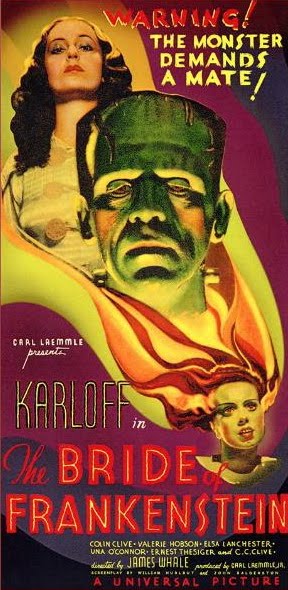
Last November when it was first announced that Turner Classic Movies (TCM), the authority in classic film, would be staging their first-ever TCM Classic Film Festival (April 22-25, 2010) in the heart of Hollywood, I was beside myself. Like thousands of others, the only reason I subscribe to cable TV is to watch films on TCM without commercial interruption. I don't think it would be a stretch to say that TCM has revolutionized how movie-lovers watch television. Over the years, I've developed a fine working relationship with TCM and am delighted to announce that I've been accredited for the festival and will be reporting from Hollywood!
 The TCM Classic Film Festival will be a landmark celebration of the history of Hollywood and its movies, presented in a way that only TCM can, with major events, celebrity appearances and screenings of classic movies. In a word: spectacular! The four-day festival will also provide movie fans a rare opportunity to experience some of cinema's greatest works as they were meant to be seen—on the big screen. All screenings—more than 50 in all—will include special introductions to provide context about each film. Among the numerous talents slated to attend and talk about their work are Mel Brooks, Luise Rainer, Ernest Borgnine, Jerry Lewis, Eva Marie Saint, Tony Curtis, Jon Voight, Jean-Paul Belmondo, Martin Landau, Anjelica Huston, Danny Huston, Buck Henry, Eli Wallach, Peter Bogdanovich, Stanley Donen, Norman Lloyd, Nancy Olson, Illeana Douglas, Susan Kohner, Juanita Moore, Darryl Hickman, Curtis Hanson, Richard Rush and special effects artist Douglas Trumbull, among many more.
 Robert Osborne, TCM's primetime host, will be the official host of the festival. "Classic movies are something that link the past to the present and form a vital part of our culture," Osborne has remarked. "This new festival will give those who love movies a way to connect with each other. It is a first-of-its-kind chance for TCM fans to experience the network in-person, meet others with the same interests and immerse themselves in a wide array of classic films." In addition, TCM weekend-daytime host Ben Mankiewicz will take part in introducing films during the festival.
Hollywood and its history will be celebrated throughout the TCM Classic Film Festival. In addition to screening classic films, from newly restored masterpieces to silent classics and undiscovered gems, the festival will tell the story of Hollywood through films, guests and special events throughout the weekend.
Vanity Fair's Tales of Hollywood
 Inspired by the book Vanity Fair's Tales of Hollywood: Rebels, Reds, and Graduates and the Wild Stories Behind the Making of 13 Iconic Films, which features fascinating behind-the-scenes stories from some of Hollywood's greatest films, the TCM Classic Film Festival is partnering with Vanity Fair to present a special collection of movies and panel discussions featuring writers from the magazine and people associated with the films. The book, published by Penguin Books, was edited by Vanity Fair editor Graydon Carter.
 The Producers (1968)—Featuring a discussion with screenwriter / director Mel Brooks. Legendary funnyman Mel Brooks discusses this hilarious comedy, which earned him a Best Original Screenplay Oscar. The story follows a pair of Broadway producers who figure out they can make more money by producing a flop. Zero Mostel and Gene Wilder star. In addition to this special screening of The Producers, TCM will partner with the Hollywood Chamber of Commerce as they honor Brooks with a star on the Hollywood Walk of Fame, which marks its 50th anniversary this year.
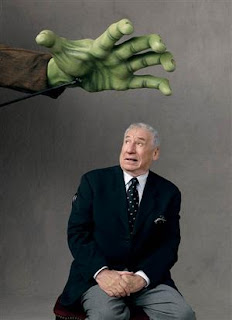 "Mel Brooks is one of the funniest men in the world today, and he has made life much happier for all of us, thanks to The Producers, Blazing Saddles, Young Frankenstein and so many of his other movie comedies," said Robert Osborne. "We're very pleased he's going to join us at the TCM Classic Film Festival and look forward to toasting him in celebration of his well-deserved star on the Hollywood Walk of Fame."
The Graduate (1967)—Featuring a discussion with writer and actor Buck Henry. Screenwriter and co-star Buck Henry will be on-hand to discuss the making of Mike Nichols' generation-defining film. The movie follows a young college graduate (Dustin Hoffman) as he tries to make his way in the world, including being seduced by an older woman (Anne Bancroft) and falling in love with her daughter (Katharine Ross). Simon & Garfunkel's song score was recently named by TCM as one of the 15 Most Influential Soundtracks of all time.
 Midnight Cowboy (1969)—Featuring a discussion with actor Jon Voight. Jon Voight discusses this ground-breaking movie that rattled Hollywood with its no-holds-barred style. He gives a strong performance as a wide-eyed Texas boy who heads to New York City to become a gigolo. Dustin Hoffman is the seedy Ratso Rizzo who becomes his friend. This striking John Schlesinger film earned Oscars for Best Picture, Best Director and Best Adapted Screenplay.
Sweet Smell of Success (1957)—Featuring a discussion with actor Tony Curtis. Tony Curtis discusses his role as a sleazy press agent who will do anything to win the favor of a powerful columnist, played by Burt Lancaster. This beautifully shot film features cinematography by James Wong Howe and an extraordinary jazz score by Elmer Bernstein.
 Cleopatra (1963)—Featuring a discussion with actor Martin Landau and Tom Mankiewicz, son of director Joseph L. Mankiewicz. Martin Landau discusses his role as Rufio, and Tom Mankiewicz talks about his father's work as director on this lavish production that, at the time, was the biggest spectacle Hollywood had ever produced. Elizabeth Taylor plays the title role, while Richard Burton plays Mark Antony, and Rex Harrison plays Julius Caesar. This film won Oscars for its cinematography, art direction-set decoration, costumes and visual effects.
 The Magnificent Ambersons (1942)—Featuring a discussion with filmmaker and Orson Welles expert Peter Bogdanovich. Peter Bogdanovich provides his insight into one of the most notorious examples of a studio taking over a director's film. Based on Booth Tarkington's novel, this remarkable drama follows the story of a family that seems stuck in time. The movie was brutally trimmed and reshot after the studio was unhappy with Welles' work, but the result is still a marvel. Sterling performances from Joseph Cotten, Dolores Costello, Anne Baxter and the incredible Agnes Moorehead are a highlight.
Film Foundation Presentations
 In addition, the TCM Classic Film Festival will honor the nation's pre-eminent organization devoted to preserving Hollywood's legacy, The Film Foundation, which will be celebrating its 20th year of preserving and restoring classic films. Several films newly restored by The Film Foundation will be showcased at the festival. Founded in 1990 by Martin Scorsese and a distinguished group of fellow filmmakers, the Film Foundation is dedicated to protecting motion pictures and the rights of the artists who create them, educating the public about the importance of film preservation, and raising the necessary funds to save the endangered cinematic treasures.
 Wild River (1960)—Film Foundation screening of a newly restored print introduced by Curtis Hanson. Curtis Hanson, a member of the Board of Directors for The Film Foundation, will present this Elia Kazan drama starring Montgomery Clift and Lee Remick. The evocative, Depression-era story follows Clift as a Tennessee Valley Authority worker trying to convince landowner Jo Van Fleet to give up her property. This film marked the film debut of Bruce Dern.
Leave Her to Heaven (1945)—Followed by a Q&A with Darryl Hickman. Darryl Hickman, who was only 14 when this movie was made, will introduce the film and engage in a Q&A session following the screening. The romantic melodrama stars Gene Tierney as a woman who seems to love men to death. Cornel Wilde, Jeanne Crain and Vincent Price co-star. Leon Shamroy's breathtaking color cinematography earned an Oscar.
 Sunnyside Up (1929)—World premiere of The Museum of Modern Art restoration, preserved with support from The Film Foundation and the Franco American Cultural Fund. This pre-Code musical stars one of the most popular screen teams of early Hollywood—Janet Gaynor and Charles Farrell—in their first sound film together. The result is a wildly entertaining, completely charming film, with some of the most spectacular musical numbers ever filmed. Hot off of becoming the first-ever Best Actress Oscar winner, Gaynor plays a young tenement girl who falls in love with the rich Farrell. The songs include the title tune, "If I Had a Talking Picture of You," "I'm a Dreamer, Aren't We All?" and "Turn on the Heat," the latter featuring a truly eye-popping production number.
 The Big Trail (1930)—Screening of the restoration by The Museum of Modern Art, preserved with support from the Bartos Preservation Fund and The Film Foundation. Celebrating its 80th anniversary this year, this Raoul Walsh western about early pioneers stars John Wayne in his first lead role. The film was shot in Grandeur, a very early widescreen process. In addition to the sweeping vistas captured by Lucien Andriot and Arthur Edeson's stunning cinematography, the film broke ground in the use of natural sound.
Hollywood on Hollywood
 Hollywood has put its own spin on the movie industry over the years, from escapist musicals to downbeat film noirs. Because there has been no greater subject for Hollywood to explore than Hollywood itself, the festival will highlight some of the best films from this category.
Singin' in the Rain (1952)—Introduced by Stanley Donen. Stanley Donen will introduce this sparkling film that has been called Hollywood's greatest musical ever. He directed the film with Gene Kelly, who plays a silent film star making the transition to sound. Unfortunately, the star's frequent leading lady, played hilariously by Jean Hagen, has a grating voice that could cause their latest film to flop. In steps Debbie Reynolds, a young chorus girl who is forced to dub her voice for Hagen's. Donald O'Connor also stars in this wonderful musical comedy that features songs from the Arthur Freed/Nacio Herb Brown catalogue.
 Sunset Blvd. (1950)—Introduced by Nancy Olson and film historian Cari Beauchamp. Billy Wilder turned his sarcastic wit on Hollywood with this comic drama about a has-been movie star who falls in love with the man she hopes is writing her comeback. Gloria Swanson gives the performance of a lifetime as the faded movie star, with William Holden as her screenwriter/love, Erich von Stroheim as the mysterious butler Max and Nancy Olson as the budding screenwriter involved with Holden.
The Bad and the Beautiful (1952)—Introduced by Cheryl Crane, daughter of Lana Turner. Kirk Douglas plays a powerful producer who needs help from some of his previous collaborators, but it seems few are willing to work with him anymore. Lana Turner and Dick Powell co-star in this Vincente Minnelli film that earned five Oscars, including a Best Supporting Actress trophy for Gloria Grahame and a Best Screenplay win for Charles Schnee.
 In a Lonely Place (1950)—Introduced by director Curtis Hanson. Curtis Hanson, who used this film to help his actors prepare for their roles in his 1997 noir thriller L.A. Confidential, frequently cites director Nicholas Ray for having a profound impact on his style. In this raw and cynical film, Humphrey Bogart stars as self-destructive screenwriter trying to clear his name of a murder rap while also engaging in an affair with a young actress, played by Gloria Grahame.
The Stunt Man (1980)—Followed by a Q&A with director Richard Rush. This unique black comedy stars Peter O'Toole as a dictatorial director and Steve Railsback as a fugitive hired to work as a stunt man. Barbara Hershey co-stars in this film directed by Richard Rush and featuring an appropriate, intentionally cheesy score by Dominic Frontiere.
The Hustons: A Hollywood Dynasty
 Actress-director-producer Anjelica Huston and actor-director Danny Huston will take part in this special tribute to the Huston clan, including their father, director John Huston; their grandfather, actor Walter Huston; and their brother, screenwriter Tony Huston. The program will include special screenings of The Treasure of the Sierra Madre (1948) and Crimes and Misdemeanors (1989), as well as a third film to be announced later.
 The Treasure of the Sierra Madre (1948)—Introduced by Anjelica Huston and Danny Huston. Director and screenwriter John Huston took home two Academy Awards for this intense drama starring Humphrey Bogart, Oscar-winner Walter Huston and Tim Holt. The film, based on a tale by B. Traven, follows an unlikely trio of prospectors driven by unbridled greed.
Crimes and Misdemeanors (1989)—Including post-screening Q&A with Anjelica Huston and Martin Landau. Woody Allen's serio-comic look at the guilty conscience stars Martin Landau as a successful eye doctor who becomes heavily involved with a flight attendant, played by Anjelica Huston. The extraordinary cast includes Allen, Alan Alda, Mia Farrow, Claire Bloom, Sam Waterston, Jerry Orbach and Joanna Gleason.
Additional Special Screenings
Throughout the TCM Classic Film Festival, special individual screenings will take place, including several beautifully restored films, rare gems and celebrity introductions. Opening Night: A Star is Born (1954)—World premiere of new restoration. The premiere of George Cukor's A Star is Born will serve as the opening night event for the TCM Classic Film Festival. This is the first major restoration of A Star is Born since 1983. TCM will screen a version that was digitally restored by scanning original negatives. The result is much better picture quality of all elements of the 1983 restoration, with deeper and richer color than ever before. A Star is Born, which earned Oscar nominations for Judy Garland and James Mason, is part of the festival's overall theme as a celebration of Hollywood history.
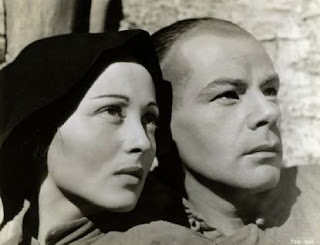 The Good Earth (1937)—Introduced by Luise Rainer. Austrian-born actress Luise Rainer, who recently turned 100, will appear to introduce this outstanding drama. She earned the second of two Oscars for her extraordinary performance as a Chinese woman whose life and family are nearly destroyed by greed. Paul Muni is equally powerful as her loving husband in this adaptation of Pearl S. Buck's classic novel. Karl Freund's outstanding cinematography also earned an Oscar.
 Jubal (1956)—North American premiere of restored print, followed by a Q&A with Ernest Borgnine. Ernest Borgnine will introduce this intriguing western by Delmer Daves. The film puts the story of Shakespeare's Othello in the saddle. Borgnine stars as a rancher who seeks marriage advice from a cowhand (Glenn Ford), only to be led into a jealous rage through the schemes of a villain (Rod Steiger). Extraordinary scenery and an intense, intelligent script highlight this underrated drama. The new 35mm digitally corrected negative for this film reproduces the original Cinemascope aspect ratio for the first time since the movie's initial release. The original stereo soundtrack has also been restored.
The King of Comedy (1983)—Followed by a Q&A with Jerry Lewis. Martin Scorsese's acerbic comedy stars Jerry Lewis as television's top host and Robert De Niro as the man determined to get on his show. Diahnne Abbot, Sandra Bernhard, Shelley Hack, Tony Randall and Ed Herlihy co-star.
 North by Northwest (1959)—Introduced by Eva Marie Saint and Martin Landau. Oscar and Emmy winner Eva Marie Saint (On the Waterfront) will be on hand for this presentation of one of Alfred Hitchcock's biggest and most enduring hits. Cary Grant plays an everyman mistaken as a double agent and chased across the country by people on both sides of the law. Saint plays the woman unwittingly roped into helping him. Martin Landau, who will also introduce the film, puts a unique spin on his henchman character. The film's memorable scenes include a cropduster sequence and a harrowing chase across the faces of Mount Rushmore. The action is highlighted by composer Bernard Herrmann's pulsating ostinatos.
 The Good, the Bad and the Ugly (1966)—Introduced by Eli Wallach. Longtime character actor Eli Wallach, who at the age of 94 can currently be seen in Roman Polanski's The Ghost Writer (2010), comes to the TCM Classic Film Festival to introduce this exciting spaghetti western. Sergio Leone's third film in his Dollars trilogy (following 1964's Fistful of Dollars and 1966's For a Few Dollars More) features Clint Eastwood, Van Cleef and Wallach as three gunmen hunting for a Confederate government treasure chest. Contributing to the film's tremendous success is composer Ennio Morricone's theme, one of the most recognizable in movie history.
 Saboteur (1942)—Followed by a Q&A with Norman Lloyd. Alfred Hitchcock's wartime thriller stars Robert Cummings as a fugitive munitions worker falsely accused of sabotage. Priscilla Lane co-stars as the woman who helps him clear his name, and Norman Lloyd provides the perfect touch as the villainous Fry. The climax atop the Statue of Liberty is one of Hitchcock's most memorable sequences.
Imitation of Life (1959)—Featuring a discussion with Oscar-nominated stars, Juanita Moore and Susan Kohner. Douglas Sirk's racially charged 1959 melodrama stars Lana Turner in the Fannie Hurst story as an actress, with Juanita Moore as the woman who works for her over the years. Sandra Dee, Dan O'Herlihy and Robert Alda co-star, along with Kohner as Moore's troubled daughter who passes for white.
 A Woman's Face (1941)—Introduced by Casey LaLonde, Joan Crawford's grandson, and Illeana Douglas, Melvyn Douglas' granddaughter. Joan Crawford and Melvyn Douglas star in this gripping drama, which rarely receives a theatrical screening. Crawford plays a scarred woman whose life is changed when she undergoes plastic surgery. Douglas stars as the doctor who helps her. Conrad Veidt is the schemer who uses her for his own selfish aims. George Cukor directed this exciting remake of a 1938 Swedish film that starred Ingrid Bergman.
Harold Lloyd in An Eastern Westerner (1920) and Safety Last (1923)—Featuring music composed and conducted by Robert Israel; introduced by Leonard Maltin and Suzanne Lloyd, Harold Lloyd's granddaughter. TCM presents two silent Harold Lloyd classics, beginning with the Hal Roach-directed An Eastern Westerner, a two-reel short in which Lloyd plays a boy from the East Coast who is sent to the Wild West by his father. Then comes one of Lloyd's funniest feature films, Safety Last, in which Lloyd plays a department store clerk whose idea for a contest backfires. Safety Last features Lloyd perilously dangling from a clock at the top of a tall building.
2001: A Space Odyssey (1968)—Featuring a discussion with visual effects artist Douglas Trumbull. TCM will present the 70mm road show version of Stanley Kubrick's landmark film about a series of mysterious monoliths leading humanity to a new era. Oscar-winning visual effects artist Douglas Trumbull will be on-hand to discuss what it took to help bring Kubrick's vision to the screen.
 Carmen Jones (1954)—Newly restored version introduced by author Donald Bogle. Otto Preminger directed this film version of Oscar Hammerstein II's adaptation of Bizet's opera Carmen. Dorothy Dandridge stars in the title role. Harry Belafonte and Pearl Bailey co-star. Hammerstein wrote English lyrics and set them to the popular tunes from Bizet's opera. Donald Bogle, author of Dorothy Dandridge: A Biography, will introduce the film.
 Metropolis (1927)—North American premiere of new restoration, including lost footage. TCM's screening of Fritz Lang's 1927 science-fiction silent masterpiece Metropolis will mark the first presentation of the new restoration of the film in North America. Due to the sensational 2008 discovery of a 16mm negative in Buenos Aires and its current restoration, Metropolis can now be shown with 30 minutes of additional footage that has been unseen since the 1927 Berlin premiere. This 147-minute version now stands as the authoritative version of the film, according to the Murnau Foundation, which holds the copyrights on all of Lang's silent films. The newly reconstructed Metropolis features extensive scenes that flesh out many of the supporting characters, fill in previously jarring gaps in the plot and provide additional back story. The music score for Metropolis will be provided live by the Alloy Orchestra, a three-man musical ensemble that will be celebrating its 20th year of writing and performing live accompaniment to classic silent films.
 Breathless (1960)—50th anniversary screening and North American premiere of newly restored print introduced by Jean-Paul Belmondo. French star Jean-Paul Belmondo will introduce the North American premiere of a newly restored print of this seminal French New Wave drama by Jean-Luc Godard. Belmondo plays a hood on the lam with a young American woman (Jean Seberg). Adapted by Godard from a story by François Truffaut, this groundbreaking character study offers candid looks at Parisian life and a romantic anti-hero. Often imitated, but never duplicated, this film had a tremendous impact by opening the door to a looser form of storytelling. In 2010, the Los Angeles Film Critics Association gave Belmondo a career achievement award.
The Story of Temple Drake (1933)—Premiere of the work-in-progress restoration by The Museum of Modern Art, preserved with support from TCM. One of the most daring pre-Code films ever produced, this audacious film has been credited with being the primary catalyst for the creation of the Roman Catholic Church's Legion of Decency. Miriam Hopkins and Jack La Rue star in the story of a rebellious Southern girl who falls into a life of debauchery. Adapted from William Faulkner's controversial novel Sanctuary, which is full of so many unsavory elements, the Hays Office openly discouraged attempts to adapt it.
.jpg) Dirigible (1931)—Newly restored print introduced by Tom Capra and Frank Capra III. Tom Capra, director Frank Capra's son, and Frank Capra III, the director's grandson and Tom's nephew, will introduce this early Capra drama. Jack Holt, Ralph Graves and Fay Wray star in the story of experimental dirigibles being used in the Antarctic. Elmer Dyer provided the outstanding aerial photography, which includes a fighter plane docking mid-air with a dirigible.
Dirigible (1931)—Newly restored print introduced by Tom Capra and Frank Capra III. Tom Capra, director Frank Capra's son, and Frank Capra III, the director's grandson and Tom's nephew, will introduce this early Capra drama. Jack Holt, Ralph Graves and Fay Wray star in the story of experimental dirigibles being used in the Antarctic. Elmer Dyer provided the outstanding aerial photography, which includes a fighter plane docking mid-air with a dirigible.
No Orchids for Miss Blandish (1948)—Rare screening of cult classic introduced by the Film Forum's Bruce Goldstein. This unique gangster film from England has garnered a cult following over the years. It stars Jack La Rue as a gangster who kills a man and kidnaps his rich girlfriend, played by Linden Travers. Scandalous at the time for its frank depiction of sex and violence, the film features an entirely British cast as New Yorkers. The Film Forum's Bruce Goldstein will introduce this screening with a short presentation on the initial reaction to the film by the British press.
 The Day of the Triffids (1963)—World-premiere midnight screening of restored print. Howard Keel and Janette Scott star in this adaptation of a novel by John Wyndham (Village of the Damned). It tells the story of a blinding meteor shower followed by an attack by mutant plants. Shortly after this film was released, the original negative was damaged in an accident. In order to return it to its past glory, restoration expert Michael Hyatt (My Fair Lady, Spartacus, Vertigo, Sweet Smell of Success) worked directly on the negative rather than a digital copy. He pain-stakingly removed more than 20,000 specks of dirt, using his own techniques. He also adjusted the color timing on the film. As a result, this Cinemascope film has emerged more beautiful and vibrant than ever.
 Bride of Frankenstein (1935)—Featuring new audio restoration. James Whale skillfully blended horror with comedy in this brilliant film, which has been newly restored. Boris Karloff returns as the creature, who is now in need of a wife. Ernest Thesiger is the wily Dr. Pretorius, who convinces Henry Frankenstein (Colin Clive) to take on the task of making one. Elsa Lanchester stars as the bride, as well as Frankenstein author Mary Shelley in a short prelude. Franz Waxman provides the marvelous score, which was later re-used in subsequent films.
Play Time (1967)—70mm print. Jacques Tati's delightful comedy follows his legendary Monsieur Hulot character through modern-day Paris as he tries to keep an appointment. The film's beautifully utilized widescreen is packed with sight gags, while the soundtrack is bursting with inventive audio jokes. Humorist Art Buchwald provides the English dialogue.
 Casablanca (1942)—Archival print from the Warner Bros. vault. Regarded by many as one of the screen's greatest romances of all time, this wartime drama stars Humphrey Bogart as a nightclub owner who gets involved in smuggling refugees out of Vichy-controlled Casablanca. Ingrid Bergman is the woman he once lost and who is now seeking to escape the Nazis with her husband, played by Paul Henreid. Claude Rains, Sydney Greenstreet and Peter Lorre provide outstanding support in this Best Picture Oscar winner.
The Adventures of Robin Hood (1938)—Preceded by the Bugs Bunny classic Rabbit Hood (1949). A few weeks before Ridley Scott's Robin Hood comes to theaters with Russell Crowe in the title role, TCM will present the colorful 1938 version of the oft-told tale. Errol Flynn stars as the legendary rogue Robin Hood and Olivia de Havilland as his love, Maid Marian. Claude Rains and Basil Rathbone co-star. Erich Wolfgang Korngold's triumphant score set the style for many swashbucklers to follow.
 Top Hat (1935)—One of the great Fred Astaire-Ginger Rogers pairings of the 1930s, this bright musical about mistaken identity features such Irving Berlin songs as "Cheek to Cheek," "Isn't This a Lovely Day to be Caught in the Rain" and "Top Hat, White Tie and Tails." It also includes a lavish production number called "The Piccolino." The outstanding supporting cast includes Edward Everett Horton, Helen Broderick and Eric Blore, as well as Lucille Ball in a bit part.
Some Like It Hot (1959)—Introduced by Tony Curtis. Billy Wilder's hilarious comedy follows two down-and-out musicians as they try to escape the mob by heading to Florida with an all-girl orchestra. Jack Lemmon and Tony Curtis play the musicians, while Marilyn Monroe, in one of her best performances, is a fellow bandmate determined to land a millionaire. Joe E. Brown and George Raft co-star.
 Pillow Talk (1959)—Rock Hudson and Doris Day enjoyed their first and most memorable outing with this sparkling romantic comedy about two people who share the same phone line. Tony Randall and Thelma Ritter co-star in this film that earned top numbers at the box office and an Oscar for its story and screenplay.
Saturday Night Fever (1977)—Disco went to the movies with this enormously popular movie about a young Brooklynite who finds his calling on the dance floor. John Travolta became an instant sensation with his Oscar-nominated performance, while the soundtrack catapulted such hits as "Night Fever," "How Deep is Your Love?" and "Stayin' Alive" to the top of the charts.
Sneak Peek: TCM's Moguls and Movie Stars—TCM is also proud to offer a sneak peek into the network's most ambitious original programming effort to date, Moguls and Movie Stars, a multi-part documentary about the history of the Hollywood film industry. The project, co-produced by Bill Haber's Ostar Productions, is slated to premiere on the network in fall 2010.
Special Programs
Several short programs will be presented throughout the TCM Classic Film Festival, including compilations of animated and live-action shorts and more. They will be introduced by experts in their fields.
Festival Shorts—Presented by film critic and historian Leonard Maltin. Leonard Maltin, who is an expert on Hollywood's long tradition of short films, curates and presents this collection of funny and entertaining shorts. Some of the titles included are Star Night at the Cocoanut Grove (1934), How to Sleep (1935) and Movie Pests (1944).
Removed from Circulation: A Cartoon Collection—Presented by author Donald Bogle. Donald Bogle, author of Bright Boulevards, Bold Dreams: A History of Black Hollywood, will present cartoons that have been kept from the public eye because of negative racial or cultural stereotypes. The collection includes several classic Warner Bros. cartoons. Bogle will provide insight into the racial attitudes of the times in which the cartoons were created. Titles include Clean Pastures (1937), Coal Black and De Sebben Dwarves (1943), Goldilocks and the Jivin' Bears (1944), Hittin' the Trail for Hallelujah Land (1931), The Isle of Pingo Pongo (1938), Sunday Go to Meetin' Time (1936), Tin Pan Alley Cats (1943) and Uncle Tom's Bungalow (1937).
Fragments—This compilation features surviving pieces from lost films from two of the world's top film archives, the Academy Film Archive and the UCLA Film & Television Archive. Titles to be announced.
Logistics
The TCM Classic Film Festival will be held Thursday, April 22, through Sunday, April 25, 2010, in Hollywood. Festival passes will go on sale Wednesday, Nov. 18, at www.tcm.com/festival. Prices will range from $500 to $1,200 for four-day passes.
 The festival will involve several venues in a central area of Hollywood, including screenings at Grauman's Chinese Theatre and the Egyptian Theatre. The Hollywood Roosevelt Hotel, which has a longstanding role in movie history and was the site of the first Oscar ceremony, will be the official hotel for the festival as well as its central hub Club TCM. Only passholders will be allowed entry into Club TCM, which will include a festival lounge, panel discussions, social events, a boutique and poolside screenings.
Among the panels and events slated for the Hollywood Roosevelt Hotel are a book signing and display of original art by Tony Curtis; a special screening of Joan Crawford's home movies, hosted by her grandson, Casey LaLonde; a presentation by special effects artist Douglas Trumbull; and numerous scheduled conversations with festival guests. The Hollywood Roosevelt will also feature several panel discussions, including Casting Secrets: The Knack of Finding the Right Actor; A Remake to Remember: Hollywood's Love Affair with Updating Movie Classics; The Greatest Movies Ever Sold: Classic Movie Marketing Campaigns; Location Location Location; Film Continuity: When Details Count; and TCM: Meet the People Behind the Network.
The central gathering point for the TCM Classic Film Festival community will be Club TCM. This area, which is open exclusively to festival passholders, will be abuzz with activity during the entire festival, providing fans with unique, once-in-a-lifetime experiences. Club TCM will be headquartered in the Blossom Room of the Hollywood Roosevelt Hotel. This lavish room is steeped in Hollywood history as the site of the original Academy Awards banquet.
The Road to Hollywood Tour
The "Road to Hollywood Tour" entered TCM Classic Film Festival's landscape only earlier this month and I found it an intriguing addition. When I first mentioned the festival to my Los Angeles colleague Doug Cummings, he replied, "You know, Michael, I just noticed how expensive this festival is. ($500 pass is the cheapest.) It makes a dramatic contrast to the free AFI FEST that occurred in the exact same location a few months ago. It's clearly not set-up for the average moviegoer in recession times!" I thought that was a valid critique. A mutual friend of ours who writes for Variety—and who, out of respect, I won't name—was infuriated by the festival's admittedly high passholder fees. He fumed, "$500 is utterly insane. The hell with that festival—which isn't really a festival anyway."
I don't agree that there is a monolithic definition to a film festival. My interest in film festival studies has proven there are as many kinds of film festivals as there are imagined communities to support them. Though it's a very good question to determine who exactly will support this pricey festival, which on first appearances seems very much for industry audiences and not TCM's faithful (and dispersed) TV demographic. I look forward to being proven wrong.
When I spoke about this over dinner with Jonathan Marlow and Kevin Lee, Jonathan mentioned that the prices were equivalent to those at Telluride and that—aware that TCM has had a presence in past editions at the Telluride Film Festival—wondered if they weren't structuring their festival on Telluride's model? Thus, it hardly came as a surprise to determine that TCM, the producer of the festival, brought Bill and Stella Pence onboard to serve as consultants. The Pences are a couple well-known in industry circles as co-founders of the Telluride Film Festival. "As dedicated fans of TCM, we think a destination film festival for network devotees is a logical and welcome step," Bill Pence said.
Stella Pence said the TCM Classic Film Festival will be a unique proposition. "There are a great many film festivals around the world, but only TCM is so perfectly poised to do something truly original when it comes to classic movies," she said.
Without question, it will be fascinating to see how effective their strategy plays out. In the interim—and perhaps to compensate for the elitist critique levied at the TCM Classic Film Festival—TCM announced earlier this month that they were going to implement the "Road to Hollywood Tour." In the weeks before the festival and to build up to the launch of the TCM Classic Film Festival, TCM is taking its love of great movies to five cities nationwide with the Road to Hollywood tour, a slate of special free screenings. Boston and New York have already experienced their presentations, with Chicago (March 30); Washington, D.C. (April 8); and San Francisco (April 21) yet to occur. Although the screenings are free to the public, tickets are required for entry. Tickets will be available beginning March 1 at http://www.tcm.com/roadtohollywood.
"We couldn't be more thrilled that we'll be able to bring the excitement of our first TCM Classic Film Festival to folks in these five great cities," said Osborne. "This is a great opportunity for us to connect directly with the TCM community across America. We look forward to meeting our fellow movie lovers and sharing our passion for great films."
Below is a complete schedule of TCM's Road to Hollywood screenings.
 The Brattle Theatre in Boston—Thursday, March 18, at 8:00PM—The Verdict (1982): Ben Mankiewicz and Boston Herald film critic Jim Verniere will introduce this emotionally powerful legal drama directed by Sidney Lumet and written by David Mamet. Paul Newman earned an Oscar nomination for his performance as an alcoholic lawyer who is having difficulty keeping clients. He lands a dream case, however, when he is hired to sue a hospital for negligence.
 The Ziegfeld Theatre in New York—Tuesday, March 23, at 7:30PM—All About Eve (1950): The legendary Elaine Stritch (Company) will join Robert Osborne in the Big Apple to present one of the greatest films ever made about life in the theater. Anne Baxter stars as a young actress determined to weasel her way into the world of top Broadway actress Margo Channing, played with gusto by Bette Davis. Celeste Holme, Thelma Ritter, Gary Merrill, Hugh Marlowe, Marilyn Monroe and an Oscar-winning George Sanders add relish to this outstanding comedy-drama by Joseph L. Mankiewicz.
 The Music Box Theater in Chicago—Tuesday, March 30, at 7:30PM—North by Northwest (1959): Robert Osborne will by joined by Oscar and Emmy winner Eva Marie Saint (On the Waterfront) in Chicago for this presentation of one of Alfred Hitchcock's biggest and most enduring hits. Cary Grant plays an everyman mistaken as a double agent and chased across the country by people on both sides of the law. Saint plays the woman unwittingly roped into helping him. James Mason, Leo G. Carroll and Martin Landau co-star.
 The Avalon Theatre in Washington, D.C.—Thursday, April 8, at 8:00PM—The More the Merrier (1943): Ben Mankiewicz and producer George Stevens Jr., founding director of the American Film Institute, will introduce this highly entertaining film directed by Stevens' father. Jean Arthur and Joel McCrea star as a pair forced to share a D.C. apartment during a wartime housing shortage. Charles Coburn won an Oscar for his deliciously comic performance.
 And here at The Castro in San Francisco—Wednesday, April 21, at 7:30PM—The Lady from Shanghai (1948): Filmmaker Peter Bogdanovich (The Last Picture Show), who is an expert on the films of Orson Welles and was a close friend of the director, will be joined by popular San Francisco film critic and show business reporter Jan Wahl of KRON as they introduce this memorable thriller. The story involves a fake murder plot that turns out to be all too real. Welles stars along with Rita Hayworth, Everett Sloane and Glenn Anders. The film's extraordinary imagery includes an exciting hall-of-mirrors sequence that remains a cinematic masterpiece.
Campaign to Save Cahuenga Peak
Finally, TCM is joining efforts to save the land surrounding one of the nation's most iconic landmarks—the famous Hollywood sign. TCM will help raise awareness for the Campaign to Save Cahuenga Peak through a multi-faceted plan that will leverage the excitement for the first-ever TCM Classic Film Festival.
 "The Hollywood sign is an iconic symbol known the world over, but the land surrounding it is in grave danger of being developed in a way that could destroy its appearance," said TCM host Robert Osborne. "As we're about to celebrate the history of Hollywood with our first-ever TCM Classic Film Festival, we are eager and proud to help preserve an important aspect of that history through this important initiative."
The Campaign to Save Cahuenga Peak is an ongoing initiative to buy and preserve land surrounding the Hollywood sign. The Trust for Public Land (TPL), one of the partnering groups on the campaign, needs to raise $12.5 million by April 14 to buy the 138 acres on Cahuenga Peak, located behind and to the left of the "H" in the iconic sign. Land purchased through the Campaign to Save Cahuenga Peak will be protected and added to Griffith Park.
Will Rogers, president of TPL, said, "We are very happy that Turner Classic Movies is joining this campaign. This partnership is a very good fit; nothing says Hollywood like the Hollywood sign, and for people who care about the movies, TCM is the first place they turn. We look forward to working with TCM and its fans to protect the view of the sign. And we will continue our efforts to protect open spaces in Los Angeles, which has long been the movie capital of the world."
TCM's plans to help raise awareness for the Campaign to Save Cahuenga Peak include the following:
On-air: A report on the campaign will be featured on TCM's Classic Movie News, a regular feature on TCM and tcm.com that runs down the latest news about classic cinema.
Online: TCM weekend daytime host Ben Mankiewicz will be featured in a special video message about the campaign, including information about how to donate. The video message will run on tcm.com and savehollywoodland.org, as well as on TCM's Facebook page and YouTube channel. In addition, the tcm.com homepage will feature a banner about the campaign, including a link to. TCM will also include information in its weekly email newsletter to fans. And TCM will invite its Facebook friends to post pictures of themselves posing in front of the Hollywood sign.
Donation of 10 TCM Classic Film Festival Passes: TCM will donate 10 Classic-level passes to TPL for the purpose of auctioning them off to raise money for the campaign.
The land surrounding the Hollywood sign was originally bought by industrialist Howard Hughes in 1940 to build a home for movie star Ginger Rogers, his intended bride. When that relationship ended, Hughes kept the land, and in 2002, his estate sold it to the investors who now own it. Two years ago, they put it on the market for $22 million, but it hasn't sold. It is currently zoned for four luxury home sites.
The Cahuenga Peak partnership includes TPL, Los Angeles City Council member Tom LaBonge, the Hollywood Sign Trust, the Santa Monica Mountains Conservancy, Mountains Recreation and Conservation Authority, the Los Angeles Department of Recreation and Parks, the Los Angeles Parks Foundation, and the Hollywood Chamber of Commerce.
Cross-published on Twitch.
 I first met Charles ("Charlie") Tabesh, the Senior Vice President of Programming for Turner Classic Movies (TCM), when Tabesh and Robert Osborne attended the 2007 summer edition of the San Francisco Silent Film Festival (SFSFF). Not only was Osborne on hand to introduce Camille (1921), but—on behalf of TCM—he accepted SFSFF's commendation to TCM for their continuing contributions to the silent film genre.
 Michael Guillén: Charlie, thanks for taking a few minutes this morning to talk to me about the international premiere of Abel Gance's Napoléon. You are no stranger to interacting with the San Francisco Silent Film Festival. I first met you and Robert Osborne back in July of 2007 when you were brought out to San Francisco to be honored by SFSFF for Turner Classic Movies (TCM) silent film programming on Sunday nights.


.jpg)