 I got so excited about the two Joan Blondell films screening at Elliot Lavine's "Hollywood Before the Code: Nasty-Ass Films For a Nasty-Ass World!" (March 2-8, 2012), that I neglected to note that Lavine's opening night doublebill includes not only Three on a Match, starring Blondell and Ann Dvorak, but, another 1932 Dvorak vehicle: Howard Hawks' Scarface (featuring Paul Muni), which will be shown in a B&W 35mm Studio Archive Print.
Of Scarface, Lavine writes: "This blistering pre-code gangster saga towers over the rest—an unnerving portrait of a brutally evil and immoral man (patterned very loosely after Al Capone) obsessed with the power that crime and other perversions have carved out for him. Blissfully violent and sexually profane, Scarface sears itself onto your unsuspecting brain like few other films can."
Of Ann Dvorak, film historian Matthew Kennedy has already bemoaned her status as "shamefully neglected." Opening night at "Hollywood Before the Code: Nasty-Ass Films For a Nasty-Ass World!" redresses that neglect. Here's a couple of lovely publicity shots of Dvorak from Scarface. You would think from her experience in Three on a Match that Dvorak would have learned that cigarette smoking can be hazardous to your health; but, I guess during pre-Code the Surgeon General was merely a gleam in his father's eye?


 As Juliet Clark wrote in her introductory program note for the Pacific Film Archive (PFA) retrospective "Joan Blondell: The Fizz on the Soda" (which ran June 13-29, 2008): "With a lush figure, bright, platter-sized eyes that missed nothing, and a mouth equally ready to dish a wisecrack, pull a sneer, or plant a kiss, actress Joan Blondell (1906–1979) was a staple of Hollywood's studio heyday. The fact that she rarely got first billing testifies more to the wealth of star power in her era than to any shortage of talent or hard work on her part: she made close to a hundred films over half a century, and brought freshness and spirit to every role."
Blondell is featured as a pre-Code staple in two "nasty-ass" films from Warner Brothers programmed into Elliot Lavine's "Hollywood Before the Code: Nasty-Ass Films For a Nasty-Ass World!", upcoming at the Roxie Theater (March 2-8, 2012); both films in B&W HQ Digital.
 Lavine synopsizes the first, Three on a Match (1932), screening on opening night, Friday, March 2: "Three young women, friends since childhood, reunite after years of separation. But the random hand of fate has determined that at least one of them will descend into the depths of drugs, depravity and death before the breathless pace of this tragically exciting sixty-three minute pre-code melodrama has exhausted itself." That "random hand of fate"—later avoided by Sydney Greenstreet in Three Strangers (1946)—is the WWI superstition that if three people lit their cigarettes off the same match, the third was doomed to die.
Juliet Clark synopsizes in her PFA capsule: "Compressing thirteen years into sixty-three minutes of screaming headlines and sordid melodrama, Three on a Match draws a triangle of types—bad girl, good girl, rich girl—only to tweak the social-determinist schematic with bitter irony. A chance meeting in a beauty parlor reunites a trio of childhood classmates: Blondell the reform-school graduate, pegged in girlhood as 'just not serious enough'; Bette Davis, the serious one; and Ann Dvorak, the snobbish striver who, ambitions fulfilled, finds adult life 'tiresome and pointless.' As the scenario rapidly descends into an underworld of drugs and crime, it becomes clear that there are worse things to be than a bad girl. The film showcases Blondell's knack for combining charming vulgarity with basic decency, and Dvorak's alarming talent for depravity; only Davis's character is underdeveloped (although her full physical development is on frequent display). Watch for an early appearance by Humphrey Bogart."
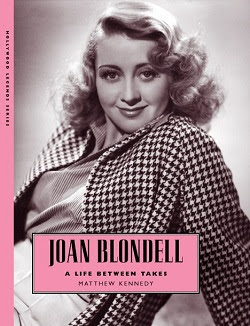 In his biography Joan Blondell: A Life Between Takes (University Press of Mississippi, Jackson, 2007), film historian Matthew Kennedy adds: "In early 1932 [Joan Blondell] made the trenchant Three on a Match, all about the divergent fortunes of school friends who meet ten years later. Vivian (Ann Dvorak) has married a wealthy lawyer. Ruth (Bette Davis) is a secretary, and Mary (Blondell) has taken to the stage after a stint in reform school. With its attention on violence, drugs, and kidnapping, Three on a Match was judged by the New York Times to be 'tedious and distasteful,' but it has become a minor pre-Code classic. It is a wonder of economic film making, as a fully realized story covering thirteen years is contained in sixty-three minutes. The plot hinges on Dvorak's character, who squanders loveless, conventional respectability and winds up ensnared in the underworld. The idiom-filled dialogue had forward momentum and gutter-inspired realism. With its uncompromising conclusion, Three on a Match became a primal scream against the injustices visited upon women." (Supra, p. 48)
 When I spoke to Matthew Kennedy during the PFA "Fizz on the Soda" retrospective, he said of Three on a Match: "If you want gritty pre-Code, they don't come any grittier than Three on a Match. It's part of volume two of TCM's Forbidden Hollywood series and it involves three women who were friends in grade school and then it catches up with them several years later and the different paths their lives have taken. One in particular—played by the shamefully neglected Ann Dvorak—burns a hole through the screen. The three women are Dvorak, Blondell and Bette Davis and, interestingly, of the three the one who makes the least impression is Bette Davis. Her role is quite underwritten. What's also interesting about Three on a Match is that it's only 63 minutes long and it covers something like 15 years. It is the most tight, economical, without-feeling-rushed movie you will ever see. It's a text book lesson in filmmaking efficiency and storytelling; it's absolutely amazing that way."
 According to a positive review of the film in the November 17, 1932 issue of The Spokane Spokesman, Three on a Match depicted the passage of time through "a brand new approach and treatment... The parade of time is cleverly portrayed through news headlines down the years, popular song sheets, reproduced on screen, and excerpts from the news weeklies from 1919 and 1932." Within these montages, Three on a Match made clever use of its titular superstition by including a graphic of a "Believe it or Not" newspaper clip explaining Swedish match tycoon Ivar Kreuger's attempt to get people to use more matches by exploiting the WWI superstition.
 The second Blondell film in the "Nasty-Ass" lineup, screening on Tuesday, March 6, is Blondie Johnson (1933). Lavine writes: "Against a graphically depicted Depression-era backdrop, the story of a wise-cracking gal who rises to the top in the male-dominated crime rackets is played out with enough gusto and sexually charged ammo to load a dozen tommy guns. A rapid-fire exercise in economy and excitement, this is first-class pre-code entertainment of the highest order!"
In my conversation with film historian Matthew Kennedy referenced earlier, I asked him to profile a Blondell film not included in the PFA series that he would want audiences to catch and his prompt suggestion was Blondie Johnson. "It's one of the few times," Kennedy told me, "where Warner Brothers said to Blondell, 'You are in no uncertain terms the name above the title and you're not co-starring with a man, not supporting somebody, it's a movie about you.' She's in every scene. It's a fantastic, low-budget gangster movie where Blondell plays the gangster. She's not the gangster's moll; she's the gangster."
 Kennedy wrote about the film in his Blondell biography: "Joan finally had her chance at a solo turn with Blondie Johnson. This was her movie outright; she worked every day of its four week schedule. Conceived as a female Little Caesar, Blondie undergoes an extreme transformation at the hands of an indifferent society. As a Depression victim, she appears before a magistrate begging for assistance so that she may care for her sick mother. She gets no sympathy, then goes home to find her mother dead. She hardens quickly. 'This city's going to pay me a living, a good living, and it's going to get back from me just as little as I have to give,' she says with bitter certainty.
" Blondie Johnson gently twisted movie storytelling and sexual stereotypes. This time Joan was not a gangster's female sidekick, she was the gangster. She became that way by the malfunctions of government, not because of a predisposition to be bad as was often the case in roles played by Cagney and Robinson. There is humor and authenticity in Blondie Johnson, and Joan enjoyed a personal success. She showed a new command on screen, occupying the space with full, confident strides and persuasively shifting from charity case to tough Mafiosa to vulnerable woman in love. It was a tidy hit at the box-office, grossing $325,000, more than twice its negative costs." (Supra, pp. 50-51)
 With miscegenation their common theme, The Cheat (1931) has been coupled with Frank Capra's The Bitter Tea of General Yen (1933) at Elliot Lavine's "Hollywood Before the Code: Nasty-Ass Films For a Nasty-Ass World!", reeling at the Roxie Theater on Sunday, March 4 in a B&W 35mm Studio Archive Print. "An exotically adventurous film from a most unexpected director!" Lavine exclaims, "A beautiful American missionary is, through fate, thrown into a romantic interlude with a charismatic Chinese warlord. Breaking many Hollywood taboos—mainly the issue of miscegenation and, in this case sprinkled liberally with simmering displays of passion—Bitter Tea is a primal slice of pre-code erotica, a film that will amaze you from start to finish!"
 In his autobiography The Name Above the Title (1971, The Macmillan Company), Frank Capra admitted it was because he had to get an Oscar® that he decided to film The Bitter Tea of General Yen. Secretly, he had thought his previous film American Madness (1932) would score him the statuette and—when he expressed his disappointment to Harry Cohn—Cohn told him, "Forget it. You ain't got a Chinaman's chance. They only vote for that arty junk." "Okay," Capra decided, "If the Academy voted only for arty films (not true), I would make the artiest film they ever saw—about miscegenation! That ought to stir up some arty votes." (Supra, p. 140)
 For Capra it was easy to consider Barbara Stanwyck for the role of the young American missionary Megan Davis, who he envisioned as "externally frigid but internally burning with her 'call.' " It was General Yen who proved a casting problem. "I knew what I did not want," Capra wrote, "a well-known star made up as an Oriental. I looked for a tall, overpowering, real Chinese. But there were no tall Chinese in casting directories, or even in laundries; most Chinese-Americans were short Cantonese. After many interviews we settled on a not-too-well-known Swedish actor, Nils Asther. He was tall, blue-eyed, handsome; spoke with a slightly pedantic 'book' accent; his impressive face promised the serenity and mystery of a centuries-old culture.
"But how could we make a Swede look Oriental? His blue eyes would photograph steel-gray in black-and-white film. That was an unusual plus. But what about the slant of his eyes? The prevailing method of 'changing' Caucasian eyes into Oriental ones was to stretch and tape the outer ends of the eyes towards the ears, fooling practically nobody. Besides which the actors looked more hideous than Oriental. There must be a better, more natural way. There was.
 "Closely studying Chinese features, I noticed two major differences between Oriental and Caucasian eyes: One, the upper Oriental eyelid is smooth and almost round, lacking the crease, or fold, of the Caucasian eyelid; and, two, Oriental eyelashes are much shorter than Western eyelashes. We followed up the two clues: The make-up man covered Nils Asther's upper eyelids with smooth, round, false 'skins,' and clipped his eyelashes to one-third their natural length. Without adding any other make-up we made photographic tests of Asther's face. On the screen he looked strange—unfathomable. The stiff, upper eyelids kept his eyes in a permanent half-closed position. Of a certain he was not a Caucasian—and his face looked natural, uncontorted! Bedecked in Mandarin costumes, and a fez-like, black, tall skullcap for added height, Asther could pass for an awe-inspiring warlord. I added one final touch: an eccentric walk—long slow strides with both his long arms moving back and forth together—in parallel—with each stride. By keeping the camera low to accentuate height, Nils Asther became General Yen—ruthless, cultured, mysterious, and devastatingly attractive."
 But not without incident. "In clipping Nils Asther's eyelashes, we forgot that long eyelashes protected Caucasian eyes against harsh light. The first day we exposed him to the glare of studio sun arcs he came down with the worst case of eyeburn (klieg eyes) studio doctors had ever seen. He was ordered to remain locked up in a dark dressing room between shots, and to wear dark, red glasses during rehearsals. Only during actual photography did we expose his unprotected eyes to the sun or studio lamps. Despite those precautions, Asther suffered constant acute pain throughout the whole picture. Fearing for his eyesight, doctors attended him night and day, administering poultices, eyedrops, and pain killers. Yet the gallant Swede gave a performance that one has to call an elegant tour de force." (Supra, pp. 141-142)
 "The result of these labors, not surprisingly," wrote David Sterritt for his Turner Classic Movie essay, "is a Hollywood stereotype." Less dismissive and, perhaps, my favorite write-up on The Bitter Tea of General Yen is Kevin Lee's for Senses of Cinema: "Back then, audiences could not accept a film that showed a Chinese man and a white woman achieving unprecedented levels of intimacy. Today, audiences may regard the white characters' stereotypical denunciations of Chinese culture, or the interracial love story with the Chinese romantic lead played by a Swedish actor in yellowface makeup, with either camp irreverence or a queasy sense of shame for Hollywood's racist legacy. It is a film orphaned between historical and cultural norms." Veined with poignant subjectivity, Lee qualified: "I think the film's failure to find a home within a prevailing social convention was what made me fall in love with it. ... This is what I find to be of such value in The Bitter Tea of General Yen; that it risks offence for the sake of constructing a dialogue, one fraught with so many perils in the realms of politics, religion, cultures and sex, that it would not be worth it if it weren't necessary. Despite the social prejudices that informed its production, it dared to carve out a space where two people might live not as Chinese and American, heathen and Christian, man and woman, but just 'you and me'—while reckoning soberly with the impossibility of achieving such a space. Whatever faults it may have, its daring puts contemporary films of similar subject matter to shame."
 Though The Bitter Tea of General Yen once again failed to secure Capra his desired Oscar®—"Damn those Academy voters! Couldn't they recognize a work of art when they saw one?"—it did bear the honor of being the first film to open the Radio City Music Hall in January 1933, even though scandalized audiences convinced the Hall to shorten the film's scheduled two-week run to eight days. The theme of miscegenation had been "made palatable and attractive as a natural outcome of passions molded by tumultuous times" (Wikipedia) and that proved unacceptable to the prejudices of the time, which contributed to the film's dubious distinction of being one of only two Capra films to lose money at the box office. As Barbara Stanwyck phrased it, "The women's clubs came out very strongly against it, because the white woman was in love with the yellow man and kissed his hand. So what! I was so shocked [by the reaction]. It never occurred to me, and I don't think it occurred to Mr. Capra when we were doing it" (quoted in Joseph McBride, The Catastrophe of Success, Simon and Schuster, New York, 1992, p. 281).
 "My father warned me about men and booze, but he never mentioned a word about women and cocaine."—Tallulah Bankhead.
My upcoming visit to San Francisco promises to reward me with cinematic treasures. First in line is Elliot Lavine's "Hollywood Before the Code: Nasty-Ass Films For a Nasty-Ass World!", reeling at the Roxie Theater from Friday, March 2 through Thursday, March 8. As detailed in the Roxie film notes: "It's been nearly fifteen years since the last great Hollywood Pre-Code Festival at the Roxie Theater but ... the Roxie is proud to announce its exciting return to blatantly profane pre-code motion picture entertainment.... Hollywood films produced before early 1934 were often marked by an unwholesome indifference to delicate sensibilities. Filled with erotically charged images, dangerous, graphic violence, and bizarrely aberrant behavior, these are films that over seventy-five years later continue to batter us with an arsenal of artistic bravura!"
 As a huge Tallulah Bankhead fan, I am delighted to have the chance to watch my foghorn-voiced diva in this Pre-Code vehicle The Cheat (1931), directed by Broadway mogul George Abbott and co-starring Harvey Stephens and Irving Pichel in a B&W 35mm Studio Archive Print. Having seen the 1915 Cecil B. DeMille version with Sessue Hayakawa and Fannie Ward, I'm intrigued to see where Bankhead and Abbott will take this provocative tale of white slavery and miscegenation.
 In her eponymous autobiography (1952:191), Tallulah Bankhead candidly admitted that all three of her 1931 ventures with Paramount Astoria—Tarnished Lady, My Sin and The Cheat—were banal. Despite their talent, these films "fizzled". "Why?" she mused, "For the same reason that though the eggs, the cracker crumbs and the salt used for the soufflé may be topnotch the resultant dish may be rancid." Paramount was teetering on bankruptcy and their "corporate jitters were reflected in their products," she surmised. "Patched, scissored, and victimized by all sorts of hocus-pocus", these "operas" (as she termed them) ended up messes.
 The December 12, 1931 review in The New York Times granted reprieve from Bankhead's own disappointment, however, praising the film as "a most satisfactory production", no masterpiece but captivating, and noted that it was gratifying to observe the "handsome and talented" Bankhead—"who has been somewhat unfortunate with her previous screen vehicles"—at last appearing in one that "really merits attention."
At DVD Verdict, Daryl Loomis offers that "this remake of the even more bizarre 1915 Cecil B. Demille original has shocking moments even today. Tallulah Bankhead was a phenomenal actress and her lead performance, guilty and innocent at once, is dripping with sexuality. ...[T]hose interested in early 20th Century America's fixation on Oriental culture will [find] a lot to sink their teeth into."
 Glenn Erickson adds at DVD Talk: "The script equates 'Asian' with 'perverse'. Pichel has spent a good deal of time in the Orient, and his mansion is decked out in Japanese style. For a party, he dresses Bankhead in an elegant Chinese outfit, like a trophy. The script gives him some barbaric Eastern ideas about sex—like a secret cabinet with dolls fashioned after his female conquests. When Bankhead refuses to play ball at the last minute, he brands her with a hot iron, to claim her as his possession! Like a demented version of The Letter, further complications involve a shooting and a rather hilariously exaggerated trial, where, of course, the 'truth burned into the flesh' must be publicly revealed. With Bankhead overdoing most of her scenes, it gets pretty sticky. The Production Code specifically rules out branding as acceptable subject manner; almost certainly with this film in mind."
 At The Sheila Variations, Sheila O'Malley asserts that "Blue Velvet has nothing on the perversity shown in 1933′s The Cheat." To illustrate same, she cites the film's opening sequence where a tuxedoed Hardy Livingstone ("played with stiff creepiness by Irving Pichel") makes a welcoming speech to the wealthy party-goers attending a fundraiser. "His first line of the speech is something like, 'I suppose anything I say right now will seem rather banal…' And there is a snicker around the table, and one guy calls out, 'Careful, there are ladies present!' and someone else says, 'Nice word!' What I am trying to say is that the movie opens with a joke about anal sex—in the midst of a chi-chi fundraiser. Laughter runs around the room, and Livingstone, the creep, continues, 'As I said, it might be banal…' Another burst of knowing laughter. It takes a dirty mind to hear the word 'banal' and immediately think of assholes—but that is what the movie does. Everyone in the scene is in on the joke. It's not a 'code'. It's out in the open."
 O'Malley provides a thorough narrative scene-by-scene synopsis of The Cheat, describing Bankhead's character as "a woman who knows how to handle men. She's got the banter down, she has an air of plausible deniability, and yet she also projects a smoldering kind of wild sexuality." Of Bankhead herself, O'Malley writes: "There's something about Tallulah that could never seem young. I am sure she was a child at some point, but she probably had a middle-aged soul from the beginning."
 While the San Francisco Film Society places its finger on the pulse of contemporary French cinema with its ongoing French Cinema Now (affectionately previewed here at The Evening Class by Michael Hawley), the musical yesteryear of France is explored through the personage of Serge Gainsbourg in two projects likewise screening in the Bay Area. First up is the theatrical rollout of Joann Sfar's feature debut Gainsbourg: Vie héroïque (Gainsbourg: A Heroic Life, 2010), currently at the Landmark Cinemas. Earlier this year, I spoke with Sfar who noted how beloved Gainsbourg is among the French and—judging from the superlative reviews of Gainsbourg: A Heroic Life—it appears his cinematic introduction to the American public has whetted appetites.
 What better way to satisfy that new craving than with Gainsbourg, L'Homme Qui Aimait Les Femmes (Gainsbourg: The Man Who Loved Women, 2010), Pascal Forneri's documentary treatment of the controversial career of the beloved chanteur who elevated the chanson to new lyrical levels? Currently playing at the Roxie, Pamela Alexander-Beutler outlines in their program notes: "The title The Man Who Loved Women references director François Truffaut's 1977 film in which Bertrand tells his own life story. In Gainsbourg: The Man Who Loved Women (Gainsbourg, l'homme qui aimait les femmes) director Pascal Forneri uses the same technique to great effect as Serge Gainsbourg tells his life story through TV clips, interviews, photos, music videos and archival footage. Life as art is made complete with additional interviews by and archival footage of Gainsbourg's muses in this wonderful docudrama. As the title implies, the film chronicles Gainsbourg's love relationships as a lens into his 30+ year career as the French singer-songwriter, actor and director and superstar. His complete disregard for taboos and the delight he took in scandalous behavior made him famous, but his musical genius made him a legend. His relationships served as both inspiration and muse. Because his relationships were such an important part of who he was, Gainsbourg: The Man Who Loved Women exposes not only Gainsbourg's creative genius, but also his charm and passion, his insecurities and vulnerability."
 Narrated by actor / writer Pierre Lescure with supplemental scoring by Aphex Twin, Forneri's television documentary excels at providing archival footage of Gainsbourg in action with voiceover recollections by the likes of Caroline von Paulus (aka Bambou), Brigitte Bardot, Jane Birkin, Catherine Deneuve, Charlotte Gainsbourg, Juliette Gréco, Françoise Hardy, Vanessa Paradis, Bernard Pivot and Michel Sardou. In many ways the archival footage speaks for itself and is wholly worth the price of admission. Whereas Joann Sfar's film is a cinematic fantasy of one man's reaction to Gainsbourg, Forneri's treatment is the real thing. Between the two lies a heady measure of enjoyment reserved for San Franciscan Francophiles. Neither are to be missed.
 Jim Mickle's Stake Land (2010), co-written by its leading star Nick Damici, has been a consensual favorite for the Twitch team even before its world premiere at the 2010 Toronto International Film Festival (TIFF), where Midnight Madness programmer Colin Geddes described it as "a road movie with fangs" and praised producer Larry Fessenden's "choice to take bigger chances and make bolder choices in spite of budget limitations." TIFF's audience wholeheartedly agreed and Stake Land won the Midnight Madness Award.
Twitch teammate Todd Brown proclaimed Stake Land: "The American horror film of the year. Plain and simple"; a pullquote picked up by the film's marketing team. Sean Smithson, Kurt Halfyard, and Swarez likewise placed Stake Land on their year-end top lists. "Mickle is just happy and unashamed to be making a genre picture with no pretensions to Deep Meaning," Grady Hendrix suggested; Stake Land "alternates between scrappy and stately" commented Kurt Halfyard; and Andrew Mack praised the film's "beautiful musical score that helps evoke that feeling of frontier spirit of the film."
 With a a couple of Late Show screenings at SFIFF54 and a "decongestive" three-day stint at the Roxie (April 29-May 1, 2011) as part of Mike Keegan's "Spring Slaughter on 16th Street"—"a respite from the fluff clogging your cinematic sinuses this time of year" (a wry snipe if ever I've read one)—Stake Land bombs the hell out of San Francisco with its devastatingly feral undead.
Although Todd Brown already interviewed Mickle for his "New American Horror" series, and followed through with a handful of supplemental inquiries at TIFF, I couldn't resist my own round with Mickle to promote Stake Land's Bay Area premiere. My thanks to Todd for getting Mickle and I in touch.
[This conversation is not for the spoiler-wary!!]
* * *
 Michael Guillén: Jim, your opportunity to interact with audiences and engage their feedback has been primarily through the festival circuit at this point?
Jim Mickle: Yeah. So far, only the festival circuit. I went over to see it at Cinefest this last weekend and that was the first time I'd seen it with an audience in a while.
Guillén: How are audiences taking the film?
Mickle: Great! Since our first screening at Toronto, it's all been great. Mulberry Street (2007) had a weird response. We premiered at South by Southwest and there was a weird response there. I don't think people really knew what to think of it. It floundered a little bit and then it played at the European fantasy festivals where it started to get its legs. People started to appreciate it and realized it wasn't what they thought it was going to be but they liked it for what it was. By the time it hit Tribeca a couple of months later, it had achieved momentum and had a much stronger reception. It really seemed to connect with people.
But Stake Land right off the bat in the middle of September when we hit Toronto really connected with people and seemed to trip the response I like to hear and that I hear kind of often—"I don't really like horror movies but I like this movie"—which I feel is good. People who do like horror movies are increment when they bring their friends or dates or family and those people wind up enjoying it too.
Guillén: You won the audience award at TIFF's Midnight Madness, which isn't a bad start to a festival run.
Mickle: Yeah, that was good validation from them at the start.
Guillén: Did that audience validation come as a surprise? Or did you already have a sense that your reversion of the vampire mythos was strong and sure?
 Mickle: It's tough to be able to look at it that objectively, especially that early on, and I remember moments of being on set and thinking, "Wow, this is low budget. This is very DIY. This is like going in the backyard and making a movie." On the one hand, that's great; but on the other hand, that often doesn't translate into a big audience. I remember considering these things at some point and having to black that all out just to keep moving forward, making the movie and trusting the script, characters and actors.
So that was the first thing I remembered when we did win. I didn't expect to win because there were a lot of great movies in Midnight Madness. A lot of movies that played earlier than we did seemed to have a giant reception so I was pretty shocked and excited when we won because I had spent a lot of years in Toronto in high school. It felt like a family field trip to remember all the crazy midnight movies I used to see there and it had always been a goal to have a movie of mine play there at some point.
Guillén: You went to school in New York, is that correct?
Mickle: Yes, I went to film school in New York. I grew up outside Philadelphia.
 Guillén: And you've been friends with Nick Damici, the film's screenwriter and lead actor, for going on 10 years now?
Mickle: Yeah, 10 years this week actually. I just found a journal I used to keep in college when I was working on films and jotted down contact info. I looked through it and found "4/19: Met Nick Damici, actor." So, yeah, it's pretty cool to think that Stake Land will be coming out to the day almost 10 years after.
Guillén: I know it's difficult to pinpoint such things and narrow them down, but, what was it in Nick Damici when you met him that gave you a sense that you could collaborate with him in the future?
Mickle: That's a good question. I met him during a student film and he really stuck out. Usually you don't see actors in a student film where you think, "Wow, this guy's great." But he really stood out in that little student film and—especially in film school—you do a lot of work on family melodramas and coming-of-age stories where everybody's finding their voice but they're all 19-22 years old. That was at a time when I was starting to lean towards enjoying genre again. I had gone through a snobby patch of only liking foreign films and forgetting that I had grown up loving horror movies. I sort of fell back in love with them and realized that genre films were the most fun thing to be working on. So I met Nick at that time and he was one of the only people that I talked to on these sets that sort of felt the same way. But also, I have an odd sensibility and have been influenced by a mishmash of a lot of genres and it was sort of the same for him. Then in a weird way we kind of completed each other because he was 20 years older than I am and he grew up with a whole different set of influences whereas I grew up with the films that came a whole generation after so—through our friendship—we were able to pool from a wide range of movies that pertained to what we were into. At the same time, they completely overlapped. We're both turned on by the same material, the same ideas, so I think it was all about that.
 Also, we had the same kind of desperation. I was getting out of school and I was in a panic because when you graduate from school you have no idea where you're going to go or what the next step is going to be. It's terrifying. At the same time, Nick was doing In the Cut (2003), the Jane Campion film, he had a role in that, and there was all this uncertainty about whether the film was going to do well and what that might mean for his career. Both of us hit a patch for a couple of years where we were both frustrated and feeling like we weren't getting anywhere. He really wanted to act and write and I really wanted to direct and so it seemed like a perfect pairing.
Guillén: Is it fair to say that it was precisely your mutual love for genre that motivated your decision to collaborate?
 Mickle: Yeah, I think so, definitely. When we were working together on that student film it was a crazy shoot where we were staying in cabins out in the middle of the woods for about two weeks and at one point the guy who owned the cabins invited us into his cabin at about 2:00 in the morning after a long shoot to sing karaoke with his family. It was an incredibly weird and surreal experience with all of us film students invading this guy's home and his daughters sitting there in their night gowns with the lights off and karaoke on the TV screen. At one point there was a Barbie doll on the floor and Nick looked at me and said, "I feel like I'm in a David Lynch movie." When he said little things like that was when I realized that he was into the same stuff I was into, I saw the same absurdity too, and right after that experience someone told me, "Hey, that guy Nick just wrote a horror film." That was right at the time I was back into horror films but I couldn't find a lot of other people who were so Nick and I bonded over genre and also bonded over wanting to do something more with the genre, to stretch it. Neither of us were interested in typical horror standards. We were thinking about how we could mix horror with the western genre and come up with a weird mixture.
Guillén: Well, it's true when you mash up genres you get some weird mixtures, but also some exact articulations of contemporary feeling. I've long thought that the juiciness of genre lies in the emotions they trigger. Specific genres trigger specific feelings and I imagine that's why audiences relate to them. When you go mixing up genres, however, you generate some complicated feelings. That's what drew me into Stake Land. Yes, it was a monster movie and I run to every monster movie I can see, but I came away with an appreciation of its complicated emotionality. Colin Geddes has used that term "elevated genre" to describe films like yours and I have to agree it's absolutely appropriate to Stake Land where you've elevated the horror narrative by plumbing its emotional depths.
Mickle: Good! Thank you. I like the horror genre because it gives a filmmaker an avenue to heighten emotions and the complexities of relationships. You can transpose other genres into that and all of a sudden you discover deeper ways of telling the story. Also, a lot of the things we deal with in Stake Land, if it weren't a horror film I think the audience might come away feeling unsatisfied because we never really come to a conclusion. We point out a lot of things about the world around us but we don't try to make Stake Land a strict message movie. We leave a lot of those threads open for discussion. If the film had been an artsy drama with a social critique and didn't have these other fun elements to it, it might have ended up being unsatisfying overall.
 Guillén: I consider Stake Land a narrative of blood and salt, in the sense that it's a recapitulative narrative and—as we all know—looking back can be hazardous; you can turn into a pillar of bitter salt. But the positive aim of recapitulation is precisely to consciously place things behind you in order to move on. You accomplished this in Stake Land through Martin's voiceover reflecting on evocations of the Depression era and the frontier West and his own journey into manhood. Connor Paolo, incidentally, inhabits Martin's character arc with tremendous tenderness and dexterity. Can you speak about your choice to use narrative voiceover?
Mickle: I always really liked voiceover and so I'd write it into my scripts in film school and my professors would say, "Oh this is really bad. Never use voiceover." At some point I got trained out of it. At another point, Nick and I were discussing something else—we were adapting a book that was in first person narrative—and both made the decision: "No narration." But I always thought there was something there, a context that was a way of looking into the story that we were missing without it.
When he started sending me the first couple of pages of Stake Land and once the narrative voiceover popped in I was totally like, "Ah, yes! Finally." I really like narrative voiceover and I like how you can use it as a rhythm and use it as almost another thread of the music. It's not just about story but it's also about the tones a lot of times. I was so excited when he first gave those pages to me. It also started to give Stake Land a feel of Terrence Malick, a Badlands feel, a Days of Heaven feel, and those were both movies that I appreciated but never actually thought that I would get to take a stab in the realm, especially by making a horror film. I think the narrative voiceover opened the film up to not having to be just a genre story.
The film is sort of like a backwards time machine that starts in a post-industrial world that is falling apart, then works back through the Civil Rights era almost, back through the Depression, and at one point we're bordering on the Civil War and pioneering, back to hunting and gathering.
 Guillén: That's an interesting take. Stake Land is also being likened unto a road movie and within that domain of reference I appreciated that there were journeys within other journeys or journeys that were relayed into further journeys. The journeys overlap and become layered, in other words. So when you talk about the narrative being irresolute—and though that might be considered a criticism by some—that's exactly what I liked. The open-ended quality of the journey has a poetic feel.
Mickle: Absolutely. And I've read critiques of Stake Land that point that out and call it a flaw, like it wasn't a choice, like it was something we forgot. It was kind of the same thing with Mulberry Street, which was raw and we didn't quite have the tone yet. By seeing Mulberry Street several times with audiences, I got a sense of how much we can get away with and how much we can't, and the ways we could have pushed things even further, and so it was fun to come back and take a second stab with Stake Land. I could rely more on my instincts and I could rely on how I knew it would play in the theater with people who are either into it or not into it.
Guillén: I can't believe anyone wouldn't be into Stake Land but different strokes for different folks, I guess.
Mickle: It happens. There are people out there. But I'd rather have people who either love it or hate it. I'm glad it's not a middle-of-the-road movie.
 Guillén: Agreed. There's nothing worse than lukewarm genre. I know you've talked to several different people about the design of your vampires. There's been a lot of witty repartee about how different your vampires are from Twilight's glittering vampires. I think one reviewer wrote that your vampires would eat up one of the Twilight vampires and spit out the glitter. How I'd like to angle in on them, however—having just watched the film again the other day—is the peculiar way in which your vampires are a metaphor for America's current economic crisis. These are creatures who maybe at one time were decent law-abiding citizens that have been drained of life—i.e., transformed—by economic forces. You could say these people have had the life sucked out of them by predatorial banks and lending institutions. Do you think that's a valid read?
Mickle: Yes, absolutely. That's part of the film's open-endedness also. We don't try to fit things too tightly into a box or to be too set in our ways. We tried not to play our narrative in any specific time in history. We were vague and unspecific about names and politics—who was the President?—and yeah, the final draft that got greenlit was in September or October 2008 before the election and it was right when people were feeling the vibe between Blue and Red states and the us vs. them politics. Also, there was all that uncertainty about which direction the country would be heading? And what these overall attitudes were going to do to the country? But the time that we were in a lot of ways more interested in was this idea of terrorists and terrorism being used as a way to control people through fear. A lot of that plays into the Brotherhood and their relationship to the vampires. That's what's sort of nice about the zombie and vampire genres—some people say our creatures are zombies/vampires—they are in a sense humans, they are characters, and not just guys in zombie suits.
 Guillén: Well, that's another thing I was going to say about your creatures. They're relevant as a potential metaphor not only of how the financial crisis has drained Americans of their livelihood and created, in effect, a class of the undead; but, politically, your vampires—for as feral and ferocious as they are—achieve a certain pathos for essentially being victimized by Christian extremists. They are, in a disturbing way, misguided terrorists being used to rule others by fear. This is all the more relevant in the face of such recent headlines as Terry Jones, the Florida pastor who incited such horrific violence by burning the Koran. Christian extremism is a seriously violent issue in our country today.
Mickle: And I don't think it will cease to go that way. At one point we may have thought, "Oh we've peaked out and Stake Land might have relevance now but it won't keep being relevant."
Guillén: Christian extremism isn't going away. It's only getting worse.
Mickle: During Mulberry Street there was the moment right before we came out where there was the scandal about finding rats all over the Taco Bells in New York. It was like, "Oh my God. What are the odds that would happen right when we were making a movie about rats in New York City?" So we had that little bit of a bump or wave but I remember thinking, "That was our bump or peak and we just missed it." But then we realized, no, these things continue even though we've tried to stay away from being specific about dates and places.
 When Obama got elected, there was a week or two where we were saying, "Shit, what is this going to do to the country? What is this going to do to our story? What if he fixes everything? What if he solves the economy? And all the issues in our film are no longer issues? We'll be making a movie that brings people down because it will remind them of the old days."
Guillén: [Laughing.] That's funny. The face of new American horror will be when everything's in order and we live in a state of anxiety that everything will be taken away from us. Right.
Returning to your narrative where order has capsized and the Brotherhood seeks to re-create order through extremist means, I have to say that the sequence where they come in with helicopters and bomb the refuge of settlers with vampires is one of the most brilliant moments of horror ever. What a concept! Every time I watch that scene my heart comes up my throat like I'm going to vomit. It's terrifying.
Mickle: Oh good! [Chuckles.]
 Guillén: Lately I've been interacting with several young people engaged with the disposable film movement that seeks to put affordable and available tools into the hands of aspiring media makers. Naturally, there's some discussion about the necessity of going to film school. Can you talk about whether you think it's still important to go through film school and why?
Mickle: Good question. I remember that being the big question in my mind when I decided to go to film school: does it make sense to do this? Or should I just spend my money and time and go off and make my own films? What's great about film school is it provides a structure that allows you to go out and experiment. If people are interested in making film and art, sometimes it's hard for them to focus and get down to it. The one thing you always hear from people is, "I'm going to make a movie. I'm going to make a movie." Three years later you still hear them saying, "I'm going to make a movie." So what was good for me about film school and what was the best class by far was where I made five films in a semester. You're directing a film one week, you're editing it the next, you're working on your friend's movie the next week, then the next week after that you're making another short film and so it keeps you in a mode of constantly being forced to come up with an idea that fits existing criteria and try to find your own way to make it different.
 That being said, any form of community-based interest in film is good if it has that sort of film school mentality. For example, the 24-hour film, 48-hour film competitions, are great because they force people to go out and do it because that is the biggest obstacle: going out and doing it. Anything that supports that, I think is good. Especially now with the RED camera, and so many of the DSLRs, there's so many amazing cameras with Final Pro Cut being available, that you can very easily make a film on your own that can hold up to much higher standards than ever before. So the big obstacle now is getting out there and doing it.
Guillén: So if I'm hearing you right, what you're saying is that the value of film school is that it teaches you discipline about production?
Mickle: Yeah, discipline. And networking also. When I look back now and think about the people who I was friends with when I was in film school, there weren't tons of them but I was in that bubble surrounded by others who were dealing with the same sorts of issues, and learning from them, sometimes from seeing what they did wrong. That kind of experience is invaluable and you can't get it from books. There are groups like Blue Tongue films....
Guillén: Ah yes, I deeply admire their collaborative ethos!
 Mickle: Well, I look at them and I think, "That's what I would be doing now if I weren't going to film school." I would surround myself in a bubble with people who are making films and who are able to support each other. Larry Fessenden does something like that with Glass Eye Pix. He's got all different scales of movies happening over there in all different stages of production. He's in this awesome world where he gets to bounce around and make his own films but also be able to comment on people's scripts and look at cuts.
Another thing about film school that's good is the competition. You go into a class and you have to watch 30 films that day. I didn't get a sense that NYU was cutthroat but you did want the things you were working on to stand out. Your films are held up to this harsh reality where people critique them. You might not like what they say but that's also something important to learn, rather than loading something up onto YouTube and ignoring the reception. There is value in learning how to handle criticism.
Guillén: Do you know if it's essential to have had film school training in order to break into the industry of studio filmmaking? Does one lead to the other?
 Mickle: I think it's absolutely just the opposite. It's weird, you know. I'm in New York and I'm in the independent world here but I just spent two weeks in L.A. working on a film and doing a lot of meetings and started to get a little bit of a sense of that studio system; by no means any real sense of it but for the first time I stuck my toe in those waters. I was blown away by how much it seemed—and I know this sounds cliché—to be a corporate culture. I don't know if there really was or is a presence of film school background, maybe there is but they take things for granted and don't talk about it? But then, the other night I was back in New York and went to a party for IFC Films and wound up in a conversation with a bunch of guys from L.A. and I was blown away by the topics in our conversation. One of the guys I talked to had worked on a T.V. show in L.A. doing lighting but we wound up having a conversation about Terrence Malick. So I guess there's two very different worlds going on there.
One of the best things I did as a young filmmaker was working on a lot of different types of movies, pre-production, production, and post-production, and having that as a background. It helped me navigate but I've started to realize that all that stuff was not essential at all.
 Guillén: When you were talking to Todd Brown you said, "I could retire if I got to do a western." That intrigued me, partially because there is such a strong western feel to Stake Land, but also because the western seems to be making something of a comeback not in and of itself but through its galvinization with other genres, particularly horror and sci-fi. Case in point would be this summer's upcoming blockbuster Cowboys & Aliens. Yet I would love and encourage you to do a pure western.
Mickle: Yeah, me too! It's fun to see some of these western mash-ups, but it would be great if all that meant there would be a resurgence of the pure genre. I'm in a minority but I wasn't really impressed with the remake of True Grit. It just felt like it was the best we had for a western and that's okay but I would like to think that the fact that it did well would make it much easier to do it better. Unfortunately, there's a mentality—especially with remakes being so prevalent—where studios don't want to spend a lot of money and westerns with desert sands and period costumes mean money; therefore, no.
Guillén: Well, if anyone could do it, I think it's you. The value of a western lies in its characters and—as someone recently said—there's no small parts in a western. All the characters are important. You've shown us in Stake Land, a horror film, that it's the characters that vitalize the genre.
 Shifting into the noir genre, I understand you're adapting Joe Lansdale's Cold in July, which you've describe as a western noir hybrid. Is that still in the works?
Mickle: Yes, it is. It's been an up and down back and forth sort of in the works but just in the last week or two it's gotten a big boost behind it. Half the task is finding the cast and financing but now it looks like the financing is there and a good chunk of the cast is there so I'm hoping by the end of the month that all those nuts and bolts will be put on and it will be ready to go. We're looking to do an August or September shoot.
Guillén: Can you provide a synopsis of that project and why you're being drawn to it?
Mickle: Yeah, sure. It's a story with a lot of twists and turns so it's been a tough pitch, which I sort of like. I don't like the this-meets-that sort of pitch. Cold in July is about a guy, a father, who wakes up one night to find a burglar in his living room. He shoots the guy and kills him and winds up facing off against the father of the dead burglar and they end up having an odd relationship, which is I guess the best way to put it. I like it because in a lot of ways it's two or three different stories in one. By the time you get to the end of it, you can't believe you started where you did. I really like those kinds of stories. I find that so many times when I come to see movies or I read scripts that I know exactly how they're going to end and who's going to be there and where the location is and so this is one of those narratives where some place in the middle you give in to the story and explore it to see where it goes. But it is a morality tale. It's a character-based thriller. What made it tough to get done for a while was that it wasn't a straightforward thriller and I think people wanted something that was going to be easily defined: a thriller that could be put in the thriller section. It finally will go forward without having to lose any of its character stuff.
 Someone has pointed out the family stuff in Mulberry Street and Stake Land and Cold In July is going to fit into that, again without really trying, but it's a strong ode to fathers, good dads and bad dads. Nick and I both have great dads and so I think in a lot of ways this is a love letter to them. But also, I'm a huge fan of Joe Lansdale and he's best known for Bubba Ho-Tep and some of the crazier over-the-top stories, but he also has these quiet, simmering, contained stories with twists and turns that are not over the top or big genre mash-ups. He writes both of those equally well but he's not really known for his quiet stories. As a fan of his work, I'm proud to be able to bring that quiet side of his universe onto the screen.
Guillén: Sounds great. Good luck with that. Since you've brought up the suggested father-son dynamic between Mister and Martin, I can reference its sad and lovely poignance in Stake Land's final scenes where you've brought up the necessity of the father having to let go in order for the boy to become a man. Any sense of what happened to Mister?
Mickle: No. Actually no. I had ideas and Larry had ideas and Nick had ideas but the one idea that really came to the forefront was that we shouldn't really know and, to a certain extent, don't really even need to know or want to know. Anytime we pushed in that direction it felt wrong. It's the simplicity that makes it more interesting.
Cross-published on Twitch.
 I got so excited about the two Joan Blondell films screening at Elliot Lavine's "Hollywood Before the Code: Nasty-Ass Films For a Nasty-Ass World!" (March 2-8, 2012), that I neglected to note that Lavine's opening night doublebill includes not only Three on a Match, starring Blondell and Ann Dvorak, but, another 1932 Dvorak vehicle: Howard Hawks' Scarface (featuring Paul Muni), which will be shown in a B&W 35mm Studio Archive Print.


