Monday, January 22, 2007

2007 BERLIN & BEYOND—The Evening Class Interview With Rainer Hoffmann, Cinematographer for The Short Life Of José Antonio Gutierrez


It's rewarding when someone champions a film, enthuses you to watch it, and you walk away from the experience wanting to champion the film as well. I dedicate this entry to Rob Davis whose Errata entry on The Short Life Of José Antonio Gutierrez when it played the Mill Valley Film Festival inspired me to catch the film when it was shown—albeit by dvd projection—at the Galería de la Raza. As good fortune would have it, however, Heidi Specogna's The Short Life Of José Antonio Gutierrez was projected in 35mm on the Castro Theater's large screen as part of the 2007 Berlin & Beyond program. The documentary was represented by the film's cinematographer, Rainer Hoffmann.

Inbetween screenings of Valerie and Combat Sixteen, Rainer Hoffmann and I snuck up to the Castro Theater's mezzanine to have a brief chat about his work on this illuminating documentary, winner of the Grand Jury Prize at the 2006 Sundance Film Festival.

I asked Hoffmann how he became involved as cinematographer on the project? He replied that he and Heidi Specogna were in Latin America researching two different stories when they received information that the first soldier killed in the war in Iraq was a Guatemalan. Guatemala claimed him as their hero. That's when the duo decided to research what was behind this story of a green-card soldier killed overseas fighting for the United States, so far away from his native country.

As they first developed the project, the U.S. Military were obliging about allowing Specogna and Hoffmann onto Camp Pendleton to research the Gutierrez story, but, as the film progressed they refused all further accommodation. It took them a year of negotiating with the Pentagon to gain permission to film at the base. When they arrived at the camp on the first day the press officer said they could film the raising of the flag and that was all. Hoffmann objected that they had not spent the past year negotiating access only to shoot the raising of the flag. He stressed they wanted to shoot soldiers in training and to interview some of the soldiers about Gutierrez. It was obvious the press officer had no clear conception of what Hoffmann was after but, after agreeing to help out as he could, this gave Hoffmann the opportunity to shoot what he wanted. What proved most important was that Specogna and Hoffmann had been in phone contact with Antonio's platoon major who expressed his desire to participate in their documentary. At Camp Pendleton they asked if there was anyone from Antonio's platoon who they could interview and the press officer said no, everyone was gone. Hoffmann then said he had a phone number for Antonio's platoon major and could they phone to see if he was available? Camp Pendleton's Security were so taken by surprise that they followed through on Hoffmann's request and, sure enough, the major was on base and available. They secured a room to conduct the interview and, surrounded by security, they accomplished same.

One of the most tragic aspects of Antonio's death was that he was reputedly killed by friendly fire. I asked if they had any trouble investigating that fact or if the military had any comment? Hoffmann said that was the only issue where security stopped the interview. Specogna was not allowed to pursue that line of questioning but was offered the Pentagon's official report. After that day of shooting at Camp Pendleton, Specogna and Hoffmann were refused any further contact with Antonio's platoon members and all further contact with the base was discontinued. Hoffmann couldn't confirm that this was due to base officials realizing where they were headed with the documentary, but he assumes so.

One of the documentary's main strengths is—as Rob Davis wrote—"the way it artfully blends the particular and the general. Gutierrez is one of many people who've followed a similar but less celebrated arc, so telling his story sheds light on countless others that remain untold, and yet at no time does Specogna coerce the details of his life into symbolism. And notice what she does with the parts of his journey that weren't captured on video: she shows us other people who are in similar straits, people planning to slip across the southern border of the United States as the last best hope for helping their families. So: the general story fills out the particular story as much as the particular fills out the general." Hoffmann achieved this by recording the efforts of immigrants traveling North by train and confirmed that he captured this material by participating himself in the journey from the Guatemalan highlands, actually riding the trains and such, the selfsame way Antonio had taken his journey.

Their objectives with the documentary were twofold. First, to give a face to this unknown soldier to pronounce his particular personality and humanity and, second—because Antonio's is the story of many, of thousands, who journey North to better their lives—the documentary became not only his story, but the stories of so many others like him. Thus, once this unknown soldier was given a face, his face became that of Everyman, indeed Everywoman, dreaming of el otro lado. The scenes of the safe houses where those crippled by train accidents have gathered for practical and emotional support underscore the all too human cost of this dream.

Finally, I commended the use of Eva Mattes as the narrative voice of the documentary. Mattes, it might be recalled, is the German actress who in the '70s worked twice with Michael Verhoeven, several times with Rainer Werner Fassbinder—including The Bitter Tears of Petra von Kant—and a few times with Werner Herzog. Though she has consistently worked since then and is regarded as one of Germany's best actresses, I had not seen much of her since decades past and was glad to be reacquainted with her through the documentary voiceover. The filmmakers felt a woman's voice would be good for the voiceover because her soft, calm and quiet voice served an effective counterpoint to the heavy themes of the story.

I asked if the film had been shown in Latin America and Hoffmann replied not as of yet though next month it begins a two-month tour from Mexico to Guatemala, possibly even Honduras.

An online memorial page has been set up for José Antonio Gutierrez. Heidi Specogna has been interviewed by IndieWIRE and, along with the fine Errata write-up, Greencine's David D'Arcy likewise extolled the virtues of the film from last year's Sundance Film Festival. A big part of why Antonio joined the Marines, D'Arcy writes, was to get a green card. He pointedly reminds: "We learn that thousands of immigrants are doing the same, putting their lives on the line, and sometimes giving their lives, so that they can remain legally in the US. All this is framed in an atmosphere in which illegal immigrants are almost as unpopular as Osama bin Laden."

"There is another part of this film that is a glimpse into the sociology of the armed forces," D'Arcy continues, "which are often the last chance for those who can't find a job and can't afford an education, and certainly can't get a passport. The military at its lowest level is filled with immigrants, mercenaries fighting America's wars in the hope of becoming American. By the term mercenary, I don't mean ruthless and cold killing for a buck. I'm just suggesting that these cash-poor young men and women are paying a price for citizenship. It can be three years of their lives at war. It can also be their lives."

Cross-published at Twitch.

01/26/07 UPDATE: I love the Twitch team! Diggthis just advised: "A little bit of news on this film ... Canada's Atopia Pictures have just secured all North American rights to The Short Life Of José Antonio Gutierrez and plan a limited theatrical run in April to be followed by a DVD release."

02/03/07 UPDATE: Todd at Twitch points to the doc's new trailer.

Sunday, January 21, 2007

2007 PSIFF—Back From The Desert


Michael Hawley offers up his first dispatch from the Palm Springs International.

* * *

Getting there was not, as the saying goes, half the cheer. Our flight from San Francisco was delayed for well over an hour. And once we arrived in Palm Springs, it took our bags an hour to appear on the luggage carousel and then another hour went by waiting for our hotel shuttle. By the time we checked in, it was already late afternoon, and we still had to obtain our press passes and check out the venue locations.

With no time to settle in, we set off on foot from our home in Palm Springs, the perfectly clean and comfortable Shilo Inn at the northern end of Palm Canyon Drive, to see how long it would take to reach Tahquitz Canyon Way. Within blocks of the Tahquitz and Palm Canyon intersection were three of the five festival venues, as well as the luxury Hotel Zoso, home of the festival's hospitality suite and press office. The walk took over a half hour, a distance we would soon learn to traverse in minutes using the regional SunBus line 111.

Things were buzzing in the press office as the opening night gala was only hours away. Unfortunately, the photos we had sent the festival for our badges were nowhere to be found, so Polaroids were snapped and then laminated before they could even finish developing. The resulting ghostly images only vaguely resembled our fine, handsome selves. While waiting for the badges to be finished, I noticed a directors sign-in sheet. There at the bottom was Volker Schlöndorff's signature, which I was tempted to steal for my autograph collection.

The next order of business was to see how long it would take to walk from this area of town to the east, where the Camelot Theater and Palm Springs High School venues were located. By this time the sun had long set, and much of the walk along Tahquitz, Sunset Way and Baristo Road was borderline perilous, lacking both streetlights and sidewalks. Often the open desert stretched out alongside of us, and every time a pick-up drove by I pictured us being abducted by the goons in Bruno Dumont's Twentynine Palms.

It took us over a half hour to reach the Camelot Theater, forcing us to reconsider our deluded fantasy of being able to walk between our hotel and all the festival venues. Fortunately, the next day we learned about the free festival shuttle vans sponsored by the Palm Springs Spa Resort Casino. These vans operated every 20 minutes between 9 a.m. and 11 p.m., connecting all five venues, the Hotel Zoso and the Spa Resort Casino, and made it blissfully easy to experience the festival without a car. (Palm Springs Spa Resort Casino . . . thank you, thank you, thank you!) We retraced our steps back to Tahquitz, and knowing that the next 10 days would involve a lot of eating on the run, sat ourselves down to a leisurely meal at the elegant Blame It On Midnight restaurant before taxi-ing back to our hotel.

My first screening was at 9:30 the following morning at the newly renovated Palm Canyon Theatre. A home for local live theater productions for the past 10 years, the Palm Canyon is a brand new venue for the festival, and in fact, the film I was about to see was the first film ever to be shown there. The theater is intimate and features comfortable, if slightly cramped stadium-style seating, and the projection and sound were both excellent. The smell of new seats and carpeting filled the air, and locals marveled that the restrooms were now located inside the building.

All in all, I have to say that I was very pleased with the festival venues. My favorite was probably the Palm Springs Regal 9, where the majority of screenings take place. The auditoriums are reasonably large and comfortable with stadium seating (the only way to see subtitled films), and the festival staff and volunteers kept the multitude of passholder, ticketholder and rush lines running with friendly, military precision. In fact, on both weekends of the festival, uniformed "volunteers" from the nearby Twentynine Palms Marine Corps Air Ground Combat Center were on hand to help with crowd control, tear tickets and hand out audience ballots. The nighttime temperatures were pretty cold, dipping in the 30s by festival's end, so it was especially nice that the theater provided outdoor heat lamps to warm up the waiting hoards.

Not far away from the Regal 9 is the Annenberg Auditorium, adjacent to the Palm Springs Art Museum. This is a very large, aisle-less room, but the screen is a comfortable distance from the front row, enabling one to sit alone with leg-room galore and an unimpeded view. There's also a decent café with seating both indoors and outdoors in a lovely sculpture garden.

On the other side of town was the Camelot Theatres, the festival's second most important venue consisting of one large auditorium and two smaller screening rooms. Constructed in 1967, there's no stadium seating here, but the pitch of the theaters is sufficiently sloped so that viewing subtitles is generally not a problem (especially if, like me, you run to get a seat on the aisle of the side sections). The Camelot also has a very nice café, with indoor and outdoor seating, and there's even a bar located upstairs.

Across the street and around the block from the Camelot is the cavernous auditorium of the Palm Springs High School. There are three or four screenings a day here, and it's also the venue for both Opening and Closing Nights. The best thing I can say is that it's generally uncrowded and the screen is humongous.

Humongous is actually a good word to describe the Palm Springs International Film Festival, now in its 18th year. As I mentioned in my preview entry, there were 254 films screened this year, all but eight of them features. I managed to see thirty-five in nine days, which represents a meager one-seventh of what was on offer. The team that puts on the festival is to be congratulated for how smoothly it runs things. I was very impressed that all of the screenings I attended began exactly on time. Festival volunteers introduced most of the screenings, unless talent associated with the film (director, producer, writer, actor, etc.) was in attendance, in which case the film would be introduced by a programmer. In all cases, appropriate warnings were issued about cell phones etc., and as often as not, audiences were told not to check phone and e-mail messages during the films, something I really appreciated. Nothing takes my mind out of the film I'm watching quicker than a blast of blue light in a dark theater. And a few of those introducing films were kind enough to ask the audience to "let the actors do the talking," advice that was heeded by most, but unfortunately, not all.

It was generally my experience, however, that audiences at this festival were pretty well behaved. And very enthusiastic! Waiting in line, sitting in a theater, riding in the shuttle van . . . people seemed compelled to discuss what they'd seen, with friends and strangers alike. And they all wanted to know what you'd seen and what you'd recommend. Of course there were times when you'd have to just smile politely as the lady next to you raved about the new Roberto Benigni film. Or hold your breath as the man behind you declared that he'd just seen the worst film in all his years of attending the festival, which of course turned out to be the film from Romania you thought was a masterpiece. But at least he was curious enough to go and see that film in the first place.

The major difference I noticed between this festival audience and the ones I'm used to in the Bay Area was the age difference. The Palm Springs audience is noticeably, well . . . much older. I'm 53 and can't remember the last time I felt so comparatively young. I lost count of the number of festival-goers I interacted with who were attending though Elderhostel programs. Is it any wonder that Frownies are one of the festival's Platinum Sponsors ("Are You Ready for YOUR Close-Up," the on-screen ads crowed). There was even a Frownie Award given at the end of the festival to the actress with the best close-up (Missi Pyle won for the film Mojave Phone Booth).

Speaking of awards and glamour, I guess I should make some mention of the other Palm Springs Film Festival, the one of black-tie galas and red carpets . . . the one that may as well have taken place in another solar system for all it showed up on my festival radar. Each morning I would be pick up The Desert Sun and see the photos of Brad Pitt, Kate Blanchett, Kate Winslet, Morgan Freeman, Sydney Pollack, Sissy Spacek, Laurence Fishburne, Alan Arkin, Philip Glass, Alejandro González Iñárritu, Todd Field, Jennifer Hudson and think, gee, I'm glad these folks are here to bring in the publicity and big bucks, because I'm sure it's not coming from ticket sales to the film from Yemen I'm about to head off to.

And finally, a few words about the city of Palm Springs itself. This was my first visit here, and the image I had in my mind was much tackier than the reality of what I saw and experienced there. To my surprise, much of Palm Springs is very charming. Each morning I looked forward to seeing the sun on the mountains to the west as I walked down Palm Canyon Drive to my first film of the day. I was also surprised by the amount of open space. Wide expanses of undeveloped desert could be found practically in the middle of town. There was no proliferation of fast food restaurants and chain stores, at least in the areas of town I visited. The food I ate there varied in quality . . . most of it decent, none of it great, with the exception of the chicken noodle soup at Sherman's Delicatessen & Bakery. This soup became my life blood as I battled a nasty chest cold from which I'm still recuperating. The weather was certainly interesting. On one hand, we experienced a few still, balmy days with temperatures in the '70s. One day, however, near gale force winds blew huge clouds of desert dirt around, and walking down the street became a game of Dodge the Plunging Palm Fronds. Nights ranged from comfortably cool to downright freezing. There was even a little rain. Something for everyone, I suppose. But it all added up to an experience I see myself enthusiastically wanting to repeat next January for the 19th Palm Springs International Film Festival.

Next up: The Films.

INLAND EMPIRE—The San Rafael Film Center Q&A With David Lynch

"Transcendental meditation speaks of inner preservation. Transcendental meditation gives you peace of mind."—Stevie Wonder

In the September-October 2006 issue of Film Comment, Paul Schrader has a thought-provoking write-up—"Canon Fodder"—wherein he juggles his quandaries regarding what criteria should be used to determine cinematic masterworks. If there is to be anything close to a film canon, he suggests, it must be based on necessarily refurbished criteria, seven of which he posits for consideration: beauty, unity of form and subject matter, tradition, repeatability, viewer engagement, morality, and the one which I feel applies here—strangeness.

"Harold Bloom," Schrader writes, "uses the term 'strangeness' in lieu of the more common 'originality.' Strangeness is the type of originality that we can 'never altogether assimilate.' The concept of strangeness enriches the traditional notion of originality, adding the connotations of unpredictability, unknowability, and magic. To say that Jean Cocteau was original seems somehow thin; he was more than original, he was strange. Originality is a prerequisite for the canon—the matter at hand must be expressed in a fresh way—but it is the addition of strangeness to originality that gives these works their enduring status. This strangeness, this unpredictable burst of originality, is the attribute of a work of art that causes successive generations to puzzle over it, to debate it, to be awed by it. Strangeness is the Romantic's term and Hegel's and everyone else's thereafter—until supplanted by the more recent 'defamiliarization.' " (Film Comment, 42:5, p. 44, fn. omitted.)

I have found no more accurate a summation of the work of David Lynch and his current project Inland Empire than Schrader's indirect description. One might even come to think of this posited criteria of strangeness as the Lynchian imperative.

From the moment reactions started trickling in for Inland Empire, I knew the film would require repeated viewings. So I caught it first at the Palm Springs International Film Festival—where there were surprisingly few walkouts among the film's capacity Camelot audience—and then again night before last at the San Rafael Film Center where David Lynch was in attendance to introduce the film and to field queries afterwards. Arriving at the Film Center two hours in advance, I was stunned to discover a rush line halfway down the block. Prudently, I had ordered my ticket online, picked it up at will call and joined Frako Loden and Joe Loree in line. They were conversing with a young fellow who had been at the front of the rush line since noon. He was jubilant. He had just been given a free ticket by someone who couldn't attend the screening. All very strange—and wonderful—indeed.

David Lynch introduced Inland Empire by offering a man with "an interesting stake in the present but always with a beautiful, haunting wind of the past; the rocker with the voice of gold"—Chris Isaak—who came on stage to perform a Mexican rancheria and his hit "Wicked Game", which Chris reminded his audience had been used in one of Lynch's movies. "I probably wouldn't have had a career," Isaak stated, "if not for David Lynch." "Baloney," Lynch protested. "Seriously," Isaak insisted, "I remember I went to Warner Brothers and said, 'Can we get a video for this?' and they said, 'No.' I said, 'Well David Lynch said he'd make one on his own time.' I remember it and I thank you for it."

Lynch then asked Isaak to play him a couple of his beautiful chords while he read a quote from the Aitareya Upanishad: "We are like the spider. We weave our life and then move along in it. We are like the dreamer who dreams and then lives in the dream. This is true for the entire universe." Lynch then wished his audience a good experience viewing Inland Empire.

Three hours later Lynch returned to the stage to a standing ovation and prolonged applause. San Rafael Film Center's programmer Richard Peterson stole the first question by way of commenting on Laura Dern's tour de force performance. "Laura Dern may not get an Academy Award," Lynch qualified, "but in a couple of years people will look back on this year and they'll say, definitely, she gave one of the best performances if not the greatest performance in my book."

Understanding that, since Eraserhead, Mary Sweeney has usually done Lynch's editing, Lynch was asked how he came to the decision to edit Inland Empire himself, what the experience was like for him, and what software system he used?

Final Cut Pro, Lynch responded. It's great to work with an editor, he added, but it's so beautiful to get your hands on. You discover things that maybe you wouldn't discover before. That's the feeling, digging down deeper. Now, with the digital world, a filmmaker has so much more control. "I'm never going to go back to film," Lynch announced. "Film is a beautiful medium, so beautiful, but it's a dinosaur. It's heavy. It's slow. It tears. Watermarks. Colors don't match in the prints. The bad ones go to the Midwest and the good ones to New York." He concedes film is beautiful when you get it right but there's so much down time to a film. "You die the death. It's unreal slow and you die. I don't want to die."

One fellow commended Lynch for the dream-like quality of his films, necessitating repeated viewings, and their Derridean sense where something is always off-center, unseen, but poetically pervasive. "That's very beautiful," Lynch thanked him (even though the audience groaned at the somewhat pretentious mention of Jacques Derrida), "and poetry is a great thing. Cinema is a language that can say abstractions. Like the right combo of words will conjure something magical, cinema has this way of saying abstractions. There are things that are communicated that can't be said in words except by a poet and we feel-think these things, they're so beautiful the language of film. You need a concrete story—you may not say that [Inland Empire] is a concrete story but to me it is a concrete story—holding a certain number of abstractions." Lynch liked the word "Derridean", didn't appear to be that familiar with Derrida, but quipped, "You learn something new every day."

Asked about his sound design, Lynch responded, "Sound and picture moving together in time is the most beautiful thing. It's all based on ideas. When you catch an idea, you don't catch the whole thing all at once, but you catch idea fragments and these fragments draw others and it goes like this [Lynch wiggles his fingers like a shimmering wave pattern] and the thing starts building. But it's always following the idea, translating the idea, staying true to that idea. Then, for every single element, you can tell if it's not right. And if it's not right, you can sort of feel—based on thinking about that idea—what will feel correct. So sound, being one element, you get the hard effects and the more abstract effects and music to marry to the picture. I'll feel how music comes in and how it swells and how it goes and how it disappears and something else comes with it. You're getting a feel based on the idea."

Asked where Lynch gets his ideas—if from dreams, from past lives, from paintings he's seen—he responded that they come from all over the place. When you get an idea, like we all get ideas he explained, something is not there and then—bingo!—it enters your mind. There it is. Whatever the idea is, sometimes they come with such a thrill and you fall in love. You see it in an instant and you fall in love. Then you write it down. The reason you write it down is you don't want to forget it. Even though an idea might come in only a moment, you might write for a long time, several sentences, paragraphs, depending upon the idea. So much comes in one moment. It's such a thrill to be in love and you write it down so when you read it again, it will all come back. Then you just follow that.

Asked if he remembers his dreams in detail, Lynch asserted he doesn't dream, or doesn't remember his dreams, and basically doesn't get his ideas from dreams. Though he loves dream logic and that's what makes his films so "dreamy."

Asked how much he changes his original ideas in the editing process, Lynch stated that scene by scene, he stays true to his ideas. Then he sees the whole thing and that, a lot of the time, is a major nightmare and a readjustment. Then there are changes for the sake of the whole. At some point he sees the film with other people, not to get notes but to feel it, and that's another nightmare and another bunch of adjustments. He proceeds like that until the whole thing feels correct.

Asked about his forays into the horrific, Lynch described the world of a film. The horror or torment of a story is strangely as beautiful. "It's a contrast thing." Then he falls in love for a second reason because he sees what sentiment can do to it. It's all "blissful." Peterson commented that Lynch had just written a book Catching The Big Fish, which is about capturing or experiencing bliss through the use of transcendental meditation, which Lynch practices to broaden his creativity. Consciousness is all we have, Lynch replied. We don't think about it much but—if we didn't have it—we wouldn't exist or—if we did exist—we wouldn't know it. "There are people who think that transcendental meditation is a religion or a cult, but it's not a religion; it's a mental technique that allows you to dive within and experience a field that belongs to all human beings, the whole thing. In Vedic science that unified field of oneness that we can all access is called atman. The true self. Know thyself. It's right there for everybody. You enliven that by experiencing it and life gets real real good."

Frako Loden asked Lynch how his methods of getting his movies into theater houses is changing. "I'm not self-distributing," Lynch responded, "but I'm not going through a regular distribution company on this film. I've got a website and—during the course of the website—I started selling my first feature Eraserhead, short films, and other things and then meeting some great people, making relationships, and getting a conduit into the stores. We thought, wouldn't it be great to have the ability to send Inland Empire that route? Traditionally you go with a distributor because the distributor will give you an advance. But things aren't happening in the movie industry—Inland Empire especially scares distributors (and you understand why)—so advances, like in the music business, are going down. Then when you do all the work distributing a film, you don't get another nickel beyond the advance and so you think, why don't we just try it? And travel to the beautiful Bay Area and meet people and meet the great theater owners and try something different?"

Lynch was asked if the look and feel of digital has changed his filmmaking? He admitted that he started not knowing if he was making anything. He shot scene by scene experimenting with the Sony PD150 for stuff on the website and at first he felt it was a toy camera but then he started liking the camera more and more. He started shooting scenes with it and, as more ideas came and developed into a bigger story, he didn't want to switch horses in midstream, so he stayed with the Sony PD150, which is not hi-def, but low-def. Then he did tests with the low-def upping the resolution to film and he was surprised how good it looked. It had its own feel, not like film, but something he "kind of loved." It reminded him of old 35mm film where you don't see everything so sharp and "it sort of strangely makes room to dream." Further, digital allows him "a tweakability for color." He can work with it before it gets transferred to film. He actually ended up with more control than if he had set up timers. For Lynch it's beautiful and it will only get better. If there's something that's not too sharp or pleasing right now, just like with pro tools there will be a thousand plug-ins he can use to get it to be the way he wants it.

Asked what the original concept had been for Inland Empire, Lynch said it would have to have been Laura Dern herself. He was outside and Laura Dern came walking down the sidewalk. She said, "Oh, hello David." He said, "Hello, Laura." She said, "I'm your new neighbor." He said, "No kidding?" He hadn't seen her for a while so it was very pleasing to discover she was his new neighbor. She said, "David, we've got to do something again." He said, "Yes, that would be so beautiful." He started thinking about her and the film got written. Laura stuck with him because, honestly, the first day he showed up with his toy camera, it didn't look like he was really shooting a movie. Later on she saw how beautiful the result was because filming with the Sony PD150 allows 40 minutes of tape, providing the time to discuss and delve into scenes. "Maybe some magic is caught that wouldn't be caught otherwise," Lynch emphasized, "so pretty soon you start falling in love with this thing."

Considering that digital filmmaking is assumedly more cost-effective, Lynch was asked if that opened him up to experiment more with his ideas. No, Lynch answered, it's the same thing—ideas and translating them—it's just that digital filmmaking is more about "getting the thing than waiting for the thing to move around." It's more friendly to the process and the scenes.

Asked how much time it took him to make Inland Empire, Lynch replied three years, two years ("and probably more") of which he didn't know what he was doing.

Asked how he had described the role to Laura Dern before shooting, Lynch explained that normally when you begin shooting a film there's a script and the lead actress, especially, knows the whole story; but, with Inland Empire, Dern didn't know what was going to happen and—for that matter—neither did Lynch. But they approached it scene by scene. Within each scene they could identify the character, talk about the scene in relation to the character, locate what they could rehearse, and what they were prepared to shoot. When they went to the next scene, they had the first scene as a point of reference. If you're true to that method of working, Lynch proposed, it doesn't mean that the film will always work out but—if you're true to it—you have a chance.

Inland Empire could be seen as a horror film about Hollywood and so one fellow was curious whether Lynch actually felt about Hollywood that way. No, he answered resoundly. It's just a story that came from ideas. He lives in Hollywood but the idea of the film isn't anything he's experienced or seen or read about. It's just an idea that came that he fell in love with that focuses on one angle of Hollywood. It wasn't even so much that he wanted to make a film about Hollywood. His original idea didn't even have anything to do with Hollywood; but, the film grew out of the ideas. Lynch loves Hollywood. He loves the Golden Age of Hollywood, its magic, and he even likes the way Hollywood fell. But now it's coming back. Digital's here and the Internet is here. Hollywood is always changing and Inland Empire inflects only one part of it, much in a comparable way as Billy Wilder's Sunset Boulevard. A person can enter Sunset Boulevard and feel another whole beautiful world about Hollywood. Films are incredible things that way.


Just out of curiosity, one fellow asked, did you decide to include the rabbit elements in the editing room or when you were generating the story? The rabbits are an idea, Lynch explained, and you don't know where an idea is going to go. It goes one way and then you start thinking and then it goes there. You start one thing and you don't know where it's going to go. It unfolds.

At this point—no doubt exhausted with having to explain his creative vision—Lynch suggested that Chris Isaak return to the stage for another song or two. Ever the jokester, Isaak assured Lynch he would try to keep things moving but had to admit it was a long movie. The weird thing, he added, is that he was listening to the audience's questions without having had the chance to see the movie. Everyone's seen the movie but him. The audience collectively went, "Awwwwww." "I came here and I sang and I didn't get to see the movie. I'll sing again and whatever I have to do to see it." He then asked for hands of how many people liked the movie. Then for how many people understood the movie. Then as a capper to the evening Isaak insisted that Lynch play maracas for the final song, even giving Lynch a maracas solo.

Strange, indeed. Wonderfully, memorably, strange.

Cross-published at Twitch.

01/25/07 UPDATE: Inland Empire will be SF Indiefest's opening night feature on Thursday, February 8, 2007, screening at the Castro Theatre, 7:00 p.m. It then opens at the San Rafael Film Center on February 9, 2007.

01/26/07 UPDATE: Peter Martin's friend Wells Dunbar caught the Austin, Texas, screening of Inland Empire at Austin's infamous Alamo Drafthouse and has contributed Dunbar's reportage of the ensuing Q&A to Twitch. Within Dunbar's masterful synopsis, I really like this description: " 'It's kinda laid a mindfuck on me,' Laura Dern snarls in a bruised drawl, somewhere in the final third of David Lynch's Inland Empire. An impassioned laugh from the audience confirmed she wasn't alone. Hair disheveled, face dirtied and with a bloody bruise edging out from her famously malleable mouth, Dern makes the declaration as one Susan Blue, a beatdown Southern belle fallen on hard times following her marriage to an Eastern Bloc refugee of ill repute. Or something."

Saturday, January 20, 2007

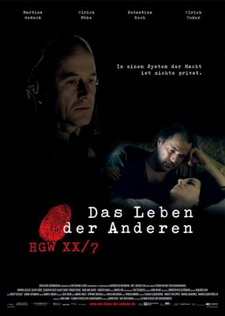
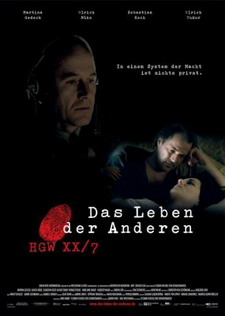
DAS LEBEN DER ANDEREN / THE LIVES OF OTHERSThe Evening Class Interview With Florian Henckel Von Donnersmarck


Florian Henckel Von Donnersmarck is a lean, tall drink of wasser. Door lintels prove a hazardous proposition for this 6'9" fellow who arrived apologetically late to our interview at the Ritz Carlton, having had to wolf down lunch; a customary practice, I presume, on out-of-town press junkets. I didn't mind waiting. His English was impeccable, his sense of humor intact, and his intelligence ready and willing to engage. After the usual introductions and niceties, we joked about how the success of The Lives of Others has brought us both to the Ritz Carlton. Otherwise, he joked, had the film not done so well he might have ended up in a youth hostel where I might not have been convinced to hook up with him.

* * *

Michael Guillén: Florian, I come to you today with congratulations on your numerous nominations and awards for your debut feature film The Lives of Others. In the past week alone you've won the Palm Springs International Film Festival's Audience Choice Award for Best Narrative Feature….

Donnersmarck: You were there for the ceremonies on that?

Guillén: Not the ceremonies, but, I did attend the festival.

Donnersmarck: Because they'd told me I had got that but I was wondering whether they have some statue of some kind? I was thinking, Palm Springs, they must have some beautiful palm or something like that; but, no one's sent me one.

Guillén: I think it's all just on-line text.

Donnersmarck: [Chuckles.] Just on-line text? Okay, well….

Guillén: But the audience loved it and that's important.

Donnersmarck: That's good.

Guillén: Also, this morning I read on Indiewire that your film has made the short list of nine films eligible for the Academy Awards foreign language category. Congratulations on that major development.

Donnersmarck: Thanks a lot. That's quite an important step now. It's actually quite a cruel system, isn't it? You could almost say out of nine you're not choosing five; you're eliminating four. Because you're choosing more than half. Normally, if you say there's a huge number and you have to choose a few out of those, that's fine—everybody knows that's how life is—but to actually have a pretty small number and you choose more than half to stay along, it's pretty cruel, isn't it? Not to be part of the five?

Guillén: You had actually strategized with regard to the Oscars—hadn't you?—in hopes that your film would be nominated in other categories than just foreign language feature?

Donnersmarck: Sony did a so-called "qualifying run", which means that you can present your film for other categories so that they might be eligible; but, I think one of the main reasons for that is actually that you can then send dvds of your film out to all members of the Academy, rather than just the people on the foreign language film committee. That way there will be more attention to the film and there's more likeliness that people will actually see it.

Guillén: I can't believe The Lives of Others wouldn't at least be nominated for best screenplay as well.

Donnersmarck: Really? Well, thanks. Your words in the Academy's ear. [Laughs.]

Guillén: So much has been written and said about The Lives of Others both in Europe and Stateside—and most of it quite favorable—that I fear treading on all-too-familiar territory. Please pardon me if my queries are nowhere near unique; but, what can we do?

Donnersmarck: No, no, I have no problem with that.

Guillén: What I wanted to explore with you this morning—not being a film critic myself—is some of the negative criticism the film has received, because I'm personally interested in how you refute your detractors.

Donnersmarck: Okay.

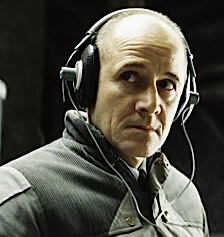
Guillén: One of your most eloquent opponents is Australian writer Anna Funder, author of the 2004 study Stasiland, who basically claims that the central premise of your film—that Stasi agent Capt. Gerd Wiesler (Ulrich Mühe) "turns" and changes for the good—is an absurd fiction that is morally weird.

Donnersmarck: I didn't know that. When did she write that?

Guillén: She was quoted in Geoffrey MacNab's article in The Independent earlier this month. Funder arms herself with the fact that former head of the Stasi File Authority, Joachim Gauck, has asserted that the records of the Stasi show no such thing ever happened. She suggests no self-respecting Stasi officer would have exhibited pity for his victims and points out that none have shown any remorse after the Wall has fallen. She expresses reservations about what purpose is served by depicting a Stasi officer who behaves honorably? She pointedly asks: "Of course a movie can give us psychological satisfactions that real life can't—the happy end, or, as here, the change of heart. I think it is a terrific movie, but I am deeply uncomfortable about this rotten core. How would we feel about an equally terrific movie made, say in the early 1960s, which showed the change of heart, redemption and comeuppance of a Gestapo agent? Whose interests does this serve?" How do you respond to Funder's reservations?

Donnersmarck: There are many people who write about the Stasi who haven't really researched it very thoroughly and who don't know that much about it. Coming to look at this, it seems to me that she's also one of these people who voice opinions before they've really looked into something. If she looked further into it, for example, she would see that precisely the man that she's quoting—Joachim Gauck—was one of the first people to actually write a large article over several pages about the film in Der Stern saying that—the caption above it, the title of the article was "This Is Exactly The Way Things Were", Ja, so war es!—it was actually his very offices that gave me several documents of cases that had shocking similarities to what went on there. There was, for example, one case of a captain of the same rank as Wiesler, Werner Teske, who in 1981 just a few years before this film [was set] was caught by his superior looking into files that were none of his business. His superior said to him, the only way you can still save your position is by saying everything that's on your mind and why you've been looking into [these files] and so on. They did this little court case against [Teske], which was actually tape-recorded, which the Gauck Archives found, and they gave me this tape recording of this trial. The Stasi had this crazy thing that they recorded everything! It was one of those weird things. It was like an obsession that they had. In this recording you [hear Teske] who, for some reason, took what his superior told him at face value. I don't know. Maybe he just had to get out of his soul all his doubts and reservations about his job and about the system and about the things that he found out about the file and how he was even thinking of somehow getting out of the country. Through all this material a very sympathetic character emerges who you can't help but like, although I was surprised to find him quite naïve for a Stasi officer. After that, just from the material that they got from this [trial], they condemned him to be executed. He was shot in the back of the head at short range in 1981; one of the last documented cases of a disloyal Stasi agent being assassinated. There was also another case actually that only came up quite recently that I didn't even know [about] while I was researching the case. Have you heard of Wolf Biermann?

Guillén: The East German poet?

Donnersmarck: Exactly. He had several Stasi agents—many many more than my fictitious writer Georg Dreyman—who were assigned to him. Der Spiegel wrote an article about this when they reported on this film because those documents had just become known. One of his Stasi agents was so impressed with Biermann's character that he started writing poetry himself and founded a group of poet Stasi agents [laughs] and they would meet once a week and read each other their terrible poems, I mean really terrible stuff, but still they were trying to express true feeling because they were so inspired by Biermann! At the same time, I don't even like to enumerate all the cases of those rare rare rare cases where Stasi agents betrayed their system because I think that would, indeed, put the wrong stress. I'm only telling you this now because someone who should know better like Anna Funder is coming up with wrong facts. I don't like to use that [material] because I don't want to give the impression that most Stasi agents, or many Stasi agents, or even a substantial number of Stasi agents, were fighting against the Stasi. That is not the case. I think that my film makes that very clear. No one has the impression that, oh wow, the Stasi were actually the good guys. Quite the contrary. Why I am telling the story of The Lives Of Others is to show people how they could behave given such a situation. And these situations will arise again. You don't have to have an absolute dictatorial system. It can be within the confines of a school, or a hierarchical business organization, or whatever, that we will have the chance to display a similar kind of heroism—to put it simply—as [Wiesler] is displaying. It makes it too easy for people in criminal organizations like the Stasi or the Gestapo if you say that—once you're a member of that group—that's it, you've lost your humanity, you're morally dead, it's over, there's no possibility for you to redeem yourself. You can always change your ways. It's much harder when you're in an organization like [the Stasi], which is why a character like [Wiesler] deserves so much admiration. Which is also why I was pretty angry when people accused Steven Spielberg [of humanizing Nazis]. They said, "Look at all these millions of Germans who behaved like monsters and you choose the one good German, Schindler, to make the film about." But I think that is still the right approach because it is exactly these people that we should be looking at and saying, "This is how you could behave and don't you be forgetting that." That's important and it's very shortsighted to consider that a "rotten core."

Guillén: I'm glad you mention Wolf Biermann. I felt his write-up of your film for Die Welt, translated into English for Sign and Sight, was one of the most interesting in that he sat down with other dissidents to watch your film. He wrote, this was factually wrong and this was factually wrong and this was factually wrong, BUT….

Donnersmarck: They were pretty wrong about many of those facts as well, though.

Guillén: Still, as a true poet, he was forgiving for what he saw to be your factual inaccuracies—whether you agree they were inaccurate or not—and caught the spirit of what you were trying to express. He felt The Lives Of Others conveyed things to him that he could never have imagined "being real". He even conceded—rather generously I thought—that, yes, "we are all addicted to evidence of people's ability to change for the good." That brings me, by contrast, to Scott Foundas' review in the L.A. Weekly. I don't know if you've read his review?

Donnersmarck: I've read that, yeah.

Guillén: Here we have a less obliging critique. I respect Scott Foundas and his writing, but, had several issues with this particular review, not the least of which—if I'm understanding him correctly—is his disdain for sentimentalized heroics as some throwaway technique of old Hollywood. Let alone his acrid view of the potential of human nature (he wrote you have an "unwavering belief in the essential goodness of mankind, despite so much evidence to the contrary"). Granted, that the dramatized heroism of Weisler in The Lives Of Others seems to be in direct counterpoint to the pared-down aesthetics of the so-called Die Berliner Schule, do you feel that the heroism you represented in The Lives Of Others is old style? Out of date? Sentimental revisionism?
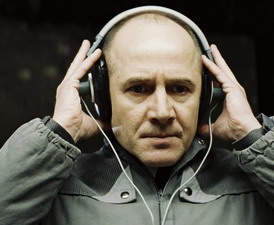

Donnersmarck: I must say I find it more problematic if someone sees the film like Anna Funder who wrote Stasiland because I disagree with that fundamental view of mankind. Scott Foundas' review was completely contradictory in itself because he claimed I was saying these people were just following orders—["Remember Those Stasi? They Weren't So Bad After All"]—and that I looked at [those days] with "dewy-eyed nostalgia." I remember that expression. That's something no one has ever said. The idea that I was heroizing people who were just following orders. I was heroizing the one person who stopped following orders. That's precisely what I'm doing. I'm doing the exact contrary of what Foundas is accusing me of. If you stop following orders, that may be the way out of that terrible misery. Now he says my next film will be about the people who were so great because they followed Hitler's orders? That's weird. I just thought that was very strange. But I know that type of critic very well. They see, "Oh no, everybody else is writing something positive about [this film]; I'm not going to be part of that herd. I'll write something different! I'll be original." But that's terrible because, at the end of the day, it's not as if consensus is something necessarily bad. If that were the case, then a film like Godfather Pt. 2 would be a really bad film because everybody agrees that that's a great film. I thought it was too bad if a critic writes a review out of some kind of weird vanity of wanting to be the only one going against the stream and ruining my Rotten Tomatoes score in the go…." [Laughs.]

Guillén: Well, I can appreciate if a critic doesn't like something most others like and feels compelled to express his point of view—though it does seem a bit like unnecessarily butting your head against a wall—but, my main objection against the review was a felt one when Foundas wrote, "And judging by the film's success in Germany and its enthusiastic reception at this year's Telluride and Toronto film festivals, it's a good bet that many moviegoers will feel similarly moved." As if, again—like you're saying—consensus is a dirty word. Such a posed distance between critic and audience seems hazardously petulant.

Donnersmarck: Having said that, I was treated as well by critics as anybody could possibly hope to be. I'd really almost put it in absolute terms that there's not one single critic—certainly not in Europe, I don't know about all the American ones (although my Rotten Tomatoes score is pretty good; that's the only negative review I got, from Scott Foundas)—but, any really serious newspaper—the kind of newspaper that would be read by educated people—gave me incredibly positive reviews. Not one exception. Normally, and very often, they had several articles by let's say a novelist or another filmmaker, or by a [bona fide] film critic, and they would explore it from different angles, or a third [angle] by a political [analyst]. Also, The Lives Of Others did incredibly well at the European Film Awards, where you're voted upon by your peers and filmmakers, so it would be wrong and distorting to say it's an audience pleaser but critics consider me immoral or that the film has an immoral theme. That's not the case at all. Some people take it like that, but fortunately they're rare and I think the people that like the film have better arguments than the people who don't.

I don't think that's always the case. For example, I like Downfall. I thought it was a good film. I can understand very much the arguments of people who criticize it for certain things. That doesn't change my opinion. I find that there were more attacks of Downfall than there were of [my film] but I found them slightly more founded and they're the kind of [criticisms] that did make me think a little bit, whereas the attacks that I've received on this film—which weren't many—didn't really make me think because they were not thought through to the end.
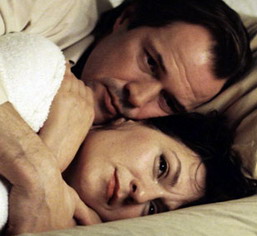

Guillén: The challenge of your film for me—moreso the first time I saw the film than the second (because I liked it better the second time than the first)—was that I was wrestling with the believability of Weisler's conversion the first time I saw The Lives of Others, but the second time I was more willing to accept it; I think because I appreciated the subtleties in Ulrich Mühe's performance more and accepted his gradual change. So it seems to come down to this issue of whether its credible that someone can change like that and, clearly, you have stated that—in effect—they can. For me it returns to the satisfaction of believing they can. Actually, Wiesler's transformation reminded me of fireman Guy Montag's transformation in Ray Bradbury's Farenheit 451, cinematically rendered by Francois Truffaut. Are you familiar with the novel and the film?

Donnersmarck: I saw Truffaut's Farenheit 451 as a kid so I don't remember it completely but I think it was considerably less realistic in what it was trying to do. It considered itself more a parable, right? The entire production design, and the way it was acted, it was not something that was supposed to be directly believable. It was just to make you think. It was almost a cautionary tale. I don't see The Lives Of Others as a cautionary tale in that way.

Guillén: I guess the analogy that I'm drawing is that, what precipitates the moral change in your character was the music and the emotional authenticity of the lives he was observing, much like literature kickstarted Montag's transformation. Though it's probably simplistic to presume that art alone could motivate such a change, and if I recall correctly Foundas likewise took objection to that.

Donnersmarck: I do think that it is believable that people would change even like that. I have seen people change. Even just the very thing that made me have the idea to write The Lives Of Others can almost serve as proof that [change] could happen like that. That is, this quote from Lenin to his friend Maxim Gorky. I actually recently found the quote in the Russian original on Wikiquotes. Do you know that page? They have the quote there in the Russian original. I only had the German book version of it but I spent two years in Russia so I always felt I should at some point find it in Russian. I always looked for it and I could never find that exact book and then suddenly I found it on Wikiquotes. Lenin said to his friend Maxim Gorky, "Beethoven's Appassionata is my favorite piece of music but I'm not going to listen to it anymore because, if I do, it makes me want to stroke people's heads and tell them nice, stupid things, and I have to smash in those heads, smash them in without mercy, to bring my revolution to an end. So I'm just not going to listen to it anymore." I thought that was a really amazing testament and tribute to the power of art. And art is only one of the things that makes my character change in The Lives Of Others. It's not just because of Brecht and Beethoven (or in Lives Of Others Gabriel Yared) that he changes. It's also because he realizes his sacred mission is being used to satisfy a high politician's sex urges; the arbitrary use of power. He sees that his true belief in this whole system actually makes him a bit of an alien among these people who are using it pragmatically and cynically. And that his friend, Lt. Grubitz (Ulrich Tukur), who was always a little bit less intelligent and a little less loyal than he was, is also having a bigger and better career.

Guillén: That's actually what made Weisler's transformation more believable for me on the second viewing. The first time I was linking it more to the music and the eavesdropping. The second time it did seem to be more about a betrayal to his—as you call it—"sacred mission." Maybe that's why I went with it more the second time.

Donnersmarck: It's like a mid-life crisis. We've probably all come close to experiencing something like that where everything seems to be pushing us into a direction of values different than the ones we've been embracing all our lives. A mid-life crisis is something that can actually happen. It's the kind of thing that can make a Catholic priest who's spent all his life obeying those rules suddenly go haywire. It's also something that can make a mafia boss go soft and seek a therapist. Or which can suddenly make a father want to leave his family. But it's never one single thing. It is always an accumulation of things. That's why I wanted the change in the film to actually start with the film. I wanted it to begin pretty much from the beginning and for there to never be an actual turning point because that is something that all the books on screenwriting say: if there's any change in character, there has to be a clearly-identified turning point. Even the old Greeks would go on about that. But I think it's wrong because, unless there's divine intervention, I don't think that things happen like Saul who turns into St. Paul from one day to the next. This day I'm killing Christians and the next day I am one. It doesn't happen like that. I mean, sometimes it does happen like that. I know that from this whole born-again Christian thing. Suddenly they'll tout some former Nazi or abortionist or something like that and say, "Now look! This person is now the greatest advocate of our cause and believes in Jesus Christ and embraced us." Normally, about a year afterwards, they're not talking about him anymore at all because he went back to his old life. When these things happen, it's like a dislocated joint; it'll pop back in eventually.

If there's something which you know has been pushing your doors out from all sides all the time, it would be very hard to change back. A thing which actually happened to Mikhail Gorbachev. This is someone whom, during my studies, I actually got to spend some time with. While I was studying at Oxford, he came there in 1993 to teach and—since I was one of the few students who spoke good Russian—I was in charge of leading him around town. He is someone who cried bitter tears at Stalin's death, thinking this was the end of the world. And he ended up becoming the fiercest anti-Stalinist in history. That guy did undergo that kind of change. He was a real ideologue. But it didn't happen from one day to the next. It did not. If Yuri Andropov hadn't died so soon, I actually think he was on a similar path. These things do happen.

Guillén: Well, you could even seek precedent with Heraclitus and promote enantiodromia, which basically says that any strongly-based conviction contains its reversal. Something will always gradually become its opposite the more you go into it.

Donnersmarck: I'm not so familiar with that.

Guillén: I can speak from my own experience. I've worked my whole adult life in the legal field and finally reached a disjuncture where I felt there was something morally questionable about law enforcement.

Donnersmarck: [Laughs.] I could see where you'd reach that.

Guillén: That was another thing that helped me relate to this film. I could see that such a change could happen because it happened to me. That's why I've been so curious about the people who don't like the film and how they seem to aim at the credibility, the authenticity, or the truth of Weisler's conversion. But even Wolf Biermann was so eloquent about how he understood your film when he said you can go through all the facts but they might not document the truth as well as a piece of fiction.

Donnersmarck: The great thing about fiction is fiction—when done well—is truer than fact. It's truer than a true story. The word for fiction in German—dichtung—actually means density. It's actually the same word. It's the word for fiction and poetry at the same time. Of course you somehow have to make things more dense in fiction, you can make them more dense in fiction, ideally you do, and you're encapsulating much more than the arbitrary qualities of a very loose reality. After seeing something like The Deerhunter, I've understood more about the Vietnam War, although of course that story is completely fictional, much more so than The Lives Of Others, but still it captures the essence of something. Even for people who were in the Vietnam War and didn't end up playing Russian roulette there, The Deerhunter still expressed something they felt. The same way the Vietnam veterans said The Deerhunter expressed what they felt, the great writers of East Germany—not just Biermann—wrote fantastic pieces about how The Lives Of Others captured their experience in essence.

This is the beauty of fiction. A film like Dr. Zhivago makes me understand things about the Russian Revolution. Gone With the Wind makes me understand great aspects about what the people in the South were fighting for; it gives me a feel for that era, for the conflict of the times, and because it is so real, and so specific, and so true, has relevance for my present life today because—at the end of the day when you get to the true fundamental human emotions like love, fear, invasion of privacy and what that does to you—we can go to these [fictions] and we all know them from our lives. Tell me one person here in America who doesn't know what it feels like to be under surveillance from the Stasi. We all know what it feels like. If you've had strict parents, you know what it feels like. If you've ever had an asshole boss, you know what it feels like. These are universal things. These are things that haven't disappeared in Germany just with the disappearance of the Stasi and they're in existence here [in the States] as well, although there never was a Stasi and this has always been a democratic country.

Guillén: Well, that being said, I'm feeling a little bit under the surveillance of the publicist. [Laughs.] Thank you so much. Good luck at the Academy Awards. I hope they're not too cruel to you.

Donnersmarck: Thank you very much. I understand that you're wanting to write something novel about the film by approaching the negative criticism, but at the same time I think it's important to remember the proportion of the positive criticism. Look at Rotten Tomatoes, for example, so far there are 19 reviews or so, and there's that one negative review by Scott Foundas. [I actually saw him at the L.A. Film Critics Association, and even almost went up to him. I won this award there a few days ago. The really good critics like Kenneth Turan and people like that had all together-–or at least 19 of them, I'm told-–decided that The Lives Of Others was the best foreign film of the year. I like to think that when it was decided, Foundas went blue in the face and almost popped, but that there was nothing he could do because he was the only one of the group who hated the film.] It's important not to make it sound in your report like the proportions were different. I could see how that would be a danger.

Guillén: Hopefully my readers will not make that erroneous assumption and will recognize that I simply wanted to hear how you refuted the few negative criticisms levied against the film. Once again, thanks for your time.

Cross-published at Twitch. My thanks to Reinhard Seidel for help with the German translations.

02/16/07 UPDATE: As a filmmaker himself, SF360's Miljenko Skoknik queries von Donnersmarck on camera shots, managing actors, and collaborating on Gabriel Yared's score.

02/19/07 UPDATE: A slight edit has been made to this transcript to more accurately reflect the articulated intention of von Donnersmarck and has been indicated by brackets.

02/23/07 UPDATE: Jonathan Marlow's interview with von Donnersmarck is up on the main Greencine site and is noteworthy for its inquiry into von Donnersmarck's history with making short films. With regard to the "backlash" that the film has received from some critics, Marlow finds it "particularly odd because the people expressing their frustrations with The Lives of Others seemingly wouldn't have an issue with the same ambiguities in a film like The Conversation." "Because it wasn't successful!" von Donnersmarck comments.
ROMÁNTICO—The Evening Class Interview With Director Mark Becker, Pt. 2


Guillén: I'm Chicano myself and another aspect I much admired in Romántico is its poignant depiction of compadrismo.

Becker: I'm not sure of that word.

Guillén: That he and Arturo were compadres, that they were almost like brothers.

Becker: I see.

Guillén: The scenes where Carmelo remained loyal to Arturo despite Arturo's problems with alcoholism were touchingly effective and a shining testament of Carmelo as an individual.

Becker: Arturo is like family, no doubt. But there's also this element that it's very male. Arturo's wife tried to articulate her situation with Arturo, the degree to which she had to force him to go to rehab, and how he was a danger to himself. But Carmelo is like a guy who is a guy friend who's going to be much more forgiving to his guy friend than anybody would necessarily be to their spouse. They were compadres, yeah. You could look at it both ways: Carmelo is faithful to his male friend in a way that is typical of men and maybe a little bit blind to how one needs to combat problems like alcoholism.

Guillén: I would beg to differ. I think Carmelo was much more conscious than you're giving him credit for. By downplaying the problem Arturo was having with his alcoholism, by not judging or scolding Arturo when so many others were on his case about his drinking problem, that's how Carmelo offers his true friendship in helping Arturo recover. Carmelo's non-judgmental friendship becomes a space where Arturo can recover. I know this dynamic personally. Because—despite what you are saying—male friends frequently desert each other in moments of crisis like this, just because they're male friends doesn't mean they're loyal, but Carmelo doesn't desert Arturo. He remains loyal. He chooses to help Arturo out in his own way.

Becker: I think you're right in the sense that that's what makes them like brothers in a way. There's nothing Arturo could have done to lose Carmelo's faith in him.

Guillén: Because the compadre system is a system based upon mutual indebtedness. It is a leaning into each other. I felt your portrayal of that through Carmelo's character was fantastic and spot-on.

Becker: It's always about trying to approach the feeling I had during production. I don't even necessarily know if I can exactly psychoanalyze any particular character perfectly—and I'm sure I can't—but I do feel like I can try to approach when I'm re-imagining it during the editing process—that feeling I had when somebody told me that or explained to me that. How can I put this together so that you feel those same chills I felt during production?

Guillén: I imagine that you do that by filming what's there. You don't film hate. You don't film love. You film what's in front of you.

Becker: Right. And you don't impose your own prejudices onto the film.

Guillén: Which was one of the reasons I enjoyed your documentary. I felt I was being given the opportunity to look into Carmelo's life.

Becker: And be able to maybe, hopefully, feel like you're putting the pieces together yourself. I like the idea of putting the viewer in an active mindset where they don't feel like they're being dragged from point A to point B.

Guillén: You've written about preferring an "unbuttoned structure" to documentaries. Could you explain what you mean by that?

Becker: By the way, I say a lot of things. [Laughs.]

Guillén: And they sound good at the time, don't they? [Laughs.]

Becker: I can explain to you what I mean by that but I'm not like a person who is able, actually, to put precise words to my feelings. Sometimes I end up going towards the more poetic.

Guillén: I find the poetic completely valid when expressing oneself.

Becker: So I'm sure what I mean by that is that I like the feeling as a viewer—when I say "unbuttoned structures"—I like the feeling as a viewer that there's a little bit of a sense of the randomness of life. When you're watching it, you don't necessarily feel like from scene to scene to scene that the filmmaker is taking you up a plot ladder where it's transparent exactly what they're doing to you as the viewer, how they're manipulating you. Even though there's a certain amount of precision and work in editing to actually take you through a plot or a narrative, I don't like the feeling that the viewer feels it happening to them. That's what I mean. I like to preserve a lot of that feeling of [being] privileged to witness all this stuff, and you are feeling a narrative flow, but you're not feeling the acts and the work of the filmmaker; you're just feeling [the film] in a pure way and not in a way where you're thinking about how the filmmaker's leading you through this procession of scenes.

Guillén: In other words, it's not like you're scripting a conflict, the conflict is naturally arising in the material situations? One of the more interesting conflicts in Romántico was when Arturo said, "If Carmelo really wanted to return to the United States, he'd be back there by now." That made me question why Carmelo hadn't returned? Why didn't he really want to return?

Becker: At that point Arturo serves a strong purpose, which is that you don't necessarily want that statement at the beginning of the film, or the middle of the film, but it is nice once in a while when one of the characters helps crystallize a potential notion about your main character. I felt like Arturo there hit the nail on the head and I chose to leave it towards the end. Carmelo is, indeed, completely ambivalent about [returning to the States] and truly fosters a certain amount of healthy denial. He wants to be the person that he was when he was 54 or whatever and risked everything to help his family, and it feels like falling short if he just eliminates that from his vocabulary. If he at any point admits that he's never going back, then he's letting down his own sense of what he should be doing for his family. He needs to maintain—"an illusion" is maybe too harsh—but he needs to maintain a little bit of a hope that he can indeed go back and do what he feels is the only way that he can help his family in the manner that he wants to. The reality is: his health, less his age and more his health, and the political situation with the border becoming more and more difficult to cross, means that he could never come back as an undocumented worker. There's that scene in the bakery with the "embassy consultant" who makes it clear Carmelo is never going to come back legally either.

Guillén: Now it's my understanding that you actually shot on film? What prompted that choice?


Becker: I'm particularly inspired by documentaries that don't forget that it's a medium of visual storytelling and when I was making Romántico, I had that very much in mind. I wanted to make a film that spoke to audiences through not just what happens, but through composition, through the visual dynamic between the character and his space, his environment, and the idea that it could show in theaters was always [foremost in my mind]. When [the idea] started to turn into a feature, I couldn't help but envision someday being able to show it to a theater movie-going audience. If 10,000 people rent Romántico on Netflix, it will never make me as happy as [an audience screening]. I just had a screening in L.A. and we had a Q&A afterwards, and [I loved] feeling the reaction of an audience in a movie theater.

Guillén: It's palpable, isn't it? I absolutely agree. What with the new forms of cinematic distribution these days—direct to video, on demand, microcinema—nothing still beats sitting in a movie theater in the dark with an audience watching a movie projected on a large screen.

Becker: The collective experience.

Guillén: Has Carmelo seen the finished product?

Becker: Yeah. That may have been the highlight of the filmmaking process, even during production, being there at this festival in Morelia, which is in the north of Michoacan and an hour south of Salvetierra, [where] they had an outdoor free screening with a couple hundred people in attendance, sitting, standing on the sides, watching the movie projected huge. Carmelo showed up about a minute before the screening—it drove me crazy—I thought he was maybe nervous, pacing the streets, but it turned out he was just getting a taco or something; he was hungry. [Laughs.] He watched the film and, I'm sure, that must have been the most odd experience to watch—in a way like home movies—in this public setting. I know he watched the film with his hand over his mouth. I don't know his exact feelings. But I do know that, after the screening, I had a Q&A and I invited Carmelo up and he was greeted with the kind of reverence that I think anybody would like but especially a musician who likes being the center of attention. They stood up [cheering his name] in crazy reverence. He's a funny guy, I find, because he has this mixture of the humility that sometimes comes with tough economic circumstances but he also has this real pride.

Guillén: I see pride and shame (or humility) as two sides of the same coin.

Becker: Interesting. He started off as the humble Carmelo for a little while but soon thereafter he was quoting himself from the movie. [Laughs.] He was very poetic [in front of his audience] and he said something to the effect of, "I say in the movie that—ever since I was a boy—I wanted to be somebody. I feel like I've become somebody because I've told my story." It might sound crazy my repeating that to you. But you couldn't want anything more as a filmmaker than the subject [saying that]. You don't want to do some sort of whitewash of your subject where the film just makes them feel good about themselves; but, this is a film that shows some of his darker side as well and he seemed to feel that there was a certain amount of honesty in the film, which he could only be happy about. The fact is that he felt like he had accomplished this dream of his to tell his story. I felt, "I didn't fuck it up." The most important thing to me in production and editing was, okay, this guy was giving me the gift of his story and I wanted to be faithful to it and I wanted to rise—not to the challenge of it—but to what he's giving me in terms of his story. I wanted to be able to capture it in the filming in cinematic language.

Guillén: Well, in a way—and that's why I brought up the comment about the compadres—you and Carmelo shared something of that compadrismo and were mutually indebted to each other through this project.

Becker: I don't know. You have to be honest. You're making a portrait film. I would never be interested in making the film if Carmelo was just some sort of pure hero, a man who's doing wonderful things for the world, that's not my interest. My interest is in being faithful to the complexity of people, which isn't all [about] heroic acts. For example, his relationship with his wife, when he talks about her menopause as being a hardship because he can't enjoy a good meal without her bothering him, that's what I wanted to show because that's who Carmelo is. He's honest to a fault. He's completely faithful to the task of taking care of his children who belies any type of macho Mexican stereotype but who also has a first grade education, who's both incredibly reflective but old-fashioned in other ways, who goes to church to pray to the Virgin at times, but doesn't buy that you should have as many children as God is willing to give you, who has all these dualities. I wanted to bring that complexity to the film.

Guillén: Your instincts as a documentarian are sound, Mark. I suspect that—why documentaries have become so attractive to audiences—is precisely because there is a cultural zeitgeist that is exhausted with aggrandized heroic representations. Audiences identify more with simpler, more human heroics, conflicted and complex as you say, "normal" individuals who perform—as I was saying—their everyday tasks so that their humanity comes through, their compassion comes through.

Becker: Sometimes I feel that even documentaries try a little too hard to show you how wonderful people are.

Guillén: Granted. But Romántico is more of a window into one human being's life rather than any idealized portrait. To wrap things up, you've expressed that you've achieved what you wanted to do for Carmelo—which I agree you have done for him—but what are your hopes for Romántico now that it's finally opening up in theaters? Other than paying your bills?

Becker: [Laughs.] There's a few things that I want. In some ways I feel like—given the distribution market—Romántico is probably maximizing its potential. I would love the idea of reaching the masses with this movie because, of course, I make films and I work in film because I want to tell stories that people see. Of course I would love if the whole nation saw Romántico; but, that's unrealistic. It's like most documentaries in which the audience is going to be those that are inclined to go see a documentary. [Romántico will screen] in cities where it's probably going to reach the art house audience that is inclined to see this kind of film. What I'm happy about is that this film could have easily not been showing in the Lumiere and Shattuck cinemas. It could have easily shown on the festival circuit, showed to an even more rarified festival audience, and never seen the light of day of movie theaters. In 2008 it's going to be seen on The Sundance Channel. It's going to have a real dvd release through my distributor Kino. So on the one hand one could get greedy and want more and more but, ultimately, I do feel this was a labor of love and the fact that it's going to achieve its audience is something I'm really happy about. It's probably not going to make anyone any money. It's not going to make my distributor any money. It's not going to make me any money. [Hopefully,] Carmelo will make a little money out of it once we hit profit. I just cannot wait to call Carmelo to tell him we need to set up a bank account for him where I can wire a little money to him.

Guillén: That'd be cool. So what's next for you? Are you working on your next feature?

Becker: I'm working on researching my next feature and I'm working as an editor again trying to dig myself out of debt from this movie.

Guillén: Any hints on what the future doc is about?

Becker: It's a portrait about the ramifications of a colorful life.

Guillén: Oh, you've been reading my mail, eh?

Becker: [Laughs.] There's this fondness that people have, sometimes for family members who have had six, seven, wives and children from different families and this is a portrait of a man who's had that colorful life and it's about the ramifications of that. He's a larger-than-life character who has a certain amount of charm. It's in English and I actually look forward to working in my native tongue. [Chuckles.]

Guillén: Sounds intriguing and something to look forward to. Congratulations, again, on Romántico. It's a wonderful documentary and—if you're worried about your audience—you shouldn't be because I think it's an audience that's only going to grow as word gets out about this documentary. It's a beautiful slice-of-life from San Francisco's Mission District as well as an exploration into Carmelo's life in Mexico. Thank you very much for taking the time to speak with me today and I wish you luck in your future project.

Becker: Thank you so much; I appreciate it.

Cross-published on Twitch.

02/03/07 UPDATE: Dave Hudson at The Greencine Daily has gathered together several write-ups on Romántico, including Sara Schieron's interview for the Greencine site, Dennis Harvey's for the San Francisco Bay Guardian, and Robert Avila's at SF360.

ROMÁNTICO—The Evening Class Interview With Director Mark Becker, Pt. 1


Mark Becker's Romántico—which opens this weekend in Bay Area Landmark theaters (the Lumiere in San Franciso and the Shattuck in Berkeley)—had its premiere at Sundance and screened at several festivals, including Los Angeles, San Sebastian and Venice, among others. The documentary won a Special Jury Recognition at Silverdocs and was nominated last year for two Independent Spirit awards. A.O. Scott from The New York Times has written that Romántico—Mark Becker's study of Carmelo Muñiz Sánchez—is "a lovely, touching, moving portrait. This man talks about his own life—his own struggles—and you get a real sense of his dignity and that he is a genuine artist." Jon Anderson from New York Newsday describes Becker's film as "visual poetry on the run and, as any work of art does when it's successful, improves our perceptions of the world: No one who sees Romántico for what it is will likely ever again brush off a strolling musician, bypass a handbill or lobby for a border wall."

Along with being a documentary filmmaker and cinematographer, Becker also works as an editor. He co-edited Lost Boys of Sudan, which won an Independent Spirit award, as well as the Golden Gate Award at the San Francisco International Film Festival. He's worked as an editor for Lucasfilm, PBS, and on various independent productions. Formerly a resident of San Francisco for seven years, he now resides in New York City.

Becker agreed to speak with me and we met in the offices of Larsen Associates where we drank some dynamite French press coffee and talked about his current documentary. During the course of our conversation, Becker described his subject Carmelo Muñiz Sánchez's face as being full of life. I could say the same about Becker himself. His countenance is genuine and his eyes are kind.

* * *

Michael Guillén: Mark, I heard about Romántico when it was at the Film Foundation's festival. Michael Hawley, who frequently contributes to The Evening Class, was enthused about the film, encouraged me to see it, and so I'm glad I've had the opportunity. I live in the Mission myself and I'm sure I've seen Carmelo and Arturo. It's quite possible I even hired them through La Rondalla to play mariachi music at my home for a party I gave my Mom some years back when she was visiting San Francisco. Thus, it was great to see your in-depth portrait.

It's my understanding that this particular project Romántico started out because you wanted to do a study of the "bachelor culture" of musicians in the Mission? But then it actually ended up being a poignant tribute to family and marriage. How did that come about?

Mark Becker: As part of the process of making a documentary, it's a virtue of the filmmaker if they can keep open-minded—as far as what the film will be about—through the process. I had a vague notion of what the film was about. I was sure I liked elements of these two guys, their lives, and I could see how it could be cinematic and I could see how there could be contradictions. For example, it was an obvious interest of mine that they were Mexicans singing love songs to gringos and knowing that they were thousands of miles away from their loved ones. I knew I was interested in the fact that they created surrogate families for each other. When I talk about the "bachelor culture", what I mean is often the musicians would live in the same apartments, they'd cook together, they were each others' surrogate families here in the U.S., despite the fact that they had wives and children in Mexico. All those elements were interesting to me and I knew that they may come together in an interesting way, but I didn't know how. The reality of Romántico—and I think this may be the case for a lot of borderline sort of verité films (I hesitate to call my film verité but it's somewhat verité)—is that things happen and evolve. Things happen to the characters during the course of filming a movie. I found myself more interested and more compelled by the drama that Carmelo kept giving me than I was by my initial preconceived notions of what the film would be about. At a certain point I thought it was important for me to give in to the story that Carmelo was giving me, which was a very personal story. It was a story about the juncture between work and family and how the two don't necessarily work hand in hand always. Carmelo [thought] he was doing such a better job of taking care of his family when he wasn't with them, when he was a thousand miles away from them in San Francisco, and so my process was to let the story evolve and to not impose in too strong of a way my original preconceived notion of the film and try as hard as I could to channel what I thought was compelling about what Carmelo was giving me.

Guillén: Well, I'm really glad you didn't replace him with Antonio Banderas!

Becker: [Laughs.] I pride myself on being very communicative about the process with film subjects because I don't like the idea that you just show up with a camera on your shoulder and shoot without explaining a little bit about how documentary filmmaking works. From the get-go I talked to Carmelo about how the film was being financed because I wanted him to be comfortable with the fact that this was … y'know, it's always an odd situation that you're spending money on a film when you're making films about people who don't have any money. I was honest about that. I talked to him about how the filmmaking worked, how we spend a lot of time with any given person, and you end up choosing small moments from all of your footage and I thought he really got it, that this was a documentary about him, I'd be spending a lot of time with it, and that I'd be culling it down to an hour and a half film. It was so shocking to me, two years into the project we were just sitting around having a chat, myself and my crew members eating lunch in Mexico and he asked one of my friends, "When are you going to be replacing me with the actor?" Two years and he thought he was research. [Chuckles.]

Guillén: That brings up an interesting point. You describe financing a film about someone without money, but was Carmelo reimbursed in any way for his participation in the film? Or was the fact that you chronicled his story for his family sufficient compensation for him?


Becker: My understanding with him from the beginning before I got to know him and became what I guess you'd call friends with him [was] that I had a certain budget for the film that was from grants and the film was being funded by those grants. That's how I explained to him that—despite the fact that it might look like I had a bunch of money—it's really this borrowed money that's paying for this film about him. I also explained to him that you can't—I mean I'm just upfront, maybe I shouldn't be, but I was just upfront—I said, "Y'know, you really can't pay documentary film subjects because that would turn you into an actor and I don't want you doing anything for me. I want to be able to capture as much reality as possible." He's always wanted to tell the story of his life. That's the way he understood it from the beginning. That being said, I think there's this dynamic [that's] really bizarre, which is how diametrically opposed this documentary ethos is—never pay your film subjects—from the human relationships which are, like, okay, you've now grown familiar and you have some affection for your film subject and they're suffering in myriad ways and can you help them in any way without interfering with the documentary that you're making, which is supposed to capture truth?

Guillén: Yes. It's like the major imperative in Star Trek.

Becker: You've lost me there.

Guillén: That you're not supposed to affect history even if you go back in time. You're to remain non-intrusive.

Becker: Oh right. I see. So I should say—I don't know if it's worth noting—but when I would go down to Mexico, my family at the end of a shoot would give him what I call "the gift." It was made clear it wasn't payment for services but it would be like—I interrupted your life, you fed me, here's some money, we're so grateful sort of thing—and so there was that. Within my modest means—obviously, they're not modest like Carmelo's—but, it was money that I was sure could help them for a couple of months. Then there's this whole notion—which I am so looking forward to—[of] helping his family now that the filmmaking process is over and there are none of the conflict of interests. The film will eventually make a profit. I'm still in debt to Romántico, but in the course of a few months I assume, I'm hoping, when it hits dvd, I'm going to be able to make a modest amount of money. After 7-8 years the film might make $10,000 or something and if I could split that in half and give Carmelo half of it, if it makes $20,000 and he can make $10,000 on the film, that would be enormous for his family.

Guillén: And would truly be generous on your part. I certainly didn't mean to make you defensive about how you've compensated Carmelo for his participation in the film; what I meant more to illustrate was how a documentarian cannot intrude upon the circumstances of what he's portraying; in your case, Carmelo's poverty and his struggle to survive. By way of separate example, I recently interviewed Rainer Hoffmann, the cinematographer for the documentary The Short Life of Jose Antonio Gutierrez, and in that film there's an arduous train sequence involving Guatemaltecos journeying North to the United States where in the back of my mind I kept wondering why Hoffmann didn't just offer to drive his subjects North? To help them out? But, of course, he couldn't do that. That would interfere with the truth of the situation and—in order to film that truth—Hoffmann had to actually ride the train with these immigrants.

Becker: I just worked on a film as an editor where there's so many back seat interviews with the film subjects. You're looking at this character sitting in the back seat and you're wondering (as an editor), "Why is he in the back seat?" The camera turns and you see it's the producer who's driving the car and then I'm thinking, "How am I going to use this? Why's he sitting in the back seat? What could justify this in the movie? Will you notice? Will you think, 'Who's driving him?' " So it's that thing. I would probably rather that guy—if he didn't have a car—to figure out how to be with him on that journey. Would he have to walk to a bus?

Guillén: So when you say that you don't think of Romántico as verité filmmaking, why do you say that?

Becker: I'm speaking of it in the purist sense. There's a lot of verité footage [in Romántico], total fly-on-the-wall footage, waiting for things to happen and I'm just filming as it happens, but there's also an element to the film … where there are poetic scenes where the film is bringing you to an emotional place that has to do with Carmelo's past, images inspired by Carmelo's memories, revisiting places he's been in his youth, and as cinematically as possible capturing those places, joining his voice to those images. That's all highly constructed stuff.

Guillén: Memory as narrative structure?

Becker: Yeah.

Guillén: It's my understanding that Carmelo was the last of the Mission musicians that you were interviewing for your film project and that—once you met him—you decided he was the one because he was "cinematic." What was it about Carmelo that you saw as cinematic? Both in him and his story that brought you to the point of developing the script to be a "reverse immigration story"?

Becker: First of all, there's two things that inspired me about him at the very beginning. At the very beginning it's sort of guess work but you're working on instinct. One thing that inspired me was that he, I thought, had a very—people may disagree—but, I thought he had a very charming face. I felt like I saw a life in his face. The way in which he communicated with me was expressive and I loved something about his stature. I almost immediately saw him—and this sounds horrible—but I almost immediately saw him in this iconic way, him with his gut and his diminutive stature. I saw him in a wide shot, this small, almost cute, old man. I don't know how to say it properly.

Guillén: Almost like an archetype?


Becker: Yeah, like an archetype. Yeah. He belied the notion of somebody who crossed the border. He's an older guy. He just has nothing to do with the conventional notion of a young, hungry migrant worker. He seemed like a guy who'd been through it a bit. He had those creases in his face, but, there was something I found very charming about his face and his physical look. The real thing was his manner of speaking. He was candid. He was compulsively honest. He was speaking from his heart almost immediately and that's something you don't always find. It was obvious that he had lived an examined life. There's almost a cultural arrogance—I was talking to someone about this at a Q&A in L.A. a couple of days ago—there's this cultural arrogance that people who live hand-to-mouth existences, just working to be able to make money for the family, to get by, don't necessarily live an examined life, one in which they're self-reflective. This guy, Carmelo, immediately I realized he'd lived a reflective life. He thought about his place in the world.

Guillén: That especially came through for me when you were showing scenes of him with his nieve cart. It reminded me of something Joe Campbell taught me: that it's in the performance of our everyday tasks that our radiance shines through. The fullbodiedness of his experience is radiant in those sequences and there's something quite magnificent in his trying to provide for his family however he can.

Becker: It's so hard to not sympathize with a guy who—in order to make money—hits the streets selling ice cream to poor children.

Guillén: And often actually giving it away, remembering how he as a poor child could not afford ice cream.

Becker: And often giving it away. There's a crazy irony. He's this avuncular character. The ways he makes a living are either by singing love songs at weddings or funerals or in bars to prostitutes, or he's selling ice cream to little children. There's something about a person who earns a living like that.

Guillén: There's also a philosophical tension to his life story that captured my attention. Here is someone who lived in San Francisco, making relatively good money to send home, who returned home because his mother is sick, and is then in a situation once he's returned home where he can't earn as much money as he was earning in the States. That's when he begins doing these other things—like pushing the nieve cart—to make ends meet, though he never quite accomplishes it, and nonetheless elects to stay.

Becker: The circumstance with regard to Carmelo's return home was completely unknown at the beginning of filming. Carmelo had been in California for three years at the time that I started filming. I chose one shooting week—I'm shooting on film so I was really particular about choosing the right shooting week in which I could get a lot of stuff and minimize the economic impact of the shooting because shooting on film's expensive—so I choose my one shooting week and Carmelo, as far as I know on day one, is in San Francisco for the duration. On day three I find out he decides to leave and on day five I'm in the airport and he's going home. The film—in many ways—came to me. It became what it was because Carmelo gave me the gift of a story and a plot. That's what Carmelo provided the film in terms of dramatic structure. But then there's the surprise, which was Carmelo's gift of his—I hesitate to say "soul"—but his sensibility. I asked him on that first audio interview if he had any questions for me, if I had not addressed something that I might have in my interview, and he said, "Well you know, Mark, I've been waiting a long time to tell the story of my life and I think that this is it." I never imagined that he, on his side, would have felt that he was waiting for me and waiting for this opportunity. Between that and his sudden need to depart and go home to Mexico, I feel Carmelo led me to Romántico.